


What Are the 10 Best Enclosure Boxes for Buyers?
Choosing among the 10 best Enclosure Boxes starts with the conditions the box must handle. A unit mounted beside a machine faces different demands from one installed in a dry office. Dust, moisture, vibration, temperature, and impact can all affect performance. Details matter. A protective rating is useful only when it matches the actual installation and the manufacturer’s stated test conditions.
This guide compares options by practical features buyers can verify: enclosure material, dimensions, mounting style, door design, cable-entry points, and access for maintenance. Metal boxes may suit some demanding settings, while plastic models can be lighter and resist certain forms of corrosion. Neither material is automatically best. Fit comes first. A box that is too small can crowd wiring and make service awkward; one that is oversized may waste space or complicate mounting. Check usable internal dimensions, not just the outside measurements. Also consider whether the cover closes securely after cables and accessories are installed.
Price and appearance matter, but they should not replace a careful review of specifications. Compare product documentation, compatibility, and available support before buying. Even a well-rated enclosure may disappoint if its seals, mounting points, or temperature limits do not suit the site. There is no perfect shortlist for every buyer. The right choice depends on the equipment, location, and maintenance plan—and those details are sometimes easy to overlook.
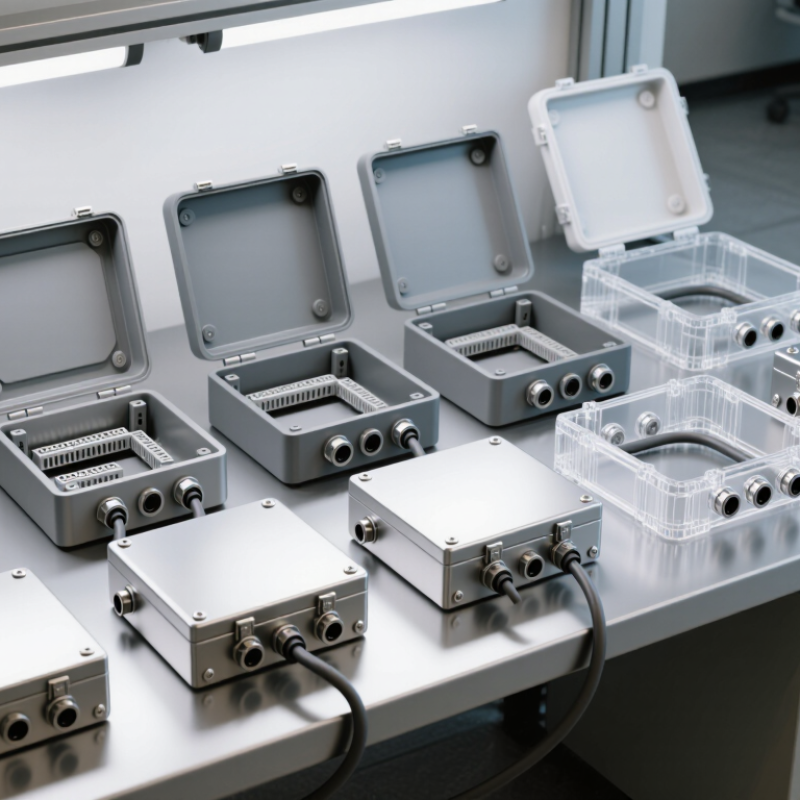
What Enclosure Boxes Are and What They Protect
An enclosure box is a protective housing for electrical controls, wiring, sensors, and other equipment. It can help keep dust, water, accidental contact, and impact away from sensitive components. Steel boxes suit many rugged indoor or outdoor settings, while polymer enclosures can resist corrosion and reduce weight. The right choice depends on the actual hazards, not appearance alone. Small details matter. A poorly fitted cable gland or damaged seal can undermine an otherwise sturdy box.
Ingress ratings help buyers compare protection levels. The International Electrotechnical Commission’s IEC 60529 standard defines IP ratings; for example, IPX7 covers temporary immersion under specified test conditions. That rating does not mean every installation is safe underwater. The U.S. Bureau of Labor Statistics recorded 145 fatal work injuries involving exposure to electricity in 2022. Enclosures are one layer of risk control, not a substitute for sound installation and maintenance. Heat still escapes. Designers must account for internal temperatures, ventilation, and condensation, especially when equipment runs continuously. A box that blocks rain but traps heat may create a different failure risk. Check the rating, material, seals, and operating environment together.

Key Features Buyers Should Compare
When comparing enclosure boxes, start with the environment they will face. Indoor dust, rain, salt air, and workshop impact call for different materials and sealing. Check the stated ingress rating, but verify what the test covers; a rating does not make every installation waterproof. Look for corrosion-resistant hardware and a gasket that sits evenly around the lid. Small gaps matter.
Measure the equipment, connectors, and cable bends—not just the box interior. Leave room for heat to escape and for hands to reach terminals during servicing. A clear lid can help with visual checks, while a hinged door may suit frequent access. Neither is ideal in every setting.
Check mounting points, wall thickness, and whether cable glands fit the openings provided. Measure twice.
Also compare operating temperature limits, UV resistance for outdoor use, and the maker’s test documentation. Labels and ratings should match the actual application, so confirm details before purchase rather than relying on a product photo. Some boxes look generous until wiring is added; I have found that allowance easy to underestimate. Consider replacement seals and removable panels, too, since routine maintenance can be awkward when fasteners are hard to reach.
Ten Enclosure Box Options to Consider
A general-purpose plastic box is light and easy to drill, making it suitable for simple indoor controls. Weather-resistant plastic adds gasketed seams and a tighter lid for damp locations. Die-cast aluminum offers a rigid shell and helps shield sensitive electronics from electrical interference. Stainless steel handles frequent cleaning, though it can be heavier and more costly. Fiberglass or reinforced polyester resists corrosion in demanding settings, but check its mounting points before loading it with equipment.
A wall-mounted enclosure keeps wiring off a workbench and makes inspection easier. Floor-standing cabinets provide more room for larger assemblies, but need a stable, level base. DIN-rail-ready boxes simplify installation of compatible control components; leave space for wiring bends and future access. Handheld enclosures suit portable meters or small controls, where grip and button placement matter. Transparent-cover boxes let technicians see indicator lights without opening the lid. Small details matter.
In a workshop, a box may face dust, splashes, vibration, or direct sun, sometimes all in one week. Match the material and sealing level to the actual environment, not just the product photo. Check internal dimensions, cable-entry space, mounting hardware, and lid clearance before ordering. A higher protection rating does not fix poor installation. And honestly, choosing by appearance alone is an easy mistake; I would still verify the drawings and test the fit with the real components.
How to Match an Enclosure Box to Its Application
Choosing among the 10 best enclosure boxes starts with the conditions at the installation site. A dry control cabinet indoors may need only basic dust protection, while a washdown area calls for a suitable ingress-protection rating and sealed cable entries. Check the rating details carefully; a sealed lid is not enough if connectors leave gaps. Outside, sunlight, rain, salt air, and temperature swings can age materials differently. Plastic can resist corrosion, while metal may offer greater impact strength. Neither is automatically right.
Fit the box to the equipment, not just the available wall space. Measure the components, wiring bend radius, and room needed for service access. A cramped box can trap heat and make routine checks awkward. Consider ventilation or thermal management when devices generate noticeable warmth, but do not compromise required environmental protection. Check mounting points, door clearance, and whether cable glands can be placed without crowding. Small details matter. I have seen a neat enclosure become frustrating because a tool could not reach its terminals. That is easy to overlook on a drawing. A sample installation or a careful layout review can expose the mismatch before the box is mounted.
| Enclosure Type | Common Material | Best Suited Applications | Key Buying Considerations | Protection and Installation Notes |
|---|---|---|---|---|
| 1. General-Purpose Junction Box | ABS, polycarbonate, or coated steel | Joining and protecting wiring, terminal blocks, and small electrical components in buildings or equipment. | Check internal space, cable-entry options, mounting points, lid access, and whether the material suits the installation environment. | Choose an ingress-protection rating appropriate to dust and water exposure. Cable glands and covers must be installed as specified to maintain the enclosure’s rating. |
| 2. Outdoor Weatherproof Enclosure | UV-stabilized polycarbonate, fiberglass-reinforced polyester, or coated metal | Outdoor controls, sensors, small distribution components, and equipment exposed to rain or sunlight. | Consider UV exposure, temperature range, condensation, mounting orientation, and whether the enclosure will receive direct water spray. | IP65 indicates dust-tight protection and protection against water jets under specified test conditions. Confirm the complete assembly—including seals and cable entries—meets the required rating. |
| 3. Corrosion-Resistant Enclosure | Stainless steel or fiberglass-reinforced polyester | Food-processing areas, washdown zones, coastal locations, and installations exposed to corrosive cleaning agents or atmospheres. | Match material and finish to the chemicals, salt exposure, cleaning routine, and required hygiene practices. Stainless steel grade selection matters. | “Corrosion-resistant” does not mean suitable for every chemical or marine environment. Verify material compatibility, gasket compatibility, and the enclosure’s tested ingress rating. |
| 4. Die-Cast Aluminum Enclosure | Die-cast aluminum, sometimes with a painted or anodized finish | Compact instrumentation, machine controls, communication devices, and applications where a rigid metal housing is useful. | Assess enclosure size, heat dissipation, weight, surface finish, grounding requirements, and compatibility with nearby metals. | Aluminum can help conduct heat, but it does not replace thermal design. Check sealing details and corrosion risks in wet or dissimilar-metal installations. |
| 5. Wall-Mount Control Enclosure | Painted steel, stainless steel, polycarbonate, or fiberglass-reinforced polyester | Wall-mounted control panels, automation equipment, small drives, and operator or maintenance components. | Allow room for wiring bends, devices, ventilation or cooling, door swing, and future maintenance. Confirm mounting strength and access clearance. | Select a rating for the actual indoor or outdoor environment. Ventilation openings can reduce protection against dust and water unless suitable rated components are used. |
| 6. Floor-Standing Electrical Cabinet | Painted steel or stainless steel | Larger control systems, power distribution equipment, and assemblies needing substantial internal mounting space. | Review dimensions, equipment weight, cable-entry location, lifting and anchoring needs, door access, and the available floor footprint. | Check heat-load requirements, enclosure ventilation, and the floor’s load capacity. The protection rating depends on the cabinet design and all installed openings and accessories. |
| 7. DIN-Rail Modular Enclosure | Polycarbonate, ABS, or sheet metal | Compact control and monitoring assemblies built around DIN-rail-mounted terminals, relays, or electronic modules. | Confirm rail type, module width, usable depth, wiring access, and whether the design allows enough room for heat-producing components. | Often suited to protected indoor panels. For exposed locations, verify the enclosure’s rating and the compatibility of glands, covers, and ventilation features. |
| 8. Transparent-Lid Enclosure | Polycarbonate or another transparent engineering plastic | Applications where status indicators, displays, or internal components need to be viewed without opening the enclosure. | Check clarity, impact resistance, chemical compatibility, UV exposure, and whether the lid material is suitable for the operating temperature. | A clear cover does not automatically provide UV resistance or a particular ingress rating. Confirm the rating of the complete enclosure and its installed components. |
| 9. Portable Handheld Enclosure | ABS, polycarbonate, or a blend of engineering plastics | Portable instruments, handheld controllers, test devices, and small battery-powered electronics. | Prioritize grip, impact resistance, operating comfort, button and display layout, battery access, and provisions for cable strain relief. | Protection depends on seams, buttons, connectors, and battery doors as well as the shell. Verify the rating for the assembled device, not just the empty case. |
| 10. Certified Hazardous-Location Enclosure | Materials and construction specified by the applicable certified product design | Electrical equipment intended for locations where flammable gases, vapors, dust, or fibers may create an explosive atmosphere. | Identify the required hazardous-area classification, zone or division, gas or dust group, temperature class, and applicable local regulations before selection. | Use only equipment certified or approved for the specific location and installation. A standard enclosure, by itself, does not make electrical equipment suitable for a hazardous area. |
Materials, Protection Ratings, and Maintenance Factors
When comparing ten enclosure boxes, start with the environment, not the appearance. Polycarbonate is light and resists impact; ABS can suit indoor equipment where heat and sunlight are limited. Stainless steel handles corrosion well, while aluminum is lighter but may dent. Fiberglass resists rust, though its surface can wear. No material wins everywhere.
Check the protection rating against the actual exposure. An IP code indicates tested resistance to dust and water under defined conditions; it does not promise protection from every chemical, pressure washer, or installation mistake. For example, an IP65 enclosure is dust-tight and resists water jets in specified tests. It is not automatically suitable for submersion. A gasket must also be seated correctly. Small details matter.
Maintenance affects long-term reliability. Inspect seals for flattening or cracks, clear dust from vents, and check hinges and fasteners for corrosion. After opening a box, confirm that cables do not pinch the gasket when the cover closes. Harsh cleaners can damage some plastics, so follow the enclosure maker’s care instructions. And inspect after storms or washdowns. A higher rating may add cost and still be the wrong choice if heat builds up inside. That trade-off deserves a second look.


