2026 Best Industrial Printing Systems for Global Buyers

Industrial Printing Systems are becoming strategic assets for factories, converters, and global product manufacturers. Buyers now expect faster changeovers, sharper traceability, lower waste, and stable performance across demanding production environments. Smithers’ Future of Global Printing to 2028 identifies digitalization, shorter runs, personalization, and sustainability as major forces reshaping print production. These pressures are visible on factory floors, where a missed barcode or blurred serial number can stop an entire shipment.

Market research from Grand View Research also points to continued growth in industrial printing, supported by packaging, electronics, automotive, and direct-to-product applications. Yet growth does not make every machine a sensible investment. Some systems appear efficient during demonstrations but struggle with dust, uneven substrates, temperature changes, or continuous operation. That difference matters. A system printing clean marks at 600 dpi may still fail when production speeds increase.

This 2026 guide compares leading Industrial Printing Systems for global buyers. It considers print quality, uptime, ink or toner costs, substrate compatibility, automation, service access, and regulatory documentation. Reports from PMMI and the International Data Corporation also emphasize connected equipment, predictive maintenance, and data visibility as important manufacturing priorities. However, technology claims deserve practical verification. Ask for production samples, maintenance records, total cost estimates, and references from similar facilities. No ranking can fit every factory. A careful buyer should challenge impressive specifications, including those presented in this guide. Real performance is often decided beside the conveyor, not inside the showroom.

2026 Best Industrial Printing Systems for Global Buyers

Industrial Printing Systems: Definition, Scope, and Core Functions

2026 Best Industrial Printing Systems for Global Buyers

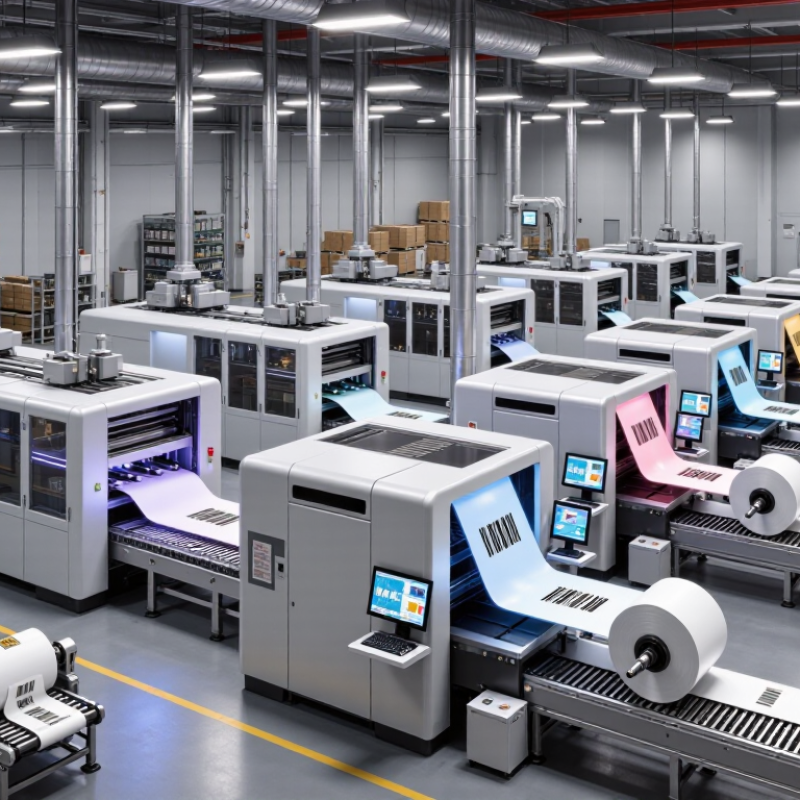
Industrial printing systems are production tools that apply text, codes, graphics, or functional layers to products and materials. They support packaging, electronics, building materials, textiles, and manufactured parts. Their scope includes digital, inkjet, screen, thermal, and hybrid processes. Each system combines print hardware, software controls, drying units, inspection tools, and material handling.

Core functions include accurate image placement, repeatable color control, variable data printing, and high-speed production. In factory evaluations, operators often check nozzle stability, substrate compatibility, cleaning access, and waste levels. A reliable system should maintain readable codes on uneven cartons or dusty plastic surfaces. It must also connect with production databases and quality records. Small integration gaps can cause major delays. No system is perfect.

Tips: Define the material, print width, speed, resolution, and environmental conditions before requesting quotations. Test real samples, not only supplier demonstrations. Ask for maintenance procedures, spare-part availability, operator training, and documented performance data. Buyers should also verify electrical standards, safety requirements, language support, and service coverage in the destination market. A careful trial can reveal problems hidden by ideal factory conditions.

Major Types of Industrial Printing Systems in 2026

Industrial printing systems in 2026 fall into several practical categories: inkjet, toner-based digital, flexographic, gravure, screen, and hybrid presses. Each suits different production conditions. Inkjet handles variable data, short runs, and direct-to-object work. Toner systems support sharp labels, folding cartons, and rapid job changes. Flexography remains efficient for long packaging runs, while gravure serves very high-volume, consistent image production. Screen printing still performs well on textiles, electronics, and textured surfaces.

Smithers estimates the global digital printing market will grow from about 136.7 billion US dollars in 2024 to 167.5 billion by 2029, in The Future of Global Digital Printing to 2029. That growth reflects shorter product cycles and more customized packaging. The Future of Inkjet Printing to 2029 also identifies inkjet as a major growth engine, supported by improved drop control and wider substrate compatibility. Numbers vary between reports. That matters.

In factory trials, substrate preparation often decides the result. Dusty sheets can create missing dots. Poor curing can leave surfaces tacky. Hybrid systems combine digital personalization with flexographic coverage, but integration adds maintenance points. Buyers should compare uptime, ink or toner consumption, drying energy, registration accuracy, and operator training. A machine with impressive peak speed may underperform during frequent changeovers. The boundary between categories is becoming less clear. That is worth testing.

2026 Best Industrial Printing Systems for Global Buyers – Major Types of Industrial Printing Systems in 2026
Industrial Printing System Primary Printing Process Typical Production Speed Typical Print Resolution Compatible Substrates Common Industrial Applications Key Advantages Main Limitations Best-Fit Buyer Profile
Sheetfed Inkjet Drop-on-demand aqueous, pigment, or UV-curable inkjet applied to individual sheets Up to approximately 6,000 sheets/hour, depending on sheet size, coverage, and finishing Typically 600–1,200 dpi; effective detail depends on ink, substrate, and screening Coated and uncoated paper, paperboard, synthetic sheets, selected plastics Commercial documents, short-run packaging, labels, direct mail, customized inserts Variable-data capability, fast job changeovers, no plates, economical short and medium runs Higher consumable cost for very long runs; color consistency and drying may require process control Printers needing versioning, personalization, and flexible production across multiple job sizes
Web Inkjet Continuous roll-to-roll inkjet using aqueous, pigment, dye, or UV-curable inks Approximately 75–300 m/min in common production configurations Typically 600–1,200 dpi Uncoated and inkjet-treated paper, label stock, films, foils, and selected flexible packaging materials Books, transactional documents, newspapers, labels, flexible packaging, and high-volume direct mail High throughput, variable data, reduced setup waste, efficient versioned production Requires web handling, drying, and finishing integration; substrate compatibility can be restrictive High-volume producers requiring continuous operation and rapid personalization
Digital Toner Press Electrophotographic imaging with dry or liquid toner transferred and fused to the substrate Approximately 60–300 A4-equivalent pages/minute, depending on configuration Typically 600–2,400 dpi addressable output Paper, coated stock, synthetic media, labels, and selected specialty sheets Short-run commercial print, manuals, labels, packaging prototypes, and personalized documents Consistent repeatability, mature workflow automation, strong text quality, fast job switching Per-page economics may weaken on long runs; heat or pressure can limit some heat-sensitive materials Commercial and industrial buyers prioritizing reliable short-run color production
Flexographic Press Relief printing from flexible photopolymer or elastomer plates with fast-drying inks Approximately 100–600 m/min, with actual speed governed by substrate and ink system Commonly wet range of 133–200 lpi equivalent; modern plate and screening systems can deliver fine detail Paper, paperboard, films, foil, nonwovens, corrugated liner, and flexible packaging materials Flexible packaging, labels, bags, corrugated packaging, cartons, and industrial packaging High production speed, broad substrate range, efficient long-run economics, inline coating and converting Plate production and registration setup add time and cost; less economical for frequent short changes Packaging converters with repeatable medium- to long-run requirements
Rotogravure Press Intaglio printing from engraved cylinders carrying ink in recessed cells Approximately 150–500 m/min in high-volume production Commonly 150–300 lpi equivalent; excellent tonal smoothness and density Plastic films, foil, coated paper, laminates, and other flexible web materials Large-volume flexible packaging, decorative laminates, publication gravure, and specialty films Excellent image consistency, smooth solids, high repeatability, and strong long-run productivity Engraved-cylinder costs are high; setup is slower and less suitable for short or frequently changing jobs Large converters producing long, stable runs with strict color and image requirements
Screen Printing Ink forced through a prepared mesh screen onto a flat, shaped, or textile surface Approximately 300–3,000 pieces/hour for automated systems, depending on format and curing Typically 60–150 lpi equivalent; optimized for heavy ink deposits rather than photographic detail Textiles, glass, ceramics, plastics, metals, wood, paperboard, and electronic materials Industrial controls, functional coatings, signage, textiles, glass decoration, and electronic printing Thick and durable ink layers, strong opacity, broad material compatibility, specialty-effect capability Lower fine-detail productivity; screens require preparation and cleaning between jobs Manufacturers requiring durable deposits, high opacity, or printing on difficult surfaces
Pad Printing Silicone pad transfers an ink image from an etched cliché to a three-dimensional object Approximately 1,000–3,600 impressions/hour, depending on part geometry and automation Typically 300–600 dpi effective detail Plastic, metal, glass, ceramic, painted, and irregularly shaped components Automotive parts, medical devices, electronics, promotional goods, and consumer-product components Prints on curved, recessed, uneven, or small surfaces; compact equipment footprint Limited image area and color complexity; cliché and setup work are required for each design Component manufacturers needing precise graphics on non-flat products
Thermal Transfer and Direct Thermal Heat-sensitive imaging using a thermal printhead; transfer systems use a ribbon while direct thermal uses treated stock Approximately 100–400 mm/sec for industrial label and coding systems Typically 203, 300, or 600 dpi Labels, tags, coated papers, synthetic films, wristbands, and specialty thermal media Barcodes, logistics labels, product identification, laboratory labels, and compliance marking Reliable variable data, strong barcode readability, low setup time, and compact integration Direct thermal images can fade with heat or light; ribbon and label-material selection affect durability Warehousing, manufacturing, healthcare, and logistics operations requiring traceable identification
UV Inkjet Direct-to-Object UV-curable inkjet deposits and instantly cures ink directly on finished three-dimensional products Approximately 100–1,500 pieces/hour, depending on object size, colors, and fixtures Typically 600–1,200 dpi Plastic, glass, metal, wood, leather, coated products, and selected rigid or flexible objects Industrial components, packaging decoration, promotional products, bottles, panels, and personalized goods Plate-free customization, immediate curing, multicolor decoration, and reduced handling steps Surface treatment or primers may be needed; adhesion, line-of-sight, and object fixturing are critical Manufacturers seeking digital decoration, product differentiation, and short customized runs
Industrial Inkjet Coding and Marking Continuous inkjet or high-speed drop-on-demand printing for contactless marking Typically 30–600 m/min, depending on code size, line speed, and ink type Commonly 50–600 dpi; optimized for readable codes rather than photographic images Plastic, glass, metal, paper, cartons, cables, pipes, films, and coated surfaces Lot codes, expiry dates, serial numbers, barcodes, QR codes, and regulatory information High-speed inline operation, non-contact printing, automated data integration, and broad product compatibility Print quality is application-specific; ink management and surface adhesion require regular control Production lines requiring real-time traceability and permanent or semi-permanent identification
Industrial 3D Printing Layer-by-layer additive manufacturing using polymer, resin, metal powder, filament, or binder systems Build rates vary widely, from several cm³/hour to hundreds of cm³/hour Typical layer thickness of approximately 20–300 micrometres, depending on technology Engineering polymers, photopolymers, composite materials, metals, ceramics, and sand-based materials Prototypes, tooling, spare parts, lightweight components, dental and medical models, and production parts Complex geometries, mass customization, part consolidation, and reduced tooling dependency Post-processing, material qualification, build-time constraints, and certification can increase total cost Manufacturers prioritizing complex parts, design freedom, and low-volume or customized production
Note: Performance figures are representative industry ranges for 2026 planning. Actual output depends on machine format, ink or toner system, substrate, image coverage, curing or drying requirements, automation level, and finishing configuration.

Key Performance Factors for Global Buyers

2026 Best Industrial Printing Systems for Global Buyers

Global buyers should judge industrial printing systems by measurable production needs, not impressive brochures. Start with actual line speed, usable print width, resolution, and substrate range. A system rated at 100 meters per minute may slow considerably on textured materials. Request test samples using your own films, cartons, labels, or metal parts. Examine fine text, barcode edges, color consistency, and drying under factory conditions.

Reliability often matters more than peak speed. Check documented uptime, maintenance intervals, spare-part availability, and remote diagnostic support. A stable system should recover quickly after a nozzle issue or power interruption. Ask whether technicians can respond across time zones. Verify electrical requirements, operating temperature, ventilation, and safety certifications for each destination market. These details can prevent expensive installation delays.

Total cost deserves careful attention. Compare ink consumption, cleaning cycles, energy use, software fees, and operator training. A lower purchase price may hide frequent maintenance or costly consumables. Data handling also matters when variable information enters the workflow. Secure access controls and traceable job records support responsible production.

Do not overvalue resolution.

Higher resolution is not always better. It can increase processing demands without improving the finished product. In practice, small compromises may appear during long runs, especially with humidity changes or inconsistent materials. Buyers should keep a trial log, record failures, and challenge supplier performance claims. That process feels slow, but it produces more reliable decisions.

2026 Best Industrial Printing Systems for Global Buyers

Key performance factors for global buyers: sustained throughput, print quality, substrate flexibility, automation, and operating efficiency.

Representative planning benchmarks for common industrial system classes. Actual output varies with media, ink coverage, resolution, finishing, and job changeovers.

Throughput Compare sustained production speed rather than peak-mode output.
Quality Resolution, drop size, color consistency, and registration affect final results.
Flexibility Media width, material compatibility, and roll-to-sheet capability support more applications.
Reliability Automated maintenance, ink monitoring, and uptime are critical for global operations.

How to Compare Industrial Printing Technologies and Suppliers

Choosing an industrial printing system requires more than comparing resolution and purchase price. Start with the substrate, ink chemistry, production volume, and required drying method. A system that performs well on coated film may struggle with corrugated board or textured metal. Measure the substrate first.

Smithers’ The Future of Digital Print for Packaging to 2028 estimates that digital packaging print will grow from about $22.8 billion in 2023 to $36.9 billion by 2028. This growth highlights demand for shorter runs, variable data, and faster changeovers. However, digital is not automatically better. Flexographic, offset, screen, and hybrid systems can still deliver stronger economics for long, stable production schedules. Compare usable output, not brochure speed.

Supplier evaluation needs equal discipline. Request verified samples using your actual materials, artwork, and curing conditions. Review uptime records, spare-parts availability, operator training, and remote-support response times. Smithers also identifies automation and workflow integration as major drivers in modern print production. Ask whether the supplier can connect prepress, inspection, finishing, and reporting systems without expensive customization. Total cost includes ink, maintenance, waste, energy, labor, and downtime. I have seen buyers focus too heavily on machine price, then discover that service delays erase the expected savings. No system is perfect. Leave room for testing, operator feedback, and one uncomfortable question: what happens when production fails at 2 a.m.?

Installation, Operation, Maintenance, and Compliance Considerations

For global buyers, an industrial printing system must be evaluated beyond speed and resolution. Smithers’ “The Future of Industrial Digital Printing to 2028” identifies automation and variable-data production as major growth drivers. Installation should therefore include network testing, substrate trials, ventilation checks, and operator training. Leave space around the machine. Technicians need safe access to ink lines, filters, and electrical panels.

Operation depends on repeatable procedures. PMMI’s 2024 “Shaping the Future of Packaging and Processing” report highlights workforce shortages and training pressure across manufacturing. A clear start-up checklist can reduce avoidable errors. Operators should verify viscosity, nozzle condition, curing energy, and print registration at each shift. Small deviations matter. Remote monitoring helps, but it cannot replace visual inspection or disciplined recordkeeping.

Maintenance plans should combine calendar-based servicing with condition monitoring. Track cleaning cycles, pump performance, rejected prints, and unplanned stops. ISO 12100 supports documented machinery risk assessment, while IEC 60204-1 addresses electrical equipment safety. In the United States, OSHA 29 CFR 1910.147 requires controlled energy isolation during servicing. For European projects, buyers should review Regulation (EU) 2023/1230 and applicable chemical obligations before shipment. Safety data sheets, emissions controls, guarding, and emergency procedures require local verification. The weak point is often documentation. A technically strong system can still fail an audit when training records or maintenance evidence are incomplete.

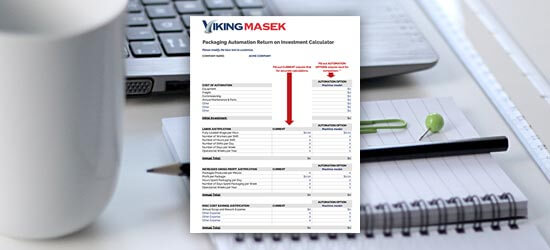
Packaging machine ROI calculator

Need help figuring out if packaging automation is right for your business?


First, start with the numbers. Download our free packing machine ROI calculator to learn how long it will take for an investment in automation to pay for itself (and much more).


Free packaging automation ROI calculator