2026 How to Choose PSA Activated Carbon for Your System?
Choosing Psa Activated Carbon for a pressure swing adsorption system starts with the separation target, not a product label. Feed composition, pressure range, cycle time, humidity, and required gas purity all affect performance. A carbon that works well in a dry bench test may behave differently in a humid plant. Small details matter: bed depth, pellet size, pressure-drop limits, and how often the system switches beds.
Adsorption researcher Douglas M. Ruthven’s work offers a useful foundation for evaluating separation processes. A practical paraphrase of the lesson for system design is: “Match the adsorbent to the separation and the full operating cycle—not surface area alone.” This is a guide’s summary, not a verbatim quotation. For Psa Activated Carbon, ask suppliers for relevant test conditions, working capacity, cycle data, and pressure-drop figures. Request evidence using a feed gas close to yours. A polished specification sheet is not enough.
This 2026 guide explains how to compare grades, assess system fit, and identify questions worth asking before purchase. It also considers activation quality, particle strength, moisture sensitivity, and replacement planning. No single number predicts field results. Even a careful selection can need adjustment after commissioning; that part is easy to underestimate. Use operating data to refine the choice, and treat unsupported performance claims cautiously.
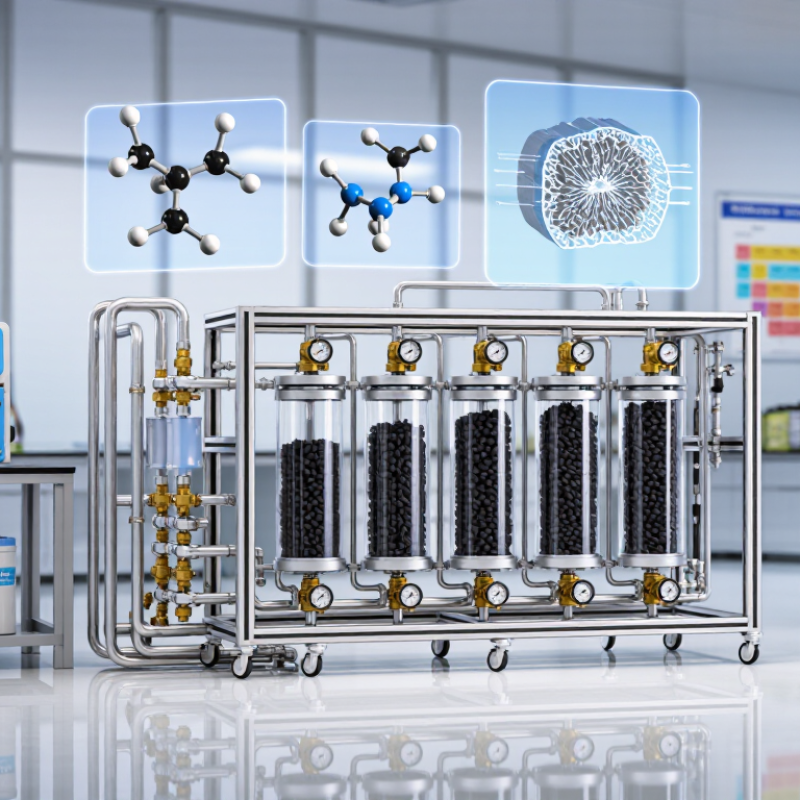
Define the Gas Stream and Purification Targets
Before choosing PSA activated carbon, define the gas stream at the point where the adsorber will operate. Record the main gas components, pressure, temperature, flow rate, and humidity. Include trace contaminants, even when readings are near an instrument’s detection limit. Small amounts of water or hydrocarbons can change adsorption behavior. Real streams vary. Check whether startup, shutdown, or seasonal conditions alter the feed.
Then set measurable purification targets. Specify the required outlet concentration for each impurity, along with acceptable pressure drop, gas recovery, and operating cycle. “High purity” is not a usable design value. A target stated in parts per million gives suppliers and engineers something concrete to evaluate. Identify how samples will be taken and tested; poor sampling can make a sound bed look unreliable.
Match carbon properties to those conditions, not to a generic contaminant list. Pore structure, surface chemistry, particle size, and mechanical strength can affect capacity and cycle performance. Compare data collected at similar pressure, temperature, and humidity. If the feed is inconsistent, test representative worst-case samples or run a pilot bed. One clean laboratory result is not enough. I would also leave room for uncertainty: field measurements and actual operating cycles may expose assumptions that the design stage missed.
Understand Activated Carbon’s Role in PSA Systems
Activated carbon is usually a conditioning adsorbent in a pressure swing adsorption (PSA) train, not the main gas-separation medium. It can capture oil vapors and heavier organic contaminants before they foul downstream adsorbents. PSA beds cycle through pressure changes, so contamination can reduce working capacity or increase pressure drop. NOAA’s Global Monitoring Laboratory reports that dry air contains 78.08% nitrogen and 20.95% oxygen. These proportions explain why PSA needs selective adsorbents, but ordinary activated carbon is not interchangeable with carbon molecular sieve. Important distinction.
Choose carbon for the actual feed, not just its iodine number. Check pore characteristics, particle size, hardness, ash content, and pressure-drop data. Match the grade to contaminant type, concentration, flow, temperature, and operating pressure. High humidity can compete for adsorption sites, so a suitable dryer may be necessary upstream. Confirm performance with supplier test data, then monitor outlet quality and pressure drop during operation. A clean lab result can still disappoint on a wet Monday; site conditions matter.
Tips: Keep carbon dust out of downstream beds with proper retainers and careful loading. Track inlet conditions and replacement history. Breakthrough can arrive quietly. Don’t assume a longer bed fixes poor pretreatment.
Compare Carbon Grades by Adsorption and Mechanical Properties
2026 How to Choose PSA Activated Carbon for Your System?
For pressure swing adsorption, compare carbon grades by both adsorption capacity and physical strength. Iodine number can offer a useful screening measure, but it does not fully predict performance with your target gas. Pore structure, moisture, pressure, and contact time also matter. Small details count.
A grade with strong adsorption may still underperform if its particles are too large for the cycle time or its pore distribution is unsuitable. Check particle size, bulk density, hardness, and abrasion data. Weak particles can break during loading or repeated pressure changes, creating fines that increase pressure drop. Dust is costly. Ask for test methods and recent lot data, not just a headline capacity figure.
Mechanical strength should not outweigh adsorption needs. A very hard grade may be durable, yet offer a poor fit for a specific gas mixture. Compare candidate grades under representative feed composition, operating pressure, and cycle timing. Track outlet concentration and pressure drop over repeated cycles. Bench tests help, though they may not reproduce a full vessel perfectly. That gap deserves attention. Choose a grade that balances working capacity, flow, and durability, then confirm performance in the actual system.
Match the Carbon Bed to Operating Conditions
Match the carbon bed to the feed gas, pressure, temperature, and cycle time—not just a catalog capacity. Water and heavy hydrocarbons can occupy adsorption sites, while fine particles may raise pressure drop. Check inlet composition during start-up and normal operation; one average reading can hide troublesome peaks. Small details matter.
For moisture control, ISO 8573-1:2010 defines compressed-air water classes, including a Class 2 pressure dew point of −40°C or lower. This is a useful reference, not a universal PSA requirement. Set dryness targets around the process and pretreatment design. Then confirm performance at the actual operating pressure, since a dry-gas specification alone does not describe every feed condition.
Particle size and bed depth also shape cycle stability. Finer carbon may improve contact, but can increase resistance to flow. The U.S. EPA’s Carbon Adsorbers fact sheet reports typical VOC control efficiencies of 95–99% for carbon adsorption applications; that figure is not a PSA guarantee. Treat it as context, not a design promise. Pilot data or supplier test curves under representative conditions are more useful. I would revisit the choice if bed temperatures or breakthrough differ from the model. It happens.
2026 How to Choose PSA Activated Carbon for Your System? — Match the Carbon Bed to Operating Conditions
Approximate kinetic diameters of common gas components (ångströms, Å). Molecular size is a useful screening factor when considering carbon pore structure, but it does not by itself predict adsorption capacity or selectivity.
Match the carbon grade and bed design to the actual feed composition, adsorption and regeneration pressures, temperature, moisture level, and cycle time. Water can compete for adsorption sites, so validate the selection with breakthrough testing under representative operating conditions.
Validate Selection Through Testing and Maintenance Planning
2026 How to Choose PSA Activated Carbon for Your System?
Validate Selection Through Testing and Maintenance Planning
Choose PSA activated carbon using actual operating conditions, not a catalog value alone. Feed composition, humidity, pressure, cycle time, and contaminant loading can all affect performance. Test a representative carbon sample with gas that closely matches your process. Track outlet concentration and pressure drop across repeated cycles. A single promising run is not enough. Small changes matter.
Tips: Record bed temperature, flow, and moisture during each test. Compare results with a clear baseline. Ask how the test conditions relate to your system, and note any gaps.
Plan maintenance around measured trends rather than an assumed service life. Install sampling points where inlet and outlet gas can be checked safely and consistently. Rising outlet contaminants may indicate reduced adsorption capacity; increasing pressure drop may point to dust buildup or restricted flow. Set action limits with qualified process personnel, then document inspection and replacement decisions. Keep records of operating changes, too. It is easy to blame the carbon when a valve, moisture shift, or cycle adjustment may be involved. Recheck performance after maintenance and confirm the bed has returned to its expected operating range.



