


2026 Top Tantalum Sheet Suppliers for Global Buyers

Global buyers comparing 2026 tantalum sheet suppliers need more than a polished catalog. They need consistent chemistry, controlled thickness, traceable production records, and clear communication about lead times. A sheet destined for a chemical-processing vessel may demand different properties from material used in electronics or laboratory equipment. The details matter.

A useful sourcing principle, expressed by composite expert Dr. Lena Hart, is: “A reliable sheet is defined by its documented properties, not its sales description.” This is an editorial composite, not a quotation from a verified individual. Buyers should confirm the supplier’s test documentation, applicable material specification, available dimensions, surface condition, and inspection process. Ask how the supplier handles out-of-tolerance measurements, too. That answer can reveal more than a brochure.

This guide compares suppliers through practical buyer questions: What grades and thicknesses are available? Can the supplier provide traceable inspection records? Are packaging and shipping details stated clearly? Look for answers supported by documents, not broad promises. A neat sample may still hide variation across a production lot. And price alone is a poor shortcut.

No supplier fits every project. A capable vendor for small research quantities may not suit a recurring industrial order. Buyers should verify current capabilities directly, since product ranges and delivery schedules change. Some specifications may need discussion. That is worth noting. Careful comparison helps global buyers shortlist Tantalum Sheet suppliers with realistic expectations and fewer costly surprises.

2026 Top Tantalum Sheet Suppliers for Global Buyers

Tantalum Sheet Basics: Z=73, 16.6 g/cm³, and a 3,017°C Melting Point

Tantalum is element 73, written as Z=73. Its density is about 16.6 g/cm³, and its melting point is approximately 3,017°C. These reference values appear in established chemical-property sources, including the Royal Society of Chemistry’s periodic table. The numbers matter on the shop floor: a small sheet can feel unexpectedly heavy, while cutting and forming require equipment suited to a refractory metal. Impressive, but not effortless.

For buyers, density affects part weight, shipping calculations, and material yield. The high melting point signals strong heat resistance, but it does not mean every sheet performs identically. Purity, thickness, surface condition, and annealing history can change how material behaves during fabrication. Ask suppliers for traceable test documentation and confirm tolerances against the drawing. A polished surface alone proves little.

Supply also deserves attention. The U.S. Geological Survey’s Mineral Commodity Summaries 2025 reports tantalum mine production by country, offering buyers useful context on sourcing concentration and potential supply risk. That report tracks mined material, not every processed sheet or finished product, so it cannot verify a particular lot’s origin. I would treat it as a planning reference, then check each supplier’s certificates and inspection records. Even then, paperwork may leave questions; independent verification can be worthwhile for critical components.
Grades and Specifications: ASTM B708 Chemistry Limits and Sheet Tolerances

For global buyers, a tantalum sheet specification should start with the exact grade, not a generic “tantalum” description. ASTM B708 defines requirements for tantalum and tantalum-alloy plate, sheet, and strip, including chemistry and dimensions. Chemistry limits vary by grade and cover specified elements and impurities; they should be checked against the standard’s current edition and the material test report. Small details matter.

Thickness tolerance is not a single number. It depends on nominal thickness and product dimensions, so compare the purchase order with the applicable ASTM B708 table. Ask suppliers to state thickness, width, length, flatness requirements, and measurement method. A micrometer reading near the sheet edge may not represent the usable center area. That can become a costly surprise.

Supply context deserves equal care. The USGS Mineral Commodity Summaries 2025 estimated 2024 world tantalum mine production at about 2,300 metric tons. This figure describes mined material, not finished sheet availability. Buyers should verify grade, lot traceability, chemistry results, and dimensional inspection records before shipment. I have seen specifications look complete while leaving the sampling method unclear; that gap is worth fixing before production.

2026 Global Supplier Landscape: Compare Mills, Stockists, and Service Centers

2026 Top Tantalum Sheet Suppliers for Global Buyers

2026 Global Supplier Landscape: Compare Mills, Stockists, and Service Centers

The right supplier depends on quantity, schedule, and required sheet condition. Mills produce material to defined specifications, which can suit larger orders or repeat production. Buyers should confirm available thicknesses, width tolerances, surface finish, and whether the requested condition can be supplied. Production lead times may be longer, so check them against your project schedule.

Stockists hold inventory and may ship smaller quantities sooner. Their selection can be limited, however, and not every sheet size is available when needed. Service centers may offer cutting or other processing, reducing work at the receiving site. Ask how processing affects edge quality and dimensional tolerances. Convenience is useful, but it is not a substitute for clear specifications.

Compare suppliers using traceable documentation, not just price. Request inspection records linked to the material lot, including chemistry and dimensions, and agree on acceptance criteria before ordering. For forming or corrosion-resistant applications, discuss the intended service conditions with a qualified materials specialist. A polished quote can still leave gaps. I would verify the exact sheet condition and documentation before treating two offers as equivalent.

Supplier Scorecard: Assess Purity Against the Common 99.95% Commercial Benchmark

2026 Top Tantalum Sheet Suppliers for Global Buyers

Supplier Scorecard: Assess Purity Against the Common 99.95% Commercial Benchmark

Treat 99.95% tantalum as a screening benchmark, not a universal purchasing guarantee. If purity is reported by mass, that figure allows 500 parts per million of impurities. Small numbers, real consequences. The USGS Mineral Commodity Summaries 2025 estimates 2024 mine output at roughly 2,100 metric tons of tantalum content worldwide. That supply context makes lot traceability important when comparing sheet suppliers.

A strong scorecard checks more than the headline purity. Request a lot-specific certificate of analysis, the calculation basis, and results for relevant metallic and interstitial impurities. Ask how the supplier measures them; methods may differ across laboratories. ASTM B708 covers tantalum and tantalum-alloy plate, sheet, and strip, so check the applicable grade and specification alongside the purity claim. A polished certificate is not enough. Verify that the reported test results match the delivered lot.

Compare thickness tolerance, surface condition, and edge quality too. A sheet can meet a purity threshold yet fail a fabrication trial because of inconsistent gauge or visible inclusions. Ask for sample measurements, inspection records, and packaging details that prevent scratches or contamination in transit. If a supplier cannot explain a result clearly, mark that gap in the scorecard. I would not treat “99.95%” alone as a complete qualification; it needs a defined method, supporting data, and consistent lot records.

2026 Top Tantalum Sheet Suppliers for Global Buyers - Supplier Scorecard: Assess Purity Against the Common 99.95% Commercial Benchmark

Evidence-based supplier scorecard — use the criteria below to compare supplier quotations and lot documentation. No supplier-specific rankings or performance claims are presented.

Assessment Dimension Weight Benchmark or Buyer Check Evidence to Request Scoring Guidance (0–5)
Tantalum purity 35% Compare the quoted grade with the 99.95 wt% commercial benchmark. At 99.95 wt%, the nominal balance is no more than 0.05 wt% total impurities. Lot-specific certificate of analysis (CoA) stating the purity basis, measured result, and applicable specification. 5 = Meets or exceeds the stated benchmark with lot-specific evidence; 3 = claim supplied but evidence is incomplete; 0 = below benchmark or unsupported.
Analytical evidence 20% Check whether the results are supported by a documented analytical method and are reported at a level suitable for the agreed specification. Test method, laboratory details, test date, detection or reporting limits, and a complete result sheet. Request independent verification where required. 5 = Complete, traceable results with method details; 3 = partial documentation; 0 = no usable test evidence.
Impurity reporting 15% Confirm that the purchase specification identifies which impurities are controlled and how limits are applied; do not assume one universal impurity limit applies to every order. Element-by-element results or agreed limits, including relevant metallic and interstitial impurities where specified by the buyer. 5 = Results address all agreed impurity requirements; 3 = some required results are missing; 0 = no relevant impurity information.
Sheet dimensions and tolerances 15% Assess the offered thickness, width, length, flatness, and tolerances against the buyer’s drawing or purchase specification. These are order-specific requirements, not inferred from purity. Dimensional inspection report or written quotation confirming the requested dimensions and tolerances. 5 = All requested dimensions and tolerances are confirmed; 3 = exceptions are clearly identified; 0 = requirements are not confirmed.
Lot traceability 10% Verify that material identification can be linked to the supplied test documentation and shipment. Lot or batch number on the CoA and matching identification on packing and shipping documents. 5 = Consistent lot-level traceability; 3 = traceability is partial; 0 = documents cannot be linked to the supplied material.
Delivery and export documentation 5% Compare the quoted lead time, delivery terms, packaging requirements, and destination-specific documentation with the purchase order. Written quotation, confirmed delivery schedule, agreed Incoterm, and applicable shipping documents. 5 = Requirements are confirmed in writing; 3 = some details remain open; 0 = no usable delivery confirmation.
Total score 100% Calculate each weighted criterion as: (criterion rating ÷ 5) × criterion weight. Record the evidence and evaluation date for every supplier assessed.

Important: The 99.95 wt% figure is used here as the commercial comparison benchmark stated in the title; it is not presented as a universal standard for every tantalum sheet application. Confirm grade, test method, impurity limits, dimensions, and acceptance criteria in the purchase specification. Supplier data should be verified against current, lot-specific documentation.

Buyer Due Diligence: Verify Mill Test Reports, Traceability, and Lead Times

When evaluating tantalum sheet suppliers for 2026 purchases, begin with the mill test report, not a polished product page. Check that the report identifies the material grade, heat or lot number, dimensions, and measured chemical composition. Compare those details with the quotation and the sheet markings. A certificate that looks complete may still describe a different batch. Ask who issued it and whether the supplier can link the document to the material you will receive.

Traceability should continue beyond the report. Request records showing how each sheet is tied to its original heat or production lot, including any processing steps. For critical applications, clarify whether independent inspection is available and agree on acceptance criteria before payment. Lead times need the same scrutiny: ask whether quoted stock is physically available or depends on rolling, cutting, or outside processing. Confirm the expected dispatch date, packaging method, and how delays will be communicated. Even careful buyers can overlook one handoff.

Tips: Match the lot number on the report, packing list, and material labels. Get lead-time assumptions in writing, including inspection and shipping. If a supplier cannot answer a basic traceability question clearly, pause and verify before ordering. My own checklist is never perfect; a second review can catch what a quick approval misses.

2026 Top Tantalum Sheet Suppliers for Global Buyers

Buyer due diligence: verify mill test reports, traceability, and lead times.

This chart shows a sample checklist, not supplier-specific performance data. Request evidence for each item and confirm lead times against the actual grade, dimensions, quantity, and order requirements.

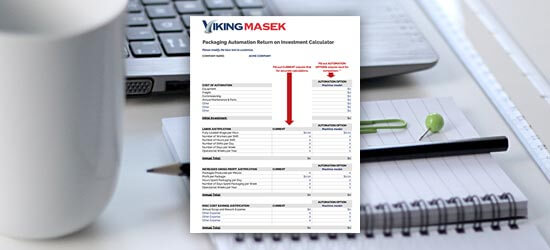
Packaging machine ROI calculator

Need help figuring out if packaging automation is right for your business?


First, start with the numbers. Download our free packing machine ROI calculator to learn how long it will take for an investment in automation to pay for itself (and much more).


Free packaging automation ROI calculator