


2026 Top Tractor Hydraulic Ram Suppliers for Global Buyers
Global buyers need more than a low quote when choosing a Tractor Hydraulic Ram supplier. The right cylinder must match the tractor’s pressure, mounting points, stroke, and working load. A ram that looks suitable on a catalog page may still bind against a linkage or leak under repeated field use. Small details matter.
Hydraulic engineer Herbert E. Merritt’s published work is a useful technical reference, but no verified quotation from him is available here. So this guide uses an original buying principle instead: “Match the ram to the machine before comparing the price.” It is a practical reminder, not a historical quote. Measure the installed cylinder, check port sizes, and confirm seal and rod specifications with the supplier. Ask how parts are tested, what documentation comes with each unit, and whether replacement seals are available. Clear answers count.
The 2026 supplier landscape includes manufacturers, distributors, and custom-cylinder shops. Their capabilities are not equal. Some offer broad catalogs; others handle smaller production runs or unusual dimensions. This guide compares suppliers through product range, technical support, quality controls, customization, and delivery reliability. No shortlist is perfect. Buyers should verify claims against their own tractor model and service conditions, especially where dust, mud, or frequent lifting can expose weak seals and poor fit. A careful match can reduce downtime. It cannot remove every risk.
Tractor Hydraulic Rams: Functions, Types, and Core Components
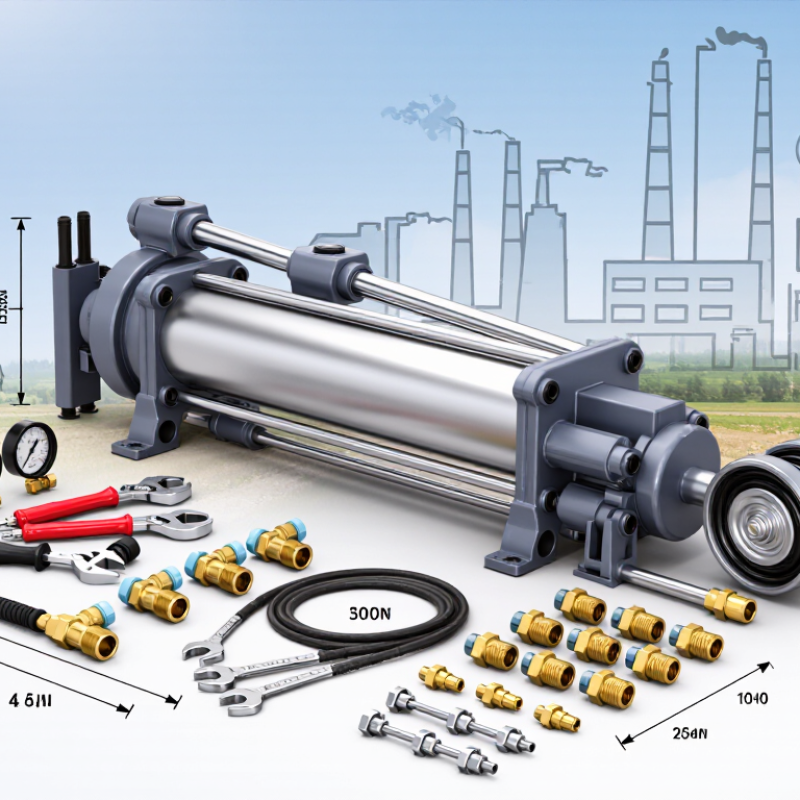
A tractor hydraulic ram converts pressurized oil into straight-line force. It raises a loader, adjusts a three-point hitch, or moves a steering linkage. The ram’s bore and operating pressure influence its force; stroke determines how far it travels. Pressure matters. A cylinder that is poorly matched to the tractor may move slowly, strain the system, or fail to hold a load safely.
Common designs include single-acting cylinders, which use hydraulic pressure in one direction and gravity or a spring for return, and double-acting cylinders, which receive pressure on both sides of the piston. Telescopic rams extend in stages, offering a long stroke in a compact space. Core parts include the barrel, piston, rod, seals, ports, and mounting ends. Damaged seals can cause oil leaks or drifting, while a bent rod may score the barrel. Bore size alone is not enough; stroke, mounts, load, and available flow also matter.
Tips: Confirm the tractor’s pressure and flow specifications before selecting a replacement. Check rod diameter, pin spacing, port thread, and retracted length against the existing unit. Keep fittings clean during installation. A small mismatch can cause trouble. Inspect for leaks after cycling the ram without a load, then follow the tractor’s service guidance before normal use.
How to Evaluate Hydraulic Ram Suppliers in 2026
For global buyers, evaluate a tractor hydraulic ram against the machine’s real working conditions, not just its catalogue dimensions. Confirm bore, rod diameter, stroke, mounting points, operating pressure, and expected load. Ask for pressure-cycle test results and inspection records tied to the cylinder’s serial number. That detail matters. A ram that fits on paper may still bind when the tractor lifts an off-centre implement.
Use recognized standards as a baseline. ISO 4413 sets general safety requirements for hydraulic fluid power systems, while the ISO Survey 2022 recorded 1,265,216 ISO 9001 certificates across 189 countries. Certification can help screen a supplier, but it does not prove a ram’s durability. Ask how the supplier controls seal selection, rod finish, weld inspection, and contamination during assembly. Request material traceability and a clear warranty process. A polished brochure can still hide a weak test protocol. Compare delivery times and spare-seal availability, too; an inexpensive cylinder is less attractive if downtime stretches for weeks. Even a thorough audit has limits, so document what remains uncertain before placing a large order.
2026 Top Tractor Hydraulic Ram Suppliers for Global Buyers
How to Evaluate Hydraulic Ram Suppliers in 2026
Suggested buyer scorecard weighting—not market survey data. Prioritize verified performance and durability, then assess fitment, quality controls, delivery capability, and after-sales support. Adjust the weights to match your tractor applications and operating conditions.
Leading Tractor Hydraulic Ram Suppliers for Global Buyers
Leading tractor hydraulic ram suppliers for global buyers do more than quote a cylinder. They help confirm that its dimensions and operating limits match the tractor and attachment. Share the required stroke, retracted length, pin diameter, mounting style, working pressure, and port details. A small mismatch at the pin can cause installation delays or uneven loading. Reliable suppliers can provide dimensioned drawings, material details, and inspection records for review.
Tips: Send clear photos and measurements of the existing ram, including its fittings and mounting points. Ask about seal compatibility, expected duty cycle, temperature range, and protection against corrosion. Request packaging details and realistic lead times before placing an order. Short questions help.
Good documentation matters, but it does not remove every risk. In practice, a tidy specification sheet may still miss a clearance issue on an older machine. Ask how the supplier handles dimensional questions and replacement parts after delivery. Compare responses for technical clarity, not just price or promised speed. For international orders, confirm the shipping dimensions and included components, such as pins or bushings, in writing.
Comparing Supplier Quality, Customization, and Production Capacity
For global buyers, hydraulic ram quality is easier to verify through records than polished catalog photos. Request material certificates, dimensional inspection results, and pressure-test records for the exact production batch. Check bore, rod diameter, stroke, pin spacing, port position, and leakage limits against the tractor drawing. Small details matter. A pin that misses by a few millimeters can delay assembly, even when the cylinder’s rated pressure looks suitable. ISO 6020-2 specifies mounting dimensions for a compact cylinder series rated at 16 MPa; it is a useful reference, not a universal tractor-cylinder requirement. Confirm that any cited standard matches the intended design.
Customization should cover more than stroke length. Ask whether the supplier can adapt seals, coatings, ports, and mounting ends, then request a sample drawing before tooling begins. Capacity claims need evidence too: compare monthly output with your forecast, and check lead times for both routine orders and replacement parts. The OECD-FAO Agricultural Outlook 2024–2033 projects global agricultural and fish production to grow by 1.1% annually over the decade. That forecast does not predict ram demand directly, but it underscores why buyers should test a supplier’s ability to scale. I would still treat a promised delivery date cautiously until the supplier shares recent on-time shipment data; that evidence is often less tidy than a brochure.
Global Sourcing Factors: Pricing, Certification, and After-Sales Support
For global buyers, a tractor hydraulic ram’s quoted price is only the starting point. Compare the same bore, stroke, pressure rating, mounting dimensions, and seal specification across offers. Then add freight, packaging, spare seals, and expected lead times. The World Bank’s 2023 Logistics Performance Index assessed 139 economies, including customs efficiency and shipment reliability. Those factors can change the real landed cost. A low quote may become expensive when a replacement seal takes weeks to arrive. Small detail, big consequence.
Certification deserves careful reading. The ISO Survey 2022 reported more than 1.26 million ISO 9001 certificates worldwide, but quality-management certification alone does not prove a ram meets your machine’s pressure or durability requirements. Ask for material traceability, dimensional inspection records, and pressure or leakage test results tied to the supplied batch. Check that certificate scopes and dates are current. For after-sales support, request written warranty limits, response times, and a local parts plan. A supplier’s promise is useful; a named contact and stocked seal kit are better. I would still verify one point: who pays freight if a tested unit fails? That question is easy to miss.


