


What Are the 2026 Top Object Space Telecentric Lens Types?

Choosing the right telecentric lens can determine whether a machine vision system measures accurately or merely appears accurate. In 2026, manufacturers are offering more specialized designs for inspection, robotics, semiconductor handling, and dimensional metrology. Each design responds to a different optical problem, such as perspective distortion, limited working distance, or uneven illumination.

This guide examines the leading object space telecentric len types expected to shape current industrial applications. It considers fixed-magnification lenses, variable-magnification systems, macro telecentric lenses, and bi-telecentric configurations. Practical factors receive equal attention. These include sensor size, pixel resolution, field of view, depth of field, working distance, and coaxial lighting compatibility. Small errors matter. A metal pin measured near the image edge should not appear wider than the same pin at the center.

The discussion follows principles used by optical engineers and inspection teams. It connects lens specifications with real production conditions, including vibration, reflective surfaces, tight tolerances, and frequent product changes. It also distinguishes verified performance data from broad marketing language. No ranking is universal. A lens that performs well for a printed circuit board may fail on a glossy molded component. That limitation deserves attention. Some 2026 product claims may change as testing methods, sensor formats, and automation requirements develop. Readers should confirm distortion, telecentricity, resolution, and illumination data through manufacturer documentation or controlled trials. A careful comparison remains more reliable than a fashionable specification.
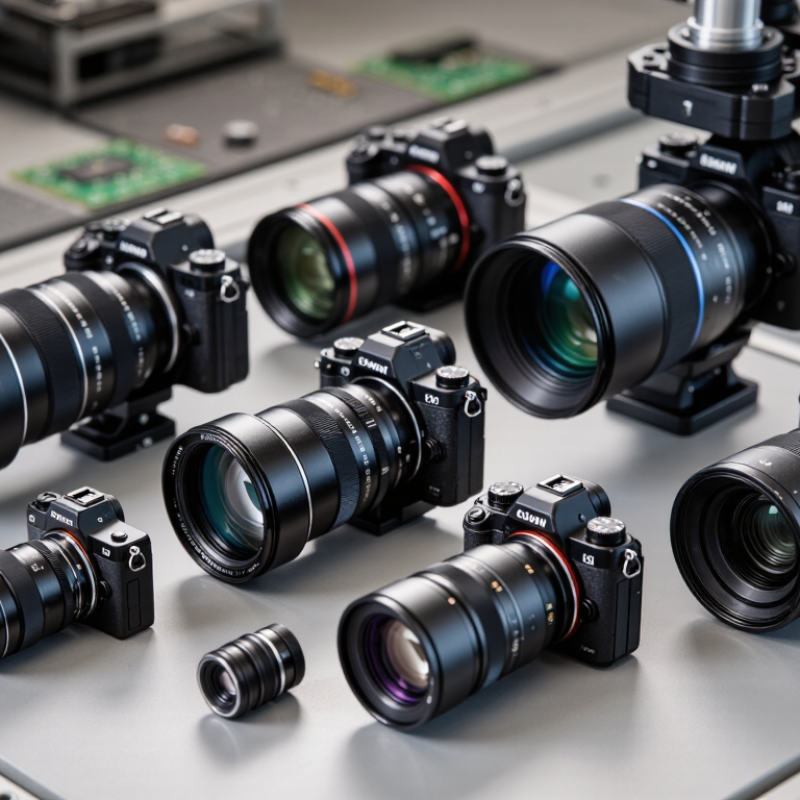
What Are the 2026 Top Object Space Telecentric Lens Types?

Definition and Core Principles of Object-Space Telecentric Lenses

What Are the 2026 Top Object Space Telecentric Lens Types?

Definition and Core Principles of Object-Space Telecentric Lenses

An object-space telecentric lens keeps its chief rays parallel on the object side. This geometry reduces perspective distortion during measurement. A part can move slightly along the optical axis without changing its apparent size significantly. That stability matters when inspecting machined edges, molded components, and printed circuit features.

The aperture stop is placed near the front focal plane. As a result, the lens views the object with nearly constant magnification. Common 2026 configurations include fixed-magnification telecentric lenses, bi-telecentric lenses, and models designed for coaxial illumination. Fixed systems suit repeatable inspection stations. Bi-telecentric designs control both object-side and image-side rays, but they usually cost more and require careful alignment.

Accuracy depends on the whole setup. Sensor size, working distance, lighting, vibration, and calibration all matter. A telecentric lens cannot correct a poorly positioned part. Real systems are never perfectly telecentric. That small imperfection deserves attention. I would verify distortion with a calibrated grid before trusting production measurements.

Tips: Keep the object inside the specified working distance. Use diffuse lighting for shiny surfaces. Check magnification at several depths, not only at the nominal focus. A simple test often reveals alignment errors early.

How Object-Space Telecentric Lens Types Are Classified

What Are the 2026 Top object space telecentric lens Types?

Object-space telecentric lenses are classified by how they control chief rays before light reaches the lens. In an object-space telecentric design, these rays travel nearly parallel to the optical axis on the object side. This reduces magnification changes when a part moves slightly along the depth axis. The main types include object-space-only telecentric lenses, double-telecentric lenses, and fixed-magnification telecentric lenses. They may also be grouped by working distance, sensor coverage, magnification, and field size.

Object-space-only models suit measurement systems where object depth causes the main error. Double-telecentric models control both object-side and image-side ray angles, supporting stable measurement and consistent edge contrast. Fixed-magnification versions are useful on repeatable production lines, where a small metal feature must fill the same pixels each time. However, classification alone is not enough. A lens with excellent telecentricity may still perform poorly if its working distance is too short or its field does not cover the full part. That mistake is common.

Tips: Check the telecentric angle, not only the magnification. Lower angles usually improve dimensional accuracy. Match the lens to the sensor diagonal and required working distance. Test reflective surfaces with real lighting, because glare can hide edge details. I would also verify distortion across the entire field. A specification sheet can look precise, yet practical alignment may reveal small errors.

What Are the 2026 Top Object Space Telecentric Lens Types? - How Object-Space Telecentric Lens Types Are Classified

Lens type or classification Primary classification basis Object-space optical behavior Typical magnification behavior Common applications Main advantages and limitations
Fixed-magnification object-space telecentric lens Entrance-pupil position and fixed optical design Chief rays are approximately parallel to the optical axis on the object side, reducing perspective distortion and edge-size variation. Designed for one nominal magnification; object-position changes have limited effect within the specified telecentric range. Dimensional inspection, gauging, metrology, alignment, and machine-vision measurement. High measurement repeatability and stable geometry. The fixed magnification provides less framing flexibility than a zoom lens.
Double or bi-telecentric lens Telecentricity on both the object and image sides Chief rays are controlled to be nearly parallel on both sides of the optical system, minimizing perspective and image-side angular effects. Magnification remains especially stable over the specified object-depth range. High-precision dimensional inspection, semiconductor and electronics inspection, and parts with strict tolerance requirements. Best control of measurement geometry, but usually larger, more expensive, and less light-efficient than simpler optical designs.
Telecentric zoom lens Variable focal length or magnification while maintaining telecentric performance over a defined range Object-side chief-ray angles remain close to zero across selected zoom settings, subject to the lens specification. Adjustable magnification and field of view; performance can vary across the zoom range. Flexible inspection cells, multiple part sizes, laboratory imaging, and production lines with changing fields of view. Flexible setup and reduced lens changes. It generally has more complex calibration and may provide lower telecentric accuracy at the range limits.
Long-working-distance object-space telecentric lens Mechanical working distance and clearance around the inspected object Maintains near-parallel object-side rays while providing a comparatively large distance between the front lens element and the object. Usually fixed or available in a limited set of nominal magnifications. Tall components, robotics, automated production equipment, heated parts, and applications requiring tool or lighting clearance. Improves access and protects the lens from collision. Longer optical paths can increase size, cost, and sensitivity to mechanical alignment.
Large-format object-space telecentric lens Image circle and sensor coverage Provides object-side telecentric imaging across a relatively large field while controlling perspective variation. Typically fixed magnification; the usable field depends on the lens image circle and sensor format. Web inspection, printed materials, large mechanical parts, flat panels, and wide-area measurement. Covers larger objects with controlled geometry. Larger glass elements and illumination requirements can increase system cost and weight.
Coaxial or inline-illumination telecentric configuration Illumination path integrated with the viewing axis The lens remains object-space telecentric; a beam splitter or integrated optical path directs illumination along or close to the viewing axis. Normally fixed magnification, with performance dependent on the lens and illumination design. Flat reflective surfaces, electronic components, glass, wafers, and parts with limited access for external lighting. Produces uniform axial illumination and reduces shadowing. It is a system configuration rather than a separate fundamental telecentricity class.
Spectrally optimized object-space telecentric lens Wavelength range and chromatic correction Maintains object-side telecentric behavior within a specified spectral band, such as visible, near-infrared, or ultraviolet operation. Usually fixed magnification; focus and image quality depend on the intended wavelength band. Color measurement, fluorescence inspection, near-infrared sorting, ultraviolet defect detection, and specialized scientific imaging. Improves transmission and color or wavelength performance in the target band. It may require dedicated lighting, sensors, coatings, and calibration.

Classification note: Object-space telecentric lenses are fundamentally identified by an entrance pupil located at or optically projected toward infinity, which makes object-side chief rays approximately parallel to the optical axis. Terms such as working distance, sensor format, illumination, zoom range, and wavelength describe application-oriented subcategories rather than independent telecentricity principles.

Key 2026 Lens Types and Their Optical Characteristics

Object-space telecentric lenses keep chief rays nearly parallel before they reach the sensor. This geometry reduces perspective distortion and preserves measured dimensions across depth. Fixed-magnification designs suit gauging washers, pins, and molded parts on stable fixtures. Their optical characteristics include low distortion, consistent scale, and limited sensitivity to object height. The 2024 MarketsandMarkets Machine Vision report estimated the machine vision market at about USD 14.5 billion in 2024, highlighting demand for reliable dimensional inspection.

Double-telecentric lenses extend this principle on both object and image sides. They provide stronger magnification stability, lower distortion, and better tolerance of sensor or part movement. They are valuable for semiconductor packages, precision connectors, and transparent components. A 0.5x lens may show a small connector with nearly unchanged edge dimensions across its working depth. However, telecentricity can reduce light efficiency. Larger apertures improve brightness, but they may decrease depth of field and increase optical cost.

Coaxial object-space telecentric lenses add on-axis illumination through a beam splitter. They can reveal flat, reflective surfaces with fewer shadows. This design often fits wafer marks, polished metal, and printed codes. According to EMVA 1288 measurement guidance, image quality should be judged through signal-to-noise ratio, sensitivity, and spatial resolution, not sharpness alone. In practice, specifications can mislead. A laboratory target may look excellent, while a tilted production part exposes residual distortion. Lens selection still needs working-distance tests, calibrated targets, and real samples.

Choosing a Type for Measurement, Inspection, and Imaging

What Are the 2026 Top Object Space Telecentric Lens Types?
Choosing a Type for Measurement, Inspection, and Imaging

Object-space telecentric lenses keep chief rays nearly parallel before they enter the lens. This design reduces perspective errors across different object heights. For dimensional measurement, a fixed-magnification telecentric lens is often the safest choice. A metal part can move slightly without changing its apparent size. That stability supports repeatable readings from edges, holes, and narrow gaps.

Inspection work may require a longer working distance or a coaxial light path. A telecentric lens with a larger depth of field can inspect raised surfaces more consistently. However, more depth of field may reduce available light. The image can look flat. Lighting and aperture still matter.

For imaging, choose according to sensor size, field of view, and required resolution. A bi-telecentric lens controls perspective on both object and image sides. It suits demanding measurement systems, but usually costs more and needs careful alignment. Variable-magnification designs offer flexibility, although their calibration can become less convenient. This is where many projects become less perfect than expected.

Test the lens with the actual part, not only a specification sheet. Check distortion near the field corners. Measure repeatability after small height changes. A tiny mounting error can outweigh an impressive optical rating. Calibration must also match the working distance, illumination, and software settings. Good results come from the complete system, not the lens alone.

Performance Factors, Compatibility, and Practical Limitations

What Are the 2026 Top Object Space Telecentric Lens Types?

In 2026, fixed-magnification object-space telecentric lenses remain practical for dimensional inspection. They reduce perspective error when component height changes slightly. Bi-telecentric designs add image-side telecentricity, helping maintain stable magnification across different sensors. Large-format telecentric lenses suit wider fields of view, while coaxial-illumination models support flat, reflective surfaces.

Performance depends on more than distortion figures. A lens with 0.1% distortion can still fail if its working distance, numerical aperture, or sensor format is mismatched. Check telecentricity error, depth of field, chief-ray angle, and lighting geometry before purchase. MarketsandMarkets’ Machine Vision Market report projects growth from about USD 14.3 billion in 2023 to USD 25.7 billion by 2028. This expansion increases demand for repeatable optical measurement, but it does not make every telecentric lens suitable for every camera.

Compatibility is often the hidden limitation. A lens may accept a C-mount camera yet waste pixels on a larger sensor. Its aperture can also restrict light, forcing longer exposure times or stronger illumination. Long barrels need rigid mounting. Small alignment errors can become measurable edge shifts. The Association for Advancing Automation reported 541,302 industrial robots installed globally in 2023, showing the scale of automated inspection environments. Still, selecting by market popularity alone is weak practice. I have seen teams overvalue low distortion and underestimate working distance. That judgment needs review.

Packaging machine ROI calculator

Need help figuring out if packaging automation is right for your business?


First, start with the numbers. Download our free packing machine ROI calculator to learn how long it will take for an investment in automation to pay for itself (and much more).


Free packaging automation ROI calculator