


2026 Top Trade Show Booth Rental Alternatives
A 10-by-10-foot booth can look polished on a screen, then feel cramped under bright hall lights. In 2026, exhibitors comparing a Trade Show Booth Rental Alternative must weigh more than the quoted price. Setup labor, shipping, storage, repairs, reuse, and brand consistency all affect the real cost. CEIR’s 2023 Index Report tracks exhibition performance through measures such as attendance, revenue, and exhibitor participation. Freeman’s 2024 Trends Report examines attendee expectations and the role of in-person experiences. Together, these industry sources offer useful context, but neither makes one booth format right for every company.
“Details matter.” Cathy Breden, CEO of the Center for Exhibition Industry Research, has emphasized the value of face-to-face exhibitions in her industry commentary; this introduction paraphrases that broader point rather than presenting a verbatim quotation. The practical question is how to create meaningful conversations without overspending on a structure that may sit in storage after the show. This guide compares modular displays, portable exhibits, custom-owned booths, and hybrid approaches. It considers upfront investment, flexibility, setup demands, and long-term use. Some trade-offs are easy to miss: a cheaper display may need more staff time, while a custom build may limit future redesigns. The right choice depends on your calendar, team, and goals. There is no perfect formula.
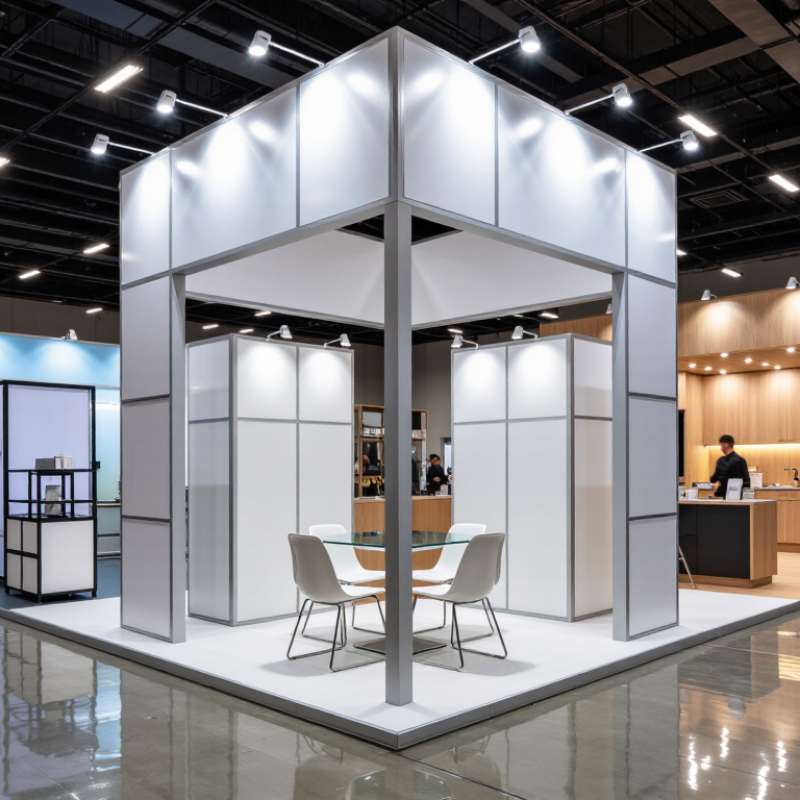
What Trade Show Booth Rental Alternatives Are
2026 Top Trade Show Booth Rental Alternatives
What Trade Show Booth Rental Alternatives Are
Trade show booth rental alternatives are display options that replace a fully rented booth. Common choices include buying a reusable modular system, using a portable pop-up display, or building a custom exhibit for repeated use. Some exhibitors also use a smaller tabletop setup or an upgraded show-provided booth. The right option depends on booth size, shipping distance, storage space, and how often the display will travel.
A modular system uses interchangeable frames, shelves, and graphic panels. Staff can reconfigure it for a 10-by-10-foot space or a larger island booth. Portable displays are lighter and faster to set up, though they offer less room for product demonstrations. Custom exhibits allow precise layouts, but storage, repairs, and freight can make ownership expensive. But ownership has costs.
UFI’s 2024 Global Exhibition Barometer reported that exhibition-company revenues in 2023 averaged 114.7% of their 2019 level. That signals continued industry activity, not a guarantee that buying beats renting. Compare total costs across expected shows, including packing crates, storage, labor, and replacement graphics. A practical test: sketch the booth, mark where visitors will stop, and check whether staff can assemble it without specialist help. Sometimes the less impressive-looking option is the more workable one.
Why Exhibitors Explore Alternatives to Renting a Booth
Exhibitors often choose a rental booth because it reduces upfront spending and avoids long-term storage. But the total can look different after several shows. Rental fees, graphics, shipping, labor, and handling may appear on separate quote lines. Compare the full cost, not just the booth price. Small details matter.
That comparison is one reason teams explore alternatives. A reusable modular exhibit can suit companies attending multiple events, especially when its panels and counters adapt to different floor plans. Some exhibitors buy key components and rent less-used items, such as lighting or specialty furniture. Others choose a portable display for smaller regional shows. Each option brings work: owned materials need inspection, packing, storage, and repairs. A scratched panel can become an inconvenient surprise.
The right choice depends on show frequency, staff capacity, booth size, and available storage. Ask vendors for itemized estimates and confirm what happens when dimensions or delivery schedules change. It is also worth reviewing past invoices, though old costs may not predict future freight or labor rates. No option removes every hassle. The goal is to choose a setup your team can manage reliably, not merely the one that looks cheapest on paper.
Key Types of Trade Show Booth Rental Alternatives
A modular exhibit can be purchased and reused, with panels, shelves, and counters rearranged for different floor plans. It suits teams with several annual events and storage access. A portable pop-up display offers a lighter option: fabric graphics, a compact frame, and a carry case fit smaller spaces. Small footprints matter. The trade-off is limited depth for product demonstrations. UFI’s 2024 Global Exhibition Barometer forecast that exhibition industry revenues would rise about 15% in 2024 compared with 2023, signaling renewed activity but not guaranteeing results for any single exhibitor.
Turnkey exhibit management is another alternative. A specialist handles design, transport, installation, and dismantling, while the exhibitor supplies the message and materials. This can reduce coordination work, though service fees and design control need careful review. Shared pavilions let smaller organizations split space and staffing; clear signage helps visitors identify each participant. For hands-on launches, a custom-owned booth can include demo counters, storage, and focused lighting, but it requires a larger upfront commitment. The less glamorous detail is storage. Compare total costs across several shows, including shipping, labor, repairs, and storage—not just the quoted booth price. A layout that photographs well can still feel cramped when visitors gather around a live demo.
How to Compare Alternatives by Cost, Setup, and Reusability
Trade show booth rental alternatives differ most in what their quotes include. A modular rental may reduce upfront spending, while graphics, shipping, installation, and storage can add charges. Ask for an itemized estimate covering the booth, flooring, lighting, labor, and delivery. Get the dates and venue access requirements confirmed in writing. Small details matter. A crate arriving late can leave a polished design unusable.
Portable displays often cost less to transport and set up, but may offer fewer layout options. A purchased modular system can work for several events if its parts fit different booth sizes. Check replacement graphic costs and storage needs before comparing the purchase price with annual rentals. Custom-built exhibits can make a strong impression, yet they usually require more planning, labor, and careful packing. That trade-off is easy to underestimate. Reusability also depends on the schedule: teams attending one event may not recover a purchase cost quickly. Compare realistic costs across expected shows, including staff time for assembly. Then choose the format your team can reliably transport, install, and maintain.
How to Choose the Right Alternative for a 2026 Event
Choosing a trade show booth rental alternative starts with the event’s actual goals. CEIR has reported that 81% of trade show attendees have buying authority, so a layout that supports focused conversations may matter more than a dramatic entrance. Check expected visitor flow, meeting needs, setup time, and storage before comparing prices. A compact modular exhibit can suit a narrow aisle; a turnkey service may help when staff cannot manage freight and installation. Measure the booth footprint, including counters and door swings. Small details cause delays.
Compare the full operating cost, not just the quoted structure. Ask whether graphics, lighting, delivery, installation, dismantling, and post-show storage are included. Freeman’s 2024 “Trust Report” found that 81% of attendees trust a brand more after an in-person event; that makes clear messaging and reliable product demonstrations practical priorities. Confirm who handles last-minute graphic changes and damaged components. Get responsibilities in writing. A custom rental may suit a one-off launch, while reusable modular components can be sensible across several events. Still, reuse is not automatically cheaper: labor, shipping distance, and venue access can change the calculation. Request a scaled floor plan and itemized estimate, then check every assumption against the event schedule.
2026 Top Trade Show Booth Rental Alternatives — How to Choose the Right Alternative for a 2026 Event
| Alternative | How It Works | Cost Pattern | Logistics and Setup | Best Suited For | Main Trade-Off | Questions to Ask Before Choosing |
|---|---|---|---|---|---|---|
| Full-service booth rental | A provider supplies a temporary booth structure and may coordinate design, graphics, transport, installation, and dismantling. | Recurring event costs; pricing varies with booth size, design, location, services, and show requirements. | Can reduce the exhibitor’s need to store and transport a booth, but services and responsibilities differ by agreement. | Teams seeking a custom appearance without owning and storing a complete booth. | Less ownership and reuse; late design changes or show-specific services can affect the final cost. | Which services are included? Who handles shipping, labor, utilities, and dismantling? What are the change and cancellation terms? |
| Modular rental system | Pre-engineered components are configured into a booth layout and may be reused in different configurations by the rental provider. | Usually tied to the selected configuration and service scope; compare the complete event quote rather than the structure alone. | Components are designed for assembly, but installation requirements, labor, and shipping depend on the system and venue. | Exhibitors needing a polished display that can adapt to different booth footprints. | Layout options are constrained by the available components; custom features may require additional elements. | Can the layout fit the assigned space? Are graphics replaceable? What are the assembly, labor, and storage arrangements? |
| Portable display system | Lightweight displays, such as pop-up frames, fabric backwalls, or portable counters, are transported in cases and assembled on site. | Often a lower-complexity option than a large custom exhibit, though total cost depends on materials, graphics, shipping, and accessories. | May be carried or shipped in compact cases; the exhibitor typically manages setup unless assistance is arranged. | Small booth spaces, local events, first-time exhibitors, and teams prioritizing easy transport. | Generally offers less visual scale and fewer integrated features than a larger exhibit. | Does the packed display meet carrier and venue rules? Can staff assemble it easily? Are replacement graphics available? |
| Custom booth purchase | A booth is designed and built for the exhibitor to own, then reused, stored, maintained, or updated for future events. | Higher initial investment; ongoing costs can include storage, shipping, maintenance, refurbishment, and show services. | Requires planning for storage, inventory, transport, and setup at each event; the owner controls the asset. | Organizations with a recurring event program and stable exhibit requirements. | Ownership can improve reuse but creates responsibilities and costs between events. | How many events are planned? What are the storage and refurbishment costs? Can the design be reconfigured? |
| Hybrid owned-and-rented exhibit | The exhibitor owns selected reusable items, such as graphics or counters, and rents larger structures or event-specific components. | Combines purchase and rental costs; the balance depends on which components are reused and which change by event. | Requires coordination between owned inventory and rented components, including compatibility, shipping, and setup responsibilities. | Teams with recurring brand elements but changing booth sizes, locations, or event needs. | Can involve split responsibilities and compatibility checks across multiple components or suppliers. | Which items are worth reusing? Are dimensions and connections compatible? Who coordinates delivery and installation? |
| Show-provided shell scheme or standard booth package | The organizer or its appointed contractor provides a basic booth structure according to the event’s package and rules. | May be bundled with exhibition space or offered as an add-on; inclusions vary by event. | Typically follows the show’s standard specifications and schedule; exhibitors add approved graphics, furniture, or services as needed. | Exhibitors who need a straightforward presence and want to work within the event’s standard offering. | Design flexibility and included features may be limited; package details can differ between shows. | What exactly is included? What are the height, signage, and installation rules? Which services require separate ordering? |
Planning note: Cost and service details vary by event, location, booth size, venue rules, and contract. Compare itemized quotes that include applicable transport, labor, installation, dismantling, storage, and show-required services before making a decision.


