


What Is a 22m Telescopic Diesel Boom Lift?
A 22m Telescopic Diesel Boom Lift is a self-propelled access platform with a straight, extendable boom, designed to raise workers and tools to elevated work areas. The “22m” figure usually refers to maximum working height, not platform height. Exact measurements vary by manufacturer, so buyers should check the machine’s specification sheet before planning a task.
On site, its diesel engine and rough-terrain chassis can suit outdoor work where ground conditions are uneven and electric charging is impractical. The telescopic boom reaches outward as well as upward, helping crews position a platform near steel frames, roof edges, or building façades. Reach is not unlimited. The load, boom angle, and ground slope affect where the platform can safely operate.
Safety deserves equal attention. IPAF’s Global Safety Report 2024 reviews powered-access incident reports and identifies recurring hazards, including falls, entrapment, and electrocution. These are practical reminders to assess the work area, train operators, and follow the manufacturer’s operating instructions. That matters.
A machine’s advertised height alone cannot tell you whether it suits a specific job. Check horizontal outreach, platform capacity, machine width, and stabilisation requirements. Then compare those figures with the actual worksite. A detail can be missed. Even experienced teams may focus on height and overlook access routes or overhead obstructions. Understanding the machine’s capabilities—and its limits—makes equipment selection more reliable.
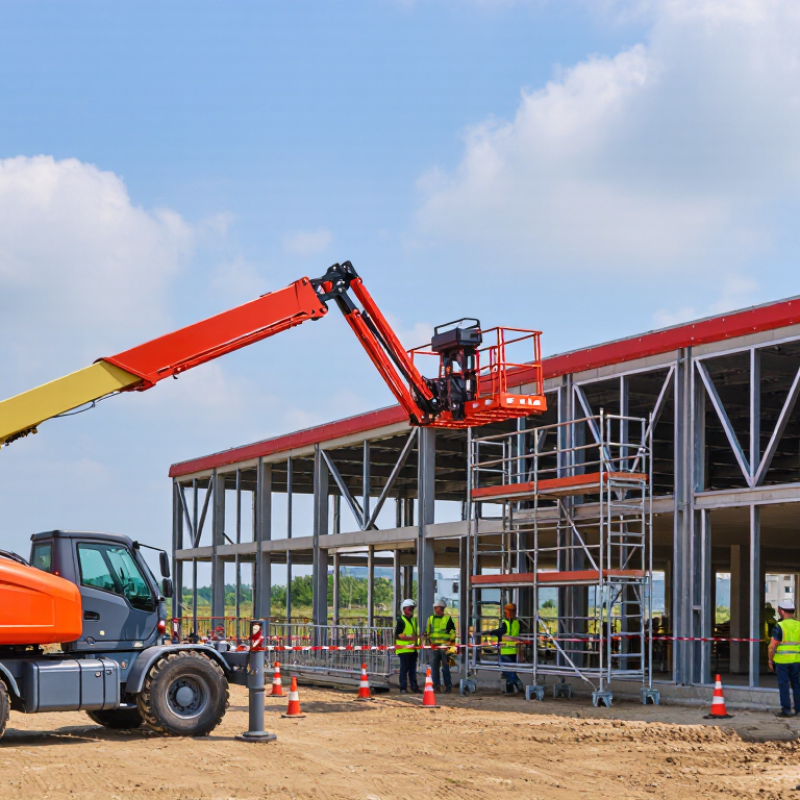
Definition: A 22 m Working Height and the MEWP Classification
A 22 m telescopic diesel boom lift is a mobile elevating work platform (MEWP) with a telescoping boom and a stated working height of about 22 metres. Working height is not usually the height of the platform floor. A common industry convention adds roughly 2 metres to platform height, making the platform’s maximum elevation about 20 metres. Actual figures vary by specification, so check the manufacturer’s stated platform height and outreach. The label is easy to misread.
Under IPAF’s MEWP classification, a self-propelled boom lift that can travel while elevated is generally Category 3b. “Diesel” describes its power source; it does not determine the MEWP category. The classification helps operators identify the machine type, but it does not tell them whether a particular setup can safely reach a work point. Ground slope, load, wind, and boom position matter. IPAF’s Global Safety Report 2024 collates reported incidents by event type, including falls, overturning, and entrapment. Those categories underline why height alone is a poor measure of safe access. Check the unit’s operating chart and site conditions before positioning it; I would verify the platform-height figure twice, because product labels can blur these distinctions.
Key Dimensions: About 20 m Platform Height and Model-Specific Outreach
A 22 m telescopic diesel boom lift is commonly described by its working height, not the height of its platform. In many specifications, a 22 m working height corresponds to a platform height of about 20 m. The difference matters when checking whether the basket can reach a roof edge or overhead structure. Numbers need context.
Outreach is model-specific. One lift may reach farther horizontally than another, even when both have a similar working height. The rated outreach can also change with the platform load and boom position. Check the machine’s chart, not just a headline figure. A tape measure and a site sketch can help reveal whether a wall, canopy, or setback limits access.
Ground conditions matter, too. A machine may have the reach on paper but still need firm, level setup space. Measure the target height and the horizontal gap separately, then compare both with the exact model’s operating chart. Check the label. Treat early measurements as planning estimates, not guarantees; site details are easy to miss, and that deserves a second look before work begins.
Load Capacity: Typical Rated Platforms Carry 230–450 kg
A 22 m telescopic diesel boom lift often has a rated platform capacity of 230–450 kg. The exact figure depends on the model and its approved configuration. That rating includes every person, tool, and material in the basket. For example, two 90 kg workers, a 35 kg tool kit, and 60 kg of fittings add up to 275 kg. A 230 kg limit is already exceeded. Easy to miss.
Capacity is a ceiling, not a comfortable target. Check the machine’s platform decal and operator manual before lifting; do not rely on a generic product description. Confirm whether the stated rating applies to the selected platform, extension deck, and operating zone. Some configurations have different limits, and a higher rating may not apply at every reach. Keep loads balanced and inside the platform. Diesel power does not change the basket rating. It is tempting to treat small fittings as negligible; that estimate deserves a second look. Count them too.
What Is a 22m Telescopic Diesel Boom Lift? – Load Capacity: Typical Rated Platforms Carry 230–450 kg
| Specification | Typical range or value | What it means |
|---|---|---|
| Working height | About 22 m | Maximum reach to the work area; manufacturers commonly calculate this as platform height plus approximately 2 m. |
| Platform height | About 20 m | Vertical height of the platform above the ground; the exact figure varies by model. |
| Rated platform capacity | Typically 230–450 kg | Maximum combined load of occupants, tools, and materials. Capacity may be lower at certain boom positions or outreach limits. |
| Horizontal outreach | Approximately 17–19 m | Typical maximum horizontal reach from the machine’s center of rotation; actual reach depends on boom geometry and load limits. |
| Platform occupants | Usually 2–3, subject to the rated capacity | The permitted number depends on the model, operating conditions, and the platform’s posted rating. |
| Power source | Diesel engine | Commonly used for outdoor work where longer operating time and travel over rough terrain are needed. |
| Drive and terrain features | Typically 4-wheel drive; some models include oscillating axles | Designed to improve traction and mobility on suitable outdoor job-site surfaces. Terrain capability varies by machine and conditions. |
| Stowed dimensions | Approximately 9–10 m long and 2.4–2.5 m wide | Indicative transport dimensions only; check the specific machine’s overall height and transport requirements. |
| Machine weight | Approximately 10,000–13,000 kg | Weight varies with configuration and equipment; confirm ground-bearing pressure and transport limits before use. |
Figures are indicative ranges for this equipment class, not guaranteed specifications. Always check the machine’s data plate, operator’s manual, and load chart before operation.
Diesel Drive System: Engine Power, 4WD, and Rough-Terrain Operation
A 22 m telescopic diesel boom lift pairs a long-reaching platform with an engine designed for outdoor work. Diesel’s energy density can support sustained operation away from charging points, but fuel consumption still depends on load, terrain, and engine condition. The U.S. Energy Information Administration lists diesel at about 137,381 Btu per gallon, compared with 120,286 for gasoline. That is energy content, not a promise of better job-site performance.
Four-wheel drive helps distribute traction when wheels cross loose gravel, mud, or uneven ground. It does not increase the lift’s rated capacity or make every slope safe. Operators should check the machine’s grade limits, tire condition, ground firmness, and platform load before travelling. On a rough site, a shallow rut can matter. So can a soft patch hidden beneath grass.
Diesel engines produce noise and exhaust, so ventilation and nearby workers need consideration, even outdoors. The International Powered Access Federation’s 2024 Global Safety Report recorded 100 powered-access fatalities across 18 countries in 2023. That figure is not specific to diesel lifts, but it underlines why drive choice cannot replace sound planning and trained operation. A practical detail is easy to overlook: four-wheel drive may help a lift reach a work area, while a poor setup can still leave it unstable.
Safety and Standards: EN 280 Design, Slope Limits, and Wind Ratings
A 22m telescopic diesel boom lift works high above ground, so stability depends on more than its reach. EN 280-1:2022 sets design and testing requirements for mobile elevating work platforms. For outdoor stability calculations, EN 280 uses a reference wind speed of 12.5 m/s, or 45 km/h.
That is a design value, not automatic permission to operate in those winds. The machine’s own wind rating and operating manual take priority. A gust can catch a raised platform like a sail.
Slope limits are equally specific to the machine. Check the chassis inclination limit, the platform-height restrictions, and any alarm or drive cutout instructions on the data plate. A firm-looking gravel pad may still hide a rut beneath one wheel.
IPAF’s 2024 Global Safety Report recorded 4,374 incident reports from 22 countries; these cover different MEWP types and do not represent a model-specific risk rate. Still, they underline why site checks matter.
Measure the ground, watch the anemometer, and stop when conditions exceed the stated limits. Small details matter. Operators can miss them.


