


7 Best Carbon Steel Plate Manufacturers Worldwide?
Choosing among Carbon Steel Plate Manufacturers requires more than comparing prices or browsing polished websites. A reliable producer must show consistent chemistry, controlled rolling practices, accurate dimensions, and traceable inspection records. Buyers should examine plate grades, thickness ranges, heat-treatment options, impact-test results, and delivery performance. A mill producing 6-millimeter structural plate may not suit a project requiring 80-millimeter pressure-vessel material.
Small details matter.
Edwin Basson, Director General of the World Steel Association, has said, “Steel is the most recycled material in the world.” That statement highlights steel’s long service life and industrial value, but sustainability claims still need evidence. Look for published environmental data, responsible sourcing policies, and clear explanations of scrap usage. Certificates should be verified, not merely displayed. Mill test certificates, third-party inspections, and quality-system records can reveal how seriously a manufacturer manages risk.
This guide reviews seven leading manufacturers worldwide through practical purchasing criteria. It considers production capacity, international reach, product consistency, technical support, and reputation among demanding industries. Shipbuilding, construction, energy, and heavy equipment buyers often need different strengths. One company may offer excellent availability, while another provides stronger customization or better low-temperature toughness.
No ranking is flawless.
Market conditions change. Delivery problems happen. Even respected manufacturers can receive uneven feedback across regions or product lines. Therefore, this overview should support careful comparison, not replace technical due diligence. Confirm current specifications, applicable standards, and project requirements before placing an order. The best choice is rarely the loudest name; it is the supplier that consistently matches documented performance with real operating needs.
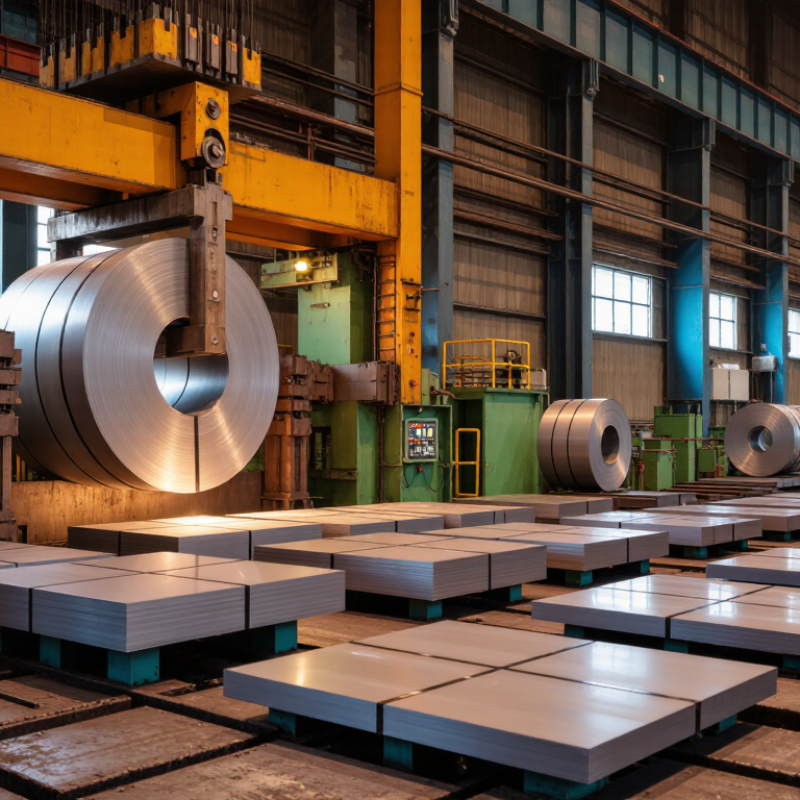
What Defines a Leading Carbon Steel Plate Manufacturer?
A leading carbon steel plate manufacturer is defined by control, not impressive claims. The process begins with verified raw materials and precise chemistry. Carbon, manganese, sulfur, and phosphorus levels must remain within the required range. Small variations can affect welding, forming, and service life.
Consistent rolling is equally important. Experienced mills control slab temperature, rolling pressure, plate thickness, and cooling speed. These details influence strength and toughness across the entire plate. A reliable manufacturer tests samples from different production areas, not only the easiest section. Tensile testing, impact testing, ultrasonic inspection, and dimensional checks provide useful evidence. Test reports should connect clearly to heat numbers and production records. Traceability matters.
Clear documentation builds trust. Certifications, calibrated equipment, qualified inspectors, and stable quality procedures show professional maturity. Delivery performance also matters because construction schedules rarely tolerate uncertain plate availability. Technical teams should answer practical questions about welding, machining, storage, and surface condition. That support reflects real experience.
No producer is flawless. A strong manufacturer admits process limits and investigates complaints with facts. One missed detail can still become a costly lesson. Buyers should review inspection records, tolerance performance, corrective actions, and customer references before choosing among global suppliers. Price alone cannot reveal plate reliability. Sometimes, the cheapest shipment carries the highest risk.
7 Best Carbon Steel Plate Manufacturers Worldwide? - What Defines a Leading Carbon Steel Plate Manufacturer?
The table below presents seven evidence-based dimensions for evaluating leading Carbon Steel Plate Manufacturers worldwide. It uses internationally recognized standards and measurable purchasing criteria without displaying company names or brand-specific data.
| No. | Evaluation Dimension | Relevant International Standard or Document | Verifiable Data Point | Why It Defines a Leading Manufacturer |
|---|---|---|---|---|
| 1 | Product Standards and Grade Coverage | ASTM A36 EN 10025-2 ASTM A572 | ASTM A36 plate has a minimum yield strength of 36 ksi (approximately 250 MPa). EN 10025-2 S355 grades generally provide a minimum yield strength of 355 MPa for thicknesses up to 16 mm. | A strong manufacturer should produce and document commonly specified structural grades while clearly stating mechanical properties, heat-treatment conditions, and applicable thickness ranges. |
| 2 | Thickness, Width, and Length Capability | ASTM A6/A6M EN 10029 Mill Data Sheet | Product capability should be stated as a measurable range, including minimum and maximum thickness, available plate width and cut-to-length options. Dimensional tolerances must follow the ordered standard. | Reliable dimensional control reduces fabrication waste, improves fit-up, and helps buyers confirm whether a mill can supply heavy plate or large-format plate for specific projects. |
| 3 | Mechanical and Chemical Consistency | Heat Analysis Tensile Test Impact Test | A compliant test certificate should identify the heat number and report chemical composition, yield strength, tensile strength, elongation, and impact energy when impact testing is specified. | Consistent heat-to-heat performance is essential for welding, forming, structural calculations, and safety-critical applications. |
| 4 | Traceability and Material Certification | EN 10204 Type 3.1 Heat Number Certificate Archive | EN 10204 Type 3.1 certification provides inspection results specific to the supplied product and signed by the manufacturer's authorized inspection representative. | Full traceability links each plate to its production heat, test results, inspection records, and shipping documents, which is vital for audits and regulated projects. |
| 5 | Surface Quality and Non-Destructive Testing | Ultrasonic Testing ASTM A578/A578M EN 10160 | Ultrasonic testing can be specified for detecting internal discontinuities. ASTM A578/A578M and EN 10160 define acceptance levels and testing requirements for applicable steel products. | Surface inspection and ultrasonic testing help identify laminations, cracks, inclusions, and other defects before the plate reaches fabrication or service. |
| 6 | Quality Management and Testing Infrastructure | ISO 9001 ISO/IEC 17025 Calibration Records | ISO 9001 addresses quality-management systems, while ISO/IEC 17025 establishes competence requirements for testing and calibration laboratories. | Independent certification, calibrated equipment, documented procedures, and competent laboratories provide objective evidence that product quality is controlled rather than merely claimed. |
| 7 | Application Support and Export Reliability | Welding Support Packaging Plan Logistics Documents | A dependable supplier should provide welding-related information such as carbon equivalent when required, export packing details, marking records, commercial documents, and shipment tracking. | Technical support and dependable documentation reduce purchasing risk, simplify customs clearance, and improve project scheduling for international buyers. |
Profiles of Seven Top Carbon Steel Plate Manufacturers Worldwide
A large integrated mill in East Asia produces shipbuilding and construction plate at high volume. Its controlled-rolling lines improve strength without excessive alloying. Procurement teams should request recent mill test certificates and impact results.
A European specialist focuses on clean steel and tight thickness tolerances. Vacuum degassing supports demanding pressure equipment applications. Its plates often arrive with smooth surfaces and clear traceability records. A North American producer is known for heavy plate and quenched-and-tempered grades. Its strength lies in bridge, mining, and structural projects. Buyers should still verify delivery schedules, especially for unusual dimensions.
A South Asian manufacturer offers flexible batch sizes and competitive processing options. It serves fabricators needing cut-to-length plate and practical lead times. Quality can vary between production lots, so independent inspection remains wise. A Middle Eastern mill emphasizes heat-resistant and structural grades for harsh operating environments. Its technical teams often help match plate chemistry with welding procedures.
A South American producer supplies carbon plate for infrastructure and industrial equipment. Local raw-material access can support stable volume, although export logistics may complicate urgent orders. A Central European specialty mill serves customers requiring precision cutting and documented surface quality. It may provide less volume, but its engineering support can reduce fabrication errors. No producer is perfect. Even strong mills deserve measured comparisons, site audits, and fresh test data before approval.
Key Products, Grades, and Manufacturing Capabilities Compared
Comparing carbon steel plate manufacturers requires more than checking production volume. The real differences appear in product range, grade control, and testing discipline. Most established producers supply hot-rolled plates for construction, machinery, bridges, and general fabrication. Some also manufacture pressure-vessel, shipbuilding, wear-resistant, and high-strength quenched-and-tempered plates.
Common grades include ASTM A36 for basic structural work, ASTM A572 Grade 50 for higher strength, and ASTM A516 Grade 70 for pressure equipment. European projects may specify S275, S355, or S690 under EN standards. These grades are not interchangeable without engineering review. Chemistry, impact performance, thickness, and delivery condition can change the application completely. Traceability matters.
Manufacturing capability deserves close inspection. Reliable producers usually offer controlled rolling, normalizing, accelerated cooling, and heat treatment for demanding specifications. Their facilities may support plates from thin gauges to heavy sections, with ultrasonic testing, tensile testing, impact testing, and dimensional inspection. Plate width and length limits also affect cutting waste and project cost. A mill certificate alone is not enough; independent inspection and batch-level traceability provide stronger evidence. Data can mislead. A manufacturer may list many grades but produce only a narrow thickness range regularly. Buyers should request recent test records, applicable certifications, production tolerances, and sample lead times. I would also examine how consistently the producer handles nonconforming plates, because that practical detail often reveals more than polished technical brochures.
Quality Standards, Certifications, and Global Supply Networks
Selecting the seven best carbon steel plate manufacturers requires more than comparing prices. Quality begins with controlled chemistry, consistent rolling, and documented heat treatment. Reliable producers usually maintain ISO 9001 systems and publish certificates covering relevant standards, such as ASTM, EN, or JIS requirements. Certification scope matters. An expired or unrelated certificate proves little.
Experienced buyers should examine mill test certificates, heat numbers, tensile results, impact values, and thickness tolerances. These details should match the plate delivered, not merely a brochure. Independent ultrasonic testing can reveal internal flaws in critical plates. Factory audits also show whether inspection equipment is calibrated and whether records are genuinely traceable. Paperwork matters.
Global supply networks add another layer of risk. Strong manufacturers operate regional warehouses, stable port partnerships, and several transport routes. They protect plates with suitable wrapping, edge guards, and moisture control during long ocean shipments. Buyers should confirm production capacity, minimum order quantities, lead times, export documents, and after-sales procedures before signing contracts. A responsive technical team can resolve specification changes faster than a sales-only contact.
My practical shortlist would favor transparent producers over the cheapest offer. However, this judgment is imperfect because shipment delays, raw material changes, and local inspection rules can alter results. A manufacturer may meet every stated standard yet struggle with small orders or urgent replacement plates. That weakness deserves attention. Reliable supply is measured in delivered conformity, not promises.
7 Best Carbon Steel Plate Manufacturers Worldwide? — Quality Standards, Certifications, and Global Supply Networks
This reference chart compares the specified minimum yield strength of widely used carbon and low-alloy steel plate grades under major ASTM, EN, and API specifications. Higher strength does not automatically indicate better quality; buyers should also verify mill certification, chemical composition, dimensional tolerances, traceability, inspection records, and the supplier’s ability to support international logistics.
Reference basis: ASTM A36, ASTM A572 Grade 50, ASTM A516 Grade 70, EN 10025-2 S235JR, EN 10025-2 S275JR, EN 10025-2 S355JR, and API Specification 2W Grade 50. Values shown are representative minimum yield-strength requirements and may vary with product thickness and edition-specific conditions.
How to Choose the Right Carbon Steel Plate Manufacturer
Choosing among the seven best carbon steel plate manufacturers requires more than comparing quoted prices. Start with the plate’s actual use, thickness, width, welding method, and operating temperature. A reliable manufacturer should provide clear chemical composition, tensile strength, yield strength, and impact-test data. Ask for evidence.
Check whether each plate includes a heat number linked to production records and inspection results. This traceability helps identify material batches during fabrication or later quality checks. Review dimensional tolerances carefully, especially for plates used in pressure vessels, bridges, or heavy machinery. Small thickness variations can affect fit-up and welding costs. Independent ultrasonic testing may also matter when internal defects could create serious risks.
Production capacity is another practical measure. A supplier may offer excellent samples but struggle with repeat orders or unusual dimensions. Confirm rolling schedules, minimum order quantities, packaging methods, and realistic delivery times. Visit the facility when possible, or request recent audit reports and inspection photographs. Certifications can support credibility, but they do not replace technical verification. Not every certificate proves consistent performance.
Compare how the manufacturer handles nonconforming material, complaints, and replacement requests. Clear procedures reveal more than polished marketing language. Check references from buyers with similar applications and climates. A low price may hide extra testing, storage, or rework expenses. Look closer. Also question your own specification; overly strict requirements can increase cost without improving service life.


