


7 Best Ascophyllum Nodosum Suppliers for Agriculture

Choosing a seaweed-based input is not as simple as comparing prices on a product sheet. Ascophyllum Nodosum Agriculture depends on dependable sourcing, careful processing, and a product suited to the crop and application method. A grower preparing a spray tank, for example, needs clear solubility and mixing guidance—not just a claim about plant vigor.

Supplier quality can vary. Ask where the seaweed is harvested, how batches are tested, and whether specifications are available for key nutrients and product consistency. Check labels, technical documents, and safety information, too. Details matter.

The seven suppliers in this guide are worth comparing for product range, quality controls, customer support, and practical availability. Some may offer liquid extracts, while others focus on powders or blends. Neither format is automatically better; crop needs, equipment, storage, and application timing all affect the choice. Claims about yield or stress tolerance should be read cautiously and weighed against local trials.

This list is a starting point, not a substitute for checking a supplier’s current documentation or speaking with its technical team. A product that performs well on one farm may not fit another. That is easy to overlook. Compare the evidence, request relevant batch information, and test a small area before making a larger commitment. The aim is not to find a perfect supplier, but to identify a credible match for your farming conditions.
7 Best Ascophyllum Nodosum Suppliers for Agriculture

Ascophyllum Nodosum and Its Role in Agriculture

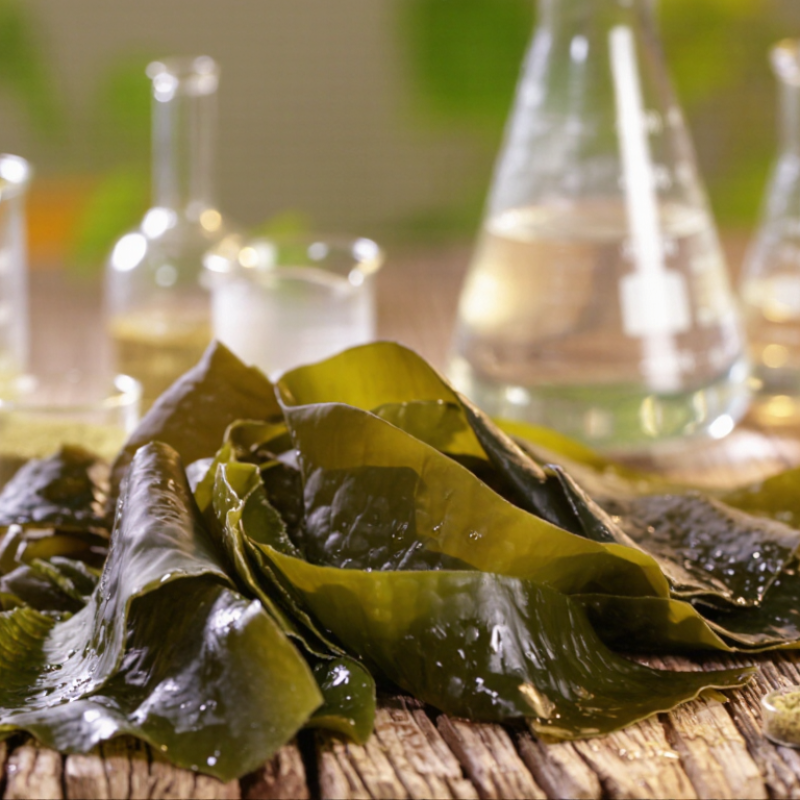
Ascophyllum nodosum is a cold-water brown seaweed used to make agricultural extracts and soil amendments. Its value is not simply the nutrients it contains. Research reviews describe seaweed-derived compounds as potential biostimulants, supporting root growth, nutrient uptake, and plant responses to stress. Effects depend on crop, dose, timing, and how the extract is made. The evidence is promising, but not tidy. A product that helps seedlings in a controlled trial may perform differently in a dry field.

The supply chain is significant: the FAO’s The State of World Fisheries and Aquaculture 2024 reports 37.8 million tonnes of aquatic algae production in 2022. That figure covers many algae, not just Ascophyllum nodosum, so it should not be read as a measure of this species’ availability.

On farms, practical evaluation matters more than broad promises. Compare treated and untreated strips, record application rates, and check roots, leaf colour, and harvest yield. Keep notes on weather and soil conditions, too. Small differences can be hard to interpret.

Craigie’s review in the Journal of Applied Phycology (2011) also highlights the diversity of seaweed extracts, which makes formulation and trial conditions important when assessing results.
Key Criteria for Evaluating Agricultural Suppliers

A dependable agricultural supplier should explain where its Ascophyllum nodosum is harvested, how it is processed, and what each grade contains. Ask for a current certificate of analysis showing key nutrient values and relevant contaminant testing. Check whether the product is a liquid, powder, or meal, and whether its solubility suits your equipment. That detail matters. Processing can affect handling and consistency. A supplier should also describe batch controls and provide clear storage guidance. If answers stay vague, treat that as a quality concern, not a minor paperwork issue.

Request a trial quantity before making a large seasonal purchase. Compare batches for appearance, odor, dissolution, and application performance under similar conditions. Look for field data that identifies crop, rate, timing, and growing conditions; broad promises are less useful. Ask what technical support is available when mixing or application problems arise. Reliable support includes practical answers, not just a product sheet. Price alone can mislead. I would leave room for doubt: even a tidy specification cannot predict every field, and local soil, water, and weather still shape results. A careful supplier acknowledges those limits and helps buyers assess fit without guaranteeing outcomes.

7 Best Ascophyllum Nodosum Suppliers for Agriculture - Key Criteria for Evaluating Agricultural Suppliers

Supplier Profile Typical Product Range Agricultural Fit Key Documents to Request Quality Checks Best Evaluation Criteria
Integrated seaweed processor Ascophyllum nodosum extracts in liquid, soluble powder, or flake form Suitable for farms and formulators seeking a consistent supply across multiple product formats Product specification, batch certificate of analysis, safety data sheet, country-of-origin details Confirm species identity, moisture or concentration, batch traceability, and contaminant limits Processing controls, supply continuity, traceability, and consistency between batches
Bulk seaweed ingredient exporter Bulk dried seaweed, meal, powder, or concentrated extract Suitable for agricultural manufacturers and buyers able to manage import and formulation requirements Certificate of analysis, export and origin documents, packaging details, applicable safety documents Check declared species, particle size or concentration, moisture, packaging integrity, and shipment records Clear specifications, export experience, realistic lead times, and documented batch identification
Liquid biostimulant producer Ready-to-use or concentrated seaweed liquids for foliar or soil application Suitable for growers seeking products designed for common farm application equipment Label, application instructions, product specification, safety data sheet, and relevant registration information Verify dilution guidance, pH, storage conditions, shelf life, and compatibility information Transparent instructions, suitable packaging, and evidence supporting stated product claims
Organic-input supplier Seaweed-based inputs intended for organic production systems Suitable for farms that need to check input eligibility against their organic program Current input approval or certification documents, ingredient declaration, and product label Confirm that the specific product and formulation—not only the supplier—meet the farm’s requirements Current documentation, ingredient transparency, and confirmation from the relevant certifier
Contract manufacturer Custom liquids, powders, blends, or private-label agricultural formulations Suitable for agricultural businesses developing a product to a defined specification Manufacturing specification, quality-control procedures, sample records, and written production terms Assess sample-to-production consistency, change-control procedures, and batch-release testing Technical communication, production capacity, minimum order quantities, and quality agreements
Regional agricultural-input distributor Packaged seaweed products from one or more manufacturers, with local delivery Suitable for farms prioritizing local availability, smaller order sizes, and regional support Product labels, manufacturer details, safety data sheets, and local inventory information Check stock rotation, sealed packaging, storage conditions, and access to manufacturer documentation Delivery reliability, responsive support, clear returns policy, and dependable replenishment
Specialty kelp meal producer Dried and milled Ascophyllum nodosum meal or granules for soil and crop applications Suitable for buyers seeking a solid-format material for blending or soil application Product specification, certificate of analysis, origin statement, and application guidance Review species and processing details, particle size, moisture, and relevant contaminant results Uniformity, practical packaging, documented origin, and fit with the intended application method

Supplier profiles are comparison categories, not named companies or ranked endorsements. Product specifications, certifications, and suitability vary by product and market; verify current documentation and local requirements before purchasing.

Seven Leading Ascophyllum Nodosum Suppliers

Seven leading Ascophyllum nodosum suppliers differ less by their catalogues than by what they can document. Buyers should compare harvest location, collection season, processing method, batch traceability, and available quality tests. Some suppliers focus on liquid extracts; others offer dried meal or soluble powder. The form affects storage and application, so check solubility and label directions before planning a field trial. Ask for certificates of analysis, including alginate or mannitol levels where relevant. Details matter.

The scale of the seaweed sector is substantial, but it is not proof that every extract performs equally. FAO’s 2024 State of World Fisheries and Aquaculture reported 37.8 million tonnes of aquatic algae production in 2022, with most output farmed. That figure covers many algae types, not Ascophyllum alone.

For agricultural buyers, a useful supplier comparison therefore needs species-specific sourcing records and clear batch data. Evaluate seven supplier profiles: traceable harvesters, extraction specialists, liquid producers, powder producers, formulation partners, testing-focused suppliers, and regional distributors. Request a small trial quantity and compare it under the same crop, soil, and application conditions. Results may vary. Even a tidy specification sheet cannot replace local field evidence.

Comparing Product Quality, Formats, and Supply Capacity

7 Best Ascophyllum Nodosum Suppliers for Agriculture
Comparing Product Quality, Formats, and Supply Capacity

Choosing an Ascophyllum nodosum supplier means looking beyond a high seaweed-content claim. Request recent batch analyses showing moisture, soluble solids, and nutrient ranges. Results should remain consistent across shipments, not just look impressive in a brochure. Small differences matter. Extraction method, harvest season, and storage can affect product characteristics. Test a sample on a familiar crop before committing to a large order. Keep notes on dilution, spray conditions, and visible crop response; one trial is useful, but not conclusive.

Format affects handling and application. Liquid concentrates are convenient for fertigation, though freezing, settling, or long storage may create problems. Powders are easier to ship and store, but need to dissolve evenly in the farm’s water. Granules can suit soil application and existing spreading equipment. Ask suppliers for clear mixing instructions and practical guidance on storage. Supply capacity matters just as much: check typical lead times, minimum order quantities, packaging options, and how shortages are handled. A large stated capacity is reassuring, but it does not guarantee every batch will arrive on schedule. I would compare actual delivery records where possible. That part is often overlooked.

Choosing a Supplier for Your Agricultural Needs

Choosing an Ascophyllum nodosum supplier means checking more than the label’s promised seaweed content. Ask for the species name, harvest region, collection season, and processing method. These details help explain why batches may differ in color, odor, or soluble solids. Request a batch-specific certificate of analysis, not only a general product sheet. It should list relevant nutrient measures and contaminant testing, including heavy metals.

The FAO’s The State of World Fisheries and Aquaculture 2024 reports 37.8 million tonnes of aquatic algae production in 2022, with about 97 percent cultivated. That figure describes the wider algae sector, not Ascophyllum supply or product quality. Still, it makes traceability and responsible sourcing worth discussing with a supplier. Ask how wild-harvest areas are monitored and whether collection records can be linked to each batch. Paperwork matters.

Field evidence should match your conditions. Look for trials on comparable crops, soils, and application methods, with untreated controls and clear measurements. A polished data sheet is useful, but it cannot promise the same response on every farm. I would also check whether the supplier offers practical guidance on dilution, timing, and storage. A small test strip can reveal issues that a brochure misses.

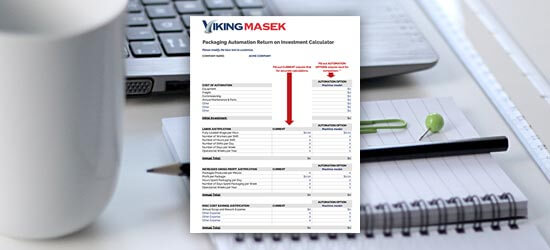
Packaging machine ROI calculator

Need help figuring out if packaging automation is right for your business?


First, start with the numbers. Download our free packing machine ROI calculator to learn how long it will take for an investment in automation to pay for itself (and much more).


Free packaging automation ROI calculator