10 Best Bakery Paper Bags for Your Business
Choosing Bakery Paper Bags is a small decision with a visible effect. The right bag keeps a croissant’s flaky edges intact, supports a warm loaf, and gives customers a comfortable way to carry their purchase. A poor fit can soften crisp pastry or leave grease marks on the counter. Small details matter.
For this guide, fictional packaging specialist Maya Ellis offers an illustrative principle: “A bakery bag should protect the bake, suit the product, and feel good in the customer’s hand.” This is an original editorial quote, not a verified statement from a real expert. The practical test is simple. Check bag size, paper strength, handle comfort, grease resistance, and print quality against the items your bakery actually sells. A tall sourdough loaf needs different support from two cookies or a paper tray of warm buns.
The 10 options ahead cover everyday counter service, takeaway orders, gifting, and branded presentation. Some prioritize sturdy kraft paper; others suit lighter pastries or window displays. Compare how each bag handles crumbs, steam, and a busy checkout—not just how it looks in a product photo. And be honest about trade-offs: a polished design may cost more, while the cheapest option may need double-bagging. No single bag fits every bakery.
What Bakery Paper Bags Are and How They Are Used
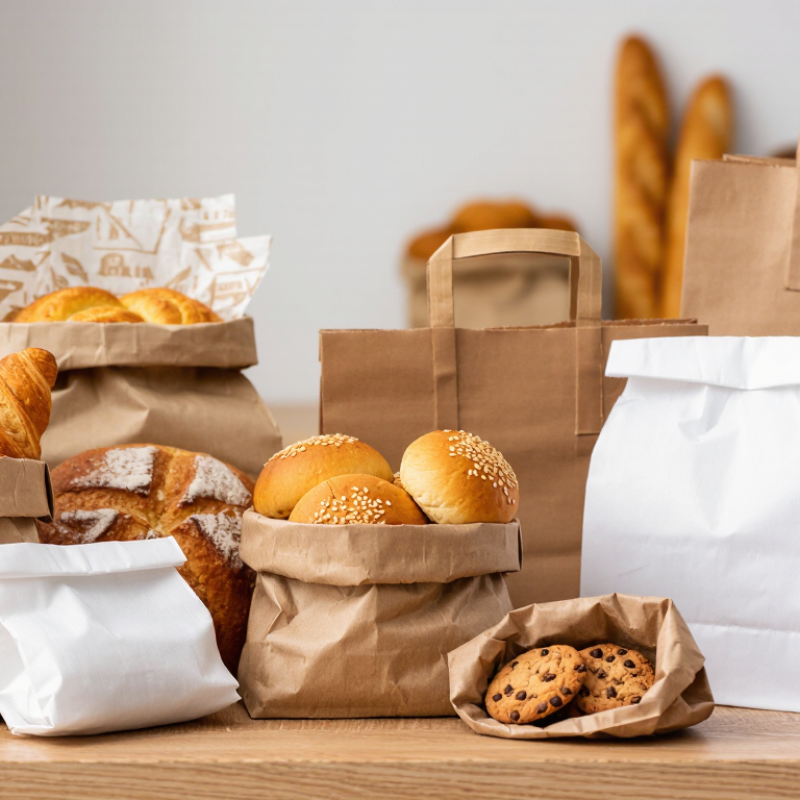
Bakery paper bags are lightweight packaging used to carry bread, pastries, cookies, and other baked goods. They are usually made from kraft or food-grade paper, with flat or gusseted sides to suit different shapes. Some have a small window that lets customers see the product without opening the bag. Others use a folded top for a simple, secure closure. Their job is practical.
In a bakery, staff can place a warm croissant in a small bag or pack several rolls in a wider one. A paper bag helps catch crumbs and makes counter service easier. It can also keep pastries separate from other items during a short trip home. For greasy or very moist foods, the inner surface and paper weight matter; ordinary paper may soften or stain. Paper is not magic. I sometimes think the bag gets chosen by size alone, though fit and ventilation affect how the food arrives. A snug bag can crush flaky layers, while an oversized one lets delicate treats slide around. Matching the bag to the product, serving routine, and expected travel time makes everyday packaging more reliable.
10 Best Bakery Paper Bags for Your Business - What Bakery Paper Bags Are and How They Are Used
Bakery paper bags are paper packaging used to carry, protect, and present baked goods. The right choice depends on the product, required grease resistance, visibility, and whether the bag needs a handle or window.
| Bag Type | Typical Material | Best For | How It Is Used | Main Advantages | Things to Consider |
|---|---|---|---|---|---|
| 1. Flat paper bag | Lightweight kraft or white paper | Cookies, doughnuts, pastries, and small rolls | Goods are placed directly into the open-top bag for quick counter service. | Simple, space-saving, and convenient for single items or small orders. | Offers limited protection against crushing and is not ideal for greasy foods unless specially treated. |
| 2. Gusseted paper bag | Kraft or white paper with expandable side folds | Bread rolls, muffins, and several pastries | Side gussets expand to create extra room as products are packed. | Holds more than a flat bag and can stand more easily when filled. | Choose a size that fits the order; excess space can let delicate items shift. |
| 3. SOS paper bag | Kraft or white paper with a flat bottom | Cookies, buns, and takeaway bakery assortments | The square bottom allows the bag to stand open while staff fill it. | Easy to fill and useful for efficient service at a busy counter. | Paper construction alone does not provide a greaseproof or moisture barrier. |
| 4. Grease-resistant paper bag | Paper treated or coated to resist oil penetration | Croissants, savoury pastries, and buttery baked goods | Provides a paper package for items that may leave oily marks on ordinary paper. | Helps reduce visible grease staining during takeaway service. | Check the supplier’s food-contact and disposal information; barrier treatments vary. |
| 5. Window paper bag | Paper body with a clear viewing panel | Cookies, biscuits, and individually packed treats | The window lets customers see the product without opening the package. | Improves product visibility and can support attractive counter displays. | The window may use plastic or another material, which can affect recycling options. |
| 6. Paper baguette bag | Long-format kraft or white paper, sometimes with a window | Baguettes and long loaves | The elongated shape accommodates bread without folding or cutting it to fit. | Designed for long bread and helps keep the loaf together during takeaway. | A paper bag protects from handling but does not prevent bread from being crushed. |
| 7. Bread loaf paper bag | Heavier kraft or white paper, often gusseted | Whole loaves and larger artisan breads | A wider opening and expandable sides make it easier to pack larger loaves. | Offers a practical paper option for takeaway bread and larger bakery items. | Paper packaging is breathable, so it is not an airtight solution for keeping bread fresh. |
| 8. Paper bag with twisted handles | Kraft or white paper with attached paper handles | Mixed pastry orders, boxed cakes, and larger purchases | Customers carry the order by the handles; the bag can hold inner bakery boxes. | Convenient to carry and suitable for orders that need an outer bag. | Select an appropriate size and load capacity; handles and paper can tear if overloaded. |
| 9. Paper bag with a block bottom | Kraft or white paper with a broad, stable base | Cupcakes in suitable inner packaging, buns, and multi-item orders | The flat base helps the filled bag sit upright on a counter or flat surface. | Useful for packing and carrying items that benefit from a stable base. | Use an insert or box for frosted or fragile items; the bag alone does not prevent tipping. |
| 10. Recycled-content paper bag | Paper made partly or wholly from recovered fibre | Everyday takeaway bakery orders, where suitable for the product | Used like other paper bags; select a construction that meets the order’s strength and food-contact needs. | Can incorporate recycled fibre and help reduce demand for virgin paper fibre. | Recycled content does not automatically mean home-compostable or recyclable everywhere; check local rules and product specifications. |
Selection tip: Match bag size and construction to the product, and verify food-contact suitability, grease resistance, handle strength, and local recycling requirements with the packaging supplier.