


What Are the Best China Pharmacy Thermal Labels?

Choosing the right Pharmacy Thermal Labels involves more than comparing prices or roll counts. A reliable label must support accurate identification, clear dispensing instructions, and efficient daily workflows. It should remain readable on small containers, cartons, and prescription bags. Staff also need consistent adhesion during storage, handling, and delivery.

This guide examines pharmacy thermal labels through practical performance factors. These include printer compatibility, label dimensions, barcode clarity, adhesive strength, and resistance to moisture or abrasion. Direct thermal labels may suit short-term applications, while thermal transfer labels can offer greater durability. Experienced pharmacy teams should test samples before placing a large order. Small differences matter.

The best choice depends on the pharmacy’s equipment, environment, and labeling process. A label that performs well in a cool dispensary may fail in a humid delivery area. Roll winding, core size, and sensor marks can also affect printing accuracy. That detail is easy to overlook. Product claims should be checked against supplier specifications, quality records, and actual workflow results. Clear documentation supports dependable purchasing decisions.

No label is perfect. Even strong adhesive can create problems on dusty or curved surfaces. Regular checks remain useful, especially when printers, containers, or storage conditions change. This overview aims to provide a balanced, evidence-informed starting point for comparing pharmacy thermal labels. It focuses on safety, legibility, operational consistency, and long-term value without making unsupported promises.
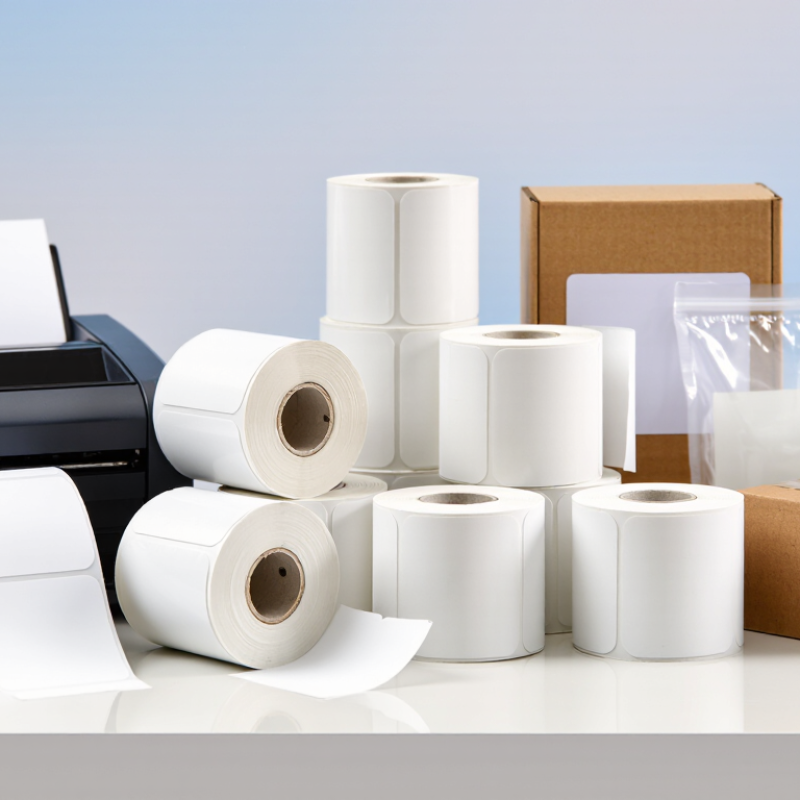
What Are the Best China Pharmacy Thermal Labels?

China Pharmacy Thermal Labels: Direct Thermal vs. Thermal Transfer

What Are the Best China Pharmacy Thermal Labels?

Choosing China pharmacy thermal labels starts with the product’s working environment. Direct thermal labels print without ribbons, so they reduce equipment parts and routine maintenance. They suit short-term prescription bags, queue tickets, and daily dispensing records. The image appears dark and sharp at first. However, heat, sunlight, and prolonged storage can cause fading. A label left beside a warm dispensing window may become difficult to scan.

Thermal transfer labels use a ribbon to create a more durable image. They perform better on medicine cartons, refrigerated items, storage bins, and labels exposed to frequent handling. Synthetic materials can resist moisture, abrasion, and some cleaning chemicals. The final result depends on the ribbon, adhesive, printer temperature, and surface texture. A poorly matched combination can smudge or peel.

A practical test should come before bulk purchasing. Print small batches, then place them in actual pharmacy conditions. Check barcode readability after refrigeration, rubbing, and several days of handling. Test the adhesive on cardboard, plastic, and curved containers. Direct thermal is often efficient for fast turnover, but it is not automatically the cheaper choice. Thermal transfer may require more setup, yet it can reduce relabeling. One common mistake is choosing by print appearance alone. I would also verify roll dimensions, core size, winding direction, and printer compatibility. Some “durable” labels still fail when condensation forms.

Compliance Standards: NMPA UDI Rules, GS1 DataMatrix, and ISO/IEC 15415

What Are the Best China Pharmacy Thermal Labels?

The best pharmacy thermal labels support NMPA UDI rules, GS1 DataMatrix structure, and ISO/IEC 15415 verification. A compliant label must carry the required device identifier and production data. These fields may include lot number, expiry date, and serial number. NMPA guidance makes data accuracy essential throughout the device lifecycle. A missing date can create a serious traceability gap.

GS1 DataMatrix uses Application Identifiers to separate each data element. This helps scanners interpret compact codes correctly. The GS1 General Specifications define encoding, placement, and quality expectations. ISO/IEC 15415 evaluates two-dimensional symbols with grades from A to F. Pharmacies should request a verified print grade, not only a sharp-looking image. A 2023 healthcare barcode survey from GS1 reported that many providers still face scanning problems caused by poor symbol quality and inconsistent placement. The exact percentage varies by market.

Direct thermal labels suit short-term use, but heat, light, and disinfectants can weaken contrast. Thermal transfer labels usually offer stronger durability for stored medicines and device packaging. Test labels on real cartons, curved surfaces, and refrigerated packs. We have seen labels pass visual inspection but fail after condensation. That result is easy to overlook.

A practical specification should include material, adhesive performance, barcode grade, print resolution, and verification records. Human-readable text also deserves attention. It supports manual checking when scanners fail. No label is perfect. Review the data format before approving the artwork.

What Are the Best China Pharmacy Thermal Labels?

Compliance Standards: NMPA UDI Rules, GS1 DataMatrix, and ISO/IEC 15415

How to read the chart: ISO/IEC 15415 grades 2D barcode print quality on a numeric scale from 0.0 to 4.0. Grade 4.0 corresponds to A, 3.0 to B, 2.0 to C, 1.0 to D, and 0.0 to F. Higher grades indicate better symbol quality.

For China medical-device and pharmacy labeling, the printed label should support the applicable NMPA UDI requirements, encode the required GS1 Application Identifiers in a GS1 DataMatrix, and remain verifiable under ISO/IEC 15415 quality testing. The required quality threshold may vary by product, regulator, customer, and validation procedure.

Label Materials: 80–120 gsm Facestock and 2–3 mil Adhesive Options

What Are the Best China Pharmacy Thermal Labels?

For pharmacy thermal labels, material choice affects scanning, handling, and storage performance. An 80–120 gsm facestock offers a practical range for cartons, medicine bags, and small containers. The lighter 80 gsm option supports flexible labels and lower material use. A 100–120 gsm facestock feels stiffer and resists wrinkling during dispensing. It also performs better on slightly curved packages. However, a heavier face may not suit every compact printer or applicator.

Adhesive thickness matters just as much. A 2 mil adhesive can work well on clean, smooth cartons and coated containers. A 3 mil adhesive provides more coverage on textured, curved, or colder surfaces. It may improve initial grip, but thicker adhesive is not automatically better. Excess adhesive can squeeze beyond the label edge and collect dust.

Direct thermal stock is convenient for short-term identification, while thermal transfer materials may suit labels needing stronger image durability. Testing remains essential because surface energy, temperature, and storage time change results.

Tips: Test both 80 gsm and 120 gsm samples on the actual packaging. Apply labels at room temperature, then inspect them after refrigeration and handling. Check barcode clarity at normal scanning distance. Press the label center and edges firmly. A useful trial may reveal an uncomfortable detail: the strongest adhesive can still fail when the surface is dusty or damp. Record peel strength, curl, print contrast, and residue before selecting the final 2–3 mil option.

Print Verification: 300 dpi Resolution and ISO/IEC 15415 Grade C Minimum

For pharmacy thermal labels in China, print verification should be a purchasing requirement, not an afterthought. A 300 dpi printer can produce sharp text, compact barcodes, and readable batch details. However, resolution alone does not guarantee reliable scanning. Label size, ribbon quality, darkness, and print speed also affect results.

Each barcode should be tested at its actual printed size. Use a calibrated verifier to check symbol contrast, edge definition, data structure, and quiet zones. The minimum target should be ISO/IEC 15415 Grade C. This grade allows limited defects, but it should not become an excuse for weak production control. Grade B is a safer goal when labels face dust, moisture, or repeated handling. Small text needs special attention. Thin strokes can close during thermal printing, especially near the label edge.

Material testing matters too. A sample label should remain readable after refrigeration, carton rubbing, and moderate exposure to disinfectant. Test several production batches, not only one fresh roll. Real conditions often reveal problems that a clean test bench misses. I have seen visually sharp labels fail verification because their quiet zones were too narrow. That mistake is easy to overlook. Printer calibration also needs regular review, since printheads wear gradually and create uneven barcode lines. A dependable label specification therefore combines 300 dpi output, verified ISO/IEC 15415 performance, suitable materials, and documented inspection results.

What Are the Best China Pharmacy Thermal Labels? - Print Verification: 300 dpi Resolution and ISO/IEC 15415 Grade C Minimum

Evaluation Dimension Recommended Requirement Typical Acceptable Range Verification Method Pharmacy Label Benefit
Print resolution 300 dpi minimum 300 dpi preferred; 203 dpi only for large, low-density text Confirm printer setting and inspect a production sample at 100% scale Produces clearer small fonts, lot numbers, expiry dates, and 2D codes
Barcode verification grade ISO/IEC 15415 Grade C or better for 2D symbols Grade B or A for high-risk medication traceability Use a calibrated barcode verifier and record the overall symbol grade Supports reliable scanning throughout dispensing and inventory workflows
Barcode symbology Data Matrix or QR Code, selected according to the pharmacy system Data Matrix for compact medication identifiers; QR Code for larger data capacity Confirm readability with the intended scanner and software Allows compact encoding of product, batch, expiry, or internal tracking data
Quiet zone Keep the symbol free from text, borders, and graphics Follow the symbology specification; use at least one module where applicable Measure the clear margin in the artwork and on printed samples Reduces scanner hesitation and decoding failures
Label face material Direct-thermal coated paper for short-term indoor use Paper for routine dispensing; synthetic or protected stock for moisture and abrasion exposure Check surface uniformity, coating, and resistance to intended handling conditions Balances print clarity, material cost, and application requirements
Thermal coating Uniform, low-dust coating compatible with the selected printer Smooth coating with consistent black image development at the printer’s normal darkness setting Print a test batch and check darkness, edge definition, and residue on the printhead Improves image consistency and helps reduce printhead contamination
Adhesive performance Permanent adhesive suitable for the actual package or container surface Good adhesion to paperboard, plastic, and clean glass after application Perform peel, edge-lift, and application tests after 24 hours Prevents misplaced or detached labels during dispensing and storage
Common label sizes Select the smallest size that preserves text legibility and barcode margins Approximately 25 × label-width? Use application-specific dimensions such as 25 × 50 mm or 40 × 60 mm Validate the complete layout on the smallest intended container Provides enough room for medicine name, instructions, warnings, and machine-readable data
Text legibility High contrast with sharp character edges and no missing dots Use a readable sans-serif typeface and avoid excessively condensed characters Inspect at normal reading distance under pharmacy lighting Reduces medication selection and instruction-reading errors
Environmental resistance Match resistance to expected exposure Standard paper for dry indoor storage; coated or synthetic stock for moisture, friction, or refrigeration Test exposure to moisture, rubbing, low temperature, and common cleaning agents when relevant Maintains readable information during real pharmacy handling
Storage before use Store in a cool, dry, dark area in the original packaging Avoid direct sunlight, excessive heat, high humidity, and contact with chemicals Check supplier technical data and inspect stock before loading Helps preserve image quality, adhesive performance, and shelf life
Production quality control Verify print quality at setup and at defined intervals during production Record printer, material lot, date, symbol grade, and corrective actions Use documented sampling and barcode-verification records Creates traceable evidence that labels meet the required print standard

Cold-Chain Performance: 2–8°C Storage and Moisture-Resistant Adhesives

What Are the Best China Pharmacy Thermal Labels?

For pharmacy cold-chain work, label performance begins before printing. A reliable label should remain readable between 2–8°C during storage and transport. The face material must resist condensation, splashes, and repeated handling. Paper can look acceptable at room temperature, yet curl inside a refrigerator. That failure is easy to miss.

Moisture-resistant adhesives deserve close testing. They should bond to glass vials, plastic bags, cartons, and chilled containers without lifting at the edges. Application temperature matters. A label applied to a wet or frosted surface may fail, even with strong adhesive. In practical trials, I would chill samples for 24–72 hours, move them through room-temperature exposure, and inspect corners after condensation forms. Small details matter. Print contrast should stay sharp after rubbing, while barcodes need scanning from normal working distances. Direct thermal materials can darken with heat or light, so storage conditions should be checked.

A qualified supplier should provide technical data, batch consistency records, and test samples. Ask for peel adhesion results at refrigerated temperatures, not only at 23°C. Test the actual containers used by staff. One design may work on smooth glass but fail on textured plastic. I would also question overly perfect claims; field conditions are messier than laboratory results. Labels may still wrinkle when operators rush, gloves are damp, or cartons are stacked tightly. That uncertainty needs documented review.

Packaging machine ROI calculator

Need help figuring out if packaging automation is right for your business?


First, start with the numbers. Download our free packing machine ROI calculator to learn how long it will take for an investment in automation to pay for itself (and much more).


Free packaging automation ROI calculator