


7 Best CHLF Pumps for Global Buyers
Choosing among the 7 Best Chlf Pumps for Global Buyers starts with the duty, not the brochure. A Chlf Pump may suit clean-water transfer or pressure boosting, but performance depends on flow, head, liquid temperature, and installation conditions. Buyers should compare pump curves at their actual operating point. A high maximum-flow figure alone proves little.
The U.S. Department of Energy’s Improving Pumping System Performance guide estimates that pumping systems use nearly 20% of global electricity demand. It also notes that pumps can account for 25% to 50% of energy use in some industrial facilities. That makes efficiency more than a sales claim. Ask for verified performance data, motor details, and the operating range behind each rating. Check wetted materials, seal options, spare-part access, and local service before comparing prices. Small differences matter. A seal that fits the liquid and temperature can prevent repeated maintenance stops.
This guide will compare seven options through practical buyer criteria: hydraulic performance, construction, energy use, installation needs, and support availability. Product names and specifications can change by market, so confirm current datasheets with the manufacturer or authorized supplier. A shortlist is only a starting point. It cannot replace an application review, and that is easy to forget when delivery deadlines are tight.
Understanding CHLF Pumps: Design, Operation, and Common Applications
7 Best CHLF Pumps for Global Buyers
Understanding CHLF Pumps: Design, Operation, and Common Applications
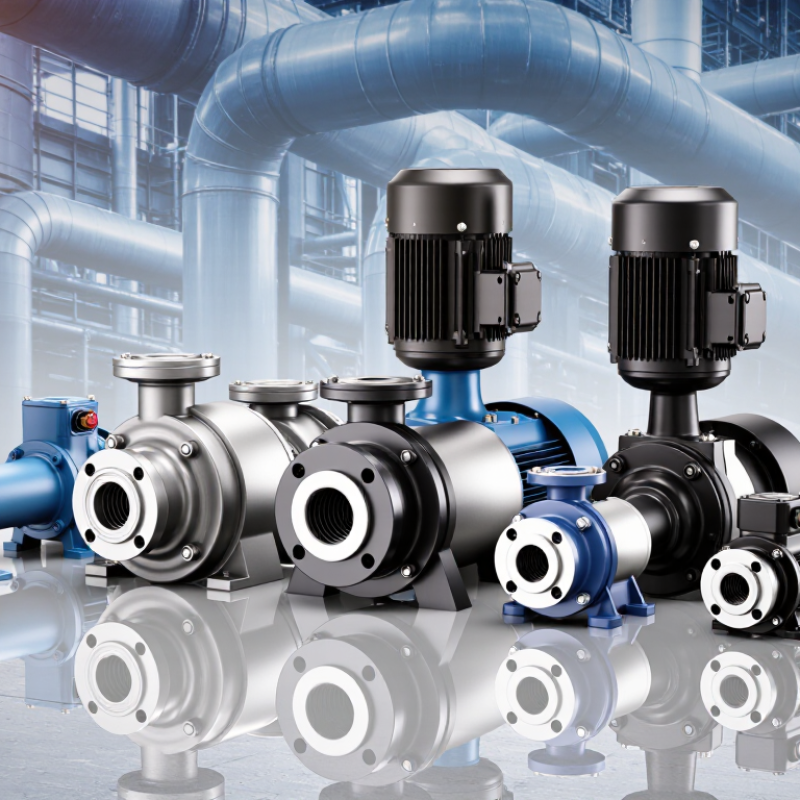
CHLF pumps are typically horizontal, multistage centrifugal units. A motor turns several impellers inside a compact casing. Each impeller adds energy to the moving liquid, helping the pump deliver steady pressure.
Small footprint. Many configurations use stainless steel wetted parts, but materials and temperature limits vary by model. Check the pump curve, liquid properties, and inlet conditions before specifying one. A pump selected only by outlet pressure may run inefficiently or suffer from inadequate suction.
These pumps commonly serve clean-water boosting, equipment cooling, light industrial circulation, and building services. Their operating point matters: compare the required flow and head with the manufacturer’s curve, then check for likely changes in demand.
The U.S. Department of Energy’s Improving Pumping System Performance sourcebook estimates that pumps use nearly 20% of global electrical energy demand; in some industrial facilities, pumping can represent 25–50% of energy use. That scale makes correct sizing more than a paperwork detail. A pressure gauge can show a stable reading while a poorly matched pump still wastes energy.
Source: U.S. Department of Energy, Improving Pumping System Performance: A Sourcebook for Industry.

Key Criteria for Evaluating CHLF Pumps
Start with the duty point: required flow and total head, not the largest figures on a product sheet. A pump that runs far from its best-efficiency point may waste energy and experience more vibration. Check the full performance curve against expected demand, including any changes in pipe length or elevation. Small details matter. The International Energy Agency’s Energy Efficiency 2023 report estimates that electric motor-driven systems use about 53% of global electricity, making motor and pump efficiency meaningful selection factors.
Confirm the liquid’s temperature, viscosity, and solids content before comparing materials and seals. For a multistage pump, verify the available net positive suction head against the pump’s requirement; insufficient margin can cause cavitation and damage. Ask for test results under ISO 9906, which defines hydraulic performance acceptance tests for rotodynamic pumps. A rated point alone is not enough. Check how the unit behaves across the operating range.
For international procurement, review voltage, frequency, connection sizes, and service access at the installation site. Confirm spare-part availability and ask how quickly routine maintenance can be completed. I would still question an unusually high efficiency claim if its test conditions are unclear. Real installations rarely match a perfect test bench.
7 Best CHLF Pumps for Global Buyers - Key Criteria for Evaluating CHLF Pumps
| Selection Priority | Best-Fit CHLF Pump Configuration | What to Evaluate | Buyer Guidance |
|---|---|---|---|
| 1. General water transfer | Standard horizontal, non-self-priming multistage centrifugal pump | Required flow rate, total head, liquid temperature, and the pump’s published performance curve | Choose a pump whose duty point falls within its recommended operating range. Confirm that the suction line can remain flooded or that the installation meets the pump’s priming requirements. |
| 2. Higher-pressure service | Multistage configuration with a head rating suited to the system | Number of stages, rated head, operating pressure, and pressure limits for the casing and connections | Use the system’s actual static lift and pipe losses to calculate required head. Do not select by outlet pressure alone; verify the complete operating point with the manufacturer’s curve. |
| 3. Clean-water circulation | Configuration specified for clean, low-viscosity liquids | Permitted liquid temperature, solids tolerance, viscosity limits, and seal compatibility | Many multistage designs are intended for relatively clean liquids. Check the product documentation before pumping water containing abrasive particles or suspended solids. |
| 4. Corrosion-conscious applications | Wetted-part material selection matched to the liquid | Material of the pump head, impellers, shaft, seals, and other wetted components | Stainless steel can improve corrosion resistance in suitable services, but no material is universally resistant. Verify compatibility with the liquid’s chemistry, concentration, and temperature. |
| 5. Energy-efficient operation | Motor and pump combination sized for the expected duty cycle | Motor input power, efficiency data, supply frequency, voltage, and expected operating hours | Compare energy use at the real duty point rather than relying only on motor nameplate power. Correct sizing and operation near the pump’s best-efficiency region can help avoid unnecessary energy use. |
| 6. Space-limited installations | Compact horizontal inline-style arrangement, where available | Overall dimensions, port orientation, service clearances, foundation needs, and connection standard | Check the installation drawing before ordering. Allow access for routine inspection and seal or motor service, and confirm that pipe loads will not distort the pump connections. |
| 7. Export and project procurement | Configuration documented for the destination market and project requirements | Electrical frequency and voltage, motor protection, connection dimensions, certificates, and spare-parts availability | Request the datasheet, performance curve, installation instructions, and applicable conformity documents. Confirm the exact model code and scope of supply before purchase. |
Note: CHLF pump performance and limits vary by model, materials, motor, and operating conditions. Verify flow, head, temperature, pressure, electrical requirements, and liquid compatibility against the specific pump documentation before selection.
Seven CHLF Pump Options and Their Distinguishing Features
Many CHLF listings describe horizontal multistage centrifugal pumps for clean water and similar, low-viscosity liquids. Buyers should compare configurations, not rely on a model label alone. Impeller stages, materials, seals, and motor choices can change suitability. Small details matter.
Seven practical options stand out.
These are selection categories, not guaranteed catalog variants; confirm availability with the supplier.
Check the pump curve.
Compare the required flow and total head at the same duty point, then review efficiency and motor load. Also verify connection size, liquid temperature, installation space, and seal compatibility. For example, a pump may reach the stated head but deliver too little flow at that point.
I have seen specifications that look clear until the operating conditions are compared. That is worth questioning. Ask for the curve and written material details before choosing.
Comparing Capacity, Materials, Efficiency, and Installation Needs
When comparing seven CHLF pumps, match rated flow and head to the actual duty point, not the largest figures on a catalog page. A pump that runs far from its best-efficiency point may waste energy or deliver unstable flow. The U.S. Department of Energy’s Improving Pumping System Performance sourcebook reports that pumps use nearly 20% of global electricity; in some industrial facilities, pumping systems account for 25–50% of electricity use. Small selection errors can matter.
Check construction against the liquid and site conditions. Stainless steel can suit clean water and humid installations, while seals and elastomers still need compatibility checks. Look for the temperature, pressure, and solids limits in the technical sheet. Capacity alone is not enough. Compare efficiency curves at your expected operating range, and consider variable-speed control only when demand changes often. Catalog curves can look tidy; real pipe losses rarely do.
Installation needs deserve equal attention. Measure the pump footprint, connection size, lifting clearance, and available voltage before ordering. Keep suction piping short and avoid forcing misaligned pipes onto the casing. That matters. Ask for a certified performance curve and test conditions, then compare like with like. I would leave room for an imperfect assumption: site measurements are often less precise than the selection spreadsheet suggests.
7 Best CHLF Pumps for Global Buyers — Comparing Capacity, Materials, Efficiency, and Installation Needs
Material choice is one practical part of pump selection. This chart compares the approximate room-temperature densities of seven commonly used pump construction materials.
Approximate densities are representative values; exact values vary by grade and product specification. Density alone does not determine corrosion resistance or suitability. Pump capacity, head, and efficiency depend on the specific model and operating duty point, so compare manufacturer performance curves and installation requirements before choosing.
Global Purchasing Factors: Standards, Support, and Total Cost
For global buyers, a CHLF pump should be judged against the standards required at its installation site, not just a catalog description. Ask for the applicable conformity documents, material specifications, performance curves, and test records. Confirm that voltage, frequency, connection sizes, and wetted materials suit the local system. Check the paperwork. A neat certificate is useful, but it does not replace clear model-specific records.
Support can matter as much as efficiency when a pump is far from the supplier. Ask how quickly technical questions are answered, whether spare parts are stocked nearby, and which components need routine replacement. A real example helps: a maintenance team should be able to identify a seal or bearing from a parts list without guessing. Get this in writing. Total cost includes purchase price, shipping, duties, installation, energy use, maintenance, and expected downtime. Request operating data at the actual flow and head; a pump selected from its maximum rating may run inefficiently in daily service. Compare lifecycle estimates using the same duty cycle and electricity assumptions. Some estimates will still be imperfect. State what is unknown, then revisit it after operating experience is available.


