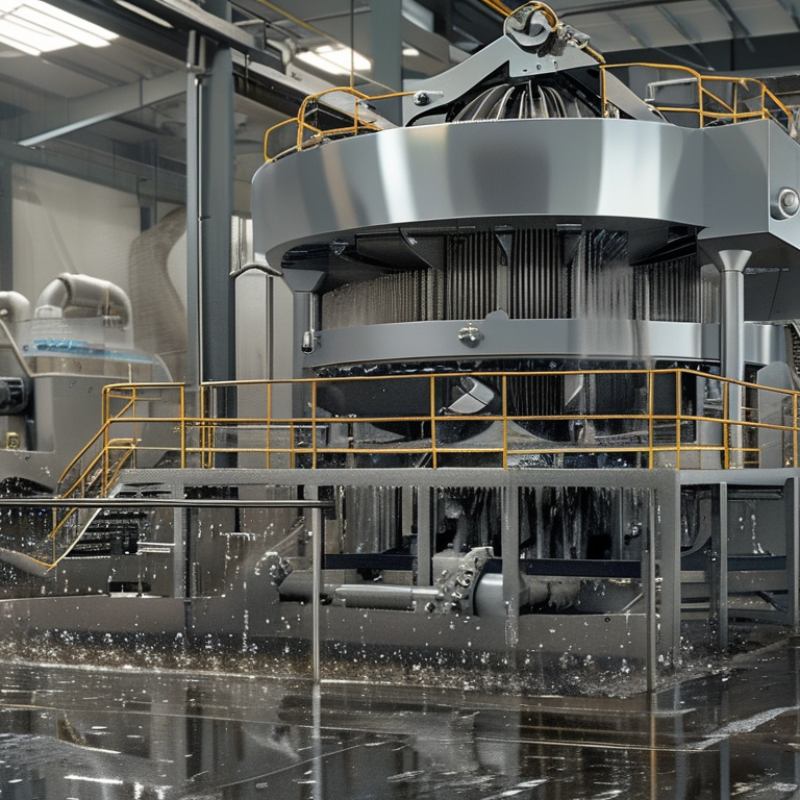
| 1. Selection Criteria |
| Selection | Applicable sludge types | Waste activated sludge, mixed municipal sludge, biological sludge, dissolved-air-flotation sludge, and many food-processing sludges. | Confirm that the sludge is pumpable and free of abrasive or oversized solids that could damage the screw, screen, or bearings. | Perform a feed-sludge analysis and identify grit, fibers, grease, and debris. |
| Selection | Feed total suspended solids | Common operating range: approximately 0.5%–3.0% total solids; some systems can accept higher concentrations with suitable conditioning. | Lower-solids feed generally requires more hydraulic capacity and may increase polymer consumption. | Measure total solids over several production days, not from a single sample. |
| Selection | Typical cake solids | Approximately 15%–30% total solids for many municipal sludges; actual results vary with sludge type and conditioning. | Use the required cake-solids target to compare screw press sizing, polymer systems, and downstream disposal costs. | Define whether the target is an average value, minimum value, or seasonal value. |
| Selection | Solids capture rate | Often about 95%–99% with suitable polymer selection, mixing, and operating control. | A high capture rate reduces solids returned to the liquid stream and lowers the load on downstream treatment. | Calculate capture from feed solids, cake solids, and filtrate solids using representative samples. |
| Selection | Hydraulic capacity | Typical small-to-medium units: approximately 1–15 m³/h of feed flow, depending on sludge concentration and machine diameter. | Do not size only by hydraulic flow. A dilute sludge may exceed the hydraulic limit before reaching the solids-loading limit. | Check both m³/h and kg dry solids/h at minimum and maximum feed concentration. |
| Selection | Dry-solids loading | Typical equipment range: approximately 20–300 kg dry solids/h, depending on screw diameter, sludge properties, and the number of screws. | Use dry-solids loading as the primary sizing basis because it reflects the actual mass of solids being dewatered. | Include peak and future design loads, commonly with a practical operating margin of about 15%–25%. |
| Selection | Screw diameter and configuration | Common screw diameters range from roughly 200 mm to 1,000 mm; single-screw units suit smaller duties, while multiple screws suit higher capacity. | Larger diameter and additional screws generally increase capacity but also increase capital cost, footprint, and maintenance requirements. | Compare installed capacity, footprint, access space, and spare-parts requirements. |
| Selection | Operating speed | Many screw presses operate at low variable speeds, commonly about 1–10 rpm, depending on design and sludge condition. | Lower speed can improve residence time and cake dryness, while higher speed can increase throughput but may reduce dewatering performance. | Confirm the available speed-control range and the manufacturer’s recommended operating window. |
| Selection | Polymer conditioning | Typical polymer demand is approximately 2–10 kg active polymer per tonne of dry solids, but the actual dose can be higher or lower. | Polymer demand depends on sludge type, concentration, temperature, shear, mixing energy, and the selected polymer chemistry. | Conduct jar tests or pilot trials using the actual sludge and the intended polymer products. |
| Selection | Electrical power | Small and medium screw presses commonly use motors from approximately 0.75–15 kW, excluding pumps and polymer equipment. | Evaluate total system power, including feed pumps, polymer mixers, conveyors, wash-water pumps, and ventilation. | Request the full connected-load and normal-running-load figures. |
| Selection | Wash-water consumption | Many automatic systems require intermittent screen washing; actual consumption is design-specific and may range from several litres per minute to continuous low-flow use. | Confirm whether the site has adequate flow, pressure, filtration, drainage, and backflow protection. | Check wash-water quality and verify that recycled water will not clog spray nozzles. |
| Selection | Noise and odor control | Screw presses are generally low-speed machines, but noise and odor may still arise from drives, pumps, open drains, and sludge handling. | Enclosures, local extraction, sealed conveyors, and suitable drainage may be needed in occupied or enclosed areas. | Review workplace noise limits and odor-control requirements before final layout. |
| 2. Installation Requirements |
| Installation | Foundation and support | Install on a level, rigid support designed for the operating weight, vibration, access loads, and connected pipework. | A rigid foundation helps prevent misalignment, excessive vibration, drain-pipe stress, and uneven screen loading. | Check level, anchor-bolt locations, structural loading, and access for lifting equipment. |
| Installation | Feed-pump arrangement | Use a controllable, solids-compatible pump with stable flow and sufficient pressure for the feed line. | Progressive-cavity pumps are frequently used for sludge because they provide controlled flow and low shear, although other pump types may be suitable. | Provide a flow meter, pressure indication, isolation valves, and a method for safe pump priming. |
| Installation | Polymer injection and mixing | Provide polymer make-down, maturation, dosing, and controlled injection upstream of the flocculation point. | Insufficient maturation or excessive shear can weaken flocs and reduce cake dryness and solids capture. | Allow adjustment of polymer dose, dilution water, mixing intensity, and contact time. |
| Installation | Pipework and drainage | Use short, accessible pipe runs with adequate slope, flushing points, drains, and cleanouts. | Long horizontal runs and sharp bends can cause solids settlement, blockages, and difficult cleaning. | Confirm filtrate drains can handle peak flow without flooding the press area. |
| Installation | Electrical and control system | Provide overload protection, emergency stops, motor protection, level or flow interlocks, and variable-speed control where required. | Interlocks should prevent dry running, uncontrolled feed, blocked discharge, and operation without wash water. | Complete an input/output test, alarm test, rotation check, and emergency-stop test before commissioning. |
| Installation | Ventilation and hazardous areas | Assess hydrogen sulfide, methane, oxygen deficiency, and corrosive-gas risks in enclosed sludge rooms. | Provide ventilation, gas detection, electrical equipment classification, and confined-space controls where applicable. | Use a site-specific risk assessment rather than relying only on the press enclosure. |
| 3. Commissioning and Operation |
| Commissioning | Initial start-up sequence | Start wash water and downstream discharge equipment before gradually introducing sludge and polymer. | A controlled sequence prevents plugging, overflow, dry running, and unstable floc formation. | Record initial speed, feed rate, polymer dose, torque, filtrate quality, and cake solids. |
| Operation | Torque control | Operate below the equipment’s continuous torque limit and use alarms for abnormal increases. | Rising torque may indicate excessive feed, poor polymer conditioning, foreign objects, screen blockage, or a restricted cake outlet. | Trend torque rather than reacting only to a shutdown alarm. |
| Operation | Filtrate quality | Monitor visual clarity, suspended solids, turbidity, and return-load impact on the treatment process. | Cloudy filtrate can indicate underdosing, overdosing, poor mixing, excessive feed rate, or damaged screening surfaces. | Use laboratory or field measurements at different operating conditions. |
| Operation | Cake discharge | Discharge should be continuous and free from excessive liquid pooling, bridging, or uncontrolled buildup. | Adjust screw speed, back pressure, feed rate, and polymer conditioning together rather than changing only one setting. | Inspect the discharge chute and conveyor for blockages during each operating shift. |
| 4. Maintenance Schedule |
| Daily | Visual inspection and housekeeping | Inspect for leaks, abnormal noise, vibration, loose guards, polymer spills, and sludge accumulation. | Clean surrounding floors, drains, screens, spray bars, and discharge areas to prevent buildup and slip hazards. | Log abnormalities before restarting the next shift. |
| Daily | Screen-washing system | Confirm spray pattern, water pressure, nozzle condition, and automatic wash cycles. | Blocked or misaligned nozzles can reduce filtrate flow and increase torque. | Clean strainers and nozzles using the approved procedure; isolate energy first. |
| Weekly | Drive and gearbox inspection | Check gearbox oil level where applicable, motor condition, coupling, guards, and unusual heat or noise. | Early detection of lubrication or alignment problems can prevent drive failure and unplanned downtime. | Follow the specific gearbox lubricant type and inspection interval. |
| Monthly | Screen and screw wear | Inspect screen gaps, wedge-wire or perforated surfaces, screw flights, wear strips, and discharge components. | Abrasive grit, sand, and corrosive sludge can accelerate wear and reduce dewatering performance. | Compare measured wear with the equipment’s replacement limits. |
| Quarterly | Instrumentation calibration | Check flow meters, pressure sensors, torque signals, level switches, and polymer dosing controls. | Incorrect instrumentation can cause overfeeding, polymer waste, poor cake quality, or nuisance trips. | Document calibration results and correct deviations promptly. |
| Annually | Comprehensive service | Inspect bearings, seals, fasteners, electrical terminals, protective devices, gearbox condition, and structural components. | Annual servicing should be based on operating hours, sludge abrasiveness, corrosion exposure, and the equipment manual. | Keep a record of replaced parts, measured clearances, torque trends, and recommended follow-up work. |
| 5. Practical Decision Guide |
| Best fit | Small facility or intermittent duty | Compact single-screw configuration with automatic washing and simple speed control. | Prioritize low standby power, easy cleaning, minimal operator attendance, and local service access. | Confirm performance at the lowest expected daily load. |
| Best fit | Medium municipal or industrial duty | One or more screws sized for normal load plus peak-load margin, with automated polymer and torque control. | Balance capacity, cake dryness, energy use, access space, and spare-parts availability. | Compare total cost of ownership rather than purchase price alone. |
| Best fit | High-throughput or continuous duty | Multiple-screw arrangement, redundant feed and polymer systems, automated monitoring, and planned maintenance access. | Evaluate redundancy, bypass arrangements, wash-water reliability, and the consequences of a single-unit shutdown. | Require a guaranteed performance test using representative sludge. |
| Decision rule | Most important selection priority | Stable dry-solids capacity and acceptable cake dryness at the actual sludge characteristics. | Capacity claims based only on water flow or ideal laboratory sludge may not represent full-scale results. | Use pilot testing, a complete mass balance, and lifecycle-cost evaluation before purchase. |