Top Hybrid Grid Tie Inverters for Global Buyers?
Choosing the right Hybrid Grid Tie Inverter can feel less like shopping and more like comparing control rooms.
Global buyers need equipment that balances solar production, battery storage, grid connection, and household demand. A strong unit should manage these tasks without creating unnecessary complexity. It should also provide clear monitoring, stable output, and practical protection against voltage changes.
Performance depends on location. A model suitable for Australia may need different certification for Europe, North America, or Southeast Asia. Buyers should verify grid codes, communication standards, warranty terms, and installer requirements before ordering. Efficiency figures matter, but real-world behavior matters more. A slightly lower-rated inverter may perform better when its cooling design suits a hot rooftop.
Look beyond impressive labels. Check continuous power, surge capacity, battery voltage range, transfer time, and backup-load limits. Read the installation manual, not only the product page. That step often exposes limitations.
This guide compares leading options for international users through a practical lens. It considers technical specifications, safety features, after-sales support, and long-term operating value. Independent testing and regional approvals deserve serious attention. Some rankings remain subjective. Buyer priorities differ, and no inverter wins everywhere.
The best choice should match the home, climate, battery system, and local grid. It should also remain understandable after installation. That detail is easy to overlook. Yet unclear software, weak documentation, or slow support can turn a promising purchase into an expensive lesson.
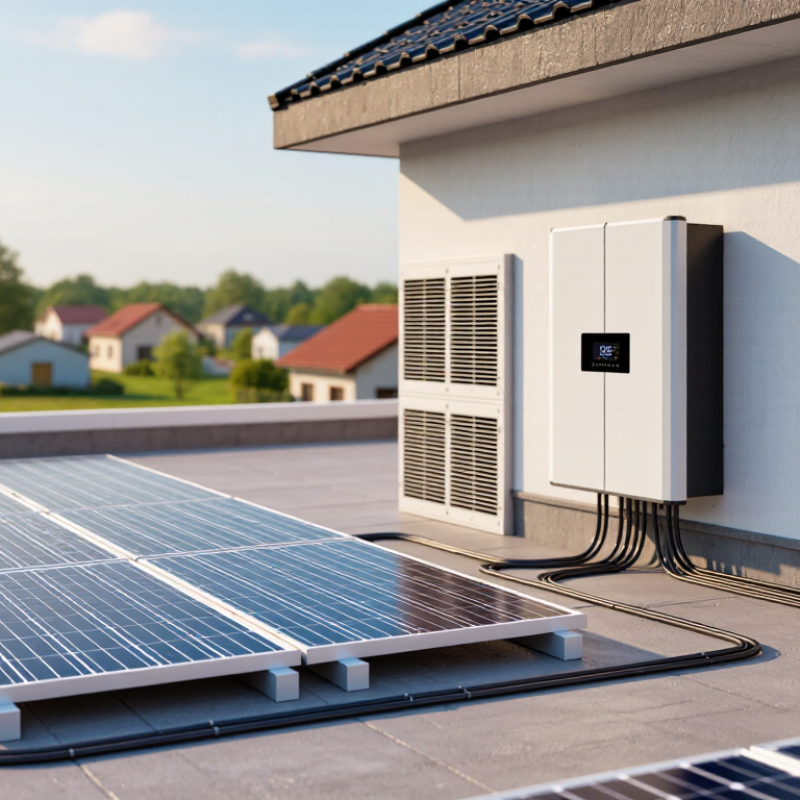
What a Hybrid Grid-Tie Inverter Is and How It Works
A hybrid grid-tie inverter connects solar panels, batteries, household loads, and the public grid in one energy system. It converts solar power from DC into usable AC electricity. When production exceeds demand, the inverter can charge a battery or export approved surplus power. When clouds reduce output, stored energy can support selected appliances.
Its control system constantly measures voltage, frequency, battery level, and household consumption. During a grid outage, a certified model disconnects from the utility line before creating backup power. This anti-islanding function protects repair workers and nearby equipment. The inverter may then supply a dedicated backup circuit, such as a refrigerator, router, or medical device. It is not a magic box. Performance depends on battery size, wiring quality, weather, and local grid rules.
Tips: Check whether the inverter supports your battery chemistry and communication protocol. Confirm its continuous output, surge rating, and backup switching time. Ask a qualified installer to verify grounding, protection devices, and export settings. Global buyers should also review regional voltage, frequency, certification, and permitted operating modes. A system designed for one market may not fit another. Real-world testing matters, because advertised efficiency rarely reflects every cable loss and temperature change. Even careful designs need monitoring, and settings sometimes require adjustment after installation.
Key Specifications for Comparing Global Inverter Models
Top Hybrid Grid Tie Inverters for Global Buyers?
When comparing hybrid grid-tie inverter models, begin with usable specifications, not attractive efficiency claims. Check rated output power, peak surge capacity, and continuous battery charging current. A unit rated for 5 kW may not support large starting loads. Motor-driven pumps can expose this weakness quickly.
Battery compatibility matters just as much. Compare the inverter’s voltage range, supported battery chemistry, charging limits, and backup switching time. Some models accept low-voltage batteries, while others require high-voltage storage systems. Also examine MPPT voltage range and maximum solar input current. These figures affect performance on cold mornings and during partial shading. A wide range is useful, but it does not solve poor system design.
Tips: Request the installation manual before buying. Verify grid frequency, phase type, export-control functions, and local certification requirements. Review IP protection, operating temperature, noise level, and communication options. A clear fault log can save hours during service visits. Warranty length helps, but regional repair access matters more. Do not overlook cable terminals and enclosure quality; small details become expensive in humid or dusty locations.
Independent test data is more reliable than marketing language. Look for weighted efficiency, standby consumption, thermal derating, and documented protection features. A perfect specification sheet can still disappoint. Real rooftops contain heat, shadows, weak networks, and uneven loads. Leave design margins, and question any comparison that ignores them.
Top Hybrid Grid-Tie Inverter Classes for Global Buyers
Comparison of representative hybrid grid-tie inverter specifications across common residential and commercial power classes. Higher maximum efficiency indicates lower conversion losses, while more MPPTs can improve energy harvesting from complex rooftop layouts.
Values are representative specification points commonly found in published global inverter datasheets. Actual limits vary by model, market, grid code, battery voltage, and installation design.
Leading Hybrid Inverter Types and Their Best Use Cases
Hybrid grid-tie inverters now serve several different energy strategies. The most practical choice depends on wiring, tariffs, battery voltage, and outage expectations. The IEA’s Renewables 2024 report recorded nearly 510 GW of new renewable capacity in 2023, with solar providing about 75%. This rapid expansion makes system matching more important than choosing the highest nameplate rating.
DC-coupled hybrids connect solar panels and batteries on one DC bus. They suit new residential systems because shared conversion reduces energy losses and simplifies battery charging. AC-coupled hybrids work well for retrofits. They can add storage beside an existing grid-tied array without replacing the solar inverter. High-voltage battery hybrids often support larger homes, farms, and small commercial sites, where lower current can reduce cable size and heat. Three-phase models fit workshops, offices, and properties with balanced commercial loads. Small single-phase units remain practical for apartments and modest houses.
Battery-backed systems need careful commissioning. A 10-kilowatt inverter may still struggle with motor starting or uneven phase loads. Real-world performance also depends on temperature, battery limits, and local grid rules. The IEA’s Batteries and Secure Energy Transitions report projects global battery storage capacity must expand roughly fourteenfold by 2030 under its net-zero pathway. That signals strong demand, but not automatic reliability. Buyers should check certified grid protection, islanding controls, surge capacity, monitoring quality, and service access. A cheaper system may be the wrong system.
Regional Standards, Certifications, and Grid Compatibility
Global buyers should rank hybrid grid-tie inverters by regional compliance, not efficiency alone. IRENA’s Renewable Capacity Statistics 2025 reports 4,448 GW of renewable power capacity worldwide at the end of 2024. This rapid expansion increases pressure on equipment that must follow local voltage, frequency, and protection rules. A suitable inverter should support documented grid settings, remote control, battery coordination, and clear fault records.
In Europe, EN 50549 requirements commonly govern distributed generators connected to public networks. North American projects often require IEEE 1547-2018 functions and certification under UL 1741 Supplement B. Australia and New Zealand generally apply AS/NZS 4777.2, with strict limits for voltage rise and disconnection behavior. IEC 62109 addresses inverter safety, while IEC 62116 evaluates anti-islanding performance. These standards overlap, but they are not interchangeable. A certificate from one region may not satisfy a utility in another.
Compatibility is tested at the point of connection. Buyers should request grid-code test reports, firmware versions, reactive-power curves, and local utility approval records. Check whether the inverter handles weak-grid conditions, unbalanced loads, and sudden battery changes. The IEA’s Renewables 2024 report projects nearly 5,500 GW of new renewable capacity between 2024 and 2030, making grid support increasingly important. Yet laboratory compliance does not guarantee smooth field operation. Cable length, transformer impedance, and installer settings can still cause nuisance trips. No checklist is perfect. Experienced teams sometimes overlook firmware approval after commissioning. It deserves a second review.
How to Select and Deploy the Right Inverter Worldwide
Top Hybrid Grid Tie Inverters for Global Buyers?
Selecting and deploying a hybrid grid-tie inverter requires more than comparing rated power. Start with the site’s voltage, frequency, phase configuration, and local grid-connection rules. A unit designed for one region may fail certification requirements elsewhere. Check anti-islanding protection, export control, surge tolerance, and battery compatibility before ordering.
Measure the real load profile, not only the household’s peak demand. Record morning pumps, evening cooking, motor starts, and seasonal air-conditioning use. Select enough MPPT channels for the roof layout, especially when panels face different directions. Confirm the battery voltage range, usable capacity, and communication protocol. Installation should include correct cable sizing, ventilation, grounding, and clearly labeled isolation points.
Field commissioning deserves equal attention. Verify firmware settings, grid parameters, protection trips, and backup transfer times with calibrated instruments. Test the system during low solar production, not only on a bright afternoon. I have seen attractive designs struggle because standby losses were ignored. A clean spreadsheet can still mislead. Leave room for future loads, but avoid oversizing the inverter without evidence. Local technicians, spare parts, remote monitoring, and documented maintenance procedures often determine reliability more than headline efficiency. Recheck every assumption before shipment.



