


What Is the Best Pick and Place Machine from China?
Choosing the best Pick Place Machine from China requires more than comparing placement speed. Buyers must examine accuracy, feeder stability, software control, service response, and long-term production evidence. A machine may claim 100,000 placements per hour, yet struggle with 0201 components or fine-pitch BGA packages. Real performance appears beside the line, after several demanding shifts.
Industry reports support this cautious approach. The IPC Global Electronics Manufacturing Supply Chain Survey highlights continuing pressure on manufacturers to improve efficiency, resilience, and production visibility. Meanwhile, market research from Grand View Research identifies automation and miniaturized electronics as important drivers for surface-mount technology equipment demand. These trends make component handling, traceability, and fast changeovers increasingly valuable. However, published figures can vary between suppliers and test conditions. That deserves attention.
Michael Ford, Senior Director of Emerging Industry Strategy at Aegis Software, has emphasized a practical principle: “Speed is only one part of the placement equation; stability, traceability, and changeover discipline decide the real result.” This view fits many Chinese manufacturers. Leading brands increasingly combine high-speed placement heads with intelligent feeders, vision calibration, SPI integration, and remote diagnostics. Still, no machine fits every factory. A compact contract manufacturer may value flexible feeder capacity, while a large automotive plant may prioritize uptime and process control.
The strongest choice is therefore evidence-based, not purely price-driven. Request sample-board testing, inspect actual placement results, and verify spare-parts support. A lower quotation may look attractive. It may also conceal training gaps or slower maintenance. This guide compares important Chinese Pick Place Machine options through measurable performance, application fit, and ownership risk.
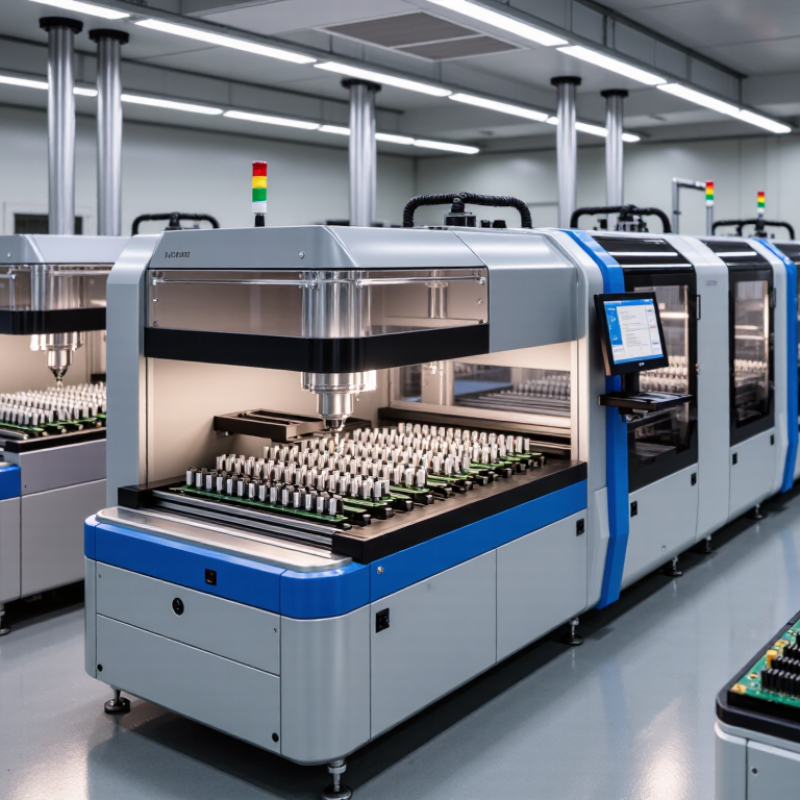
What Defines the Best Pick and Place Machine from China?
The best pick and place machine from China is defined by consistent performance, not a low purchase price. In real production, placement accuracy must remain stable across long shifts. A machine should handle small components, fine-pitch packages, and different PCB sizes without constant manual correction. That matters.
Reliable vision alignment is essential. Cameras should recognize varied component shapes under changing factory lighting. Feeders also deserve close attention because uneven feeding can create repeated placement errors. Ask for proof. Request a live test using your own components and sample boards. Measure placement accuracy, changeover time, feeder stability, and actual hourly output.
Professional support separates a useful machine from an expensive problem. A capable supplier should provide clear manuals, operator training, spare-part guidance, and responsive remote assistance. Check whether the control software records alarms and production data. This helps technicians find recurring faults instead of guessing. Safety design, electrical documentation, and quality inspection records also show manufacturing discipline. I would not trust impressive specifications alone. A machine may perform well during a short demonstration, then struggle with dust, vibration, or frequent product changes. That is an uncomfortable possibility, but it deserves attention. The best choice is the machine supported by transparent testing, practical engineering, and dependable service after delivery.
What Is the Best Pick and Place Machine from China? - What Defines the Best Pick and Place Machine from China?
| Evaluation Dimension | Recommended Benchmark for a High-Quality Machine | Why It Matters | How to Verify Before Purchase |
|---|---|---|---|
| Placement Speed | Approximately 10,000–30,000 components per hour for compact or medium-scale SMT production. | Higher theoretical speed can improve output, but practical performance depends on feeder changes, board complexity, and component mix. | Request a placement test using the customer’s actual PCB files, component list, and production program. |
| Placement Accuracy | Typically around ±0.03–0.05 mm under documented operating conditions. | Accurate placement helps reduce solder defects, rework, component waste, and alignment problems. | Check repeatability data, calibration procedures, sample boards, and inspection results from a controlled trial. |
| Component Range | Support for common chip packages, small passive components, integrated circuits, connectors, and selected odd-form parts. | A wider component range allows one machine to serve more products and reduces equipment changes. | Compare the machine’s feeder, nozzle, camera, and component-size specifications with the actual bill of materials. |
| PCB Compatibility | Adjustable support for the required PCB length, width, thickness, weight, and panel configuration. | Correct board handling prevents vibration, transport errors, registration problems, and production interruptions. | Confirm the permitted PCB dimensions and test single boards, panels, thin boards, and heavy boards when applicable. |
| Vision and Alignment | Upward and downward vision functions, fiducial recognition, component verification, and automatic correction. | Reliable vision improves placement quality when boards, components, or solder pads have small positional variations. | Test fiducials, polarity marks, fine-pitch packages, reflective parts, and components with different surface finishes. |
| Feeder System | Stable tape, tray, stick, and bulk-feeding options where required, with quick setup and clear feeder status monitoring. | Feeder reliability directly affects changeover time, placement continuity, and material loss. | Evaluate feeder repeatability, spare-part availability, loading time, and compatibility with the planned component packaging. |
| Software and Programming | Intuitive programming, CAD and BOM import, offline preparation, barcode functions, and production-data storage. | Efficient software reduces setup errors and makes product changeovers faster and more consistent. | Ask for a live programming demonstration using real customer files rather than a prepared sample project. |
| Changeover Efficiency | Fast product changeover supported by feeder carts, setup verification, recipe management, and clear operator instructions. | Shorter changeovers are especially valuable for high-mix, low-volume manufacturing. | Measure the complete changeover process, including feeder replacement, program selection, verification, and first-board approval. |
| Machine Availability | Designed for stable continuous operation with effective alarm handling and accessible maintenance points. | Availability often has a greater effect on output than maximum advertised speed. | Request documented uptime records, failure-response procedures, preventive-maintenance schedules, and service commitments. |
| Maintenance and Spare Parts | Clear maintenance procedures, commonly available wear parts, technical documentation, and responsive remote support. | Accessible support lowers downtime and helps operators resolve routine problems safely. | Review the spare-parts list, service response time, training plan, warranty coverage, and escalation process. |
| Inspection and Traceability | Compatibility with barcode scanning, production records, placement verification, and integration with inspection equipment. | Traceability supports quality control, process analysis, and faster root-cause investigation. | Confirm supported data formats, communication interfaces, barcode standards, and data-export functions. |
| Safety and Compliance | Emergency stops, guarded moving parts, safety interlocks, electrical protection, and documentation for the destination market. | Safety features protect operators and support smoother installation and customer acceptance. | Verify the applicable electrical, machinery-safety, and electromagnetic-compatibility documentation for the intended country. |
| Total Cost of Ownership | Evaluate purchase price together with installation, training, feeders, nozzles, software, maintenance, energy use, and downtime risk. | The lowest initial price does not always provide the lowest cost per correctly placed component. | Prepare a multi-year cost model based on actual production volume, staffing, maintenance intervals, and expected utilization. |
Note: The best pick and place machine is determined by the complete production requirement, not by placement speed alone. Actual performance should be confirmed through a representative production trial.
