


2026 Best Steel Heat Exchanger Types for Buyers?

In 2026, selecting a Steel Heat Exchanger is less about chasing a “best” label and more about matching equipment to process conditions. Buyers may compare shell-and-tube, plate, and coil designs, each with different strengths. A compact plate unit can save floor space, while a shell-and-tube model may suit demanding duties or easier inspection. The right choice depends on more than shape.

Start with the operating details. Record the fluids, flow rates, temperatures, pressure, available space, and cleaning requirements. Then assess the steel grade, corrosion risks, expected service life, and access to replacement parts. A stainless steel unit is not automatically suitable for every fluid, and carbon steel may need added protection in corrosive service. Details matter.

This guide examines common Steel Heat Exchanger types and the trade-offs buyers should weigh in 2026. It also explains how material selection, thermal performance, maintenance access, and supplier documentation affect a purchase. Ask for verified performance data, material specifications, and design limits—not just a catalog rating. Compare quotes against the same duty and assumptions. Even careful comparisons have limits: actual fouling, operating changes, or installation constraints can alter performance. That part is easy to underestimate. Use the guide as a practical starting point, then confirm the final selection with a qualified thermal engineer and the equipment manufacturer.
2026 Best Steel Heat Exchanger Types for Buyers?

Steel Heat Exchangers: Purpose, Structure, and Operating Principles

2026 Best Steel Heat Exchanger Types for Buyers?
Steel Heat Exchangers: Purpose, Structure, and Operating Principles

Steel heat exchangers transfer heat between fluids while keeping their streams separate. Buyers find them in boilers, process equipment, HVAC systems, and manufacturing plants. Steel offers strength and practical fabrication options, but the correct grade depends on fluid chemistry, temperature, and pressure. Steel is not automatically corrosion-proof. Even clean-looking water can cause trouble over time.

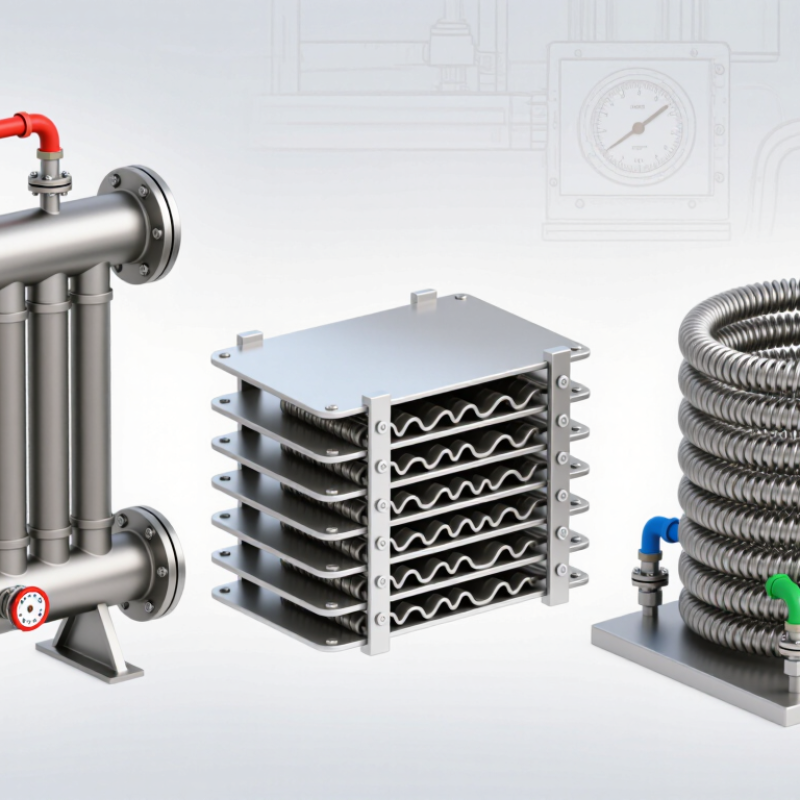
A common shell-and-tube unit has a steel shell, tube bundle, and connected headers. One fluid flows through the tubes; another moves around them inside the shell. Heat passes through the tube walls without the fluids mixing. In plate designs, thin metal plates create alternating flow channels and a large heat-transfer area. Counterflow, where fluids move in opposite directions, often improves heat transfer. Actual performance still depends on flow rate, fouling, and the unit’s design. Small details matter.

Tips: Check fluid composition, operating temperatures, pressure ratings, and cleaning access before choosing a type. Ask for material and performance data tied to your actual conditions. In practice, early estimates can miss fouling or seasonal changes. That is not always obvious from a product drawing. Keep inspection records, and watch for leaks, scale, or unexpected temperature drops.

Main Types of Steel Heat Exchangers and How They Differ

2026 Best Steel Heat Exchanger Types for Buyers?

Main Types of Steel Heat Exchangers and How They Differ

Steel heat exchangers come in several designs, and the right choice depends on the fluids, pressure, temperature, and cleaning needs. Shell-and-tube units pass one fluid through tubes while another flows around them inside a shell. They are sturdy and practical for demanding service, though they can take up considerable space.

Gasketed plate exchangers use stacked plates to create narrow flow channels. Their compact footprint and high heat-transfer performance suit many clean-fluid duties, but gaskets need regular inspection.

Welded plate designs remove gasket limits and can handle some higher-temperature or pressure conditions, depending on construction. Coil exchangers use submerged tubing, often for simpler tank heating or cooling. That can be convenient, but cleaning the coil may be awkward. “Steel” is not a complete material specification: stainless and carbon steel differ in corrosion resistance and suitability. Small details matter.

Tips: Match the steel grade to both fluids, not just the operating temperature. Check pressure ratings, fouling risk, access for maintenance, and available space. Ask for performance data at your actual flow rates. A catalogue rating may not reflect your process.

Steel Grades, Configurations, and Performance Factors

Steel heat exchanger selection starts with the fluid, not the catalog. Carbon steel can suit many water and oil services, while stainless grades such as 304 or 316 may better resist particular corrosive fluids. Neither grade is universally safe. Chloride levels, temperature, cleaning chemicals, and oxygen exposure can change the choice. Ask for material compatibility data under actual operating conditions.

Configuration shapes maintenance and heat transfer. A shell-and-tube unit handles varied pressures and can allow tube-side cleaning, though it may need substantial floor space. Plate exchangers are compact and offer strong heat transfer, but narrow channels can foul when fluids contain fibers or suspended solids. Inspect the expected deposits. A small sample of process fluid can reveal more than a tidy specification sheet.

Performance depends on flow rate, inlet temperatures, pressure drop, and fouling allowance. Request calculations for normal operation and likely peak loads. Check weld quality, gasket or tube access, and the inspection plan before purchase. These details matter. Do not rely on surface area alone; an oversized exchanger can still perform poorly if flow distribution is uneven. Real systems are messy. Leave room for operating changes, and record assumptions so future engineers can question them.

2026 Best Steel Heat Exchanger Types for Buyers? - Steel Grades, Configurations, and Performance Factors

Compare exchanger designs by service conditions, cleaning needs, materials, and operating costs. Actual pressure and temperature limits depend on the complete design, applicable code, materials, and manufacturer’s calculations.

Heat Exchanger Type Typical Configuration Common Steel Choices Performance Advantages Buyer Considerations Often Suited To
Shell-and-tube One fluid flows through tubes; the other flows through the surrounding shell. Designs may use straight or U-tubes and fixed or removable tube bundles. Carbon steel pressure-vessel plate or pipe for shells; carbon steel, 304/316L stainless steel, or duplex stainless steel for tubes, as required by the fluids. Adaptable to a wide range of duties; can be designed for substantial pressure and temperature; tube bundles can be accessible for inspection or cleaning, depending on construction. Check tube-side and shell-side fouling, corrosion allowance, vibration, thermal expansion, bundle-removal clearance, and the applicable pressure-vessel code. Process plants, power and utility systems, oil and gas services, and duties where robust construction or mechanical cleaning is important.
Gasketed plate-and-frame Thin, corrugated plates are clamped in a frame, with gaskets directing alternating fluid channels. Common plate materials include 304L or 316L stainless steel; duplex stainless steel may be considered for more demanding chloride-containing services. Frame material is selected separately. High heat-transfer area in a compact footprint; close temperature approaches are often achievable; the unit can usually be opened for inspection and cleaning. Confirm gasket compatibility, fluid cleanliness, pressure and temperature limits, and allowable pressure drop. Gaskets can limit operating conditions and require periodic replacement. Water heating and cooling, HVAC, food and beverage processes, and clean liquid-to-liquid services within the selected gasket and design limits.
Welded plate Corrugated plates are joined by welding rather than relying on conventional plate-channel gaskets; exact construction varies by design. Typically stainless steel or duplex stainless steel selected for the process fluid; material grade and weld procedure should be verified for the service. Compact plate geometry can provide efficient heat transfer while avoiding process-side gasket limitations in some designs. Opening and mechanical cleaning may be difficult or impossible, depending on construction. Confirm inspection, repair, cleaning, and allowable pressure and temperature with the supplier. Selected chemical, process, and utility duties where a compact design is desired and the fluid is compatible with the welded construction.
Spiral plate Two fluids flow through separate spiral passages formed by metal plates; available flow arrangements depend on the design. Carbon steel or stainless steel, including 316L, may be used according to corrosion requirements and process conditions. A single passage can support flow through certain fouling or viscous fluids; the spiral path can promote mixing and heat transfer. Assess solids size and concentration, cleanability, pressure drop, corrosion, and access for maintenance. Suitability depends on passage geometry and the specific fluid. Some wastewater, sludge, viscous-liquid, and process services where fouling behavior makes conventional narrow passages less suitable.
Air-cooled finned-tube Process fluid flows inside tubes; external fins increase the air-side heat-transfer surface. Fans may move ambient air across the bundle. Tube material may be carbon steel, stainless steel, or another alloy selected for the process fluid; fin and structural materials are selected for the environment and design. Rejects or supplies heat using air rather than a cooling-water circuit; can reduce cooling-water demand and associated water-treatment needs. Performance varies with ambient temperature, airflow, fan power, recirculation, noise limits, and site conditions. Verify capacity at the design ambient temperature. Remote or water-constrained sites and process cooling duties where air is an acceptable heat sink.
Steel Grade Selection Guide
Steel Grade or Family Typical Use Key Selection Factors
Carbon steel, such as SA-516 Grade 70 Common pressure-vessel plate choice for shells and other pressure-containing parts when the process fluid and design conditions permit. Often economical, but corrosion protection, corrosion allowance, fluid chemistry, temperature, toughness requirements, and the governing construction code must be evaluated.
304L stainless steel General-purpose corrosion-resistant option for some plates, tubes, and wetted components. Low-carbon grade supports weld-related corrosion considerations. It is not suitable for every chloride-bearing or corrosive service; assess the full fluid chemistry and operating conditions.
316L stainless steel Frequently considered where greater resistance to certain corrosive environments than 304L is needed. Molybdenum improves resistance to some forms of corrosion, but pitting, crevice corrosion, and chloride stress-corrosion cracking can still occur in susceptible conditions.
Duplex stainless steel, such as 2205 Used in selected services requiring higher strength and improved resistance to localized corrosion compared with common austenitic stainless grades. Confirm temperature range, welding and fabrication controls, fluid compatibility, and design-code requirements; it is not a universal substitute for corrosion testing or engineering review.

Selection note: Material names alone do not establish suitability. Confirm fluid composition, contaminants, chlorides, pH, temperature, pressure, fouling tendency, cleaning method, and applicable design standards with a qualified heat-exchanger engineer.

Applications Across Industrial and Commercial Systems

2026 Best Steel Heat Exchanger Types for Buyers?
Applications Across Industrial and Commercial Systems

Steel heat exchangers support varied duties, from cooling process water to heating air in large buildings. In manufacturing plants, shell-and-tube units often handle high pressures and steady thermal loads. Plate designs can suit compact installations where operators need efficient heat transfer and accessible cleaning. Material choice matters: carbon steel may suit compatible, controlled water circuits, while stainless steel can better tolerate some corrosive fluids. Confirm fluid chemistry before selecting either.

Tips: Check design pressure, temperature range, fouling risk, and cleaning access. Fit matters. Ask a qualified engineer to verify thermal calculations and material compatibility for the actual operating conditions.

Commercial systems may use steel units for district heating interfaces, boiler loops, chilled-water systems, or hot-water generation. A school’s plant room, for example, may need a compact exchanger that can be isolated during routine service. A factory with abrasive or dirty process water may need a different layout and wider cleaning access. No type is best for every site. Buyers should compare expected loads, maintenance resources, space, and corrosion conditions, then review the supplier’s technical data. Real operating data is sometimes incomplete, so assumptions about peak demand deserve a second look.

2026 Best Steel Heat Exchanger Types for Buyers

Typical application fit across industrial and commercial systems

Ratings are qualitative guidance: 1 = limited fit, 2 = common fit, and 3 = strong fit for typical applications. They are not measured performance scores. Actual suitability depends on fluid properties, pressure, temperature, fouling, materials, and the specific design.

How Buyers Can Compare Steel Heat Exchangers in 2026

When comparing steel heat exchangers in 2026, start with the process conditions, not the catalogue headline. Record the fluid composition, flow rate, operating pressure, temperature range, and expected fouling. A shell-and-tube unit may suit demanding pressure or temperature conditions, while a plate design can offer compact heat transfer where maintenance access is practical. Coiled or jacketed designs may fit smaller systems, but their performance depends heavily on the application. No type wins everywhere.

Check the steel grade against both fluids, including chlorides, cleaning chemicals, and moisture during shutdown. Ask for calculated heat duty, pressure drop, design limits, and cleaning instructions—not just a peak efficiency figure. Numbers need context. Compare the same operating conditions across supplier proposals, and confirm whether quoted performance includes fouling allowances. Look closely at gasket access, tube-bundle removal, weld quality records, and inspection intervals; these details affect downtime. A polished datasheet can still hide assumptions. I would also question a design that leaves little room for flow variation, even if its initial price looks attractive. A small mismatch may become costly after months of deposits or changing production demand.

Packaging machine ROI calculator

Need help figuring out if packaging automation is right for your business?


First, start with the numbers. Download our free packing machine ROI calculator to learn how long it will take for an investment in automation to pay for itself (and much more).


Free packaging automation ROI calculator