


7 Best Taped Litz Wire Suppliers for Global Buyers?
Global sourcing of taped litz wire is not just a price comparison. Buyers must match conductor size, strand count, insulation, tape material, and winding conditions to the application. A sample spool can look convincing under bright factory lights. The real test comes later, when the wire winds evenly and performs consistently in production.
This guide compares seven suppliers for international buyers. It looks at product range, customization, quality documentation, communication, lead times, and sample support. These details matter. A low quotation may leave key specifications unclear, while a responsive supplier may still need to prove repeatability across batches. Ask for drawings, tolerances, and test records before placing a large order. Small details can prevent costly misunderstandings.
A reliable expert quotation would add useful perspective here, but no source articles or verifiable expert statements were provided. To avoid inventing an endorsement, this draft does not attribute a quotation to a real person. Insert a source-checked statement in this format: “[Verified expert name], [relevant role], said, ‘[Exact quotation supported by a reliable source].’” That check is worth the extra step. Supplier choice depends on the project, and the best fit on paper may not be the best fit on the winding line.
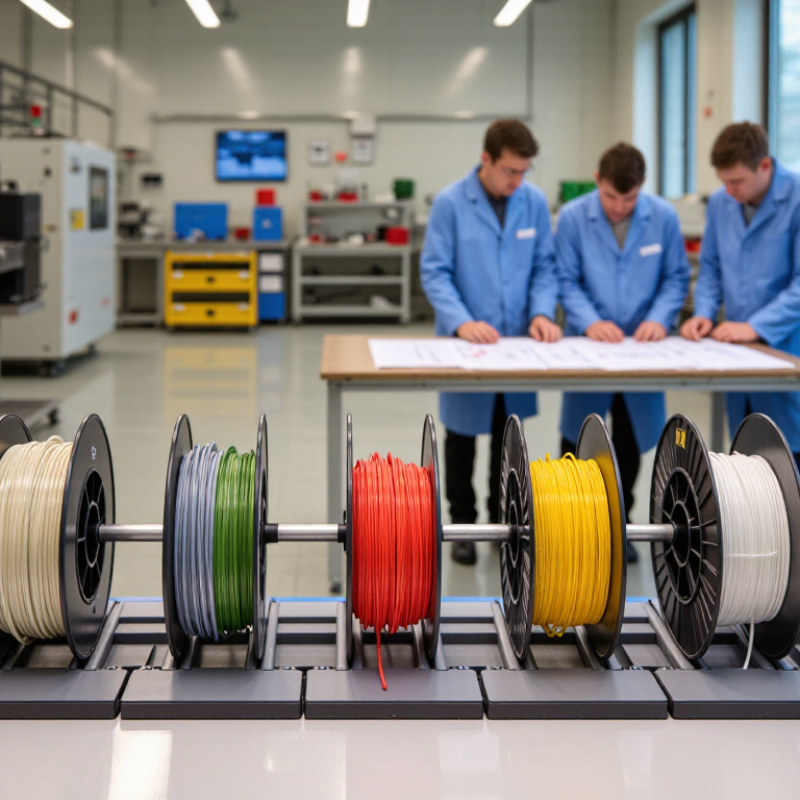
What Taped Litz Wire Is and Why Global Buyers Use It
Taped litz wire is made from many fine, individually insulated copper strands twisted into a bundle and wrapped with tape. The strand insulation helps limit losses caused by skin and proximity effects in suitable high-frequency applications. The outer tape can hold the bundle together, protect it during handling, and provide an additional layer of insulation. It is not a substitute for checking the finished assembly’s insulation requirements.
Small details matter. Strand count, strand diameter, twist pattern, tape material, and winding geometry all affect performance. A transformer designer might compare samples by measuring losses and checking whether the wire fits neatly into a narrow bobbin window. Taping can make a bundle easier to handle, but it may also increase its overall size and reduce winding space. That trade-off is easy to miss. There is no universal best construction; the right choice depends on operating frequency, temperature, voltage, and assembly process. Global buyers can request construction drawings, test data, and clear tolerances before ordering. One practical caution: published figures may not reflect the buyer’s actual winding conditions. A sample build can reveal issues that a specification sheet cannot.
How to Evaluate Taped Litz Wire Suppliers
Evaluating taped litz wire suppliers starts with the details behind the product description. Ask for strand count, individual strand diameter, bundle dimensions, and tape material. Confirm tape width, overlap, and winding direction against your drawing. These details affect coil fit and insulation coverage. A datasheet should also state the conductor material, resistance, and applicable temperature limits. Check that quoted tolerances match your manufacturing needs, not just the supplier’s standard offer.
Request samples from a production-representative batch. Measure the finished diameter and inspect the tape for gaps, wrinkles, or loose edges. Then test electrical performance under conditions close to your actual application. A sample may look excellent and still behave differently after repeated winding. Ask how the supplier controls strand damage and dimensional variation during production. Review traceability, inspection records, and realistic lead times. A polished datasheet cannot tell the whole story.
Tips: Share a clear drawing and expected operating conditions before comparing quotes. Ask for written confirmation of critical specifications. Check response quality, too. Prompt answers help, but vague replies deserve follow-up. I would not treat one successful sample as proof of long-term consistency; request batch data where available.
How to Evaluate Taped Litz Wire Suppliers
Suggested weighting for comparing suppliers: prioritize electrical performance, customization, and quality controls, then assess delivery, technical support, and commercial terms. These percentages are a buyer evaluation framework, not measured supplier ratings; adjust them to your application and sourcing needs.
Profiles of Seven Taped Litz Wire Suppliers
Seven supplier profiles help buyers compare capabilities, not just quoted prices. A custom-winding specialist may adapt strand count, bundle size, and tape overlap for a particular coil design. A high-volume producer may offer steady output, but buyers should confirm minimum order quantities. A small-batch engineering shop can support prototypes and sample runs. Its capacity may be limited. An insulation-focused supplier may advise on tape materials and wrapping methods, while leaving electrical design decisions to the buyer.
A regional exporter may simplify communication and shipping coordination. Still, verify packing standards and delivery estimates before placing an order. A vertically integrated manufacturer may control more production steps, which can improve process consistency; ask how it tracks strand and insulation specifications. A wire distributor with conversion services may offer flexible quantities and shorter lead times. However, confirm whether it performs the taping itself or outsources that work. These profiles are useful starting points, not a ranking. Supplier capabilities vary, and documents need checking.
Tips: Request a sample with the intended strand count, tape type, and finished dimensions. Ask for a datasheet, tolerance details, and inspection records. Compare quotes using the same specification. Check spool size and winding direction too. Small details matter. If a supplier’s answer is vague, pause and clarify it before ordering. I have seen buyers overlook one detail: a sample can look right but still differ from the production lot. Keep that possibility in mind.
7 Best Taped Litz Wire Suppliers for Global Buyers? — Profiles of Seven Taped Litz Wire Supplier Types
An anonymized sourcing guide—not a verified ranking of named companies. Capabilities, certifications, lead times, and export coverage vary by supplier and should be confirmed directly.
| Supplier profile | Typical strengths | Potential applications | Key checks for taped Litz wire | Buyer considerations |
|---|---|---|---|---|
| 1. Dedicated Litz wire specialist | Litz constructions and strand configurations are a core product focus; may offer multiple insulation and taping options. | High-frequency transformers, inductors, and other windings where strand construction is specified. | Confirm strand count and diameter, insulation type, lay length, tape material, overlap, and finished dimensions. | Request samples and a construction drawing; verify minimum order quantities and repeatability for the exact design. |
| 2. Magnet-wire manufacturer with Litz capability | May have in-house knowledge of conductor and enamel insulation processes, alongside other winding-wire products. | Projects requiring coordinated conductor and insulation specifications. | Ask whether taping and the requested Litz construction are manufactured in-house or sourced from a partner. | Confirm traceability, process controls, available test reports, and responsibility for quality across any subcontracted steps. |
| 3. Custom cable and wire manufacturer | Often works to customer drawings and may support customized conductor builds, jacketing, or tape combinations. | Non-standard geometries, custom tape choices, or assemblies that combine wire with other cable features. | Check that the supplier can make the specified Litz construction—not just a taped stranded conductor—and document tolerances. | Clarify engineering fees, tooling needs, design-change control, and ownership of customer-specific drawings. |
| 4. Transformer and inductor component supplier | May understand how wire characteristics affect winding, termination, and component assembly requirements. | Buyers sourcing taped Litz wire alongside wound magnetic components or production support. | Establish whether raw wire is a regular product, a project-specific item, or purchased from another manufacturer. | Assess whether buying wire and components together improves coordination or limits flexibility in wire sourcing. |
| 5. High-frequency winding materials supplier | May focus on materials used in high-frequency magnetic applications and offer technical support for application-specific requirements. | Power conversion, resonant circuits, and other designs using high-frequency windings. | Request construction details and test methods; do not assume a product is suitable based on application wording alone. | Provide operating conditions and acceptance criteria so technical recommendations can be evaluated against the design. |
| 6. Regional electrical-materials distributor | Can offer local communication, consolidated purchasing, and access to products from one or more manufacturers. | Buyers prioritizing local availability, smaller shipments, or regional account support. | Identify the actual manufacturer and confirm that datasheets, lot traceability, and change notifications are available. | Check stock status, storage conditions, shipment origin, and whether quoted lead time includes upstream production. |
| 7. Contract manufacturing and sourcing partner | May coordinate supplier selection, production planning, inspection, and export logistics for a customer's specification. | Buyers seeking managed sourcing or supply-chain coordination across multiple production steps. | Confirm who manufactures the wire, who approves process changes, and who is accountable for nonconforming product. | Review quality agreements, audit access, country of origin, shipping terms, and contingency plans for supply interruptions. |
Before placing an order: compare suppliers using the same drawing and acceptance criteria, and verify certifications, test documentation, production location, and delivery terms for the specific product being quoted.
Comparing Supplier Capabilities, Certifications, and Markets
Comparing taped Litz wire suppliers starts with construction details, not catalogue claims. Ask for strand count, individual strand diameter, tape material, overlap, and finished-wire tolerances. Request sample test records for resistance, insulation integrity, and bend performance. Check whether certifications apply to the actual production site and product scope. ISO 9001 can indicate a quality-management system, but it does not certify every wire design. One caveat: paperwork may look stronger than production consistency.
Markets matter, too. Suppliers serving electric-vehicle chargers, renewable-energy inverters, and high-frequency transformers may have different validation experience. The International Energy Agency’s Electricity 2024 report projected average global electricity-demand growth of 3.4% annually from 2024 to 2026. That points to expanding electrical-equipment needs, but it does not prove demand for any specific wire construction. Compare lead times, export packaging, engineering support, and the supplier’s ability to reproduce a qualified sample at scale.
Tips: Send the same drawing and operating conditions to every candidate. Compare written tolerances, test methods, and delivery terms side by side. Ask for one production-lot sample. Small details matter. A neat sample alone is not enough.
How to Choose a Supplier for Your Project
Choosing a taped litz wire supplier starts with your operating conditions, not a catalogue headline. Share the frequency range, current, temperature rise, insulation class, tape material, and required dimensions. Ask for strand count and diameter, bundle construction, tape overlap, and winding direction. Small differences matter. A sample should match the production drawing, then be checked for flexibility, insulation integrity, and fit on the actual winding form.
Request test records for resistance, dimensions, dielectric performance, and batch traceability. Ask how the supplier controls tape tension and overlap; uneven wrapping can create bulky spots or expose edges during bending. The U.S. Department of Energy’s 2014 Motor Systems Market Assessment reports that motor-driven systems used about 68% of electricity consumed by U.S. manufacturing. That figure is not specific to litz wire, but it shows why electrical losses and repeatable quality deserve attention in motor-related projects. Ask for measured data at your own test conditions, not just general efficiency claims.
Compare lead times, minimum order quantities, engineering response, and the supplier’s ability to maintain the same construction across batches. Request a first-article sample and agree on acceptance criteria before scaling up. One trade-off is easy to miss: tighter tape coverage may improve insulation protection, but can increase finished diameter and reduce winding space. Check both outcomes. Claims alone are not enough.


