What Is a Beverage Can End and What Types Are Available?
A Beverage Can End is the closure fitted to a can body, usually joined by a tightly formed double seam. It may look like a simple metal disc, but its score line, rivet, and tab must work together. When a consumer lifts the tab, the scored panel opens while remaining attached. That small detail helps keep loose metal out of the drink.
Most familiar is the stay-on-tab end, used on many standard beverage cans. Wide-opening ends expose more of the drinking aperture, while specialty designs may support resealing or particular drinking experiences. Availability varies by can size, supplier, and filling system. Not every end fits every can. The distinction matters.
Materials and coatings matter, too. Aluminum ends are common, while steel options may suit particular packaging systems. A food-contact coating protects the product and the metal, but its suitability depends on the beverage and processing conditions. Manufacturers also consider opening force, seam integrity, transport, and filling-line compatibility. A lid that feels smooth in the hand still needs reliable performance through storage and distribution.
This guide introduces the main Beverage Can End types and explains how their features differ. It also considers practical selection factors, from opening style to can compatibility. The terminology can be confusing. Some product names overlap, and supplier specifications deserve a close reading. A useful choice balances consumer convenience with dependable sealing, rather than relying on appearance alone.
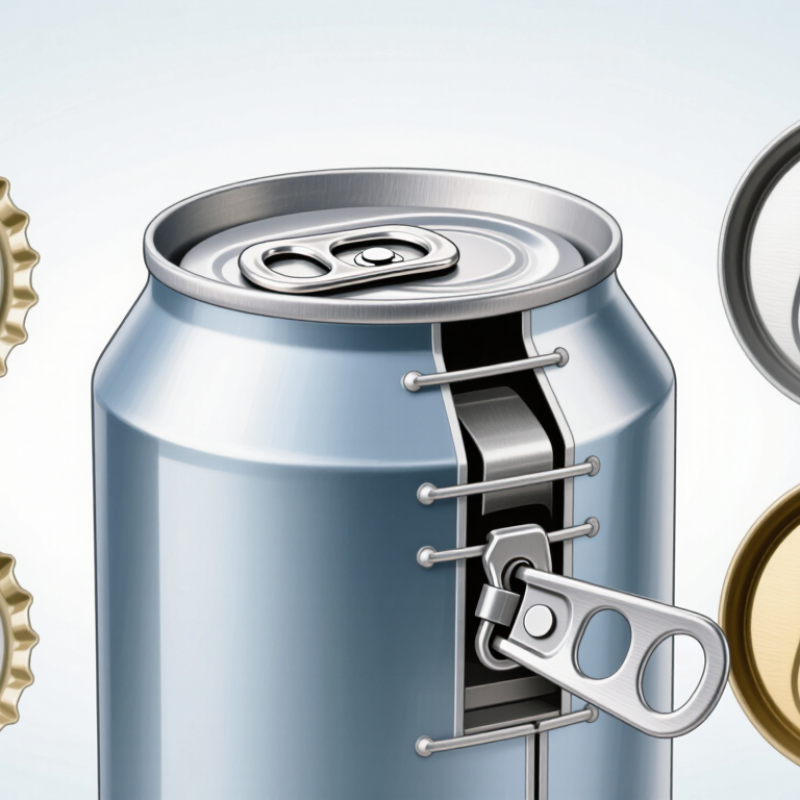
Definition and Purpose of a Beverage Can End
A beverage can end is the metal closure fitted to the open top of a can. It seals the contents, helps retain carbonation, and keeps out oxygen and contaminants. The end is joined to the can body with a double seam: tightly folded layers of metal that form a pressure-resistant connection. Small part. Big job.
Most modern beverage ends use a scored opening panel and a riveted tab. Pulling the tab pushes the panel inward, creating a drinking opening while leaving the tab attached. The score must be deep enough to open reliably, but not so deep that handling or internal pressure breaks the seal. That balance is easy to overlook. A tiny flaw can matter more than a polished surface. End shape and opening size also affect pouring, drinking, and how the can feels in the hand.
Material choices and designs vary by can format and production needs. The Aluminum Association and Can Manufacturers Institute’s 2023 U.S. Aluminum Can Recycling Data report puts the aluminum beverage-can recycling rate at 43%. This figure describes whole cans, not ends alone, but it shows why end material and recovery matter. A can end is more than a lid; it is a pressure-bearing part that must open cleanly and remain attached.
What Is a Beverage Can End and What Types Are Available?
Definition and purpose: A beverage can end is the closure attached to the top of a can. It seals the contents, helps protect the beverage, and provides an opening for pouring or drinking.
| Dimension | Description | Purpose or Use |
|---|---|---|
| Basic definition | A shaped metal closure joined to the can body with a double seam. | Creates a secure, leak-resistant closure that helps keep the beverage contained during handling and storage. |
| Main components | The end shell includes a curled edge and countersink. On an easy-open end, a scored panel is connected to a riveted tab. | The curl and countersink support the seam and end structure; the score defines the opening panel, while the tab gives the user leverage to open it. |
| Stay-on-tab (SOT) end | An easy-open design in which the tab remains attached to the end after opening. | Common on modern beverage cans. It provides convenient access while avoiding a loose pull tab. |
| Removable pull-tab end | An older easy-open design in which pulling the tab removes a scored panel from the can end. | Opens a drinking or pouring aperture, but leaves a separate tab and panel that must be handled after opening. |
| Standard opening | A stay-on-tab end with a relatively small opening intended for ordinary drinking or pouring. | Suitable for many carbonated soft drinks, beers, and other canned beverages. |
| Wide-opening end | An easy-open end with a larger scored panel than a standard opening. | Allows a greater flow of liquid and more access for drinking; the exact opening shape and size vary by design. |
| Full-aperture end | An end designed so that most or all of its central panel opens while remaining attached, depending on the design. | Provides broad access to the can opening, commonly for products intended to be poured or consumed from the container. |
| Material | Beverage can ends are commonly made from aluminum alloy. The can body may be aluminum or steel, depending on the package. | Material choice affects forming, strength, weight, and compatibility with the can body and seaming process. |
| End-size designation | Codes such as 200 or 202 are used in the can industry to identify nominal end-size formats; the code is not a universal guarantee of interchangeability. | Helps specify a compatible end and can-body design. Compatibility should be confirmed using the relevant technical specifications. |
| Closure performance | The end and double seam are designed to withstand normal filling, processing, transport, and storage conditions. | Helps protect product quality and maintain package integrity. Performance depends on the complete package design and production controls. |
Note: End styles, opening dimensions, materials, and size codes vary by can format and application. A can end must be specified to match the body and the intended filling and seaming process.