


Top Cantilever Rack Types for Warehouse Storage

Long, awkward materials can turn a warehouse aisle into a daily obstacle course. Steel bars, lumber, pipes, and sheet goods need accessible support without obstructive front posts. A Cantilever Rack addresses this challenge with a central column and projecting arms. Workers can load items from the open side using suitable handling equipment. The result can be easier access, but only when the rack matches the inventory and workflow.

This guide introduces common cantilever rack types, including single-sided and double-sided systems, as well as light-, medium-, and heavy-duty configurations. It also considers adjustable arms, base length, upright spacing, and indoor or outdoor placement. Small details matter. A long pipe may need more support points than a short bundle, while uneven loads can affect how weight should be distributed. Capacity labels are not interchangeable; check the manufacturer’s specifications for the exact configuration and intended load. That step is easy to overlook.

Choosing a system involves more than selecting the strongest-looking frame. A larger rack may consume valuable floor space, while a compact layout can restrict handling access. The best fit depends on product dimensions, load weight, available equipment, and future storage needs. Even a careful plan can miss a real-world pinch point, so review aisle clearance before installation. The following sections compare the main options and explain what to assess before choosing.
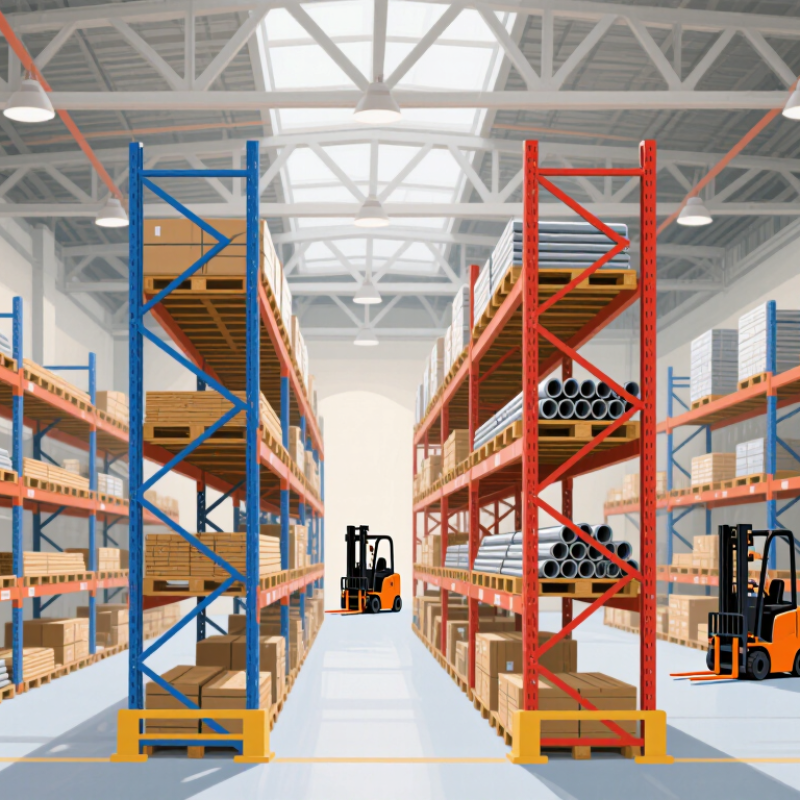
Top Cantilever Rack Types for Warehouse Storage

Assess Load Dimensions and Stability Under OSHA 29 CFR 1910.176(b)

Cantilever racks suit long, awkward materials such as pipe, timber, and sheet stock. Single-sided units fit against walls; double-sided racks serve central aisles. Choose arm length and upright spacing to support the actual load, not just its total weight. A bundle of pipe may weigh less than a compact steel plate, yet extend much farther beyond the arms. That overhang can shift the load center and reduce stability.

OSHA 29 CFR 1910.176(b) requires stored materials to be secured against sliding or collapse. It does not set one universal cantilever-rack layout or capacity. Check each load’s length, width, weight, and shape against the rack’s rated capacity and placement instructions. Keep heavy items low, distribute them evenly, and avoid unsupported ends. Leave aisles clear for handling equipment. In practice, dimension checks are easy to rush; a quick tape measure is not a full stability review. Uneven floors, damaged arms, or mixed bundle sizes may also change how safely loads sit.

Tips: Measure the longest load and its overhang before selecting arm length. Confirm the upright and arm capacities together, and inspect locking pins and anchors. If a load rocks, bends an arm, or sits unevenly, stop and reassess the setup. Don’t guess.
Top Cantilever Rack Types for Warehouse Storage

Example layout dimensions: load width and arm projection (meters). These are illustrative planning values, not standard rack dimensions or load ratings.

Choose a rack configuration and arm length to suit the actual load dimensions, and verify capacity and stability with the rack supplier or a qualified engineer. OSHA 29 CFR 1910.176(b) requires clear, appropriately marked aisles and passageways; it does not specify universal cantilever rack dimensions or capacities.

Compare Single-Sided and Double-Sided Cantilever Rack Types

Single-sided and double-sided cantilever racks solve different warehouse layout problems. A single-sided rack places arms on one side of the upright column. It works well against a wall or along a perimeter, where access from the rear is unnecessary. This arrangement can keep long items, such as timber or metal sections, off the floor without using a central aisle for both faces.

A double-sided rack has arms on both sides of its columns. Positioned in a row, it serves two picking faces and can increase storage density in the same floor area. But those gains depend on aisle width and equipment access. A forklift needs room to approach, lift, and turn with a long load. More storage is not always better. A narrow aisle may slow handling or create awkward load movements.

Compare the available floor space, item lengths, and picking frequency before choosing. Measure the longest load, including any overhang, and check that arms and uprights suit the expected load distribution. Review floor capacity and anchoring requirements with a qualified rack professional. A single-sided layout may leave a little space unused; that is not automatically a flaw. Conversely, double-sided access can be wasted if one face is blocked by stored goods or equipment. Walk the proposed layout with an actual load in mind. The drawing may look neat. The turn may not work.

Choose Structural-Steel or Roll-Formed Rack Construction

Top Cantilever Rack Types for Warehouse Storage

Choose Structural-Steel or Roll-Formed Rack Construction

Structural-steel cantilever racks suit heavy, long loads such as steel bars, lumber, or large pipe bundles. Their welded or bolted components can provide substantial capacity, depending on the design. Uprights and arms often feel stout under demanding handling. That strength may come with greater weight, cost, and installation effort. Check the rated capacity for each arm and column, not just the rack’s overall rating. A forklift bump can also damage an arm, so aisle clearance matters.

Roll-formed racks use shaped steel sections, often making them lighter and easier to adjust. They can work well for lighter or changing inventory, such as trim, tubing, or packaged panels. But thinner sections may be more vulnerable to impact, and capacity varies by profile and configuration. Neither construction is automatically better. Compare load weight, bundle dimensions, handling equipment, floor conditions, and expected changes in inventory. A rack that fits today’s stock may become awkward after one product shift.

Tips: Measure the longest loads, including overhang. Review the rack’s load tables and anchoring requirements before installation. Leave room for safe forklift turns. If impacts or changing loads are common, factor repairs and adjustments into the decision; that part is easy to underestimate.

Match Arm Loads and Bracing to ANSI/RMI MH16.3-2021

Cantilever racks may be single-sided against a wall or double-sided in open warehouse aisles. The choice changes the layout, but not the need to check each arm and upright for the actual stored load. ANSI/RMI MH16.3-2021 provides a structural basis for evaluating cantilevered rack systems. Treat it as a design reference, not a substitute for site-specific engineering.

Start with the load on each arm, including how far it projects and where the material rests. A bundle of pipe placed near the arm tip creates a different demand than the same bundle supported close to the column. Check the full load path: arms, connections, uprights, bases, anchors, and supporting floor. Bracing helps control frame movement and stability, but it cannot make an overloaded arm safe. It must suit the rack height, configuration, and expected forces. Small details matter.

In practice, record the product dimensions and weight, then compare them with the rack’s approved configuration and posted capacity information. Keep loads centered and distributed as intended; long stock can shift during handling. If arms, braces, or anchors differ from the original design, have a qualified rack engineer review the change against MH16.3-2021. A field adjustment may look harmless. It may not be. Recheck the arrangement after installation, especially where aisle impacts or uneven floors are concerns.

Plan Layout, Seismic Design, and Inspections Using RMI Guidance

Cantilever racks suit long, awkward goods such as timber, pipe, and sheet stock. Single-sided racks work along walls; double-sided units serve aisles from both faces. Select light-, medium-, or heavy-duty arms according to verified product loads, not appearance. Measure the longest bundles, forklift turning path, and aisle clearance before fixing the layout. Leave room for guards and clear access to exits. A tidy drawing can still miss a real-world obstruction.

For seismic design, give a qualified structural professional the rack layout, stored-load assumptions, building details, and local seismic criteria. Use current RMI guidance and applicable specifications to inform the design, installation, and anchorage review. Do not assume a rack is safe because it stood through an earlier tremor. Uneven loading, altered arms, or an unverified slab can change the outcome. Small details matter.

Inspect uprights, bases, arms, braces, anchors, and connections on a documented schedule. Look for bent steel, cracked welds, loose fasteners, impact marks, and missing load notices. Record the rack location and defect, then restrict access when damage may affect stability until a competent person assesses it. Check again after relocation or a layout change. The checklist may feel repetitive, but missed damage is harder to explain.

Packaging machine ROI calculator

Need help figuring out if packaging automation is right for your business?


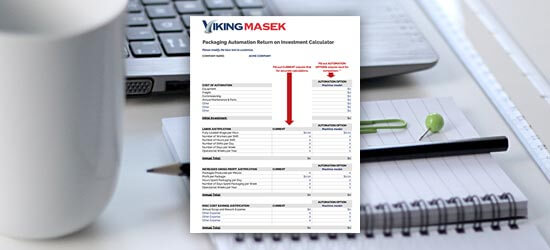
First, start with the numbers. Download our free packing machine ROI calculator to learn how long it will take for an investment in automation to pay for itself (and much more).


Free packaging automation ROI calculator