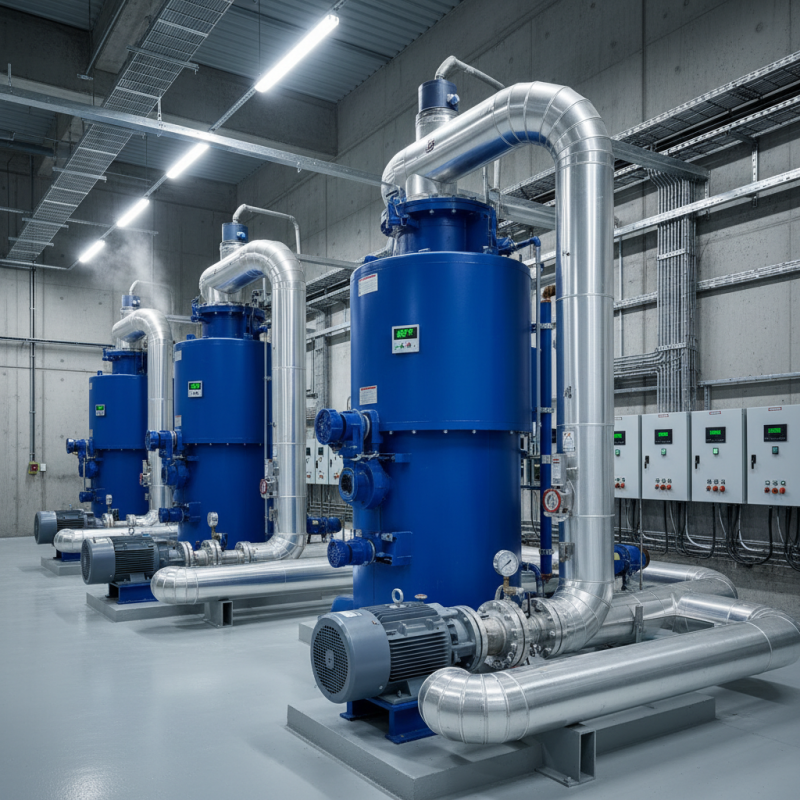
What is Chiller Series and How Does It Work?
The Chiller Series plays a crucial role in cooling systems. It is vital for industrial and commercial applications. Understanding its function helps in better utilization and maintenance.
Chillers operate by absorbing heat from the environment. They circulate a refrigerant to achieve this. The Chiller Series can vary widely in size and capacity. Some units are compact, ideal for smaller spaces. Larger units can cool entire buildings. This creates a challenge in efficiency and cost.
The technology behind the Chiller Series can be complex. It requires careful consideration during installation and repairs. Users often overlook maintenance needs. Regular inspections can prevent larger issues. Such reflections are important for reliable performance. The Chiller Series, while powerful, is not infallible. It requires attention to ensure optimal functioning.
What is a Chiller Series?
Chiller Series refers to a group of refrigeration units used in various applications. They are vital for cooling large spaces and industrial processes. Typically, chillers remove heat from fluid through vapor-compression or absorption cycles. Their energy-efficient operation can significantly reduce energy costs.
In a standard chiller series, the system consists of several components. These include a compressor, condenser, evaporator, and expansion valve. The compressor compresses refrigerant gas, increasing its pressure. Heat is released in the condenser, cooling the refrigerant. The cooled refrigerant then flows to the evaporator, absorbing heat and cooling the intended area.
Understanding the intricacies of the chiller series can be challenging. For instance, improper sizing often leads to inefficiencies. Many users overlook maintenance, which can result in poor performance. A well-managed chiller series can enhance comfort and operational efficiency. However, the balance between cost and performance remains tricky. Learning these details helps improve decision-making and reduces costly mistakes.
The Components of a Chiller System
A chiller system is essential for cooling processes in many industries. Understanding its components helps in effective maintenance and operation. The main parts include compressors, condensers, evaporators, and expansion valves. Each plays a crucial role in the cooling cycle.
Compressors are responsible for pressurizing the refrigerant. They are the heart of the system, ensuring efficient circulation. Condensers cool the hot refrigerant gas, allowing it to transform back into a liquid. Evaporators absorb heat from the surrounding air or water, providing the necessary cooling effect. Expansion valves regulate the flow of refrigerant, ensuring the correct pressure and temperature.
Tips: Regular maintenance is key for longevity. Check refrigerant levels often. Ensure that all components are clean and functioning properly. Even minor leaks can lead to significant issues later on. Keep an eye on system pressures and temperatures; they are indicators of performance.
Each component's performance can vary over time. If one part fails, the entire system may be compromised. Listening to operational sounds can provide hints about issues. Unexpected noises may signal wear and tear. Regular inspections can help identify problems before they escalate.
How Chiller Series Operate Mechanically
Chiller series units play a crucial role in cooling systems. They focus on removing heat from a specific area and transferring it to a different location. This process is vital in various settings, from industrial sites to commercial buildings. Understanding their mechanical operation helps grasp their significance.
Mechanically, chiller series units utilize a refrigeration cycle. This cycle consists of four primary processes: compression, condensation, expansion, and evaporation. First, a refrigerant absorbs heat, turning from liquid to gas. Next, a compressor raises the pressure of this gas, preparing it for the condensation phase. Here, the gas releases heat, transitioning back into a liquid.
Finally, the expansion valve reduces the refrigerant's pressure before it re-enters the evaporator. The cycle continues. Observing this process, one might notice inefficiencies, like potential leaks or improper insulation. These factors can undermine performance. Regular maintenance can help identify these issues, ensuring the system runs smoothly. However, it’s easy to overlook them in busy environments. Addressing these concerns proactively is essential for optimal operation.
Different Types of Chiller Systems and Their Uses
Chiller systems are essential in various industries. They remove heat from liquids through vapor-compression or absorption cycles. This cooling process is crucial for maintaining optimal conditions in manufacturing, food processing, and air conditioning.
There are several types of chiller systems. Air-cooled chillers are commonly used for small to medium applications. They are cost-effective and easy to install. Water-cooled chillers tend to be more efficient but require a cooling tower. This makes them better suited for larger operations. Additionally, absorption chillers use heat, making them ideal where electricity costs are high.
Tip: Regular maintenance is key. A poorly maintained chiller can lead to energy inefficiency. In fact, the U.S. Department of Energy states that operational inefficiencies can increase energy use by up to 30%. Therefore, schedule routine checks.
Additionally, hybrid systems are gaining popularity. These systems combine technologies for enhanced efficiency. For instance, they can switch between air and water cooling based on demand. However, these setups require careful planning and monitoring. Sometimes, the pursuit of efficiency can lead to complications if not managed properly.
Applications of Chiller Series in Various Industries
Chiller Series systems play a crucial role in various industries. Their primary function is cooling, particularly in industrial processes, commercial buildings, and even in medical facilities. In manufacturing, chillers maintain precise temperatures during production. This prevents heat-related damage to sensitive components. A report by the International Institute of Refrigeration highlights that about 40% of energy is consumed by HVAC systems, including chillers. This makes efficient designs essential.
In the food and beverage sector, chillers are vital for preserving product quality. They reduce the risk of spoilage and extend shelf life. Supermarkets depend on these systems for keeping food fresh. A study from the Food Marketing Institute reveals that effective cooling can prevent up to 20% of food waste. Yet, some facilities still face challenges in optimizing their cooling systems.
Healthcare facilities also rely on chillers to control environment temperatures. Operating rooms require strict temperature management. Keeping these areas cool is critical for patient safety during procedures. However, not all hospitals have upgraded their chiller systems. Some still use outdated technology, which can lead to inefficiencies. According to a report by the American Society for Healthcare Engineering, nearly 60% of hospitals face cooling system issues. Addressing these concerns is imperative for better healthcare delivery.
Applications of Chiller Series in Various Industries