


China Best Thermal Expansion Vessel Manufacturer?

Choosing the China Best Thermal Expansion Vessel Manufacturer requires more than comparing prices, catalog images, or promised delivery dates. A reliable supplier should understand how water expands, how pressure changes, and how vessels behave during repeated heating cycles. The right product protects boilers, pumps, pipework, and safety valves from unnecessary stress.

Hydronics educator John Barba has described an expansion tank as “the shock absorber of a hydronic system.” This simple comparison is useful. A vessel must absorb pressure growth quietly, even when the system temperature rises from 20°C to 80°C. Its diaphragm material, weld quality, pre-charge pressure, and shell coating all influence service life. Small details matter.

Experienced manufacturers usually provide documented specifications, material information, inspection procedures, and relevant certifications. They should also explain whether each Thermal Expansion Vessel suits potable water, heating water, solar systems, or other applications. One vessel cannot safely serve every system. That assumption causes problems.

Factory experience matters, but it is not enough. A strong supplier should combine engineering knowledge with practical testing. Look for pressure testing, leak checks, batch traceability, and clear installation guidance. Ask difficult questions.

No manufacturer is perfect. Even a well-designed vessel can fail when installers ignore pre-charge settings, mounting direction, or system pressure. That is an uncomfortable point, but it deserves attention. This guide examines how to assess Chinese manufacturers through product quality, technical support, production consistency, and long-term reliability. The goal is not to name the cheapest supplier. It is to identify the partner most capable of delivering safe, stable, and application-matched performance.
China Best Thermal Expansion Vessel Manufacturer?

Thermal Expansion Vessels: Purpose, Design, and Operating Principles

China Best Thermal Expansion Vessel Manufacturer?

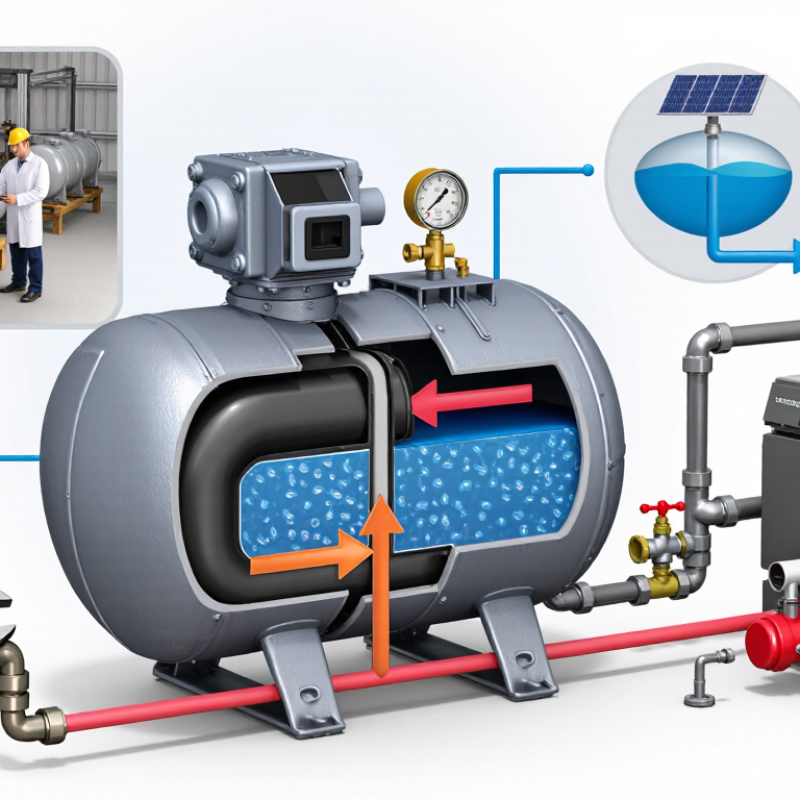
Thermal expansion vessels protect sealed heating and water systems from pressure increases. As water warms, its volume grows. The vessel receives this extra volume through a flexible diaphragm or bladder. This action reduces pressure spikes, valve discharge, and unnecessary pump stress. A correctly sized vessel improves system stability and service life.

The design includes a steel shell, gas chamber, water chamber, and charging valve. Pre-charge pressure must match the system’s static pressure and operating temperature. If it is too low, the vessel may fill too early. If it is too high, expansion space becomes limited. In practice, installers should check pressure when the vessel is isolated and empty. Small measurement errors can matter. That point is often underestimated.

Tips: Confirm vessel volume, connection size, temperature rating, and diaphragm compatibility before purchase. Ask for pressure-test records, material details, and clear installation guidance. A reliable manufacturer should explain sizing assumptions instead of offering one universal model. Inspect the pre-charge during maintenance, especially after repeated pressure fluctuations. Even a well-designed vessel can perform poorly when installed without proper support or an accessible isolation valve.

Key Criteria for Evaluating Chinese Thermal Expansion Vessel Manufacturers

Selecting the best Chinese thermal expansion vessel manufacturer requires more than comparing prices. The Solar Heat Worldwide 2024 report estimates approximately 560 GWth of solar thermal capacity worldwide, with China holding about 70%. This large installed base supports useful manufacturing experience, but capacity alone does not prove reliability.

Check compliance with EN 13831, ASME Section VIII, or the standard required in your market. Ask for material certificates, welding procedure qualifications, bladder test records, and batch-level traceability. A serious factory should explain vessel volume, maximum working pressure, temperature limits, and pre-charge settings clearly. I prefer seeing hydrostatic test procedures and calibration records, not only attractive certificates. ISO’s 2022 Survey recorded more than one million ISO 9001 certificates in China. Yet certification shows process management, not automatic product quality.

Inspect production in practice. Look for clean welding areas, controlled painting, protected threads, and separate zones for pressure testing. Request samples from different production dates. Compare shell thickness, flange dimensions, and air-tightness results. One overlooked detail can create installation trouble. Ask whether the manufacturer has experience with glycol systems, potable water, heating circuits, or chilled-water applications. The correct diaphragm material matters. So does the replacement process.

A transparent supplier should provide drawings, test reports, warranty terms, and technical support in writing. Export experience is helpful, but it should be verified through shipment records or independent inspections. I would not accept vague claims such as “European quality” without measurable evidence. My screening method is not perfect; field performance can still vary with installation, water chemistry, and incorrect pre-charge adjustment.

Manufacturing Standards, Materials, and Quality Control Practices

China’s best thermal expansion vessel manufacturer should prove control through standards, materials, and testing. EN 13831 covers sealed expansion vessels for water systems. ASME BPVC Section VIII supports pressure-vessel design and fabrication. PED 2014/68/EU may also apply when working pressure exceeds 0.5 bar.

Material selection affects service life. Carbon-steel shells need consistent anti-corrosion treatment, while stainless steel suits aggressive water conditions. EPDM or butyl diaphragms must tolerate temperature cycles without permanent deformation. A serious factory checks steel certificates, rubber batches, weld penetration, coating thickness, and pre-charge pressure. It should record every vessel by serial number.

ISO Survey 2023 reported 1,265,216 ISO 9001 certificates worldwide, showing how widely documented quality systems are used. Certification alone proves little.

Testing should include hydrostatic pressure testing, leak inspection, diaphragm movement checks, and calibrated gauge verification. Sampling is useful, but full inspection is safer for critical dimensions. A 2024 pressure-vessel market analysis by Mordor Intelligence forecasts continued demand from heating, cooling, and water infrastructure projects.

That growth can encourage rushed production. It should not. In factory audits, I would inspect rejected vessels, not only polished samples. This reveals recurring defects.

No manufacturer is perfect. Even a strong process may miss a weak weld or incorrect pre-charge. Honest reporting, corrective-action records, and independent certification matter more than attractive brochures.

Product Selection for Heating, Plumbing, and Renewable Energy Systems

Choosing the best thermal expansion vessel manufacturer requires more than comparing tank prices. In heating systems, vessel volume must match water capacity, operating temperature, and safety valve pressure. A reliable manufacturer provides sizing guidance based on real installation conditions, not only catalogue tables. Ask for diaphragm material, shell thickness, connection size, and factory pressure-test records.

Plumbing systems need stable pressure during repeated water heating and cooling. A vessel with an unsuitable pre-charge may cause frequent pump cycling, pressure drops, or relief valve discharge. I have seen small vessels installed beside domestic water heaters because the pipe connection looked convenient. That choice was costly. Check the actual expansion volume first. Keep it practical.

Renewable energy systems create different demands. Solar thermal circuits can reach high temperatures, while heat pumps often operate with frequent cycling. The vessel should tolerate the fluid, temperature range, and pressure changes specified by the system designer. Look for traceable production records, clear technical documents, and testing aligned with applicable standards. After installation, verify the pre-charge with the system isolated and pressure-free. Measurements can still vary slightly on site. That is worth checking twice. A manufacturer that supports commissioning, replacement parts, and installation questions is usually more dependable than one offering only a low initial price.

How to Compare Suppliers, Certifications, Pricing, and After-Sales Support

Choosing the best thermal expansion vessel manufacturer in China requires more than comparing factory prices. The IEA’s Buildings 2023 report states that buildings use about 30% of global final energy. Reliable pressure control therefore protects pumps, boilers, pipework, and operating budgets. Ask each supplier for material certificates, welding procedures, hydrostatic test records, and traceability from steel sheet to finished vessel.

Certifications need careful checking. Depending on the destination, relevant evidence may include ISO 9001, EN 13831, the Pressure Equipment Directive, or ASME Section VIII compliance. Verify the certificate number with the issuing body. A logo on a brochure proves very little. Pricing should include freight, testing, packaging, installation guidance, replacement parts, and warranty coverage. Request the same specification from every supplier. Otherwise, the cheapest quote may simply exclude essential tests or accessories. No comparison is perfect.

Tips: Build a simple scorecard. Give quality and documentation 30%, product performance 25%, price 20%, delivery 10%, and after-sales support 15%. Ask whether engineers answer within one business day, whether spare bladders are stocked, and whether remote commissioning is available. The UNEP Global Status Report highlights the growing pressure to improve building efficiency, but efficiency targets can expose weak maintenance planning. I would also request two recent project references and inspect one vessel’s nameplate, weld finish, and pressure data. A supplier may sound professional, yet response quality after payment reveals more.

China Best Thermal Expansion Vessel Manufacturer? - How to Compare Suppliers, Certifications, Pricing, and After-Sales Support

Comparison Dimension Supplier Profile A Supplier Profile B Supplier Profile C What Buyers Should Verify
Typical Product Range 2–500 L; mainly heating and chilled-water systems 8–2,000 L; HVAC, solar thermal, and industrial water systems 1–5,000 L; standard and engineered configurations Confirm usable volume, connection size, mounting method, and application temperature.
Vessel Construction Welded carbon-steel shell with replaceable diaphragm Welded carbon-steel shell with fixed or replaceable bladder options Carbon steel, stainless steel, and customized shell options Request material certificates, weld procedures, and diaphragm or bladder specifications.
Common Working Pressure 3–10 bar 6–16 bar 3–25 bar, subject to design approval Check design pressure, maximum allowable working pressure, and test pressure separately.
Temperature Range Approximately −10°C to +100°C Approximately −10°C to +110°C Approximately −20°C to +130°C, depending on membrane material Verify the temperature rating of the membrane, coating, fittings, and complete assembly.
Quality Management Certification ISO 9001 quality management system ISO 9001 quality management system ISO 9001 quality management system; scope should be confirmed Check certificate validity, issuing body, manufacturing site, and certification scope.
Pressure Equipment Compliance CE/PED documentation available for selected models CE/PED documentation available for applicable product categories PED, ASME, or other code packages available by project Confirm whether the exact vessel model, volume, pressure, and destination require conformity assessment.
Testing and Inspection Hydrostatic pressure test and leak inspection Hydrostatic test, air-tightness check, and dimensional inspection Hydrostatic test, weld inspection, coating inspection, and third-party inspection by request Ask for test pressure, test duration, inspection records, and serial-number traceability.
Indicative Factory Price Approximately US$25–US$180 per unit for common 2–100 L models Approximately US$35–US$260 per unit for common 8–200 L models Approximately US$30–US$450 per unit for standard models; engineered units quoted separately Compare equivalent volume, pressure, membrane, coating, packaging, certification, and delivery terms.
Minimum Order Quantity Commonly 10–50 units, depending on model Commonly 20–100 units, depending on customization Often 1–20 units for standard models; project orders negotiated separately Obtain the MOQ in writing and confirm whether mixed sizes can be combined in one order.
Standard Lead Time Approximately 15–25 days after order confirmation Approximately 20–35 days after technical approval Approximately 25–45 days; longer for customized designs Confirm production schedule, approval milestones, shipping time, and delay remedies.
Customization Capability Connection size, color, label, and bracket customization Volume, pressure, fittings, mounting, and membrane customization Custom dimensions, materials, fittings, supports, and documentation packages Require approved drawings and a signed technical specification before production.
Warranty Coverage Typically 12–18 months from shipment or 12 months from commissioning Typically 12 months from commissioning, subject to agreed terms Typically 12–24 months for approved projects Clarify coverage for shell corrosion, membrane failure, fittings, labor, and freight.
Spare Parts Availability Replacement membranes and valves generally available Replacement bladders, valves, and sealing components generally available Replacement parts supplied according to model and project documentation Check spare-part pricing, storage life, compatibility, and expected dispatch time.
Technical Support Sizing support and installation instructions by email Sizing calculations, drawings, and commissioning guidance Application engineering, documentation review, and project-based support Evaluate response time, calculation quality, language support, and availability after shipment.
Recommended Buyer Fit Cost-sensitive buyers requiring standard HVAC expansion vessels Distributors and contractors requiring broader pressure and configuration options Industrial or export projects requiring engineering and compliance documentation Select according to application risk, regulatory market, order volume, and total delivered cost.

Note: Price ranges, lead times, capacities, and warranty periods are indicative market ranges for comparison only. Final values depend on vessel size, design pressure, materials, certification requirements, order quantity, packaging, shipping terms, and destination regulations.

Packaging machine ROI calculator

Need help figuring out if packaging automation is right for your business?


First, start with the numbers. Download our free packing machine ROI calculator to learn how long it will take for an investment in automation to pay for itself (and much more).


Free packaging automation ROI calculator