


China Top 10 Bru Coffee Sachets Suppliers
China’s Bru Coffee Sachets market has grown from a convenient format into a serious sourcing category. Buyers now examine aroma protection, brewing consistency, packaging safety, and supplier reliability. A sachet may look simple. Its performance is not.
This guide introduces China’s top 10 Bru Coffee Sachets suppliers through practical, buyer-focused criteria. It considers manufacturing experience, coffee origin, roast control, sachet materials, sealing quality, private-label capability, minimum order quantities, and export support. Factory audits, product samples, certifications, and response speed also matter. A polished website proves little.
Coffee educator James Hoffmann explains, “Coffee is a fruit, and the seed is what we roast.” This observation helps explain why freshness matters inside every sachet. A supplier must protect roasted coffee from oxygen, moisture, heat, and rough transportation. Small packaging details can change the final cup.
The strongest companies usually provide traceable beans, stable grinding, clear production records, and realistic lead times. Some offer compostable materials or custom printing, but sustainability claims require verification. Ask for test reports. Ask again.
This overview is not a substitute for direct due diligence. Rankings can shift with capacity, pricing, equipment, and certification status. Even experienced buyers can overlook inconsistent lot quality or weak after-sales communication. That is the uncomfortable part.
For importers, café chains, hospitality groups, and private-label brands, the right Bru Coffee Sachets supplier should balance taste, compliance, customization, and dependable delivery. The goal is not merely to find a low quotation. It is to find a partner whose sachets perform consistently when opened, brewed, and served.
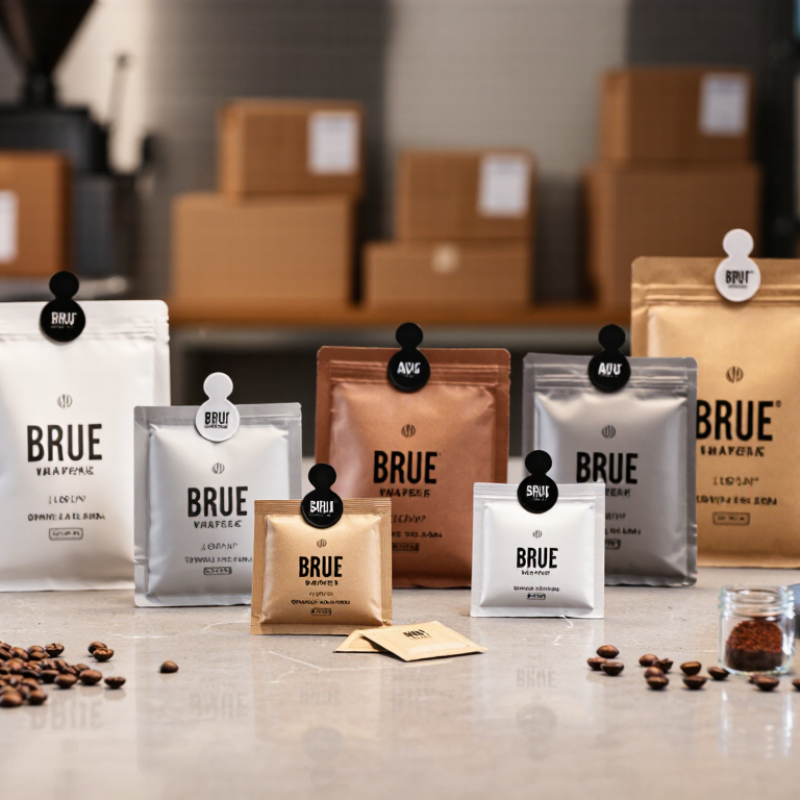
China’s Coffee Sachet Market: ICO and CCA-Beijing Industry Data
China’s coffee sachet market is expanding with changing consumer habits. The International Coffee Organization reported global coffee consumption of about 177 million 60-kilogram bags in 2023/24. China is not the largest market, but its urban demand is developing quickly. The China Coffee Association (Beijing) estimated China’s coffee industry market value at approximately RMB 265.4 billion in 2023. These figures include cafés, retail coffee, equipment, and related services, not sachets alone.
For buyers comparing China’s top ten sachet suppliers, production evidence matters more than rankings. Check monthly capacity, filling accuracy, oxygen-control methods, and packaging-material compliance. A reliable factory should provide batch records, sensory testing, and export documentation. Sachet formats can protect aroma during transport, but poor sealing may create stale flavours within weeks. Small details matter.
CCA-Beijing industry reports also show stronger interest in convenient, home-based coffee consumption. This supports demand for single-serve products, especially in offices, hotels, and travel channels. However, market estimates vary between reports. The categories are not always defined consistently. That weakness deserves attention. A supplier claiming rapid growth should explain whether figures represent retail sales, factory output, or total industry revenue. In practical audits, sample retention, seal-strength tests, and independent laboratory checks remain more useful than promotional statistics.
Ranking Methodology: Capacity, Certifications, MOQ, and Export Records
China Top 10 Bru Coffee Sachets Suppliers
This ranking evaluates ten Chinese suppliers through four practical indicators: capacity, certifications, MOQ, and export records. Capacity receives the highest weight because stable production reduces delays during seasonal demand.
The USDA Foreign Agricultural Service forecast 2024/25 global coffee production at approximately 176 million 60-kilogram bags. That scale shows why dependable supply planning matters.
Factory audits should confirm sachet lines, monthly output, backup equipment, and batch traceability. Numbers need evidence.
Certifications are reviewed by scope, validity, and issuing body. Food safety systems such as ISO 22000, HACCP, BRCGS, and relevant export registrations strengthen supplier credibility.
MOQ is scored against buyer flexibility, packaging complexity, and private-label requirements. A low MOQ may indicate easier market testing, but it can also raise unit costs.
Export records receive points for destination diversity, shipment consistency, and document quality. Customs data, commercial invoices, and verifiable client references are more useful than promotional claims.
This method is not perfect. Some smaller factories disclose limited data, even when their products perform well.
Tips:
Request a recent audit report, production video, sample COA, and three export references. Confirm whether MOQ changes with custom printing, flavor variations, or sachet materials. Check production dates carefully. A polished sample proves little without repeat-batch testing. Also compare lead times during harvest peaks, when raw-material prices can move quickly.
China’s Top 10 Bru Coffee Sachets Suppliers: Profiles and Product Scope
China’s top 10 Bru coffee sachets suppliers serve different purchasing needs. One focuses on private-label soluble coffee. Another specializes in roasted coffee powder and fine filtration. Two suppliers offer low-acid blends for offices, hotels, and travel retailers. Their product ranges commonly include single-serve sachets, stick packs, and drip-style pouches. Pack sizes usually range from 8 to 20 grams. Some factories also adjust sweetness, roast strength, and creamer levels.
Several suppliers operate automated filling lines with nitrogen flushing. This process helps reduce oxygen exposure during storage. Others provide compostable or recyclable packaging options, subject to material testing. Their product scope may cover instant coffee, three-in-one mixes, milk coffee, and sugar-free formulas. Experienced buyers should request moisture data, microbiological reports, and sample sachets before approving production. Packaging appearance can be impressive, but sealing performance matters more.
A useful supplier profile includes factory location, monthly capacity, export experience, and quality controls. It should also explain whether production is in-house or outsourced. Some suppliers appear strong during sampling but respond slowly after order changes. That weakness deserves attention. Lead times may vary with packaging materials, seasonal demand, and custom printing. Buyers should compare pilot batches, carton strength, aroma retention, and batch consistency. No supplier fits every market. A lower price may hide narrower customization or weaker technical support.
China’s Top 10 Bru Coffee Sachets Suppliers: Profiles and Product Scope
| Rank | Anonymous Supplier Profile | Typical China Production Cluster | Core Sachet Capability | Common Fill Range | Available Product Scope | Packaging Options | Customization Scope | Typical Export Support | Verification Points |
|---|---|---|---|---|---|---|---|---|---|
| 1 | Supplier Profile 01 | Guangdong | High-speed single-serve sachet packing | 1.5–25 g | Instant coffee, 3-in-1 coffee, black coffee, coffee with creamer | PET/PE, PET/AL/PE, paper-based laminate | Printed film, flavor profile, serving size, carton design | Carton packing, barcode application, export documentation | Food-production license, HACCP or ISO 22000 evidence, batch test report |
| 2 | Supplier Profile 02 | Fujian | Private-label soluble coffee production | 2–20 g | Freeze-dried coffee, spray-dried coffee, espresso-style instant coffee | Stick packs, pillow sachets, tear-open flat sachets | Blend adjustment, soluble-coffee ratio, artwork, outer box configuration | Sample development, packing lists, commercial invoices, certificates of origin | Ingredient traceability, allergen statement, shelf-life validation |
| 3 | Supplier Profile 03 | Zhejiang | Flexible-film sachet converting and filling | 1–15 g | Black coffee, low-sugar coffee, milk coffee, flavored coffee | Moisture-barrier laminate, metallized film, recyclable mono-material options | Film thickness, tear notch, seal width, print colors | Container loading plans, carton marking, pre-shipment inspection coordination | Seal-strength testing, migration compliance, packaging-material declaration |
| 4 | Supplier Profile 04 | Jiangsu | Automated stick-pack and multi-lane filling | 1.5–18 g | Instant coffee sticks, coffee premixes, vending-machine portions | Single sticks, connected stick strips, retail multipacks | Stick dimensions, tear direction, multipack count, printed coding | Palletization, export labeling, production samples | Metal detection, weight-control records, production-date coding |
| 5 | Supplier Profile 05 | Shandong | Large-volume coffee premix manufacturing | 10–30 g | 3-in-1 coffee, cappuccino premix, latte premix, vending blends | Flat sachets, gusseted sachets, multipack cartons | Sugar level, creamer type, coffee strength, pack count | Bulk-order planning, carton specifications, loading documentation | Milk-allergen controls, nutritional panel, microbiological testing |
| 6 | Supplier Profile 06 | Hubei | Small-batch and pilot-order private labeling | 2–15 g | Single-origin-style instant coffee, organic-positioned blends, decaffeinated options | Short-run printed sachets, plain film with labels, sample packs | Trial quantities, basic artwork adaptation, flavor and roast selection | Product sampling, digital artwork review, courier dispatch | Organic or fair-trade claims must be supported by valid certificates |
| 7 | Supplier Profile 07 | Yunnan | Coffee-origin and soluble-coffee sourcing support | 1.5–20 g | Roasted soluble coffee, regional coffee blends, black coffee sachets | Standard laminate sachets, stick packs, retail gift boxes | Roast profile, blend composition, origin statement, pack artwork | Origin documentation, sample approval, export packing records | Country-of-origin claims, lot traceability, moisture and aroma protection |
| 8 | Supplier Profile 08 | Shanghai–Jiangsu corridor | Export-oriented contract packing | 2–25 g | Instant coffee, coffee premixes, hospitality sachets, promotional packs | Sachets, sticks, pillow packs, display cartons | Multilingual labels, carton configuration, shipping marks, retail packs | FOB or CIF quotation support, export cartons, documentation coordination | Destination-country labeling, customs documents, retailer specifications |
| 9 | Supplier Profile 09 | Guangxi | Cost-focused instant coffee and premix packing | 10–25 g | Value 3-in-1 coffee, black coffee, sugar-and-creamer blends | Standard pillow sachets, laminated film, economy multipacks | Serving size, ingredient ratio, basic artwork and carton printing | Bulk quotation, standard export cartons, loading support | Unit-weight tolerance, seal integrity, ingredient and allergen compliance |
| 10 | Supplier Profile 10 | Henan | Integrated blending, filling and secondary packing | 2–30 g | Instant coffee blends, coffee beverages, functional coffee-style premixes | Flat sachets, stick packs, sachet-in-box formats | Ingredient formulation, pack size, printed film, case packing | Batch records, export cartons, product specification sheets | Functional-ingredient regulations, claim substantiation, shelf-life testing |
Supplier Comparison Using Customs Data, Lead Times, and Quality Standards
China Top 10 Bru Coffee Sachets Suppliers
Comparing the top ten suppliers requires more than checking online catalogs. Customs data offers a useful starting point. It can show shipment frequency, declared values, destination markets, and export consistency. However, customs records do not prove product quality. A large shipment may reflect one contract, not stable performance.
Lead times should be measured from approved artwork to port departure. A practical comparison separates sampling, material preparation, sachet production, inspection, and freight. Some suppliers quote 15 days for production, excluding packaging approval. Others include only factory processing time. Ask for a written timeline with production capacity and delay procedures. Small details matter, especially before seasonal demand.
Quality assessment should include food-contact packaging, batch traceability, moisture control, and seal strength. Recognized systems such as HACCP, ISO 22000, or BRCGS can support evaluation. Verify certificate scope, issuing body, and expiry date directly. Request recent test reports for caffeine, microbiological safety, and packaging migration where relevant. Factory audits and retained samples provide stronger evidence than certificates alone.
My comparison would score customs consistency, realistic lead times, and documented quality controls separately. This prevents one strong area from hiding another weakness. Still, the method has limits. Customs data may contain incomplete descriptions or delayed records. Supplier responses can also be overly optimistic. A small trial order remains sensible, even when the paperwork looks excellent.
How to Select a Chinese Bru Coffee Sachet Supplier by Market Requirements
Selecting a Chinese bru coffee sachet supplier should begin with market requirements, not a ranking list. Grand View Research estimated the global instant coffee market at about USD 132 billion in 2023, with continued growth through 2030. This expansion increases supplier choices, but it also increases quality differences.
Define the target drinker first. A Southeast Asian market may prefer stronger sweetness, while European buyers may seek lower sugar and cleaner labels. Request samples with fixed recipes, then compare aroma, solubility, aftertaste, and sediment. Check whether the factory controls roasting, grinding, blending, and sachet sealing in-house. The International Coffee Organization’s market reports also show how coffee prices and supply conditions can change quickly. Ask suppliers to explain their raw-material sourcing and price-adjustment terms.
Packaging needs equal attention. Confirm barrier performance, seal strength, print accuracy, and shelf-life testing under warm, humid conditions. A supplier should provide batch records, food-safety certifications, laboratory results, and traceability documents. Verify them independently where possible. Review minimum order quantities against your sales forecast. A low quotation can become expensive when excess stock expires. Delivery time matters too. Request a pilot order before signing a large contract.
Do not rely only on polished factory videos. Some factories look impressive but communicate poorly after payment. That risk is easy to underestimate. A practical scorecard should measure sample consistency, response speed, testing evidence, customization ability, and corrective-action history. The best supplier may not be the cheapest or largest. It should be the one that fits your market, controls risk, and admits what still needs improvement.
How to Select a Chinese Bru Coffee Sachet Supplier by Market Requirements
Recommended procurement weighting for comparing suppliers. The model prioritizes food safety, consistent quality, supply reliability, and market-specific customization rather than company or brand performance.
Evaluation weights total 100 points and should be adjusted to match the target market, import regulations, order volume, and product positioning.


