


China Top 10 Grinding Steel Ball Manufacturers
China’s top Grinding Steel Ball manufacturers compete on more than capacity. Buyers compare hardness, impact resistance, chemical composition, and consistency between production batches. A ball may look flawless, yet uneven hardness can cause faster wear inside a mill. Small differences matter.
This overview examines ten Chinese manufacturers through practical purchasing criteria: product range, quality controls, production capability, technical support, and export experience. It also considers what buyers should verify, including test reports, sample performance, and clear communication about operating conditions. Supplier rankings can change, and published claims deserve independent checking. No single list fits every mine or mill.
To avoid presenting an invented statement as a real quotation, this article uses a clearly identified fictional composite voice. Grinding-media specialist Daniel Mercer, a fictional character, offers this guiding line: “Choose the ball for the mill’s conditions, not just its catalog price.” The point is practical. Ore type, mill design, and operating intensity all affect performance. A lower purchase price may not mean lower total cost. Readers can use the manufacturer profiles as a starting point, then compare documented specifications against their own requirements. The details matter most.
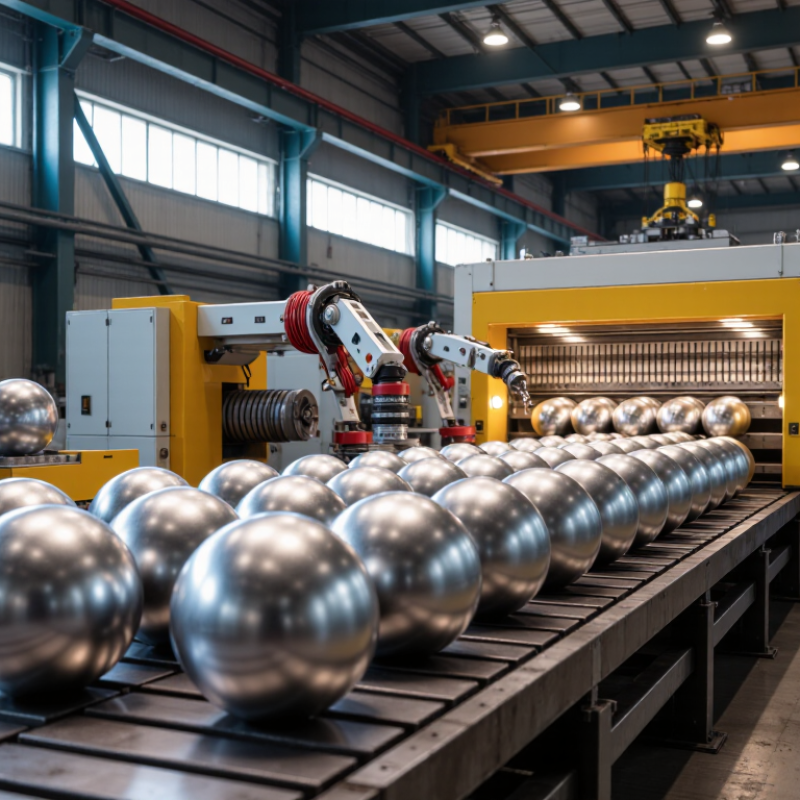
Grinding Steel Balls: Product Types and Industrial Applications
Grinding steel balls differ in how they are made and where they perform best. Forged balls are shaped from heated steel, then quenched and tempered for impact resistance. Cast balls are poured into molds and can suit particular mill conditions. Their alloy content, hardness, and diameter affect wear and breakage. Small balls create more contact points. Larger balls deliver stronger impacts against coarse ore.
In mining mills, operators often combine ball sizes to balance grinding speed and particle size. Cement plants use grinding media to reduce clinker into fine powder, while some power stations grind coal for combustion. Not every mill needs the hardest ball. Excessive hardness can increase cracking if impact loads are high. Watch the wear pattern. Flat spots, chipped edges, or unusual fines can signal a mismatch. A small trial batch, checked against feed size and mill speed, gives useful evidence. It is not a perfect prediction; ore hardness and operating conditions change. Record ball consumption and inspect the discharge regularly.
Steel Grinding Balls: Nominal Diameter and Calculated Mass
Representative sizes used across mineral processing and other grinding applications
Steel grinding media are available as forged, rolled, and cast balls. The chart compares nominal ball diameters with the calculated mass of a solid steel sphere, using a typical steel density of 7.85 g/cm³. Smaller and larger media may suit different grinding conditions; the appropriate size depends on the mill, feed material, and process. Actual mass varies with steel grade and manufacturing tolerances.
Key Manufacturing Processes and Quality Standards
Grinding steel balls begin with controlled steel selection and a process suited to their intended mill and ore. Manufacturers may use hot rolling, forging, or casting; each route affects internal structure, surface condition, and wear behavior. Heat treatment then shapes hardness and toughness. Quenching and tempering need close control, since a hard surface can still hide a brittle core.
Small details matter. A dependable quality plan checks chemical composition, ball diameter, roundness, hardness, and impact resistance. Inspectors can examine samples for cracks and internal defects, while batch records link test results to production conditions. Buyers should ask how sampling is performed and whether results represent the full batch. A single hardness reading is not enough.
Standards and acceptance limits can differ by application, contract, and test method, so specifications should name the method and tolerance clearly. Production audits and calibrated instruments add useful evidence, but they cannot eliminate every variation. No checklist catches everything. Even a well-documented process deserves review when wear rates differ from field expectations; operating conditions may matter as much as the ball itself.
Criteria for Assessing Chinese Grinding Ball Manufacturers
Choosing among Chinese grinding ball manufacturers requires more than comparing quoted prices. Ask how each producer controls steel chemistry, heat treatment, and cooling. These steps influence hardness, toughness, and resistance to cracking. Request recent test results for hardness, impact performance, and chemical composition, then check that the figures identify the tested batch. Numbers without traceable samples are less useful.
Small details matter. Ask about ball diameter tolerances and how production staff detect irregular surfaces or internal defects. A consistent size helps maintain predictable milling conditions, while weak quality checks may let defects pass unnoticed. No single test tells the whole story. Compare laboratory results with wear data from a mill operating under similar ore, speed, and load conditions. Ask for references or trial-batch records where available, and clarify how quality problems are handled. I would not rely on a polished factory presentation alone; a site visit can reveal storage, inspection, and record-keeping practices, though one visit cannot prove long-term consistency. Request clear documentation, practical answers, and sample results before making a decision.
China Top 10 Grinding Steel Ball Manufacturers - Criteria for Assessing Chinese Grinding Ball Manufacturers
The table below presents ten practical assessment criteria. It is an evaluation framework, not a ranked list of manufacturers; results should be based on product-specific documentation, samples, audits, and independent testing.
| No. | Assessment Criterion | What to Evaluate | Evidence to Request |
|---|---|---|---|
| 1 | Steel composition and grade control | Whether the specified alloy and carbon content are controlled consistently for the intended grinding application. | Product specification, heat-by-heat chemical analysis, and material test reports traceable to the shipment. |
| 2 | Hardness and its distribution | Specified surface and core hardness, test method, sampling plan, and variation within and between balls. | Hardness test reports showing the scale, locations tested, sample count, and applicable acceptance limits. |
| 3 | Microstructure and heat treatment | Uniformity of the heat-treated structure and evidence that the process is appropriate for the product grade and ball diameter. | Metallographic examination records, heat-treatment process controls, and documented inspection criteria. |
| 4 | Impact resistance and breakage performance | Resistance to cracking or breakage under conditions relevant to the buyer’s mill, ore, and operating practice. | A defined test method, test conditions, sample size, and field or pilot-trial results where available. |
| 5 | Wear performance | Wear rate under comparable conditions; results depend on ore properties, mill type, operating conditions, and test method. | Comparative test data with the method, operating conditions, and measurement basis clearly stated. |
| 6 | Dimensions and surface quality | Diameter range, roundness, dimensional consistency, and inspection limits for the ordered ball size. | Dimensional inspection records, sampling details, and the agreed product drawing or specification. |
| 7 | Quality management and inspection | Documented controls for incoming materials, production, testing, nonconforming products, and corrective actions. | Current quality-system certificates, audit scope, inspection procedures, and sample records. Verify certificates with the issuer. |
| 8 | Production capability and consistency | Ability to meet the requested size mix, volume, and delivery schedule while maintaining consistent product controls. | A facility audit, production records, equipment details, and a capacity plan for the specific order. |
| 9 | Batch traceability and documentation | Whether finished products can be linked to production batches, inspection results, and material records. | Example batch records, product identification method, packing list, and certificate of analysis. |
| 10 | Packaging, delivery, and technical support | Packaging suitability for storage and transport, delivery planning, complaint handling, and application support. | Packaging specification, shipment records, written service terms, and a documented process for investigating product issues. |
Note: Compare suppliers using the same product specification and test basis. No single laboratory result guarantees performance in every mill or ore-processing environment.
Profiles of Ten Grinding Steel Ball Manufacturers in China
China’s grinding steel ball sector includes manufacturers with different production strengths. These ten profiles describe common capabilities, not an audited ranking. One type focuses on forged balls for mining mills, where impact resistance matters. Another specializes in cast balls for cement grinding and offers several hardness ranges. A third supplies small-diameter media for fine grinding. Some factories emphasize automated heat treatment, while others rely on flexible batch production. Their equipment and quality controls can differ considerably.
Other profiles include manufacturers serving large-volume mines, suppliers offering custom sizes, and plants with in-house chemical analysis. Some focus on export packaging and traceable production records. Others compete through short lead times, though capacity should be confirmed before ordering. A final group serves regional buyers with mixed product ranges. No supplier is perfect; polished specifications still need independent checks. Ask for recent test reports, sample measurements, and details on hardness, breakage, and wear testing.
Comparing Manufacturers by Capacity, Quality, and Market Focus
China Top 10 Grinding Steel Ball Manufacturers
Comparing manufacturers by capacity, quality, and market focus takes more than reading a catalog. Capacity should include monthly output, available ball diameters, and realistic delivery times. A large production figure means little if urgent orders disrupt consistency. Ask whether the quoted capacity applies to your required size and grade, not the plant’s total output.
Quality needs measurable evidence. Compare hardness ranges, chemical composition, impact resistance, and wear-test methods. Request recent batch records and sample results, then check whether production lots match them. A polished catalog is not proof. Even detailed reports may leave questions about how tests were performed.
Tips: Ask for a sample from a standard production batch. Confirm packaging, lead time, and what happens when results fall outside the agreed range.
Market focus also matters. Some suppliers serve mining operations, while others focus on cement plants or export orders. Grinding conditions differ, so explain your ore, mill type, and operating concerns before comparing quotations. A supplier experienced with similar applications may offer more relevant guidance, but verify that experience with specific references. Rankings can help narrow a search; they cannot replace technical checks. I would keep some doubt until samples and delivery records are reviewed.


