


China Top 10 100 Pin SCSI Cable Suppliers for Buyers?
Choosing among China’s top 10 100 Pin Scsi Cable suppliers requires more than comparing prices. Buyers should confirm connector dimensions, pin layout, cable length, shielding, and compatibility with the target equipment. A cable that looks correct can still fail to mate securely. Check the drawing.
Ask suppliers for clear product photos, pinout details, material specifications, and sample availability. For a 100 Pin Scsi Cable, confirm whether the connector is straight or angled and whether the cable’s construction suits the installation environment. Tight cabinets, frequent movement, and nearby electrical noise can affect practical performance. These details matter.
A reliable supplier should answer technical questions directly and keep product specifications consistent across quotations, samples, and production orders. Buyers can also request inspection records or a documented quality-control process. Do not assume that “custom” automatically means fully compatible; verify the exact interface requirements before approving a design. Small discrepancies can become expensive.
This guide compares ten China-based suppliers through buyer-focused criteria, including product range, customization, communication, and evidence of manufacturing capability. It is an initial shortlist, not a substitute for testing. No source material or verifiable expert quotation was provided, so this introduction does not invent a named specialist or attribute an unsupported statement. Before placing an order, compare the supplier’s documents with your device specifications and test a sample under real operating conditions. One careful check can prevent a costly mismatch.
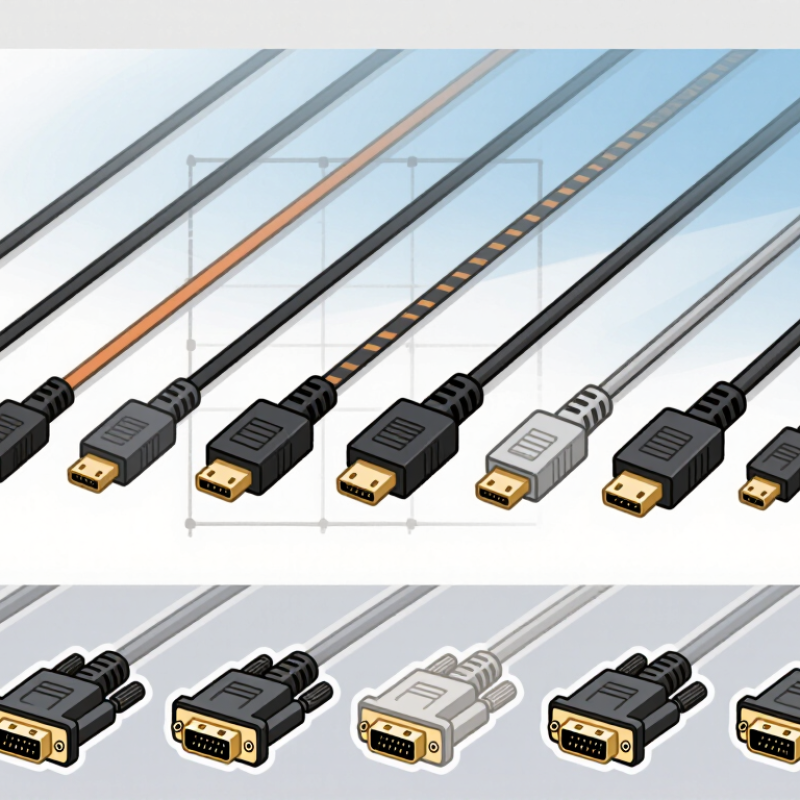
Understanding 100-Pin SCSI Cables and Their Applications
A 100-pin SCSI cable connects equipment built for a specific parallel SCSI interface. The pin count describes the connector, not the cable’s full compatibility. Connector shape, keying, wiring, and signal requirements matter too. In a server cabinet, the cable may link a controller to a compatible storage enclosure. A snug fit is useful, but it does not prove the wiring is correct.
These cables can also appear in legacy industrial computers, imaging equipment, and specialized data systems. Their many conductors carry signals between devices, while correct termination helps limit reflections along the bus. Cable length and device configuration affect reliable operation. Check carefully. Before ordering, compare the equipment manuals and inspect both connector ends. Note the gender, latch or screw-lock style, and any required pinout. A photo alone may hide important differences.
A practical check is to record the controller model, target device, and interface standard before requesting a quote. Ask the supplier to confirm pin mapping and supported bus configuration, rather than relying on “100-pin” alone. That small detail is easy to overlook. Compatibility can still be uncertain when older documentation is incomplete, so testing with powered-down equipment and a verified cable is sensible. The connector may look right, yet one reversed or miswired connection can prevent communication.

Key Specifications Buyers Should Check
For 100-pin SCSI cables, verify the exact connector type and pinout before comparing prices. A matching shell does not guarantee matching wiring. Check the cable’s supported SCSI interface, conductor quality, shielding, and documented impedance. T10’s SPI-4 specification, published as INCITS 362-2002, defines Ultra320’s maximum transfer rate as 320 MB/s. That figure is an interface ceiling, not a guarantee that every 100-pin cable or device will reach it.
Length and termination matter in real installations. Confirm the allowed bus length for your interface and signaling mode, then count every device and cable segment. A longer run can increase signal reflections and errors, especially when termination is missing or placed incorrectly. Ask suppliers for test records, pin-mapping drawings, and clear labeling for single-ended or differential use. One detail is easy to overlook: verify the host adapter and peripherals use the same signaling type.
Tips: Request a sample and inspect the connector fit, shielding coverage, and strain relief. Test it with your actual equipment under sustained data transfer, not just a quick power-on check. Keep the test conditions; they make supplier comparisons more reliable. There’s no shortcut here.
China Top 10 100-Pin SCSI Cable Suppliers: Key Specifications Buyers Should Check
Compare the nominal maximum transfer rates of common wide parallel SCSI generations. Use the interface generation—not connector pin count alone—to check cable compatibility.
Buyer note: These are nominal bus rates, not guaranteed cable performance. Confirm the exact 100-pin connector pinout, SCSI generation, signaling type (SE, LVD, or HVD), required cable length, and termination compatibility with your equipment.
How to Evaluate Chinese SCSI Cable Suppliers
When evaluating Chinese suppliers of 100-pin SCSI cables, ask for a drawing that identifies every pin, conductor, shield, and connector key. Check that the proposed cable matches your host and device interface; a 100-pin connector alone does not confirm compatibility. Request a sample and verify pin-to-pin continuity, insulation, shielding, and fit inside your equipment. Small details matter.
Ask how the supplier controls wire preparation, crimping, and final inspection. IPC/WHMA-A-620 provides workmanship criteria for cable and wire harness assemblies, so request the applicable inspection records rather than relying on a general quality claim. The SCSI Trade Association’s Ultra320 technical overview cites a peak transfer rate of 320 MB/s. Treat that as a benchmark only when the complete interface supports that mode. Request test results for the actual cable configuration, including length and termination. Check whether the supplier can trace samples to production lots and explain how it handles failed tests. Paperwork helps, but it can still miss a poor fit. Test the cable in your equipment before approving a large order.
China Top 10 100 Pin SCSI Cable Suppliers for Buyers? - How to Evaluate Chinese SCSI Cable Suppliers
Use this 10-point checklist to compare suppliers. It focuses on verifiable product and quality information rather than an unverified supplier ranking. Record a pass, fail, or follow-up item for each check.
| No. | Evaluation Area | What to Verify | Evidence or Acceptance Check | Buyer Record |
|---|---|---|---|---|
| 1 | 100-pin interface identification | Confirm the connector type, dimensions, keying, gender, and mating interface at both cable ends. | Request a dimensioned drawing and clear connector photos. Compare them with the equipment manuals or existing cable; “100-pin” alone does not establish compatibility. | Pass / Fail |
| 2 | SCSI generation and electrical interface | Identify the SCSI interface and signaling type required by the connected equipment, such as single-ended (SE), low-voltage differential (LVD), or high-voltage differential (HVD), where applicable. | Ask the supplier to confirm compatibility in writing against the host and device specifications. Do not assume different signaling types are interchangeable. | Pass / Fail |
| 3 | Pinout and wiring | Check signal assignment, conductor mapping, and any required straight-through or custom wiring arrangement. | Obtain a pinout or wiring diagram and confirm it against the equipment documentation. Request a continuity test report for the sample or production lot. | Pass / Fail |
| 4 | Cable construction | Review conductor count and gauge, insulation, shielding, drain-wire arrangement if applicable, and outer jacket material. | Request a construction specification or bill of materials. Confirm that the proposed construction matches the application’s electrical, mechanical, and environmental requirements. | Pass / Fail |
| 5 | Cable length and routing | Specify the required finished length, tolerance, bend space, and installation route. | Approve a drawing or sample showing the measured length and connector orientation. Confirm the proposed length against the equipment and SCSI bus documentation; do not assume one length suits every installation. | Pass / Fail |
| 6 | Termination and bus configuration | Determine whether the cable is passive or includes termination components, and how termination is handled in the complete SCSI bus. | Request a clear description of any termination features and verify the intended bus arrangement against the system documentation. Avoid duplicate or missing termination. | Pass / Fail |
| 7 | Connector fit and workmanship | Inspect housing, contacts, strain relief, latch or fastening features, and cable exit direction. | Evaluate a production-representative sample for secure mating, visible damage, contact alignment, and strain relief. Confirm that connector orientation matches the approved drawing. | Pass / Fail |
| 8 | Electrical and functional testing | Check what testing is performed for continuity, shorts, opens, and application-specific signal performance. | Request the test procedure and sample report. For critical use, agree on acceptance criteria and validate the cable with the actual host and device combination. | Pass / Fail |
| 9 | Quality control and traceability | Review incoming-material checks, in-process inspection, final inspection, lot identification, and handling of nonconforming products. | Ask for a sample inspection record and confirm that finished goods can be traced to a production lot and purchase order. | Pass / Fail |
| 10 | Commercial and delivery requirements | Confirm quotation scope, minimum order quantity, sample and production lead times, packaging, shipping terms, and warranty or return process. | Compare written quotations on the same specification and delivery basis. Confirm that any approved drawing, test requirements, and change-control expectations are included in the order documents. | Pass / Fail |
Compatibility depends on the exact connector, pinout, signaling type, bus configuration, and equipment requirements. Confirm these details with the device documentation and validate a sample before placing a production order.
Profiles of 10 Chinese 100-Pin SCSI Cable Suppliers
Profiles of ten China-based supplier types help buyers compare capability without treating every factory as a SCSI specialist. One profile may focus on legacy SCSI assemblies; another on custom cable design. Others may offer low-volume builds, large production runs, shielded cable, wire-harness integration, precision contact assembly, industrial interconnects, electrical testing, or export documentation. These are sourcing profiles, not verified company endorsements. Ask each supplier for a sample and a pin-to-pin drawing.
Grand View Research estimated the global connector market at USD 84.9 billion in 2023 and forecast 5.6% annual growth from 2024 to 2030. This broad-market figure does not measure 100-pin SCSI demand, which buyers should assess separately. Check connector gender, pin mapping, cable length, shielding, and termination against the actual equipment. Request continuity-test records and inspect strain relief near the backshell. A polished datasheet helps, but it cannot replace a sample test. Even experienced buyers can miss legacy interface differences; verify the mating connector before ordering.
How to Compare Suppliers and Choose the Right Partner
Choosing a 100-pin SCSI cable supplier starts with compatibility, not price. Confirm the connector type, pinout, cable length, and whether the wiring is straight-through or custom. A mismatch may look minor on a drawing but prevent the cable from working with your equipment. Details matter.
Ask suppliers for a dimensioned drawing and a sample before placing a large order. Check connector fit, cable flexibility, shielding, and strain relief. Request continuity-test records and ask how each production batch is inspected. A document is useful, but it does not replace checking a sample in the actual system. One easy-to-miss detail is bend space behind the connector; measure it where the cable will be installed.
Compare lead times, minimum order quantities, packaging, and how defects are handled. Clear answers matter as much as a competitive quote. Ask whether materials or construction can change between batches, and how changes are communicated. A polished specification sheet can still leave gaps, so write down the details that matter to your application. That takes extra time. It can prevent a costly mismatch later. If the supplier cannot explain a test result plainly, pause and ask again before committing.


