


What Are China Top Rapid EV Charger Manufacturers?
China has become a major force in electric vehicle charging equipment, especially for high-power public charging networks. Its manufacturers serve highways, urban parking areas, dealerships, fleet depots, and commercial facilities worldwide. This article examines China’s top Rapid Ev Charger manufacturers through practical and verifiable criteria, rather than relying only on brand popularity.
The evaluation considers charging power, connector compatibility, thermal management, safety certifications, software integration, warranty support, and after-sales service. Companies such as Star Charge, TELD, Sinexcel, XCharge, and BYD are often discussed in this market. However, their strengths differ. One may offer strong network software, while another focuses on modular power systems or large-scale fleet deployment. The details matter. A charger rated at 480 kW may not deliver that output continuously under heat, grid, or vehicle limitations.
Reliable selection also requires attention to operating evidence. Buyers should review installation records, uptime data, load-balancing performance, maintenance response times, and certification documents. Factory capacity is useful, but field performance matters more. Some published specifications are difficult to compare because testing conditions vary. That sounds simple. It is not always.
This guide aims to provide a balanced introduction for distributors, charging operators, property developers, and fleet managers. It recognizes China’s manufacturing advantages while avoiding unsupported claims about universal leadership. Product rankings can change as technology, regulations, and export markets develop. A careful buyer should still verify current technical documents and local compliance requirements before making a final decision.
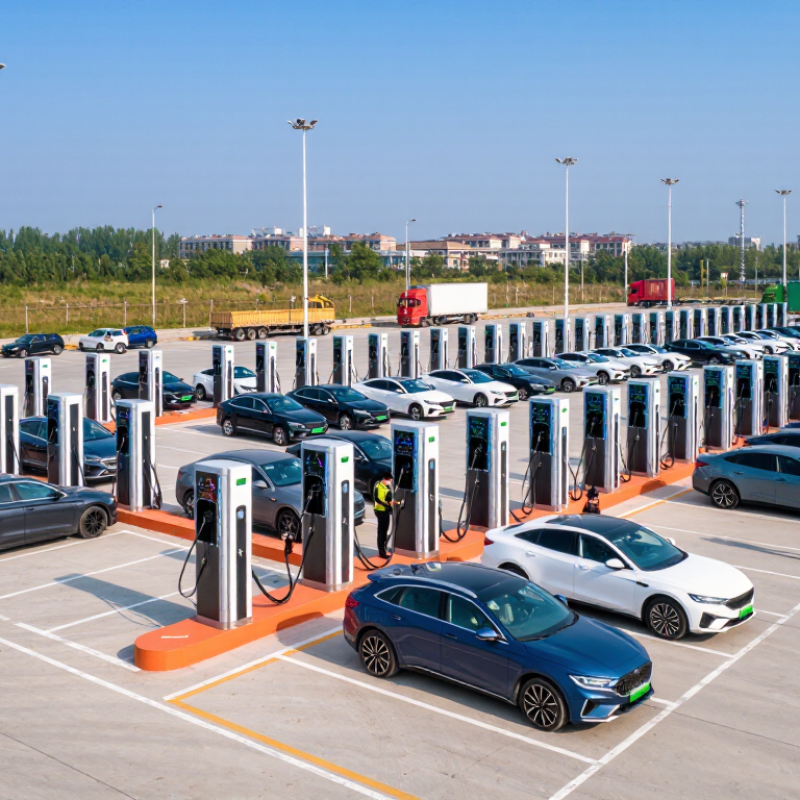
What Defines a Top Rapid EV Charger Manufacturer in China
A top rapid EV charger manufacturer proves performance beyond a showroom demonstration. Its equipment should deliver stable power during repeated charging sessions, not only during a short laboratory test. Engineers should verify output accuracy, cooling performance, insulation, and connector durability. A 180 kW charger may look impressive, but field results matter more. Numbers matter.
Reliable manufacturers design around local operating conditions. They test chargers in summer heat, winter cold, dust, rain, and unstable grid environments. Strong thermal management prevents power reduction after several vehicles charge continuously. Clear displays, balanced cable weight, and emergency stop controls also influence daily usability. Small details become important at busy charging sites.
Professional suppliers provide traceable test reports, compliant safety documentation, and software that supports remote monitoring. They should explain power-sharing logic instead of hiding it behind technical language. Open communication with installers helps reduce downtime and maintenance costs. Spare parts availability and trained service teams are equally important. Field experience reveals weaknesses that brochures rarely mention. No system is perfect. A careful manufacturer admits failure points and improves them through updated firmware, revised components, and honest customer feedback. That attitude often separates a dependable partner from a factory focused only on shipment volume.

What Defines a Top Rapid EV Charger Manufacturer in China?
Representative rapid DC charger output tiers commonly used in the Chinese EV charging market
China’s Leading Rapid EV Charger Manufacturers and Their Strengths
China’s leading rapid EV charger manufacturers have built their strengths around practical engineering and large-scale production. Many offer direct-current chargers from 60 kW to over 480 kW, serving highways, fleet depots, and urban parking areas. Their equipment often uses modular power units, which can simplify replacement when one module fails. Liquid-cooled cables also help manage heat during repeated high-power sessions.
Supply chain depth is another important advantage. Local access to power components, cabinets, connectors, and control systems can shorten production cycles and reduce costs. Experienced manufacturers usually test chargers under high temperature, dust, moisture, and voltage fluctuation conditions. This matters in real projects, where a clean laboratory is not enough. Firmware updates, remote monitoring, load balancing, and payment integration are also becoming standard features.
Still, performance is not identical across every supplier. Some systems need better software compatibility with overseas vehicles and charging networks. Installation quality can influence uptime as much as the charger itself. I have seen projects lose efficiency because cables were poorly arranged or cooling airflow was restricted. Buyers should examine field records, safety certifications, spare-parts support, and response times before choosing equipment. Fast charging sounds simple. Reliable deployment is harder.
Key Technologies Behind China’s Rapid EV Charging Solutions
What Are China’s Top Rapid EV Charger Manufacturers?
Key Technologies Behind China’s Rapid EV Charging Solutions
China’s rapid EV charging sector relies on high-voltage architecture, intelligent power conversion, and precise thermal control. Many current systems operate at 800 volts, reducing charging time without requiring extremely thick cables. Silicon carbide power modules improve switching efficiency and reduce energy loss inside the cabinet. This matters at busy highway stations, where several vehicles may charge simultaneously.
Liquid-cooled charging cables are another practical development. They remain thinner and easier to handle while carrying high current. Inside the charger, temperature sensors monitor connectors, power modules, and cooling channels in real time. If heat rises unexpectedly, the system can lower output before equipment suffers damage. Small details protect large investments.
Dynamic load balancing also improves daily reliability. Software distributes available power according to battery status, station demand, and grid limits. A nearly full battery may receive less power, while another vehicle uses the released capacity. Communication between the charger and battery management system must remain stable. One missed data signal can slow the session or interrupt it. Fast charging is not always better. Repeated high-power sessions may increase battery stress, especially in extreme heat or cold.
Technicians still need to inspect cables, filters, cooling pumps, and insulation regularly. Remote diagnostics help, but they cannot replace physical checks. Some installations appear impressive during testing yet perform unevenly after months of dust, rain, and heavy use. Better field feedback should shape the next generation of charging equipment.
How to Compare Rapid EV Charger Manufacturers in China
Comparing rapid EV charger manufacturers in China requires more than checking rated power. Examine the full charging system, including the cabinet, cooling design, connectors, control software, and protection devices. A 180 kW charger may perform differently under heat, dust, or unstable grid conditions. Ask for measured output at 25%, 50%, and full load. Numbers matter.
Request factory audit evidence, production photos, test records, and relevant electrical certifications. Check whether the manufacturer tests insulation, surge protection, emergency stopping, and temperature rise before shipment. Experience also shows that uptime claims need context. Ask for service records from similar installations, not only laboratory results. Speak with operators who manage busy charging sites.
Compare warranty length, spare-part availability, remote diagnostics, and technician response times. A clear parts list can reveal hidden maintenance costs. Confirm whether the software supports load balancing, user authentication, billing, and open communication protocols. Test these functions with a sample unit when possible. Small delays become expensive during peak hours.
Do not judge quality from a polished showroom. Inspect cable flexibility, screen visibility in sunlight, cooling fan noise, and cabinet access. One overlooked detail can affect daily operation. I would also compare performance after repeated charging sessions, although this test is often rushed. That is a weakness worth acknowledging. A lower purchase price may look attractive, but unreliable cooling or slow support can reduce the charger’s real value.
Selecting the Right Chinese Rapid EV Charger Manufacturer for Your Needs
Choosing a Chinese rapid EV charger manufacturer requires more than comparing output prices. The IEA’s Global EV Outlook 2024 reported that China represented nearly 60% of global electric car sales in 2023. It also held the world’s largest public charging network. This scale creates strong manufacturing experience, but quality still varies between factories.
Start with your operating conditions. A highway site may need 240 kW or more, liquid-cooled cables, and stable performance during summer heat. Urban depots may value load balancing, compact cabinets, and overnight maintenance access. Confirm support for your vehicle connector standards, communication protocols, payment system, and grid voltage. Ask for independent test records, not only a product brochure. Check protection ratings, efficiency, noise levels, surge protection, and emergency shutdown response.
Factory verification matters. Request a live video inspection or an on-site audit. Review production controls, component traceability, software update procedures, and spare-parts availability. The manufacturer should explain warranty coverage clearly, including response times and replacement responsibilities. TÜV, SGS, or equivalent laboratory reports can strengthen confidence, while market-specific certification remains essential. The IEC Global EV Outlook and regional grid rules should guide your technical checklist. A low quotation may hide costly downtime. I would test a sample unit under real traffic conditions before signing a large contract. Even then, no supplier is perfect; service quality can change after installation. Get every promise in writing.
What Are China Top Rapid EV Charger Manufacturers? - Selecting the Right Chinese Rapid EV Charger Manufacturer for Your Needs
| Evaluation Dimension | Practical Market Reference | Why It Matters | What to Verify with the Manufacturer |
|---|---|---|---|
| DC Output Power | Common rapid-charging configurations include 20–60 kW, 60–180 kW, 180–360 kW, and higher-power systems. | The required power depends on vehicle compatibility, parking duration, grid capacity, and site traffic. | Request rated power, peak power, continuous power, power-sharing behavior, and derating curves. |
| Output Voltage Range | Many modern DC fast-charging systems support an output range approximately covering 200–1,000 V DC, depending on the model. | A broad voltage range improves compatibility with different passenger cars, buses, and commercial vehicles. | Confirm minimum and maximum output voltage, voltage accuracy, and compatibility with the target vehicle battery platform. |
| Maximum Charging Current | High-power liquid-cooled systems may support several hundred amperes; the exact current limit varies by connector, cable, and charger design. | Higher current can reduce charging time but increases thermal-management and installation requirements. | Check continuous current, peak current, cable cooling method, connector temperature monitoring, and cable length. |
| Connector and Charging Standard | Common options include GB/T for mainland China and CCS1, CCS2, or CHAdeMO for specific overseas markets. | Connector selection must match the vehicles and legal requirements in the intended market. | Confirm connector version, pin configuration, regional approval, cable rating, and availability of dual-standard configurations. |
| Communication Protocol | OCPP 1.6J remains widely deployed, while OCPP 2.0.1 supports newer device-management and security functions. | Protocol compatibility affects integration with charging-network software, payment systems, and remote operations. | Request protocol version, supported profiles, API documentation, firmware-update process, and interoperability test results. |
| Electrical Efficiency | Well-designed modern DC chargers commonly target peak efficiency above 95%, although efficiency varies with load and temperature. | Higher efficiency reduces energy losses, operating costs, and heat generation. | Ask for efficiency curves at 25%, 50%, 75%, and 100% load, along with standby power consumption. |
| Power Factor and Harmonics | Commercial fast chargers are generally expected to provide high power factor and controlled harmonic distortion when connected to public or industrial grids. | Good power quality helps reduce grid impact and supports compliance with local utility requirements. | Request power-factor data, total harmonic distortion results, and applicable grid-compliance test reports. |
| Safety Protection | Typical protection functions include overvoltage, overcurrent, short circuit, ground fault, overtemperature, surge, and emergency-stop protection. | Comprehensive protection reduces risks to users, vehicles, electrical equipment, and the site. | Review the protection list, fault-response time, emergency-stop behavior, insulation monitoring, and safety test records. |
| Ingress and Impact Protection | Outdoor cabinets are often specified with an IP rating such as IP54 or higher; the exact requirement depends on the installation environment. | Protection against dust, rain, moisture, and accidental impact is essential for outdoor reliability. | Verify IP and IK test reports, corrosion protection, drainage design, operating altitude, and temperature range. |
| Cooling Architecture | Air cooling is common for lower and medium power; liquid cooling is used for higher-current cables and high-power charging applications. | Cooling design influences noise, cable weight, maintenance, power density, and continuous output. | Confirm cooling medium, fan or pump redundancy, coolant monitoring, maintenance intervals, and noise level. |
| Grid Input Requirements | Three-phase AC input is common for commercial DC fast chargers, with voltage and frequency selected for the destination market. | The input specification determines transformer capacity, cabling, protection devices, and connection cost. | Request input voltage range, frequency, maximum input current, inrush current, breaker requirements, and recommended transformer size. |
| Certification and Market Compliance | Required approvals vary by destination and may include regional electrical, EMC, safety, metrology, and radio requirements. | A charger cannot be legally installed or operated in every market using the same documentation. | Obtain certificates, declarations, test reports, scope pages, certificate-holder details, and confirmation that the documents cover the exact model. |
| Remote Monitoring and Payments | Common functions include remote status monitoring, fault alerts, transaction records, user authentication, and tariff management. | These features support unattended operation and reduce the cost of field service. | Check dashboard functions, payment options, data ownership, cloud hosting location, cybersecurity controls, and offline operation. |
| Installation and Site Adaptability | Important factors include cabinet footprint, cable reach, foundation requirements, ventilation clearance, and service access. | A compact and serviceable design can reduce civil-work costs and improve uptime. | Request dimensional drawings, foundation plans, cable-entry details, lifting instructions, clearance requirements, and installation manuals. |
| Warranty and Spare Parts | Warranty terms should clearly define coverage for power modules, connectors, control boards, displays, cooling components, and labor. | Transparent warranty coverage limits unexpected ownership costs. | Confirm warranty duration, exclusions, replacement procedure, spare-parts availability, repair locations, and response-time commitments. |
| Factory Quality Control | A reliable production process should include incoming inspection, assembly checks, insulation testing, functional testing, burn-in, and final inspection. | Consistent testing helps reduce early failures and field installation problems. | Request quality procedures, sample test records, serial-number traceability, factory-acceptance criteria, and audit access. |
| Total Cost of Ownership | Purchase price should be evaluated together with installation, grid upgrades, energy losses, software fees, maintenance, spare parts, and downtime. | The lowest initial price does not necessarily provide the lowest lifetime operating cost. | Request a five-year cost model with energy efficiency, service, software, replacement parts, and estimated availability assumptions. |
Note: Technical ratings, certifications, connector combinations, and warranty conditions vary by model and destination market. Buyers should verify the exact product documentation before placing an order.


