


How to Choose the Best Sewer Line Cleaning Machine in 2026
Choosing a Sewer Line Cleaning Machine in 2026 starts with the work it must handle, not the largest motor on a sales sheet. The U.S. Environmental Protection Agency’s 2022 Clean Watersheds Needs Survey, published in 2024, estimated $630.1 billion in wastewater infrastructure needs over 20 years. The estimate includes collection and conveyance systems, but it does not measure demand for cleaning equipment. It does show the scale of infrastructure requiring inspection and maintenance. Small details matter.
A machine that clears a 4-inch branch line may be a poor fit for long runs, heavy roots, or larger mains. Compare cable machines, high-pressure water jetters, and combination units against pipe diameter, access, blockage type, and typical distance. Check cable or hose capacity, feed controls, pressure ratings, and available service support. For example, a tight basement cleanout calls for different access and handling than a roadside manhole. Ask operators how often they move the unit, where they store it, and what protective equipment and training the job requires. These practical details can change the best choice. Not every blockage yields to the same method. Manufacturer specifications help, but they do not replace experience with local pipe conditions. The right machine is the one your crew can use effectively, maintain reliably, and match to the job. It is worth admitting that no single model is ideal for every line.
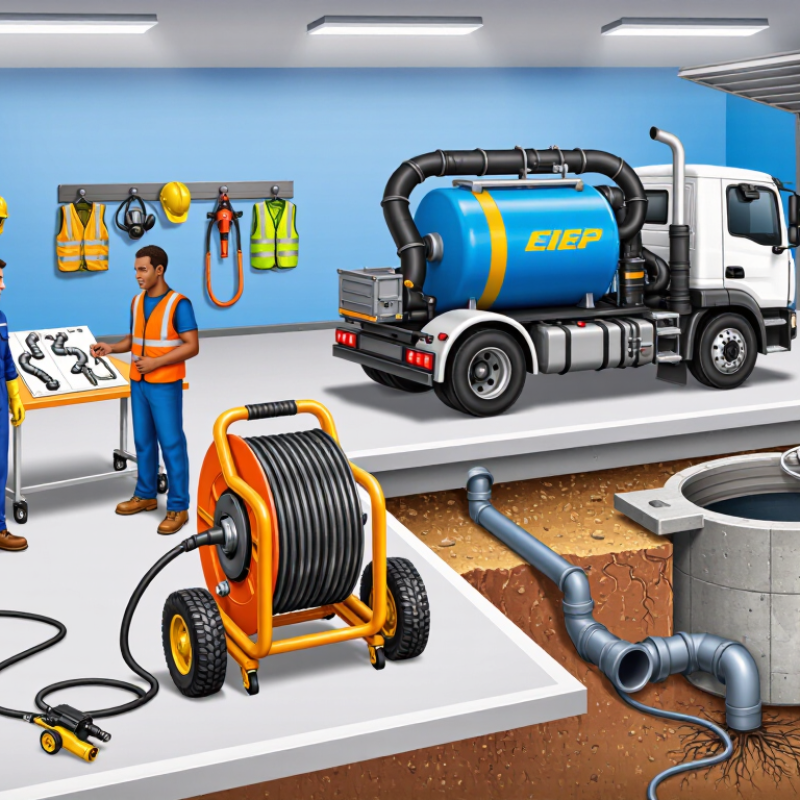
Define the Sewer Line Cleaning Tasks and Pipe Conditions
Before comparing machines, define what the sewer line must handle. A short kitchen branch with soft grease differs from a long building sewer packed with roots or mineral scale. Record the pipe’s length, diameter, material, access points, and bends. Measure where possible. Guesswork can leave a cable too short or send excessive force into a weakened pipe. Small details matter.
Describe the blockage and how often it returns. Slow drainage may suggest buildup, but symptoms alone do not identify the cause. A camera inspection can reveal roots, offsets, cracks, standing water, or a collapsed section. If inspection is unavailable, proceed cautiously. A cleaning machine may clear debris, but it cannot repair structural damage. That distinction is easy to overlook.
Match the machine to the task and pipe condition. Cables may suit localized clogs and tighter indoor access; water jetting may help remove broader deposits when the pipe can safely withstand it. Check required reach, cable or hose size, power, and operator control. Older clay or brittle pipes deserve extra care. I would not choose solely by motor strength; stronger is not always better. A clear job description makes a safer, more useful comparison.
How to Choose the Best Sewer Line Cleaning Machine in 2026
Match the cleaning method to the blockage and pipe condition. The scores below are an indicative planning guide—not measured performance data. Inspect fragile or damaged pipes before cleaning.
Ratings: 1 = poor fit, 5 = strong fit. Cable machines are often suited to localized blockages and roots; water jetters to grease and flushing; sectional rodders to tougher deposits in suitable pipes. Verify pipe material, diameter, condition, and machine guidance before use.
Compare Machine Types, Cables, and Cleaning Methods
How to Choose the Best Sewer Line Cleaning Machine in 2026
Compare the machine type with the pipe’s diameter, length, and blockage. A compact drum machine can suit indoor drains and shorter runs. Sectional machines offer more control on longer lines, but require careful handling. For larger mains, a water-jetting unit may clear grease and loose debris without pushing a cable through the pipe. No single method works everywhere. Check the pipe material and access point before choosing equipment.
Tips: Wear eye protection and gloves, and inspect the cable for kinks or worn sections. Start with the smallest suitable cutter. Keep a steady feed; forcing a cable can damage it or the pipe. Stop if resistance changes suddenly.
Cable choice matters as much as machine power. Thicker cables can handle tougher work, while thinner ones navigate smaller bends more easily. Match the cutter to the obstruction: a retrieval head may help with a lodged object, while a general cutter can address soft buildup. Water jets need a suitable water supply and controlled pressure. If you are unsure about pipe condition, get a qualified technician to assess it. It is easy to overestimate what a machine can clear; even experienced operators sometimes need to reassess the method.
Match Machine Capacity to Pipe Diameter and Blockage
Choosing a sewer line cleaning machine starts with the pipe, not the motor. Measure its inside diameter and note bends, cleanouts, and material changes. A cable suited to a narrow branch may bind in a tight elbow if it is too stiff. In a wide main, a light cable can whip or coil instead of carrying a cutter steadily.
Diameter is only half the decision. Match cable or rod stiffness and cutter width to the pipe, then select enough working reach without leaving excess cable inside.
Blockage type changes the load. Soft grease calls for a different cutter and approach than roots or compacted scale. If the obstruction is uncertain, start with a smaller cutter and inspect progress rather than forcing a stalled tool.
The spec sheet can mislead. Maximum reach does not guarantee effective reach; bends, deposits, and cable condition all matter. Field conditions still surprise.
The U.S. EPA’s 2022 Clean Watersheds Needs Survey estimated $630.1 billion in wastewater infrastructure needs over 20 years. That national estimate provides context, not a machine-sizing rule. Before purchasing, record pipe diameter, blockage, access distance, and tool compatibility.
Assess Safety Features, Maintenance, and Operating Costs
A sewer line cleaning machine should protect its operator as well as clear blockages. Check for cable guards, a readily accessible emergency stop, and clear operating instructions. Inspect the cord, plug, and ground-fault protection on electric models before each shift. The U.S. Bureau of Labor Statistics recorded 5,283 fatal work injuries across all industries in 2023. That figure is not sewer-specific, but it underscores the need to assess hazards carefully. Small details matter.
Maintenance affects both reliability and cost. Ask how often cables, cutters, and drive components need inspection, and whether routine servicing can be done in-house. After each job, clean and dry the cable to limit corrosion; replace frayed or kinked sections before they fail. Keep a simple log of repairs, parts, labor, and downtime. A low purchase price can become expensive when a machine sits idle.
Compare total operating costs, not just the sticker price. Include power or fuel, replacement tools, protective equipment, training, and expected service life. Request a demonstration on a representative pipe, and note setup time, noise, vibration, and how easily the machine feeds cable around bends. A common blind spot is counting only productive minutes. Clearing and cleanup take time, too. Estimates will never be perfect, but tracking real job costs for a month can reveal whether the machine fits your crew’s workload.
| Machine type | Typical use and line range | Safety features to assess | Routine maintenance | Operating-cost profile | Best fit |
|---|---|---|---|---|---|
| Portable drum cable machine | Small interior drains; commonly used with roughly 1/4–3/8 in. cables for lines around 1.5–3 in., depending on the machine and cable. | Look for a ground-fault circuit interrupter (GFCI) where applicable, a guarded rotating drum, a secure foot switch, and a cable-feed mechanism that keeps hands away from the rotating cable. | Clean and dry the cable and drum after use; inspect the cable for kinks, cracks, or corrosion; check the power cord, switch, and guards. | Usually low. Electricity use is modest; cable wear and replacement are the main consumable costs. | Light-duty work, service calls, and users who need a compact, easily transported unit. |
| Medium-duty drum cable machine | Commonly handles about 3/8–5/8 in. cables and drains roughly 2–4 in.; actual capacity depends on cable length, stiffness, and machine design. | Assess the cable guard, foot control, GFCI protection where applicable, stable frame, and accessible emergency stop or power disconnect. | Clean and inspect cables after each job; check drum, bearings, feed components, switches, and power connections at the intervals specified by the manufacturer. | Low to moderate. Cable wear, cleaning supplies, and occasional service are the main costs; electricity is generally a smaller factor. | Frequent residential drain work where a balance of portability and capacity is important. |
| Sectional cable machine | Uses interchangeable cable sections, often around 5/8–1 1/4 in.; configurations may suit lines approximately 3–10 in. or larger, subject to the machine and cable system. | Check for a dependable foot switch, secure cable couplings, suitable guards, stable handling points, and clear procedures for preventing cable whip or entanglement. | Clean, dry, and inspect each section and coupling; check for cracks, deformation, and worn connectors; lubricate or service components only as directed. | Moderate. Cable sections and couplings require inspection and eventual replacement; routine energy use is usually not the main expense. | Commercial or municipal work requiring longer reach, adaptable cable lengths, or access through smaller openings. |
| Heavy-duty drum cable machine | Designed for larger drains and longer runs; common cable sizes are approximately 5/8–7/8 in., with line suitability varying by cable, cutter, and machine. | Prioritize a guarded drum, reliable foot control, emergency power shutoff, stable loading and transport design, and safe access to the cable feed. | Inspect cables and cutting tools after use; clean the drum; check feed parts, guards, wheels, and electrical components on the service schedule. | Moderate to high. Larger cables, cutters, transport, and repair needs can increase costs; operating cost depends heavily on use and wear. | Repeated work on larger building drains where a drum system’s reach and cutting action are useful. |
| High-pressure water jetter | Uses pressurized water and specialized nozzles; equipment ranges from compact units for smaller lines to larger systems for roughly 2–8 in. lines or more. Confirm the rated flow and pressure match the job. | Check for a pressure-rated hose and fittings, trigger control, pressure relief or regulator, secure nozzle connections, and a documented procedure for depressurizing the system before servicing. | Flush and drain the system as directed; inspect hoses, fittings, filters, and nozzles; check pump fluid and winterize when required by the manufacturer. | Moderate to high. Water, fuel or electricity, filter and nozzle wear, and pump or hose servicing contribute to cost. | Suitable lines and jobs where water jetting is appropriate; verify pipe condition and local discharge requirements before use. |
Selection note: Line-size ranges are typical application guidance, not guarantees. Confirm compatibility with the machine manual, cable or hose specifications, pipe material, access conditions, and blockage type. Cost profiles are relative planning estimates; labor, repairs, local energy and water prices, and replacement parts are not included.
Select a 2026 Machine Based on Performance and Support
A sewer line cleaning machine should fit the pipes and blockages you actually handle. For residential work, check whether its cable or hose reaches typical cleanouts without excessive effort. For larger lines, compare usable reach, cutting-head options, and the machine’s ability to keep a steady feed. A long cable sounds useful, but it can feel awkward in a narrow room. Small details matter.
Performance figures need context. Ask how the machine handles roots, grease, and compacted debris, and whether its controls allow gradual pressure adjustments. Check the cable diameter against the pipe sizes you service. A specification sheet can still mislead; advertised capacity does not show how the unit behaves around bends or in a cramped basement. If possible, watch a demonstration using a similar pipe layout.
Support deserves equal weight in a 2026 purchase. Confirm that replacement cables, cutters, and wear parts are available, and ask how repairs are handled during busy periods. Clear maintenance instructions and practical operator training can reduce downtime. I would not choose a machine based on a fast demonstration alone. Ask what routine cleaning and inspection involve, then note whether service answers are specific or vague. Even a capable machine becomes a poor fit when help is difficult to reach.


