


How to Choose the Right Translucent Glass for Your Project
Choosing the right Translucent Glass starts with understanding what the space needs. A bathroom may call for dependable privacy, while a kitchen partition may need to soften glare without dimming the room. The same sheet can behave differently as light shifts from morning to evening. Think about the view from both sides, not just the appearance in a sample.
Consider how much light should pass through and how clearly shapes should remain visible. Frosted, patterned, and textured finishes each diffuse light in different ways. A small sample helps, but it cannot fully show the effect across a large wall. Check samples in the project’s actual lighting. Details matter.
Performance is just as important as appearance. Glass thickness, panel size, framing, edge treatment, and installation conditions all affect the final result. For doors, partitions, or overhead applications, ask a qualified supplier or glazing professional which product specifications suit the intended use. Confirm applicable safety requirements before ordering. That step is easy to overlook.
Budget, cleaning, and long-term maintenance also deserve attention. Textured surfaces can collect dust in grooves, while some finishes may show fingerprints more readily than others. There is no perfect answer. A choice that looks elegant in a showroom may feel too dim or too exposed once installed. Compare real samples, clarify the project’s priorities, and treat any uncertainty as a reason to ask better questions. The right glass balances light, privacy, appearance, and practical performance for the specific space.
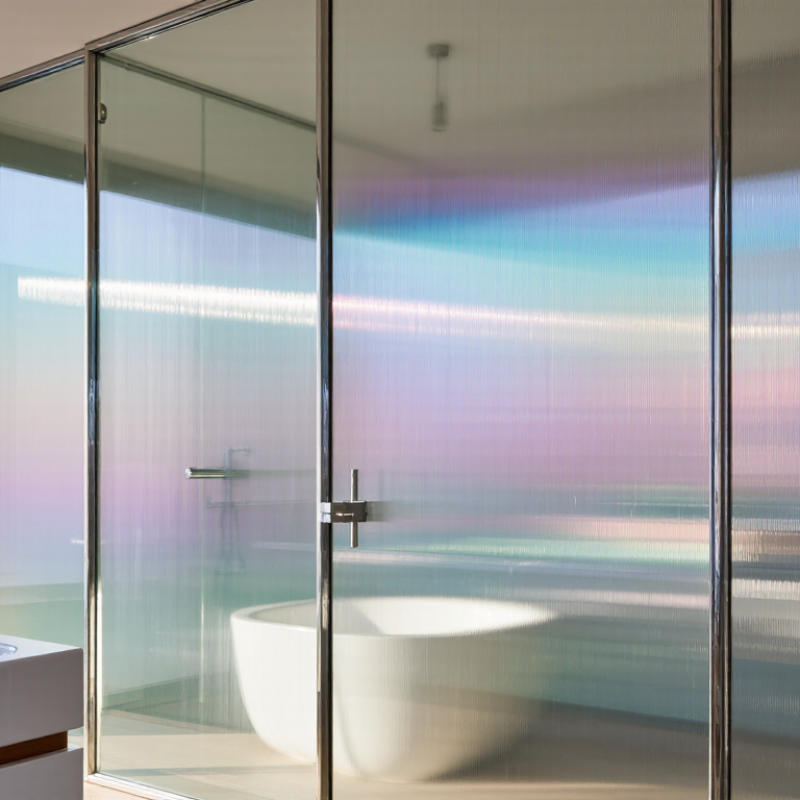
What Translucent Glass Is and How It Diffuses Light
Translucent glass passes daylight while scattering it, so a bright window becomes a softer glow rather than a clear view. The effect comes from surface texture, ceramic frit, or a diffusing layer inside laminated glass. Tiny irregularities redirect light in many directions. A frosted panel can blur the outline of a person standing behind it, while still brightening a hallway. Not all products diffuse equally. Some soften glare but also make colors look muted.
Visible transmittance helps compare options. The National Fenestration Rating Council’s rating system expresses VT on a 0.00–1.00 scale; a higher value generally means more visible light passes through under standardized test conditions. It does not predict the exact brightness of a room, which also depends on orientation, shading, and nearby surfaces. The CIE International Lighting Vocabulary defines visible radiation as roughly 380–780 nanometres, the range relevant to human vision. Check sample pieces beside the actual wall color, ideally in morning and afternoon light. I still find samples easy to misjudge under showroom lighting. For a bathroom partition, prioritize privacy and even diffusion; for a north-facing stairwell, a higher VT may help preserve daylight. The trade-off is real: stronger diffusion can reduce crispness and perceived brightness.
How to Choose the Right Translucent Glass for Your Project
What Translucent Glass Is and How It Diffuses Light
Translucent glass scatters transmitted light, softening views and reducing sharp shadows. The values shown are indicative examples, not product specifications: transmission varies with glass thickness, texture, and manufacturing. Check a specific product’s visible light transmittance and diffusion data when making a final selection.
How to Define Your Project’s Privacy and Lighting Needs
Define privacy by considering who may see through the glass, from where, and during which activities. Translucent glass softens views, but it does not always hide people completely. A face may become an indistinct shape, while movement and shadows remain visible. At night, bright interior lighting can make a panel feel less private than it does during the day. That matters. A bathroom beside a shared hallway needs a different level of obscurity than a home office partition. Stand at likely viewing points and consider the distance, not just the glass sample held in your hand.
Then assess how much daylight the space needs. Heavily textured or more opaque glass can screen views well, but may reduce the brightness reaching a room. Clearer finishes usually pass more light, though they can reveal more detail. Test samples in the actual opening, at different times of day. Check them with interior lights on, too. Look from both sides. A small sample can be misleading; I have found that the surrounding wall color and window direction change how a finish feels. If privacy and brightness both matter, compare a few options in place before deciding. Your first choice may look different once the sun shifts.
Which Glass Types and Finishes Suit Different Uses
Translucent glass varies in both appearance and performance. Acid-etched glass has a smooth, even haze that softens views while spreading daylight. It suits bathroom screens, office partitions, and cabinet doors. Sandblasted glass creates a similar matte look, but its surface may show fingerprints or cleaning marks more readily. Choose a finish based on daily handling, not appearance alone.
Patterned, or rolled, glass adds texture and can obscure direct views. It works well in entry doors and interior dividers, though its patterns may cast noticeable shadows. Check a sample in the actual room. Light changes everything. Laminated translucent glass combines interlayers with diffused visibility and may help hold fragments together if it breaks; suitability depends on the specified construction. For doors or larger panels, ask a qualified glazier to confirm the glass type, thickness, edge support, and any safety requirements. One easy detail to overlook is cleaning: textured surfaces can collect dust in their grooves. Compare samples from both sides, in daylight and at night, before choosing.
How to Compare Safety, Strength, and Performance Requirements
Choosing translucent glass starts with its use, not its appearance. A shower screen, stair guard, and room divider face different impact and moisture demands. Frosted, patterned, or etched surfaces diffuse light, but the finish does not make glass stronger. Looks matter. Check the location, exposure, and consequences of breakage.
Where broken glass could cause injury, compare tempered and laminated options against local building requirements and test documentation. Tempered glass generally breaks into smaller pieces, while laminated glass can hold fragments to its interlayer. Neither option suits every project. Framing, edge quality, panel dimensions, and installation also affect performance. Ask about glass thickness and supported span, not just appearance. Small edge chips are easy to overlook, yet they can affect reliability.
Strength is only one requirement. Consider wind or human impact, temperature changes near heaters or sunny windows, cleaning methods, and privacy after dark. Translucent glass may still show silhouettes when a room is lit. Request verified test data for relevant impact, thermal, or acoustic claims, and check the complete assembly. A qualified glazier or structural professional can assess supports and fixings. One detail deserves a site check: will the chosen texture provide enough daylight without compromising privacy?
How to Specify the Right Glass for Installation and Maintenance
Choosing translucent glass is only part of the specification. The installation details determine whether it fits safely and remains practical to clean. State the panel dimensions, thickness, edge finish, and whether the glass must be safety-rated for its location. Confirm these details with the glass supplier and installer before fabrication. A small mismatch can mean a costly remake.
Check how the panel will sit in its frame or channel. Note the required clearances, support points, and compatible setting blocks and sealants. These depend on the glass system, so avoid relying on a generic detail. Small details matter. Specify which face carries any texture or coating, especially when the glass is directional. Review a full-size sample in the intended light; a small sample may not reveal glare or privacy changes across a larger area.
Plan maintenance at the same time. Identify how cleaners can reach both faces and whether mineral deposits are likely near sinks or showers. Provide cleaning guidance that suits the glass finish, and avoid abrasive tools unless the supplier confirms they are appropriate. One point is easy to overlook: access for replacement. It may be awkward to design around, but recording panel sizes and removal clearances can help future repairs. I would recheck those dimensions on site; drawings do not always capture the final opening accurately.
How to Choose the Right Translucent Glass for Your Project — How to Specify the Right Glass for Installation and Maintenance
| Glass option | Appearance and privacy | Indicative visible light transmission (VLT) | Suitable applications | Installation specification | Maintenance guidance |
|---|---|---|---|---|---|
| Acid-etched glass | Uniform matte surface that diffuses light and softens outlines. Privacy depends on lighting, viewing distance, and the degree of etching. | Often approximately 70–90%; confirm the value for the selected product and thickness. | Interior partitions, doors, shower screens, and daylighting applications where a smooth, diffuse appearance is desired. | Specify which face is etched and orient it as recommended by the fabricator. Select tempered or laminated safety glazing where required by local code and location. | Clean with water and a mild, non-abrasive cleaner using a soft cloth. Avoid abrasive pads and cleaners that may damage the treated surface. |
| Sandblasted glass | Matte finish that can be applied in patterns or selected areas. It diffuses images, but should not be treated as complete visual screening. | Varies with the clear-to-treated area, surface treatment, and glass thickness; request product-specific test data. | Decorative partitions, screens, signage, and interior features with custom patterns. | Confirm the treated face, pattern orientation, edge finish, and any protective coating before fabrication. Check that the design is compatible with the required safety-glazing process. | Use a soft cloth and mild cleaner. Treated areas can show fingerprints or residue more readily; follow the fabricator’s cleaning instructions. |
| Patterned or rolled glass | Surface texture distorts views while allowing light through. Privacy and visual distortion vary substantially with the pattern and viewing angle. | Product-specific; texture, pattern depth, thickness, and lighting affect transmission and appearance. | Doors, internal screens, cabinet fronts, and other locations where texture is part of the design. | Review a full-size or suitably large sample. Specify pattern direction, exposed face, thickness, edgework, and safety-glazing requirements. | Clean with a soft brush or cloth to reach textured areas. Avoid tools or abrasive products that could scratch the surface. |
| Ceramic-frit glass | Fired ceramic dots, lines, or coverage areas create a controlled balance of transparency, diffusion, and screening. | Depends on frit color, pattern, and coverage; obtain calculated or tested VLT for the complete glazing build-up. | Building façades, partitions, balustrades, and designs requiring a durable patterned surface or solar-control contribution. | Specify frit coverage, pattern, color, orientation, and location within the glass make-up. Have the glass supplier review thermal-stress and heat-treatment requirements. | Clean the exposed glass surface using the supplier-approved method. Inspect seals and surrounding framing as part of routine building maintenance. |
| Translucent laminated glass | A translucent interlayer diffuses light and can help retain fragments if the glass breaks. Privacy depends on the interlayer and glass construction. | Product-specific; request VLT data for the selected interlayer, glass thickness, and complete assembly. | Partitions, overhead glazing, doors, and locations where fragment retention or added design options are required. | Specify interlayer type, total build-up, edge exposure, support, and safety classification. Protect laminate edges from prolonged moisture unless the system is designed for exposure. | Clean exposed glass with a soft cloth and mild cleaner. Check edges, seals, and framing for signs of moisture entry or damage. |
| Translucent channel glass | U-shaped glass sections create a ribbed, light-diffusing surface. The degree of view-through depends on configuration and lighting. | System-specific; confirm performance for the selected glass, channel spacing, and installation assembly. | Large interior or exterior screens and façades designed around a continuous translucent surface. | Use the tested system details for supports, setting blocks, joints, drainage, and movement allowances. Confirm wind-load and safety requirements for the location. | Clean accessible surfaces with non-abrasive products. Keep drainage paths clear and inspect seals, joints, and supports periodically. |
Specification note: VLT figures are indicative only where a range is shown; performance varies by manufacturer, glass thickness, processing, and assembly. Request current product data and samples, and verify safety-glazing, structural, thermal, fire, and energy requirements against applicable local codes before ordering.


