


How to Choose Black UHMW Plastic for Your Application?

Choosing Black Uhmw Plastic begins with the application, not the color. A black sheet may look rugged, but appearance alone proves little. UHMW-PE is valued for extremely high abrasion resistance, low friction, impact strength, and moisture resistance. Grand View Research’s 2024 UHMWPE market analysis identifies wear performance and demanding industrial uses as major growth drivers. Still, market growth does not guarantee the right grade for every project.

Think about the working environment. Will the part slide against steel, carry a heavy load, or face repeated impact? Will it sit outdoors under sunlight? Carbon-black pigmentation can improve light protection, but black material is not automatically UV-stabilized or electrically conductive. That assumption causes expensive mistakes. Temperature, sheet thickness, machining tolerance, and mounting method also matter. A conveyor guide may need low friction, while a truck-bed liner may need impact resistance and easy replacement.

Industry standards provide a stronger basis for comparison. ASTM D4020 covers UHMW-PE molding materials, while ASTM D638 and ASTM D695 support tensile and compressive property evaluation. For food-contact components, buyers should verify the exact formulation against applicable requirements, including FDA 21 CFR 177.1520 where relevant. Supplier test reports should identify test methods, temperature, load, and conditioning.

Experience shows that no single grade wins every time. A material can perform brilliantly in a dry wear test, then disappoint in heat or outdoor exposure. Review certificates, request samples, and test the actual geometry. That modest step often reveals more than a polished datasheet. Reliable selection balances service life, safety, machinability, cost, and the consequences of failure.
How to Choose Black UHMW Plastic for Your Application?

Define Black UHMW Plastic and Its Key Properties

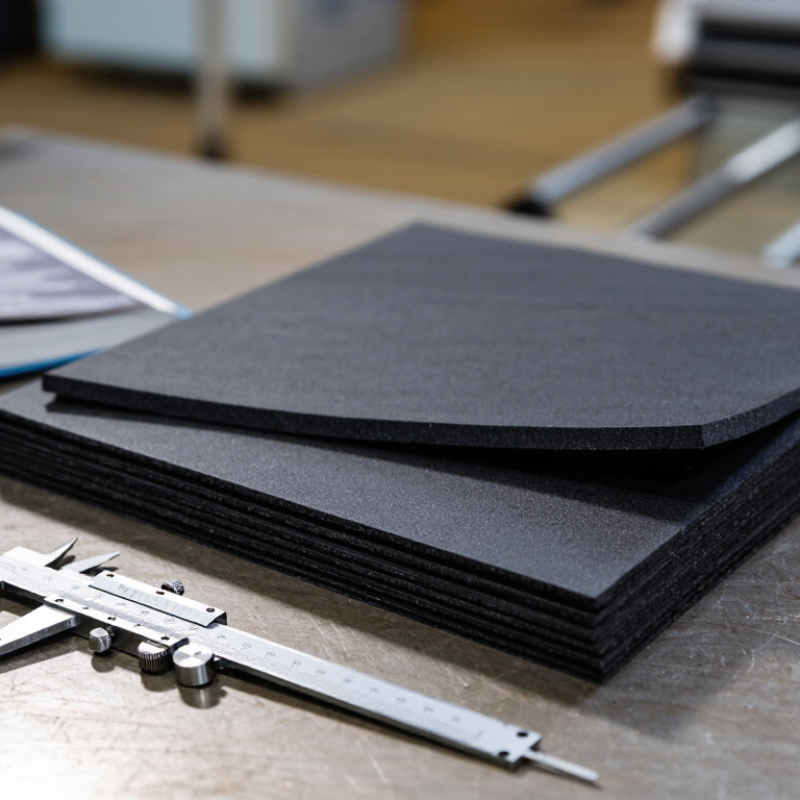
Black UHMW plastic is an ultra-high-molecular-weight polyethylene compound containing carbon black or another dark pigment. Its molecular chains create a dense, slippery structure with strong resistance to sliding wear. ASTM D4020 identifies UHMWPE as a specialized polyethylene material with very high molecular weight. Typical technical datasets report a density near 0.93–0.94 g/cm³, far below steel.

It feels light in the hand.

Material reports from the Society of Plastics Engineers commonly place UHMWPE’s static friction coefficient near 0.05–0.15, depending on surface finish and load. That low friction suits conveyor guides, chute liners, wear strips, and sliding pads. Carbon black can also improve resistance to ultraviolet exposure, which matters for outdoor equipment. However, black color alone does not prove UV stability. Ask for test data, such as ASTM G154 exposure results.

UHMW plastic also absorbs very little moisture and withstands repeated impact. Its weaknesses deserve equal attention. It creeps under continuous pressure, expands noticeably with heat, and offers less stiffness than engineering metals. A poorly supported liner may deform around bolt holes. I have seen designs fail because color was treated as performance evidence. Check load, temperature, sliding speed, chemical contact, and support spacing before selecting a grade. ISO 11542 testing guidance and supplier-specific mechanical reports can help compare creep, tensile strength, and abrasion results under realistic conditions.
How to Choose Black UHMW Plastic for Your Application?

Black UHMW plastic is ultra-high-molecular-weight polyethylene containing a black pigment, commonly carbon black, for improved light shielding and outdoor color stability. It is selected for low friction, high abrasion resistance, impact toughness, and chemical resistance. The chart shows representative engineering ranges for common mechanical properties; actual values vary by grade, processing method, temperature, and test standard.

For wear liners, guides, and sliding parts, prioritize abrasion resistance and a low coefficient of friction. For load-bearing components, compare tensile strength, compressive strength, and operating temperature with the application requirements. These values are typical ranges, not a product specification.

Identify Your Application’s Performance Requirements

Choosing black UHMW plastic starts with your application’s actual performance requirements. Do not select it by color alone. Define the load, contact pressure, sliding speed, temperature, moisture, and expected service life. ASTM D4020 describes UHMW-PE as a polyethylene material with exceptionally high molecular weight, supporting strong abrasion resistance and low-friction performance. However, published material data show wide variation between grades. Tensile strength, impact resistance, and dimensional stability can change with processing and additives.

Black formulations often contain carbon black, which can improve resistance to ultraviolet exposure. That benefit matters for outdoor conveyors, guide rails, chute liners, and marine handling equipment. Still, black does not automatically guarantee long-term weathering performance. ISO 4892-2 provides a framework for accelerated xenon-arc weathering tests, but laboratory exposure cannot perfectly reproduce every outdoor environment. Consider thermal cycling, sunlight angle, dirt buildup, and chemical contact. A design may perform well in testing, yet disappoint near a hot metal surface.

Tips: Build a short requirement sheet before requesting samples. Record the highest load, not the average. Check whether the part needs impact resistance at low temperatures. Ask for test conditions, not only headline values. Compare wear results using the same pressure, speed, and counterface. ASTM D4060 abrasion data can help with comparisons, but it was developed for coatings, so it may not represent your exact sliding system. Prototype testing remains necessary. I have seen specifications fail because engineers measured friction but overlooked edge impact and bolt-hole deformation. That mistake is easy to repeat.

Compare UHMW Grades, Thicknesses, and Surface Options

Choosing black UHMW plastic starts with the working environment, not the color. Black UHMW-PE usually contains carbon black, which can improve resistance to sunlight and visual staining. ASTM D4020 identifies UHMW-PE as a high-molecular-weight polyethylene material, while ISO 11542-1 provides guidance for testing and classification. Typical data shows a density near 0.93–0.95 g/cm³ and tensile strength commonly between 20 and 50 MPa, depending on grade and test method.

Grade selection affects service life. Standard grades suit chutes, wear strips, and guide rails with moderate abrasion. Enhanced grades may perform better under repeated impact, elevated loads, or abrasive minerals. Published engineering data often places the coefficient of friction near 0.10–0.20, but surface texture, pressure, and contamination can change it significantly. Clean laboratory results can mislead.

Thickness must match support spacing and impact energy. A 6 mm sheet may work as a liner over continuous backing. Unsupported panels often need 12 mm, 20 mm, or more to limit deflection. Machined, textured, and polished surfaces offer different results. Smooth surfaces reduce drag, while textured finishes can improve grip. Check dimensional tolerances carefully. UHMW expands with heat, and a tight installation may buckle. That detail is easy to miss. Test a small section under real load before approving a full installation, especially when moisture, grit, or temperature changes are present.

Evaluate Chemical, Thermal, and Environmental Conditions

How to Choose Black UHMW Plastic for Your Application?

Evaluate Chemical, Thermal, and Environmental Conditions

When selecting black UHMW plastic, begin with the actual service environment, not color or price. Review chemical exposure, contact time, concentration, and temperature together. Diluted chemicals may become aggressive when heated. Oils, solvents, acids, and cleaning agents can affect dimensions or surface performance. Request compatibility data for the exact formulation. Generic charts help, but they are not final proof.

UHMW plastic suits many low-friction duties, yet heat changes the decision. Record continuous temperature, peak temperature, and heat duration. A part beside a hot motor may exceed the measured room temperature. Thermal expansion can loosen a guide or close a narrow clearance. Leave practical allowance. Depending on its formulation, black material may absorb more solar energy outdoors. I once treated ambient air temperature as the design temperature. That assumption was wrong.

Environmental conditions deserve equal attention. Check ultraviolet exposure, moisture, dust, impact, and repeated cleaning. Water absorption is low, but trapped water can still corrode nearby metal hardware. Fine dust may act like abrasive paste. Outdoor parts may need stabilized material and a tested surface finish. Verify load, speed, and wear under representative conditions. A short trial is valuable. It can reveal swelling, cracking, or unexpected noise before production. For critical applications, have a qualified engineer review the data and define inspection intervals.

How to Choose Black UHMW Plastic for Your Application? - Evaluate Chemical, Thermal, and Environmental Conditions

Evaluation Dimension Typical Black UHMW Plastic Data Application Consideration Suitability
Density Approximately 0.93–0.94 g/cm³ Lightweight compared with metals and many engineering plastics. Good for weight-sensitive designs
Continuous service temperature Commonly about −100 to +80 °C, depending on load and design Long-term exposure near the upper limit can reduce stiffness and load-bearing capacity. Suitable for moderate-temperature service
Melting range Approximately 130–136 °C Do not use the melting range as a recommended operating temperature. Not suitable for high-heat processing zones
Water absorption Generally less than 0.01% by weight Maintains dimensional stability in humid or wet conditions better than hygroscopic plastics. Excellent for wet environments
Dilute acids and alkalis Generally excellent resistance at ambient temperatures Verify concentration, temperature, exposure time, and mechanical loading. Usually suitable
Organic solvents and hydrocarbons Resistance varies; swelling or softening may occur with some solvents Test the exact chemical, especially aromatic, chlorinated, or hot solvent exposure. Requires compatibility testing
Strong oxidizing chemicals Resistance is limited, particularly at elevated temperatures Avoid unverified use with concentrated oxidizers or prolonged exposure. Generally unsuitable without testing
Abrasion and wear Very high abrasion resistance and low coefficient of friction Useful for liners, chutes, wear strips, bearings, and material-handling components. Excellent for sliding and abrasive service
Impact resistance Very high impact toughness, including at low temperatures Helps resist shock loads and material impact, but does not replace structural design analysis. Excellent for impact-prone parts
UV and outdoor exposure Black grades commonly contain carbon black, which improves UV resistance; performance varies by formulation For continuous outdoor use, confirm UV stabilization and evaluate color, surface, and strength retention. Generally suitable with UV-stabilized material
Flammability Polyethylene is combustible and can support burning Not recommended where fire resistance, smoke control, or flame-retardant certification is required unless specifically qualified. Use caution in fire-risk areas
Electrical behavior Typically electrically insulating; black compounds may be static-dissipative or conductive only when specially formulated Confirm surface resistance and grounding requirements rather than relying on color alone. Specify electrical grade when needed
Dimensional stability under load Moderate stiffness with noticeable creep under sustained stress Use adequate thickness, supports, and safety factors for long-term static loads. Requires creep analysis for loaded parts
Selection note: The values shown are typical ranges for unfilled black UHMW polyethylene and can vary with grade, processing method, thickness, temperature, load, and chemical concentration. Validate the selected material under the actual service conditions before production use.

Select the Right Material and Verify Its Compatibility

How to Choose Black UHMW Plastic for Your Application?

Select the Right Material and Verify Its Compatibility

Black UHMW plastic is not chosen by color alone. Its performance depends on load, temperature, speed, chemicals, and sunlight exposure. Published data tested under ASTM D792 commonly places UHMW-PE density near 0.93–0.94 g/cm³. ASTM D570 results also show extremely low water absorption, often below 0.01%. That helps in wet conveyors, guides, and outdoor handling equipment. However, low moisture uptake does not prevent dimensional changes from heat.

Check the working temperature carefully. Many UHMW-PE grades operate continuously around 80°C, while short-term exposure may reach higher levels. Actual limits vary with load and design. ISO 15527 and ASTM D4020 provide useful material classification references, but they cannot replace application testing. Black formulations often use carbon black for improved light stability. They may still require additional weathering verification. Do not assume every black sheet has equal UV resistance.

Chemical compatibility deserves a practical test. Place a small sample in the process fluid, then inspect swelling, cracking, discoloration, and weight change. Review the supplier’s certificate for density, tensile strength, impact performance, and friction data. A 2023 engineering plastics market review identified wear resistance and low friction as major UHMW-PE selection drivers. That sounds convincing, but it can mislead. A heavily loaded sliding part may creep before it visibly wears. Check pressure, speed, temperature, and support spacing together. A clean selection can still fail.

Packaging machine ROI calculator

Need help figuring out if packaging automation is right for your business?


First, start with the numbers. Download our free packing machine ROI calculator to learn how long it will take for an investment in automation to pay for itself (and much more).


Free packaging automation ROI calculator