


China Top Custom Steel Pipe Manufacturer How to Choose?

Choosing a China-based Custom Steel Pipe manufacturer requires more than comparing prices. The right supplier must match material grade, dimensions, pressure requirements, and project standards. A pipe may look flawless outside, yet fail after welding, forming, or hydrostatic testing. That risk is expensive.

The scale of steel production makes supplier selection even more important. The World Steel Association reported global crude steel production of about 1.89 billion tonnes in 2023. However, volume does not guarantee precision. The International Energy Agency also notes that steelmaking creates roughly 7–9% of global energy-related carbon dioxide emissions. Traceability, efficient production, and reduced waste therefore matter during procurement.

W. Edwards Deming, a leading manufacturing quality expert, wrote, “Quality comes not from inspection, but from the improvement of the production process.” His principle applies directly to custom pipe manufacturing. Ask whether the factory controls melting, piercing, rolling, heat treatment, welding, and final inspection. Request material certificates, dimensional reports, hydrostatic test records, and applicable standards such as ASTM, ASME, API, or EN requirements.

Experience teaches a less comfortable lesson: the cheapest quotation can hide unclear tolerances, inconsistent wall thickness, or weak documentation. That assumption can fail.

A capable Chinese manufacturer should explain its steel source, production capacity, non-destructive testing methods, coating options, and export experience. It should also identify limitations honestly. No supplier fits every project. The best choice is the one that connects technical evidence with your operating conditions, delivery schedule, and long-term maintenance needs. Expect details. Verify them.
China Top Custom Steel Pipe Manufacturer How to Choose?

What Defines a Top Custom Steel Pipe Manufacturer in China

China Top Custom Steel Pipe Manufacturer: How to Choose?

What defines a top custom steel pipe manufacturer in China? The answer begins with process control, not attractive brochures. An experienced supplier should explain steel grades, outside diameter, wall thickness, length, and tolerance limits clearly. Ask for recent mill certificates and heat-number traceability. These records connect each pipe to its original material batch.

Look closely at production capability. A reliable factory should demonstrate cutting, bending, welding, heat treatment, and surface finishing equipment. Request sample reports for ultrasonic, hydrostatic, or radiographic testing when suitable. Factory photos are useful, but an independent audit is stronger. During a site visit, check storage conditions, calibration labels, and how workers protect pipe ends. Small details matter.

Ask how custom drawings become controlled production documents. The manufacturer should confirm revision numbers before fabrication. Clear inspection plans reduce costly misunderstandings. Delivery promises also need evidence, such as capacity schedules and previous export records. A low price can hide thin walls, poor coating, or unstable tolerances. That risk is easy to underestimate.

No supplier is perfect. Even a capable factory may struggle with unusual alloys or urgent changes. Discuss those limits openly. A trustworthy partner admits problems early and offers measurable corrective actions. Communication quality often reveals more than a sales presentation. Your final decision should rest on verified samples, documented controls, and consistent technical answers.
What Defines a Top Custom Steel Pipe Manufacturer in China?

A strong custom steel pipe manufacturer should combine verified quality systems, technical customization, reliable testing, production capability, export compliance, and dependable delivery performance.

The percentages represent a practical buyer evaluation framework based on commonly used industrial procurement criteria, including ISO 9001 quality systems, applicable ASTM, API, and GB/T standards, material traceability, inspection documentation, and supply reliability. It is not a ranking of individual companies.

Key Factors for Evaluating Steel Pipe Quality and Production Capabilities

China Top Custom Steel Pipe Manufacturer How to Choose?

Evaluating a custom steel pipe manufacturer begins with quality evidence, not attractive quotations. Ask for material certificates, heat numbers, and complete traceability records. Verify chemical composition and mechanical properties against the required specification. Wall thickness, outer diameter, ovality, and straightness also need controlled measurement. Small deviations can create serious installation problems.

Production capability matters equally. Review the manufacturer’s forming, welding, heat-treatment, and coating equipment. Confirm whether its machines suit your pipe size, grade, and order volume. Request recent inspection records, including ultrasonic or radiographic testing where applicable. A capable quality team should explain acceptance criteria clearly. Sample pipes can reveal weld consistency, surface finish, and dimensional discipline.

Visit the facility when the project is important. Observe storage conditions, calibration labels, and how workers prevent steel mix-ups. Ask about production schedules and the response process for nonconforming products. A reliable supplier welcomes technical questions and documents corrective actions. No factory is flawless. I have found that honest reporting of a minor defect often indicates stronger control than polished promises. Price still matters, but unexplained savings deserve careful review. Supplier evaluation should remain practical, documented, and specific to your application.

How to Compare Customization Options, Materials, and Industry Standards

Choosing a top custom steel pipe manufacturer requires more than checking wall thickness and price. Customization should match service conditions, not just drawings. Ask whether the supplier can control outside diameter, wall tolerance, length, bevel angle, threading, bending, and surface treatment. World Steel Association data reports 1.892 billion tonnes of crude steel production in 2023. That scale makes material traceability essential.

Material selection starts with pressure, temperature, corrosion, and welding requirements. Carbon steel suits many structural and fluid applications, while stainless or alloy steel may perform better in corrosive or high-temperature environments. Request heat numbers, chemical analysis, tensile results, and impact-test records. ASTM A106, ASTM A312, and API specifications cover different applications; they should never be treated as interchangeable. Small differences matter.

Industry standards also need verification. Compare dimensional tolerances, hydrostatic testing, nondestructive examination, and inspection responsibilities. ISO 9001 certification can support process control, but it does not prove every pipe meets your project specification. An independent inspection plan is safer. In real sourcing work, polished documents sometimes hide unclear tolerances. That is a warning. A useful comparison table should show standard, grade, size range, test method, certificate type, and rejection procedure. Do not accept “equivalent material” without written technical evidence and approval.

How to Verify Certifications, Factory Experience, and Quality Control

Choosing a custom steel pipe manufacturer requires more than comparing prices. Start by checking each certificate carefully. Confirm the issuing body, certificate number, validity period, and covered products. The company name should match the factory’s legal registration. The certificate scope must include steel pipes, welding, or relevant testing activities.

Factory experience should be visible in daily operations. Ask how many years the facility has produced custom pipes. Request project records, production photos, and sample inspection reports. A reliable factory can explain its steel grades, forming methods, welding procedures, and delivery controls clearly. During a visit, inspect cutting machines, welding areas, storage conditions, and identification tags. Clean floors are useful, but traceability matters more.

Tips: Ask for heat numbers and mill test certificates. Check whether gauges and testing equipment have current calibration records. Review the quality plan before placing an order. It should cover incoming steel checks, dimensional inspection, weld testing, hydrostatic testing, and final packing. Independent inspection can add confidence, especially for large or unusual orders. Still, inspection cannot repair weak process control.

Do not accept a certificate file as complete proof. Documents may be valid but outdated, limited in scope, or unrelated to the actual workshop. Compare certificate details with inspection records and product markings. A perfect checklist is not enough. I would also ask what happens when a pipe fails inspection. Honest answers often reveal more than polished sales material.

How to Assess Pricing, Lead Times, Communication, and After-Sales Support

China Top Custom Steel Pipe Manufacturer: How to Choose?

A reliable comparison begins with more than the lowest quotation. Ask whether pricing includes material testing, cutting, threading, coating, packaging, and delivery. Request a line-by-line quote. It should state steel grade, outside diameter, wall thickness, tolerance, quantity, and payment terms. A low price may exclude inspection or export packing. That difference can become expensive later. Check lead times carefully. Separate production days from shipping days. Ask for a written schedule covering raw material purchase, inspection, production, and dispatch. A supplier should explain delays before they affect your project.

Communication reveals technical competence. Send drawings with revision numbers and ask the manufacturer to confirm every key dimension. A capable contact will discuss weld methods, forming limits, surface treatment, and test certificates clearly. Avoid vague replies such as “no problem” without evidence. Request sample reports, progress photos, or a video inspection when appropriate. Time-zone differences can slow decisions, so agree on response times and one technical contact. I have found that rushed specifications often create avoidable rework. That is worth admitting.

After-sales support needs written procedures. Confirm how the supplier handles dimensional disputes, damaged bundles, missing documents, and coating defects. Ask about claim deadlines, evidence requirements, and corrective-action reports. A dependable manufacturer keeps batch numbers, inspection records, and packing photos. These details help trace a problem to production or transport. Clarify whether replacement material, repair advice, or compensation applies. Test the process with a small question before placing a large order. Slow replies now may become harder after shipment.

China Top Custom Steel Pipe Manufacturer How to Choose? - How to Assess Pricing, Lead Times, Communication, and After-Sales Support

Assessment Dimension What to Compare Indicative Industry Benchmark Evidence to Request Recommended Evaluation
Material and Product Scope Carbon steel, stainless steel, galvanized pipe, ERW pipe, seamless pipe, welded structural sections, coatings, and custom fabrication. The manufacturer should clearly identify applicable standards such as ASTM A53, ASTM A106, API 5L, EN 10219, or equivalent project specifications. Product catalogue, mill capability list, sample inspection reports, and previous non-confidential project specifications. Give a higher score when the supplier can manufacture the required grade, dimensions, wall thickness, end finish, and coating in-house or through controlled production partners.
Pricing Transparency Unit price, tooling, cutting, beveling, coating, inspection, packaging, inland freight, export documentation, and payment terms. Indicative export pricing for carbon steel pipe commonly varies by grade, diameter, wall thickness, quantity, coating, steel input cost, and delivery term. Broad market quotations may range from approximately USD 650–1,500 per metric ton before freight for many standard carbon-steel products. Itemized quotation, validity period, Incoterm, currency, tax treatment, minimum order quantity, and a list of excluded charges. Do not select the lowest price automatically. Compare the total delivered cost and confirm that the quotation covers the exact material grade, tolerances, coating, testing, and packing requirements.
Price Stability and Contract Terms Quotation validity, raw-material adjustment clauses, currency exposure, deposit requirements, balance payment, and cancellation conditions. Standard quotations are often valid for 7–30 days because steel prices and freight rates can change. Custom orders may require a deposit of about 20%–40%, subject to negotiation and risk assessment. Pro forma invoice, sales contract, price-adjustment formula, payment schedule, and written change-order procedure. Prefer a clearly defined price-validity period and written protection against unexpected additions after order confirmation.
Production Lead Time Manufacturing time, raw-material availability, tooling, coating, inspection, packing, and port booking. Common stock or standard pipe may be ready in approximately 7–15 working days. Custom sizes, special grades, heavy-wall seamless pipe, or additional coating may require approximately 20–45 working days or more. A production schedule with milestone dates for material approval, manufacturing, inspection, packing, and dispatch. Score suppliers higher when they provide realistic dates, identify critical-path risks, and confirm whether the lead time begins after deposit, drawing approval, or raw-material confirmation.
Quality Control and Traceability Chemical composition, mechanical properties, dimensions, weld quality, hydrostatic testing, non-destructive testing, coating thickness, and heat-number traceability. For many industrial orders, buyers should expect a material test certificate such as EN 10204 Type 3.1, dimensional inspection records, and test results matching the purchase specification. Quality plan, inspection and test plan, sample mill certificates, calibration records, and independent inspection options. Require heat-number consistency between the pipe, marking, packing list, and material certificate. Use third-party inspection for safety-critical or high-value orders.
Communication and Technical Response Response speed, technical accuracy, drawing review, clarification of standards, document quality, and escalation process. A reliable export supplier should normally acknowledge technical inquiries within one business day and provide a complete quotation or clarification plan within approximately 2–5 business days, depending on complexity. Completed technical questionnaire, marked-up drawings, specification review, named project contact, and documented communication channel. Prioritize precise answers over generic promises. Check whether the contact can explain tolerances, standards, testing, packaging, and delivery risks.
Customization Capability Non-standard outside diameter, wall thickness, length, threaded or grooved ends, beveling, drilling, bending, galvanizing, epoxy coating, and fabricated assemblies. Custom products normally require drawing approval and may involve tooling or setup charges. Tolerances should be agreed against the relevant ASTM, API, EN, or project standard before production. Approved drawings, tolerance chart, first-article inspection plan, tooling quotation, and sample or prototype inspection report. Select a supplier that confirms manufacturability in writing and identifies any dimensions or finishes that require special processing.
Packaging and Shipping Readiness Pipe bundling, separators, end protection, moisture control, marking, container loading, weight limits, and export documents. Packaging should prevent ovalization, coating damage, corrosion, and shifting during handling. Bundles should be clearly marked with size, grade, heat number, quantity, and weight where required. Packing photographs, loading plan, commercial invoice, packing list, certificate of origin, and shipping-document checklist. Confirm packaging requirements before production, especially for long lengths, coated surfaces, thin-wall pipe, and mixed-size containers.
After-Sales Support Warranty period, defect notification process, replacement policy, corrective-action response, spare parts, and technical assistance. Commercial warranties commonly cover manufacturing defects for approximately 12 months from shipment or 12 months from installation, depending on the contract. Exclusions must be stated clearly. Written warranty, claims procedure, response-time commitment, non-conformance report template, and examples of corrective-action documentation. Prefer suppliers that commit to acknowledging claims within 1–2 business days and provide a practical replacement, repair, credit, or corrective-action solution.
Supplier Risk and Compliance Business registration, factory verification, production capacity, financial stability, export experience, sanctions screening, and compliance with destination-country requirements. A credible supplier should provide verifiable legal and factory information, consistent product documentation, and evidence of compliance with the applicable quality and safety requirements. Business licence, factory audit report, quality-system certificate, customer references without confidential information, and third-party verification where appropriate. Use staged purchasing: sample or pilot order, pre-shipment inspection, and clearly documented acceptance criteria before placing a large order.
Note: Pricing and lead-time ranges are indicative procurement benchmarks only. Actual results depend on steel grade, outside diameter, wall thickness, quantity, tolerances, coating, inspection level, payment terms, shipping route, and the agreed Incoterm.
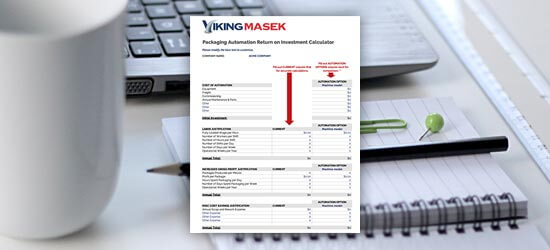
Packaging machine ROI calculator

Need help figuring out if packaging automation is right for your business?


First, start with the numbers. Download our free packing machine ROI calculator to learn how long it will take for an investment in automation to pay for itself (and much more).


Free packaging automation ROI calculator