How to Choose Paper Salad Bowls for Your Business?
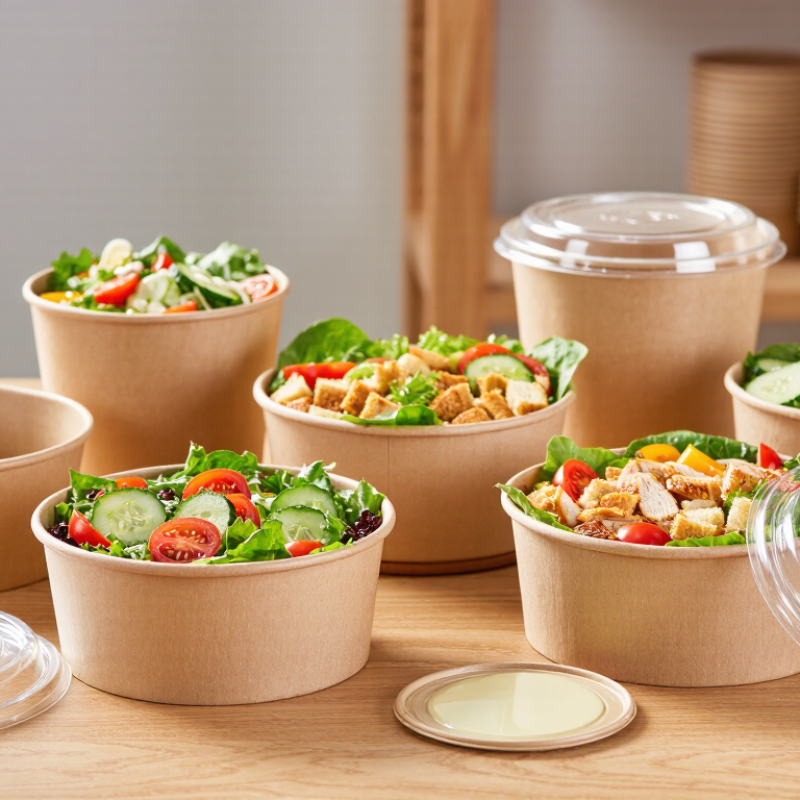
Choosing the right Paper Salad bowl is more than a branding decision. It affects how a meal travels, looks, and feels in a customer’s hands. A leafy salad with dressing needs a different level of strength than a small side portion. Think about serving size, ingredients, takeaway time, and how bowls will be stacked in your storage area. Small details matter. A lid that fits poorly can undo an otherwise careful choice.
Packaging specialist Elena Morris puts the principle simply: “A good bowl protects the food before it promotes the brand.” Use that as a starting point, not a guarantee. Compare bowl capacity, rim shape, rigidity, and lid compatibility with the meals you actually sell. Check how the bowl handles chilled ingredients and heavier toppings, and test it with dressing before placing a large order. Ask suppliers for clear material and product specifications. If available, request samples and inspect them under normal service conditions. A bowl may look sturdy on a product page but feel different when filled and carried. That can be frustrating. Cost also deserves a close look: compare the price per usable unit, including lids and storage needs, rather than judging by the carton price alone. This guide will help you weigh those practical factors, spot trade-offs, and choose a Paper Salad bowl that suits your menu and daily workflow. No bowl fits every business.
Identify Your Menu, Serving Sizes, and Daily Volume
How to Choose Paper Salad Bowls for Your Business?
Identify Your Menu, Serving Sizes, and Daily Volume
Start with the salads you actually serve. A leafy side salad needs less depth than a grain bowl with roasted vegetables, dressing, and protein. Measure a typical portion in your usual serving scoop, then check whether it fits without pressing down the greens. Leave room for tossing and toppings. A bowl that looks generous but spills during delivery can create extra work.
Estimate daily volume using real sales, not just your busiest day. Note how many bowls you serve at lunch, during peak hours, and for takeaway orders. If demand changes by day, compare a busy shift with a quieter one. Your forecast may be imperfect; that is normal. Keep a small sample of filled bowls and test how they stack, travel, and hold dressing before ordering in bulk.
Tips: Fill a few candidate sizes with your standard portions. Check headspace, lid fit, and whether wet ingredients soften the bowl during your normal service window. Record the results.
Choose capacity around your menu mix, not a single ideal serving. If one size struggles with bulky toppings, separate sizes may work better. But too many options can complicate storage and staff training. Review usage after a week: leftover stock, overfilled bowls, and frequent spills all offer useful clues.
How to Choose Paper Salad Bowls for Your Business? — Identify Your Menu, Serving Sizes, and Daily Volume | Menu Type | Typical Serving | Suggested Bowl Capacity | Typical Daily Orders | Practical Ordering Guidance |
| Side salad | About 3–5 oz (85–140 g) of greens and toppings | 12–16 fl oz (355–475 ml) | 25–75 bowls | Choose a smaller bowl for compact portions. Allow extra room if the salad includes bulky leaves or separate toppings. |
| Standard entrée salad | About 8–12 oz (225–340 g), including greens, vegetables, and protein | 24–32 fl oz (710–950 ml) | 30–100 bowls | A wider opening helps with mixing and topping distribution. Check that the lid fits securely for takeaway orders. |
| Large or loaded salad | About 12–16 oz (340–455 g), with multiple toppings or a larger protein portion | 32–40 fl oz (950–1,180 ml) | 15–60 bowls | Use additional capacity for ingredients that take up more space, such as chopped vegetables, croutons, or sliced proteins. |
| Grain bowl or salad with substantial add-ons | About 12–18 oz (340–510 g) of grains, vegetables, and protein | 32–40 fl oz (950–1,180 ml) | 20–80 bowls | Test the bowl with your actual recipe; cooked grains and layered toppings can require more space than leafy greens alone. |
| Shareable salad | About 16–24 oz (455–680 g), intended for two or more people | 48–64 fl oz (1,420–1,890 ml) | 5–25 bowls | Consider a broad, sturdy bowl and a compatible lid to reduce shifting during transport. |
Planning note: Serving weights and daily order ranges are practical planning estimates, not fixed standards. Bowl capacity is nominal volume; actual fit depends on ingredient shape, packing, and how generously each portion is filled. To estimate a starting daily stock, multiply expected orders by bowls per order, then add a small buffer for demand variation and handling.
Compare Paper Types, Bowl Sizes, and Lid Options
Choose the paper by what the bowl must hold. Kraft paper gives salads a natural look, while white paper suits a clean, bright presentation. For oily toppings or dressing, compare moisture and grease resistance, not just appearance. Coatings can affect end-of-life options. The U.S. Environmental Protection Agency’s 2018 report estimated that 68.2% of paper and paperboard was recycled; that broad figure does not guarantee acceptance of coated food bowls. The American Forest & Paper Association reported a roughly 68% paper recycling rate for 2022. Check local facility guidance.
Size the bowl around a real serving. A 24-ounce bowl may suit a side salad; a 32-ounce option gives leafy greens and toppings more room. These are practical starting points, not universal standards. Fit matters. Test a full portion with dressing before ordering in bulk, since a bowl that looks roomy when empty can feel cramped once ingredients are added.
Match lids to the delivery journey. A flat lid saves stacking space, while a domed lid protects bulky toppings from being pressed down. Ask suppliers to confirm lid fit and test for leaks after several minutes of handling. A small mismatch can loosen during transport. I would not skip this test, even when the sample appears secure.
Evaluate Strength, Leak Resistance, and Food Safety
How to Choose Paper Salad Bowls for Your Business?
Evaluate Strength, Leak Resistance, and Food Safety
A bowl must survive more than a quick look on the counter. Fill samples with chilled greens, dressing, and heavier toppings, then check for sagging, seam separation, or damp spots after 15 minutes. Repeat with warm foods if your menu includes them. A firm rim helps during stacking, but an empty bowl’s stiffness can be misleading. Hand-feel is an imperfect guide. Ask suppliers for performance data under realistic holding conditions, including oil and acidic dressings. Test before ordering.
Leak resistance depends on the bowl’s coating, seams, and intended use. Shake a filled sample gently, then carry it at normal service angles. Watch the base and rim. The FDA Food Code 2022 sets cold holding at 41°F or below and hot holding at 135°F or above; check that the bowl’s stated use suits your serving temperatures. Food-contact materials should be supported by clear supplier documentation, not vague claims. EPA’s 2018 materials report counted 41.9 million tons of paper and paperboard packaging in U.S. municipal solid waste, a reminder to consider disposal alongside performance. A bowl that leaks is costly; one that works only in a showroom is, too.
Review Sustainability Claims and Disposal Requirements
A paper salad bowl can look sustainable on a shelf, yet its coating may affect what happens after lunch. Ask suppliers what the lining contains and whether the bowl has been tested for composting or recycling. “Plant-based” does not automatically mean compostable, and “compostable” may refer only to industrial facilities. Check the test standard, intended conditions, and whether the claim applies to the whole bowl, including its lid.
Then compare those claims with local disposal options. A compostable bowl has little practical value if nearby facilities reject food-soiled packaging. Recycling programs may also exclude bowls with grease, dressing, or attached film. Ask the waste hauler directly; rules can vary by service area. A small trial helps. Fill sample bowls with oily dressing, stack them during a busy service, and see whether staff can separate lids and food scraps without slowing cleanup. Real conditions are messy.
Keep the supplier’s documentation on file, and make disposal instructions visible near collection bins. Be cautious with broad labels. I would not rely on a leaf icon alone. Claims can be incomplete, and facilities change their requirements. That uncertainty deserves a second look.
Compare Costs, Suppliers, and Customization Options
Choosing paper salad bowls starts with the meals you actually serve. A leafy lunch with dressing needs more depth and sturdier walls than a small side salad. Compare total delivered cost, not just the price per bowl. Freight, lids, storage space, and minimum order quantities can change the math. A low unit price may be misleading. Ask for samples, then fill them with a chilled salad and gently shake them. Check for leaks, soft rims, and lids that pop loose.
Supplier reliability matters when weekly demand changes. Ask about stock availability, production lead times, material specifications, and food-contact documentation. Get the details in writing. Custom printing can make packaging easier to recognize, but setup charges, print coverage, and color limits affect the real cost. Request a proof and confirm whether artwork changes bring extra fees. I once underestimated storage volume. It was an avoidable headache.
Tips: Compare quotes using the same bowl size, lid type, and order quantity. Test a sample during your actual packing routine. Keep customization modest at first. It may look less distinctive, but it reduces risk while you learn what customers notice.