


How to Choose PLA 3D Printing Filament in 2026?

Choosing PLA filament in 2026 requires more than comparing colors and advertised diameter. Pla 3d Printing remains popular because PLA prints easily, needs modest temperatures, and produces clean visual details. The Wohlers Report 2024 valued the global additive manufacturing industry at approximately $20.035 billion in 2023. Its 13.5% growth shows a larger and more competitive market. That expansion brings more brands, recycled claims, and inconsistent quality. A spool can look identical on a shelf. It may print very differently. The real question is fit.

For this guide, selection starts with verified data. Check polymer formulation, diameter tolerance, drying guidance, nozzle temperature, and batch traceability. ASTM F42 and ISO/ASTM 52900 provide useful additive manufacturing terminology. However, they do not guarantee smooth extrusion or reliable layer bonding. Practical testing should include a 20 mm calibration cube, a thin-wall vase, and a bridging sample. Record stringing, surface gloss, adhesion, and actual spool weight. A ±0.02 mm tolerance sounds impressive. Yet measurement methods matter. Humidity can quietly change the result.

Sustainability also requires careful wording. European Bioplastics’ 2024 market data projected global bioplastics production capacity to grow from about 2.47 million tonnes in 2024 toward 5.73 million tonnes by 2029. PLA is important within that broader market, but composting access remains uneven. A biodegradable label does not mean a printed part disappears in a backyard compost bin. For 2026 buyers, the best spool balances predictable processing, mechanical needs, storage, and documented environmental claims. Some recommendations will remain conditional. That is honest. Printer settings, room humidity, and geometry can overturn a ranking.
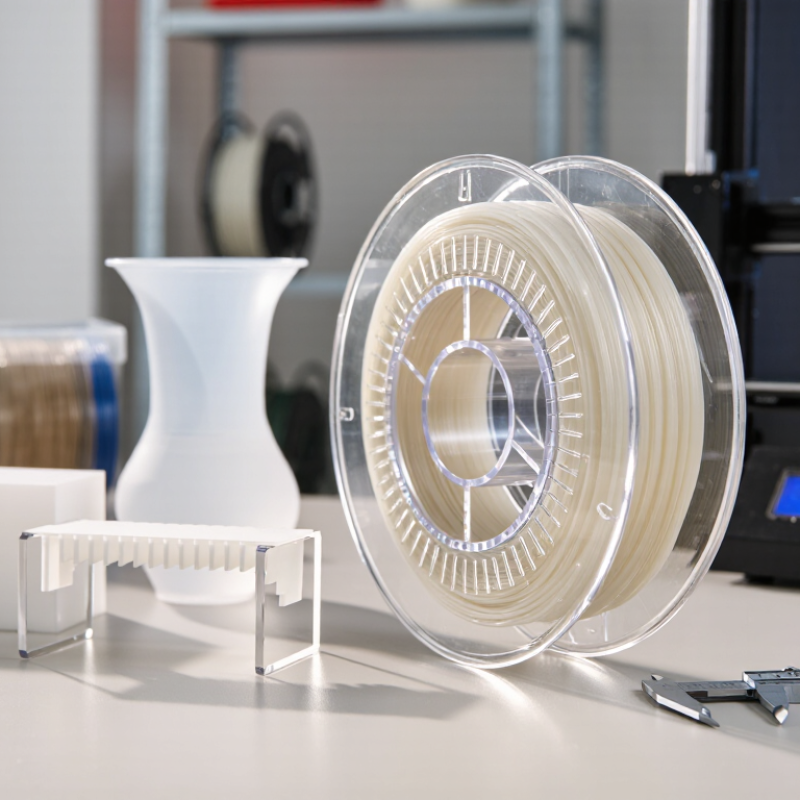
How to Choose PLA 3D Printing Filament in 2026?

Understanding PLA Filament Properties and Printing Requirements

How to Choose PLA 3D Printing Filament in 2026?

Understanding PLA Filament Properties and Printing Requirements

PLA remains popular because it prints at relatively low temperatures and produces sharp, clean details. Wohlers Report 2025 valued the global additive manufacturing industry at approximately 24.5 billion dollars in 2024. That growth increases material choice, but it also creates confusion. PLA is not one uniform material. Its stiffness, color additives, moisture level, and crystallinity can change print behavior.

Most standard PLA melts near 180–220°C and softens around 55–65°C. Keep that limit in mind. A PLA hook left inside a hot car may bend quickly. European Bioplastics’ 2024 market update projected global bioplastics production capacity to reach about 7.4 million tonnes by 2028. However, bio-based does not mean heatproof or automatically compostable. Check the technical data sheet before judging performance.

For everyday parts, begin with a 0.4-millimeter nozzle, moderate cooling, and a bed near 50–60°C. Adjust temperature in five-degree steps. Too much heat creates stringing and swollen corners; too little causes weak layer bonding. Dry filament still matters. I often see a “new” spool produce rough walls after absorbing humidity. Store it sealed with fresh desiccant. Printing requirements should match the object: PLA suits models, prototypes, and indoor fixtures, but not high-temperature components. My own testing is sometimes inconsistent, especially with dark pigments, so one successful profile should not become a permanent rule.
Comparing PLA Types, Blends, and Performance Features

Choosing PLA in 2026 requires more than comparing spool colors. Standard PLA remains predictable, affordable, and easy to print. It suits display models, prototypes, and classroom projects. PLA+ usually adds impact resistance through modified polymers. It can survive handling better, but results vary between formulations. I test a small calibration cube before printing functional parts. Small details matter.

Tough PLA is useful for clips, brackets, and objects facing repeated knocks. It may need slower cooling or adjusted temperatures for stronger layers. Matte PLA hides layer lines, although its surface can feel slightly rough. Silk PLA produces a bright finish, but it is often less rigid. Wood-filled and mineral-filled blends create distinctive textures. They can also increase nozzle wear and clogging risk. A hardened nozzle is a sensible precaution.

Recycled PLA can reduce material waste, yet color and flow may change between batches. Moisture affects every type. I once blamed a weak blend when damp filament caused brittle layers and uneven surfaces. Dry storage and careful temperature tests would have prevented that mistake. Print speed, cooling, nozzle size, and model geometry often matter as much as the filament label. For precise parts, I favor consistent standard or reinforced PLA. For appearance, specialty blends are tempting, but their performance deserves verification before a long print.

Checking Filament Quality, Compatibility, and Storage Conditions

How to Choose PLA 3D Printing Filament in 2026?

Good PLA filament starts with consistent quality, not attractive packaging. Check the stated diameter tolerance, usually measured in millimeters, and inspect the surface for bubbles, rough patches, or uneven winding. A digital caliper can reveal problems that your eyes miss. I also compare several points along the spool, because one perfect measurement proves little. My first assumption was that a larger spool always offered better value. It did not. Poor winding caused feeding resistance and several weak layers.

Compatibility depends on more than the printer’s label. Confirm the recommended nozzle temperature, bed temperature, and cooling requirements. Your printer’s hot end, nozzle material, and airflow can change the result. Dry PLA should extrude smoothly, with limited popping or steam. If the filament snaps easily, feels unusually brittle, or leaves rough surfaces, moisture may be involved. A test cube helps evaluate layer adhesion, overhangs, bridging, and dimensional accuracy before a long print. Keep notes about temperature changes. Small adjustments often matter.

Tips: Store opened filament in an airtight container with fresh desiccant. Add a humidity indicator if possible. Keep spools away from sunlight and warm windows. Before printing, check for tangled loops and dust. A short drying cycle may restore damp PLA, but excessive heat can deform it. Do not trust a single successful print. Test again after storage, because conditions change.

How to Choose PLA 3D Printing Filament in 2026?

Practical temperature windows for checking PLA filament compatibility, print quality, and storage conditions

These are commonly used starting ranges for standard PLA. A nozzle temperature of 190–220°C and a bed temperature of 0–60°C cover many PLA formulations. Drying at approximately 40–50°C can help reduce moisture-related defects, while storing filament in a sealed container at a stable room temperature helps preserve print quality. Always check the filament technical data sheet, diameter tolerance, and recommended settings before printing.

Matching PLA Filament to Your 3D Printer and Project

How to Choose PLA 3D Printing Filament in 2026?

Matching PLA filament to your 3D printer and project starts with temperature control. Check your printer’s nozzle range, bed temperature, and maximum speed before buying filament. Standard PLA works well for models, organizers, and display parts. For outdoor pieces, choose a tougher or heat-improved PLA, but test it carefully. PLA can soften in a hot car or near a radiator.

Filament diameter matters. Most printers require 1.75 mm filament, with a small tolerance for smooth feeding. Store opened spools in a sealed bag with fresh desiccant. Moisture can cause popping sounds, rough walls, and weak layers. I usually print a small temperature tower before a large project. It takes time, but it reveals stringing and poor layer bonding early. My settings are not always perfect. Room temperature and spool age can change the result.

Tips: Match the filament to the nozzle size and layer height. Use a clean build surface and level the bed before testing. Start with moderate speeds, then increase them gradually. Watch the first layer closely; tiny gaps often signal incorrect bed height. For functional parts, print a strength test instead of trusting appearance alone. Keep notes about nozzle temperature, cooling, and drying time. A glossy sample may look attractive, but it can hide brittle layers. When unsure, test a small section before committing to hours of printing.

Evaluating Sustainability, Cost, and Supplier Reliability

How to Choose PLA 3D Printing Filament in 2026?
Evaluating Sustainability, Cost, and Supplier Reliability

Choosing PLA in 2026 is less about color and more about evidence. In my workshop, I compare a spool’s print consistency, packaging, and material documentation before checking its price. A low-cost roll can waste hours through brittle feeding, uneven diameter, or repeated bed failures. That hidden cost matters. Look for clear information about recycled content, production energy, and disposal conditions. “Biodegradable” can mislead when industrial composting is required. Ask for test data, not vague promises.

Sustainability also depends on how efficiently the filament prints. A stable diameter reduces failed parts, purge waste, and unnecessary reprints. I record nozzle temperature, moisture exposure, and dimensional accuracy for each new supplier. Dry storage helps. However, my measurements are not laboratory certification. That limitation deserves honesty. Choose suppliers who publish technical data sheets, safety information, batch details, and realistic lead times. Independent certifications can help, but verify their scope and date.

Cost should be calculated per usable part, not per kilogram. Include shipping, taxes, drying time, failed prints, and labor needed to solve defects. A slightly higher price may be sensible if quality remains stable across batches. Reliability is tested during ordinary weeks. Can the supplier replace a damaged roll, answer technical questions, and maintain stock? Before committing, order a small quantity and print the same calibration model several times. Keep records. Supplier claims can change, and reviews may reflect old production. Recheck documentation each year, especially when sustainability language influences the purchase.

How to Choose PLA 3D Printing Filament in 2026? - Evaluating Sustainability, Cost, and Supplier Reliability

PLA Filament Category Typical Price
(USD/kg)
Recycled or Bio-Based Content Typical Mechanical Data Printing Conditions End-of-Life Reality Best Use Case
Standard PLA 15–30 Usually bio-based polymer; recycled content must be verified by documentation. Tensile strength: approximately 45–65 MPa
Heat-deflection temperature: approximately 50–60°C
Nozzle: 190–220°C
Build plate: 20–60°C
Drying: commonly 40–50°C for 4–6 hours when moisture is present
Industrially compostable only where suitable facilities accept certified PLA. It is generally not suitable for backyard composting. General prototypes, decorative parts, educational models, and low-temperature indoor components.
Recycled-Content PLA 18–35 Commonly 10–100% recycled material, depending on the product. Ask for the percentage and calculation method. Mechanical properties may be within approximately 10–20% of standard PLA, but variation between lots can be higher. Nozzle: 190–225°C
Build plate: 20–60°C
Drying is strongly recommended before printing.
Recycling can reduce virgin-material demand, but printed parts are rarely accepted in ordinary household recycling streams. Projects prioritizing material circularity, provided consistent diameter and batch quality are documented.
High-Flow PLA 20–40 Bio-based content varies; recycled content is not implied by the high-flow designation. Usually similar stiffness to standard PLA; final strength depends heavily on layer bonding and print speed. Nozzle: approximately 200–230°C
Designed for higher volumetric flow; printer-specific calibration is required.
Same general PLA disposal limitations. Faster printing may reduce machine energy per part, but the total benefit depends on failed-print rate and printer efficiency. Higher-throughput production of larger models and functional prototypes.
Toughened PLA 25–50 May contain impact modifiers or blends; bio-based and compostability claims require product-specific evidence. Higher impact resistance than standard PLA; tensile and heat performance vary substantially by formulation. Nozzle: approximately 200–230°C
Build plate: 40–70°C may improve adhesion.
Do not assume compostability if additives or polymer blends are used. Follow the manufacturer’s material declaration. Clips, brackets, housings, and parts exposed to moderate impact but not high heat.
Specialty or Filled PLA 30–70+ May include wood, mineral, fiber, or other fillers. The filler does not automatically make the whole filament compostable. Properties are formulation-dependent; abrasive fillers may require a hardened nozzle. Nozzle: approximately 190–230°C
Use a wear-resistant nozzle for abrasive formulations.
Mixed materials are generally more difficult to recycle. Confirm disposal guidance before purchase. Appearance-focused parts, prototypes requiring a specific surface effect, and selected low-load applications.

Supplier Reliability Evaluation Checklist

Reliability Dimension Evidence to Request Practical Acceptance Target Why It Matters
Dimensional consistency Published diameter tolerance, sampling method, and test results. Approximately ±0.05 mm or better for common 1.75 mm filament, subject to verification. Stable diameter improves extrusion consistency and reduces print failures.
Lot traceability Lot number, production date, material batch, and retained sample policy. Every spool should be traceable to a production lot. Makes complaints, recalls, and repeat purchasing more manageable.
Moisture control Packaging specification, desiccant use, moisture guidance, and measured moisture data where available. Vacuum-sealed packaging with desiccant and clear drying instructions. Moisture can cause bubbling, stringing, weak layers, and inconsistent surface quality.
Quality documentation Technical data sheet, safety data sheet, recommended print settings, and material composition. Documents are current, specific to the product, and available before purchase. Supports repeatable production and responsible sustainability claims.
Supply continuity Typical lead time, stock policy, minimum order quantity, and substitute-material policy. Documented lead times and at least one technically equivalent alternative. Reduces production interruptions and emergency purchasing costs.
Sustainability verification Recycled-content declaration, chain-of-custody information, life-cycle data, or third-party certification. Claims are supported by recognized documentation rather than marketing language alone. “Bio-based,” “recyclable,” and “compostable” describe different attributes and should not be treated as equivalents.
Technical note: Values shown are typical planning ranges rather than guaranteed specifications. Confirm the exact technical data sheet for each product and lot. Compostability claims should be checked against applicable standards such as EN 13432 or ASTM D6400, while recycled-content claims should be supported by documented calculation methods.
Packaging machine ROI calculator

Need help figuring out if packaging automation is right for your business?


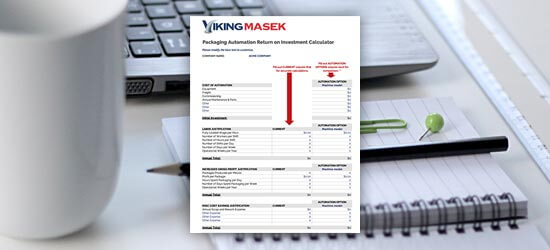
First, start with the numbers. Download our free packing machine ROI calculator to learn how long it will take for an investment in automation to pay for itself (and much more).


Free packaging automation ROI calculator