


How to Choose Sewer Drain Cleaning Equipment in 2026
Choosing Sewer Drain Cleaning Equipment in 2026 requires more than comparing motor power or catalog prices. A reliable decision begins with pipe diameter, blockage type, access conditions, water availability, and operator experience. A small inspection camera may reveal roots at a six-inch joint. A trailer jetter may clear grease, but struggle with heavy sediment. The wrong machine wastes time, fuel, and maintenance budget.
The U.S. Environmental Protection Agency’s 2022 Clean Watersheds Needs Survey identified approximately $630.1 billion in documented wastewater and stormwater infrastructure needs. The American Society of Civil Engineers also rated U.S. wastewater infrastructure poorly in its 2021 Infrastructure Report Card. These figures suggest rising maintenance pressure, especially for municipalities, contractors, and property managers. Equipment selection therefore affects service quality and long-term asset protection.
John Schorle, a sewer-cleaning trainer associated with professional drain-service education, offers a practical reminder: “The machine must match the blockage, pipe, and operator—not just the sales brochure.” That principle remains useful in 2026. Look for controllable pressure, accurate flow ratings, durable hoses, accessible parts, and clear safety systems. Battery-powered units can reduce noise indoors. Compact drum machines can reach tight service areas. Yet every option has limits. I sometimes overvalue headline specifications. Field testing matters more. A machine that performs beside a clean showroom drain may fail beside a muddy manhole. This guide compares Sewer Drain Cleaning Equipment through performance, reliability, safety, service support, and total ownership cost.
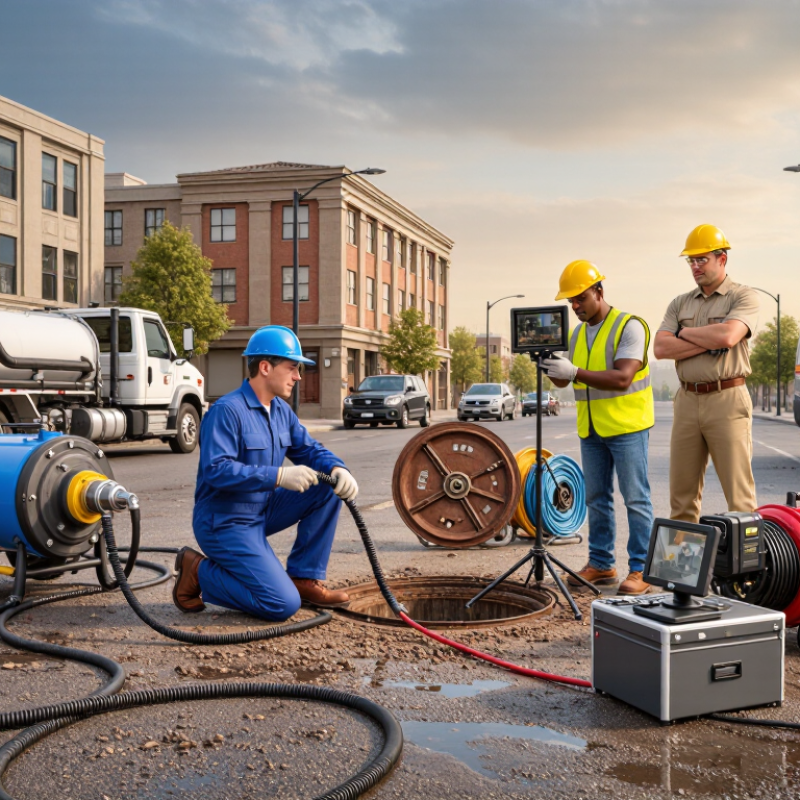
Understanding Sewer Drain Cleaning Needs in 2026
In 2026, sewer drain cleaning starts with diagnosis, not equipment shopping. Each blockage has a different cause, depth, and risk. Grease often needs controlled water pressure, while roots may require mechanical cutting. Older clay pipes can crack under aggressive force. Newer plastic pipes may deform when handled poorly. A camera inspection reveals pipe size, joint damage, standing water, and access limits before cleaning begins. This evidence helps technicians choose suitable cables, nozzles, cameras, and protective tools.
Tips: Inspect before cleaning. Measure access points. Match pressure to pipe condition. Keep inspection records. Ask about previous repairs. Small details matter.
In field assessments, I have seen crews choose powerful equipment too early. The blockage moved, but damaged pipe sections remained hidden. That approach wastes time and can increase repair costs. Reliable planning combines inspection results, maintenance history, weather conditions, and expected debris. Remote camera systems can improve accuracy, especially in long or frequently blocked lines. However, technology does not replace judgment. Poor lighting, dirty lenses, or rushed interpretation can produce false confidence. I have also underestimated access space before. It was an avoidable mistake. Equipment should be portable, serviceable, and appropriate for the operator’s training. Safe setup areas, ventilation, electrical protection, and local work requirements must be checked before operation.

How to Choose Sewer Drain Cleaning Equipment in 2026
Understanding sewer drain cleaning needs in 2026 starts with matching equipment capacity to the pipe diameter. The chart shows practical planning ranges for water-jetting flow rates commonly used for residential, commercial, and municipal sewer lines.
Smaller drains generally require controlled flow to avoid damage, while larger sewer lines need higher flow to move heavy sediment, grease, and roots. Final equipment selection should also consider blockage severity, access points, hose length, water availability, and local safety requirements.
Comparing Manual, Electric, Hydro Jetting, and Robotic Equipment
How to Choose Sewer Drain Cleaning Equipment in 2026
Manual cable equipment remains useful for small blockages and narrow residential lines. It gives operators direct feedback through the cable. You can often feel roots, grease, or a hard obstruction. It is affordable, portable, and simple to maintain. However, it may leave residue behind. It also demands patience, strength, and careful handling. I have sometimes underestimated a blockage after the cable broke through. The pipe looked open, but flow remained weak.
Electric cleaning machines provide more power and consistent cable rotation. They suit recurring clogs, longer indoor runs, and tougher deposits. Operators should match cable size with pipe diameter. Excessive force can damage fragile or corroded piping. Training matters here. So does inspection. Electric equipment is efficient, but not automatically safer.
Hydro jetting uses pressurized water to wash pipe walls clean. It works well against grease, sludge, and mineral buildup. A camera inspection should confirm pipe condition before jetting. Old joints may not tolerate high pressure. Robotic equipment offers another approach, especially for large commercial lines. Cameras, cutters, and controlled tools can reach difficult sections with less manual exposure. The costs are higher, and setup takes longer. Not always. Yet detailed footage improves decisions and records. In practice, the best choice depends on blockage type, pipe condition, access, and operator skill. No method wins every time.
Evaluating Power, Reach, Compatibility, and Cleaning Performance
How to Choose Sewer Drain Cleaning Equipment in 2026
Power should match the blockage, pipe material, and access conditions. A machine that is too weak may stall against hardened grease or roots. Excessive torque can damage older clay, cast iron, or weakened joints. The EPA’s 2022 Clean Watersheds Needs Survey estimated $630.1 billion in wastewater infrastructure needs over 20 years. That scale makes careful equipment selection more important, especially for aging networks. Choose adjustable power, overload protection, and controls that let operators slow the cable when resistance changes.
Reach must be measured realistically. Check the pipe diameter, line length, access points, and cleanout angles before purchasing. Longer reach is useful, but extra cable can increase handling risks and reduce control. Water-jetting units need enough hose length, pressure, and flow for the target line. Nozzle design also matters. A penetrating nozzle may open a passage, while a flushing nozzle removes loosened debris. Cleaning performance is not only pressure.
Compatibility is often overlooked. Confirm electrical supply, vehicle space, cable or hose sizes, and available maintenance support. ASCE’s 2021 Infrastructure Report Card rated U.S. wastewater infrastructure D+, reflecting persistent system challenges. Equipment should therefore support inspection, routine cleaning, and safer repeat work. Field results can vary. I would test a machine on representative lines before committing. Bigger is not automatically better. Record cleaning time, stoppages, water use, and post-cleaning inspection results. Those imperfect records reveal whether the equipment actually performs.
Checking Safety Features, Maintenance Needs, and Operating Costs
How to Choose Sewer Drain Cleaning Equipment in 2026
Checking Safety Features, Maintenance Needs, and Operating Costs
Safety should influence every equipment decision. Look closely. Choose machines with an emergency stop, stable handles, and guarded moving parts. Ground-fault protection reduces electrical risk near wet floors. A reliable cable brake can prevent sudden movement during blockage removal. Reverse controls also matter when a cable jams. Operators still need gloves, eye protection, suitable footwear, and practical training. Equipment cannot correct careless positioning.
Maintenance requirements often reveal the real quality of a machine. Inspect cables, cutting heads, seals, and power cords before each shift. Clean debris from the frame and drum after use. Lubricate moving parts according to the service instructions. Keep a simple inspection log. It can expose repeated failures early. I have seen teams overlook small cable kinks until downtime became expensive. That mistake is easy to repeat.
Operating cost includes more than the purchase price. Compare electricity use, replacement cables, cutting tools, cleaning time, and scheduled servicing. Add labor costs for setup and transport. Rental equipment may suit occasional work, but availability can disrupt urgent jobs. Owned equipment may cost less over several years, yet neglected maintenance changes that calculation. Costs compound. Ask suppliers for service intervals and typical replacement parts. Then estimate one difficult month, not only normal usage. A cheaper machine may become costly when one failed component delays an entire crew.
| Equipment Type | Typical Drain Diameter | Best-Fit Applications | Important Safety Features to Check | Routine Maintenance Needs | Typical Operating Cost* | Operator Skill Level | Safety Profile | Main Selection Limitation |
|---|---|---|---|---|---|---|---|---|
| Portable Electric Drum Machine | 30–100 mm (1.2–4 in) | Indoor sinks, floor drains, kitchen lines, small branch drains and short residential blockages. | Ground-fault protection, emergency stop or foot switch, enclosed rotating drum, cable anti-whip control and insulated handles. | Clean and disinfect the cable after use; inspect for kinks, corrosion and broken wires; lubricate the cable and check belts or switches regularly. | Approximately US$2–6 per operating hour | Basic to intermediate | Medium | Limited reach and cleaning power; rotating cable can expose operators to entanglement and contaminated wastewater. |
| Portable Electric Sectional Machine | 50–150 mm (2–6 in) | Longer building laterals, commercial branch lines and recurring blockages requiring stronger cable torque. | Foot-pedal dead-man control, cable torque limiter, transport guards, insulated controls and a stable frame or guide tube. | Wash and inspect each section after use; check couplings, bearings, guide springs and electrical protection; replace worn cable sections promptly. | Approximately US$3–8 per operating hour | Intermediate | Medium | Heavier and more difficult to transport; incorrect coupling or excessive torque can cause cable separation or injury. |
| Gasoline-Powered Drum Machine | 75–150 mm (3–6 in) | Outdoor service work, municipal cleanouts and locations where electrical power is unavailable. | Engine exhaust management, fuel shutoff, belt and pulley guards, emergency stop control, secure drum cover and low-vibration handles. | Engine oil and air-filter service; fuel-system inspection; cable cleaning; belt, clutch, bearing and fastener checks. | Approximately US$5–12 per operating hour | Intermediate | Low | Produces exhaust and noise; must not be operated in enclosed or poorly ventilated spaces. |
| High-Pressure Water Jetter | 50–300 mm (2–12 in) | Grease, sludge, scale and silt removal in service laterals, commercial drains and municipal sewer lines. | Pressure relief valve, trigger-gun dead-man control, hose safety whip check, non-return valve, thermal relief valve and clearly rated hoses. | Flush and inspect hoses and nozzles; check pump oil, filters, fittings and unloader operation; winterize the pump in freezing conditions. | Approximately US$8–25 per operating hour | Intermediate to advanced | Medium | High-pressure water can penetrate skin and cause serious injury; requires exclusion zones, protective clothing and trained operation. |
| Trailer-Mounted Water Jetter | 100–600 mm (4–24 in) | Long sewer runs, larger commercial systems, municipal maintenance and heavy deposits. | Pressure relief and bypass controls, hose reel guard, emergency shutdown, secure chemical and fuel storage, trailer brakes and lighting. | Daily hose and nozzle inspection; pump oil and filter service; engine maintenance; tank cleaning; trailer tire, brake and coupling checks. | Approximately US$15–40 per operating hour | Advanced | Medium | Higher purchase, transport and maintenance costs; requires suitable access and secure parking. |
| Vacuum Excavation or Sewer Vacuum Unit | Access pits, manholes and pipelines up to approximately 900 mm (36 in) | Removing standing water, sludge, debris and excavation spoil around sewer access points. | Vacuum relief valve, tank pressure gauge, hose restraint, emergency shutdown, safe discharge controls and confined-space procedures. | Inspect vacuum hoses and seals; clean filters and tanks; service the blower or pump; inspect hydraulic systems, valves and chassis components. | Approximately US$25–70 per operating hour | Advanced | Medium | Large footprint and high operating cost; does not replace cutting or descaling equipment when deposits are firmly attached. |
| Sewer Camera Inspection System | 50–600 mm (2–24 in), depending on camera head and push-rod size | Locating blockages, identifying pipe defects, verifying cleaning results and reducing unnecessary excavation. | Water-resistant camera head, cable strain relief, electrical isolation, stable reel brake, locator warning and bright, glare-controlled monitor. | Clean and disinfect the camera and push rod; inspect the cable jacket; check sonde operation, reel bearings, connectors and battery condition. | Approximately US$1–5 per operating hour | Intermediate | High | Diagnoses problems but normally cannot remove heavy blockages by itself; camera heads may be damaged by sharp edges or excessive force. |
| Mechanical Root Cutter | 100–300 mm (4–12 in) | Removing tree-root intrusion from sewer lines when mechanical cutting is appropriate. | Torque-limiting clutch, guarded rotating shaft, dead-man control, secure cutter attachment, reverse function and operator protection from flying debris. | Inspect cutter blades, shaft, couplings and bearings; remove roots and debris; sharpen or replace cutters according to wear. | Approximately US$6–18 per operating hour | Advanced | Low | Can damage fragile, cracked or unlined pipes; requires confirmed pipe condition and careful control of cutting force. |
| Battery-Powered Compact Drain Cleaner | 30–100 mm (1.2–4 in) | Short indoor service calls, occupied buildings and locations where low noise and quick setup are priorities. | Battery thermal protection, electronic overload cutoff, guarded cable, emergency stop, low-voltage warning and secure battery locking. | Clean and disinfect the cable; inspect the charger, battery contacts and cable condition; store batteries within the recommended temperature range. | Approximately US$1–4 per operating hour | Basic to intermediate | High | Limited runtime, torque and reach compared with larger corded or engine-driven machines. |
Selecting Equipment for Residential, Commercial, and Municipal Drains
How to Choose Sewer Drain Cleaning Equipment in 2026
Selecting equipment should begin with the drain environment, not the catalog. Residential lines usually need compact tools for 75–150 mm pipes, limited access, and occasional root intrusion. A camera helps confirm the blockage before cutting. Electric cable machines offer control indoors, while compact water-jetting units clear grease and sediment faster. Operators must manage splash, electrical hazards, and contaminated water carefully.
Commercial drains demand stronger planning. Restaurants may require frequent grease removal, larger hoses, and recovery tanks. Apartment buildings often benefit from inspection cameras, sectional cables, and medium-flow jetters. Municipal systems are different. They may include deep manholes, large diameters, heavy sediment, and traffic risks. High-flow jetting, vacuum recovery, sonar locating, and CCTV inspection should work as one system. The U.S. EPA’s 2022 Clean Watersheds Needs Survey estimated 630.1 billion dollars in documented water infrastructure needs. That figure shows why durable, serviceable equipment matters.
Tips: Match nozzle pressure and flow to pipe material. Keep a spare hose and locator battery onsite. Record pipe diameter, blockage type, and cleaning time. A perfect specification rarely exists. Field conditions change, sometimes embarrassingly fast. Test access points before mobilizing large equipment. Training, confined-space procedures, and maintenance records protect crews and improve reliability. Industry guidance from the Water Environment Federation also supports inspection-led maintenance instead of relying only on emergency cleaning.


