How to Choose Stone Composite Floor for Your Project?
Choosing flooring for a construction project involves more than selecting an attractive surface. A Stone Composite Floor must suit the room, structure, climate, and daily use. In real projects, visual appeal can hide practical problems. I have seen beautiful floors fail because installers ignored moisture, uneven subfloors, or expansion gaps. Small errors matter. The wrong product may crack near doorways or feel uncomfortable underfoot. This guide explains how to assess Stone Composite Floor options with practical judgment and reliable information.
Material selection should begin with project conditions. Before comparing colors, examine the subfloor, room dimensions, humidity, and expected traffic. Ask how the floor will be installed and maintained. A busy retail entrance needs stronger wear resistance than a quiet guest room. A kitchen may require better moisture protection. A basement demands careful subfloor preparation. These details guide suitable specifications. They are easy to miss. I once underestimated preparation time on a renovation, and the schedule suffered.
Reliable decisions require evidence, not confident sales language. Check technical data, installation instructions, warranty terms, and independent test results. Request samples, then inspect them under natural and artificial light. Compare surface texture, edge quality, thickness, and locking performance. Confirm that the product meets applicable local building requirements. Not every attractive sample performs equally well. That uncertainty deserves attention. Professional installers can identify risks that online descriptions often overlook. The aim is a balanced choice, combining durability, appearance, installation practicality, and long-term value. Good flooring supports the project. Your project deserves evidence.
Understanding Stone Composite Flooring and Its Main Types
How to Choose Stone Composite Floor for Your Project?
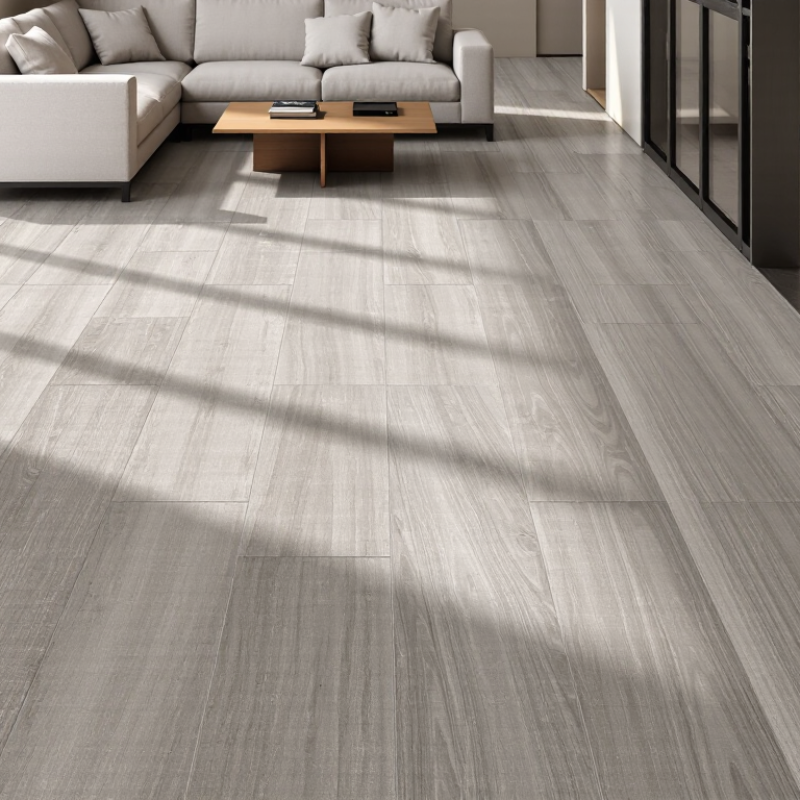
Stone composite flooring combines mineral fillers with polymers to create a stable, rigid surface. Its main types differ by core material and construction. SPC flooring usually contains limestone powder, PVC, and stabilizers. It feels dense and resists moisture well. WPC flooring uses a wood-polymer core. It offers more underfoot comfort but may feel less rigid. Mineral-core products use a higher mineral content, although manufacturers may define this term differently.
Look closely at the technical sheet. Check the core density, wear-layer thickness, locking system, and moisture rating. A busy hallway needs stronger surface protection than a quiet bedroom. In a kitchen, sealed joints and correct subfloor preparation matter greatly. SPC can suit concrete floors with occasional dampness. WPC may feel warmer beneath bare feet. It feels solid. Yet no flooring solves every installation problem.
I would also inspect sample planks under real lighting. Dark patterns can make dust more visible. Uneven subfloors may cause clicking sounds or joint stress. Many buyers focus on waterproof claims and overlook expansion gaps. That is a costly mistake. Product terminology can also confuse, so compare test data rather than names alone. For reliable results, confirm indoor air-quality information, installation limits, and recommended maintenance procedures. A practical choice balances durability, comfort, room conditions, and installer skill. The cheapest option is not always the most economical.
How to Choose Stone Composite Floor for Your Project? - Understanding Stone Composite Flooring and Its Main Types
| Evaluation Dimension | Standard SPC Flooring | Enhanced Mineral-Core SPC | SPC with Attached Underlayment | Project Selection Guidance |
|---|---|---|---|---|
| Core composition | Rigid core made mainly from polyvinyl chloride, limestone or calcium-carbonate filler, and stabilizers. | Rigid core with a higher mineral-filler content or a modified mineral-polymer formulation. | Standard SPC core combined with a factory-attached foam or acoustic backing layer. | Request the technical data sheet because terminology and mineral content vary between products. |
| Typical overall thickness | Approximately 3.5–7 mm, excluding any separate underlayment. | Approximately 4–8 mm, depending on the core design and wear-layer specification. | Approximately 4–8 mm, including the attached backing layer. | Confirm door clearances, stair heights, transitions, and appliance gaps before ordering. |
| Dimensional stability | Generally more stable than conventional flexible vinyl, but still affected by heat, sunlight, and subfloor movement. | Often selected where high rigidity and resistance to indentation are important, subject to the product specification. | Similar core stability to standard SPC; the attached backing does not eliminate expansion requirements. | Follow the manufacturer’s perimeter-gap, acclimation, and maximum-room-size instructions. |
| Water resistance | The core is generally water-resistant, while joints, edges, and the subfloor remain potential moisture entry points. | Typically suitable for moisture-prone rooms when the locking system and installation details are properly sealed. | Usually suitable for kitchens, utility rooms, and bathrooms where the product is specifically approved for those areas. | Do not use water resistance as a substitute for subfloor moisture testing and leak prevention. |
| Surface wear protection | Common wear-layer ranges are about 0.20–0.55 mm; thicker layers generally support heavier traffic. | Available with similar wear-layer options; mineral content does not replace the need for a suitable wear layer. | Wear performance depends mainly on the protective layer, finish, and surface treatment. | For commercial or high-traffic areas, compare wear-layer thickness, abrasion class, and warranty conditions. |
| Impact and indentation performance | Good resistance to everyday foot traffic when installed over a firm, level subfloor. | Often provides a firmer feel and strong load resistance, but excessive point loads can still damage the surface or locking joints. | The backing may improve comfort but can slightly reduce the firm feel under heavy concentrated loads. | Use furniture protectors and confirm suitability for rolling loads, heavy shelving, and commercial equipment. |
| Underfoot comfort and acoustics | Firm underfoot; acoustic performance depends strongly on the subfloor and selected underlayment. | Firm, stable feel; additional acoustic treatment may be required in apartments or multi-level buildings. | More forgiving underfoot and may reduce reflected sound compared with flooring installed without backing. | Check impact-sound ratings and building requirements rather than relying only on the presence of underlayment. |
| Installation method | Most commonly installed as a floating click-lock floor; some products are glue-down. | Usually floating click-lock installation, with stricter requirements for subfloor flatness. | Usually floating click-lock installation without a separate underlayment. | Never install an additional soft underlayment unless the product instructions explicitly allow it. |
| Subfloor requirements | Must be clean, dry, structurally sound, and flat within the tolerance stated by the manufacturer. | A rigid core can telegraph bumps or gaps, so subfloor preparation is especially important. | The attached backing may accommodate minor surface variation, but it cannot correct an uneven or unstable subfloor. | Level localized irregularities, remove loose materials, and test moisture before installation. |
| Underfloor heating compatibility | Often compatible with hydronic or electric systems when approved by the manufacturer. | May be compatible, but thermal limits and installation procedures must be verified for the specific product. | Compatibility depends on the flooring, adhesive or locking system, and backing material. | Observe the specified maximum operating temperature and gradual heating and cooling schedule. |
| Best-fit applications | Residential living areas, bedrooms, kitchens, hallways, and selected light-commercial spaces. | High-traffic residential areas, retail spaces, offices, and projects requiring a particularly rigid floor system. | Renovations where faster installation, added comfort, or reduced floor buildup is desirable. | Match the product’s traffic classification, moisture rating, acoustic rating, and warranty to the project. |
| Primary advantages | Balanced cost, durability, water resistance, design variety, and relatively simple installation. | High rigidity, stable feel, and potential for improved resistance to indentation. | Simplified installation, improved comfort, and fewer separate underlayment materials. | Prioritize the benefits that directly address the site conditions instead of selecting by core name alone. |
| Main limitations | Can feel hard underfoot, may show subfloor imperfections, and requires expansion planning. | May cost more and can transmit sound or crack at joints if the subfloor is poorly prepared. | The attached backing may limit underlayment choices and can increase replacement cost if damaged. | Review samples, installation instructions, environmental certifications, and the complete warranty before purchase. |