How to Choose the Best Round Plastic Container for Your Needs?
Choosing the right Round Plastic Container can seem simple, yet it involves critical considerations. These containers are versatile, serving various purposes in homes and businesses. From food storage to organization, their utility cannot be overstated.
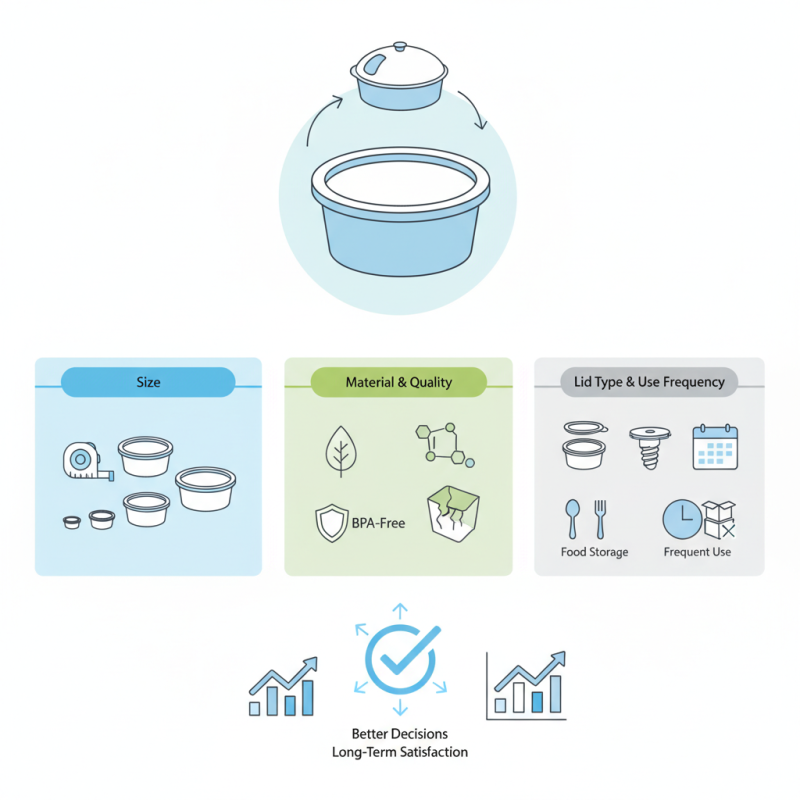
When selecting a round plastic container, think about size, material, and lid type. A container that is too small might not meet your needs. On the other hand, a very large container may take up unnecessary space. Consider how you will use it. This helps ensure you choose the best option.
Many people overlook the importance of quality. A cheap round plastic container may not last long, affecting your investment. It's also essential to check if the container is BPA-free if it will hold food. These factors can significantly impact your overall satisfaction. Reflect on how often you will use it and adjust your choices accordingly. Taking the time to evaluate your needs can lead to better decisions in the long run.
Understanding the Different Types of Round Plastic Containers Available
When selecting the right round plastic container, it’s essential to understand the variety available. Common types include food storage containers, deli containers, and specialty containers like those used for medical waste. Each subtype serves a unique purpose, catering to different consumer needs. For instance, food storage containers are often designed for repeated use, while deli containers are typically single-use and recyclable. According to a report by Allied Market Research, the global plastic containers market is projected to reach $237 billion by 2027. This growth emphasizes the importance of thoughtful selection to meet specific requirements.
Material choice plays a vital role in your decision. Containers can be made from polypropylene, polyethylene, or polystyrene, each with distinct properties. Polypropylene is known for its heat resistance, making it ideal for hot food. In contrast, polystyrene is lightweight but can crack easily under stress. A study published in Packaging Technology and Science highlighted that improper material selection can lead to food spoilage and contamination. Furthermore, if the container isn't suitable for the intended use, it can lead to waste and frustration.
Lastly, consider the sustainability aspect. Many modern consumers are leaning towards eco-friendly options. Some round plastic containers are made from recycled materials or are designed to be reused. The Global Sustainability Study showed that 66% of consumers are willing to pay more for sustainable products. However, it's vital to balance sustainability with functionality. A container may be eco-friendly but fail to meet storage needs. This consideration should be central to your choice, ensuring practicality and environmental responsibility go hand in hand.
Evaluating Material Quality and Durability for Your Plastic Container
When choosing a round plastic container, evaluating material quality is crucial. High-density polyethylene (HDPE) and polypropylene (PP) are among the top materials recommended for durability. According to industry reports, HDPE is resistant to impact and can withstand a wide range of temperatures. This makes it suitable for various applications, from food storage to industrial uses.
Another aspect to consider is the lifespan of these materials. Studies show that HDPE containers can last up to 20 years without significant degradation. However, exposure to sunlight can weaken them over time. Proper storage can mitigate this. Additionally, containers made from low-quality plastic can leach harmful chemicals, especially when used for food. Always look for containers that meet FDA standards for safety.
Consider the weight of the container and how it impacts usability. Lighter containers may be easier to handle, yet they might not offer the same strength. Thick-walled containers provide more durability but can be cumbersome. Each user must balance weight and strength according to their specific needs. Evaluate your requirements carefully and choose the material that aligns with your priorities.
Material Quality and Durability of Round Plastic Containers
Sizing: How to Determine the Right Volume for Your Needs
Choosing the right size for a round plastic container is crucial for your specific needs. Start by assessing what you'll store. If it's food items, consider the portions you usually prepare. A small family may need a container of 1 to 2 liters, while larger gatherings require 3 to 5 liters. Think about how often you will use it.
Next, reflect on storage space. If your kitchen cabinets are limited, smaller containers are better. A 0.5-liter container can fit neatly on a shelf or in a refrigerator door. But, if you have ample storage, larger containers provide versatility for various uses. The right volume ensures you won’t end up with an overcrowded container or underwhelmed with too much empty space.
Don’t forget to think about material thickness. A thicker container can hold more weight and is often more durable. However, it may be bulkier. Balance is key. Visualize how you want to maintain freshness and accessibility. Ultimately, choosing the right size involves trial and error. You might find that what seems like a perfect fit today doesn't quite work tomorrow. Always keep your changing needs in mind.
Choosing the Right Lid and Seal for Optimal Freshness
When selecting a round plastic container, the lid and seal play crucial roles in maintaining freshness. A properly fitting lid ensures that air does not enter, which can lead to spoilage. If the lid does not close well, the contents may dry out or go stale. Look for containers that feature locking mechanisms. They provide added security, preventing unwanted exposure to outdoor elements.
Consider the material of the lid. Some plastics contain additives that improve seal integrity. Additionally, a transparent lid can allow you to see inside without opening the container. This can help you make quick decisions about your food without compromising freshness. However, remember that not all seals are equal. A cheap seal may break with minimal pressure, leading to leaks or contamination over time.
Every kitchen has unique needs. You may find that a certain lid does not fit as snugly as expected. Over time, you might need to evaluate whether the container's design serves your requirements effectively. Testing various options can lead to better choices and enhanced food preservation. Choosing the right lid and seal is more than a minor detail; it significantly impacts the longevity of your food.
Considering Design Features for Versatile Use and Storage
When selecting a round plastic container, design features play a crucial role. Look for containers that offer versatility in use and storage. A simple design can provide maximum functionality. Consider containers with stackable shapes. This feature saves space and makes organization easy. containers with transparent materials help identify contents at a glance.
Lids are another essential aspect. Opt for containers with secure-fitting lids to prevent spills. Some lids may include built-in features, like venting, which is great for microwave use. Additionally, handles can enhance portability, making it easier to carry your container when needed.
Always think about cleaning and maintenance as well. Choose containers that are dishwasher safe, reducing effort and time. However, it's important to note that not all plastics withstand rigorous cleaning. This might affect the container's lifespan. Reflect on your storage habits and how often you will use the containers to ensure you make a suitable choice.
How to Choose the Best Round Plastic Container for Your Needs?
| Feature | Description | Ideal Use |
| Material | BPA-free plastic for safety and durability | Food storage |
| Size Options | Available in various sizes from small (1L) to large (5L) | Meal prep or bulk storage |
| Lid Type | Snap-on or screw-on lids for secure closure | Transportation of liquids or solids |
| Design Features | Stackable design to save space | Efficient storage in cabinets or fridges |
| Microwave Safe | Safe for reheating food in the microwave | Convenient meal warming |
| Dishwasher Safe | Easy cleaning in the dishwasher | Everyday use without hassle |