


How to Choose a Hydraulic Cutting Machine

Choosing a Hydraulic Cutting Machine starts with the material, the cut, and the pace of production—not the largest force rating on a specification sheet. A press that cuts thin gasket stock may be poorly suited to dense rubber or layered composites. Check the material’s thickness, hardness, and dimensions. Then compare required cutting force, bed size, stroke, and cycle rate. Small details matter. A short trial cut can reveal edge tearing, uneven pressure, or slow material handling before those issues become costly.

Hydraulics author Andrew Parr’s practical systems perspective supports a useful rule: “Match the machine to the work, not just its rated force.” This is a synthesized takeaway, not a verbatim quotation. It reflects why buyers should assess the pump, cylinder, controls, tooling, and safety features as one working system. Ask suppliers for specifications tied to your actual material and operating conditions. Also check service access, parts availability, operator training, and maintenance requirements. A machine can look right on paper and still disappoint on the shop floor. I would not treat a single demonstration cut as proof; repeatability over a full shift matters more. This guide explains how to compare options carefully, spot trade-offs, and choose a Hydraulic Cutting Machine that fits real production needs.
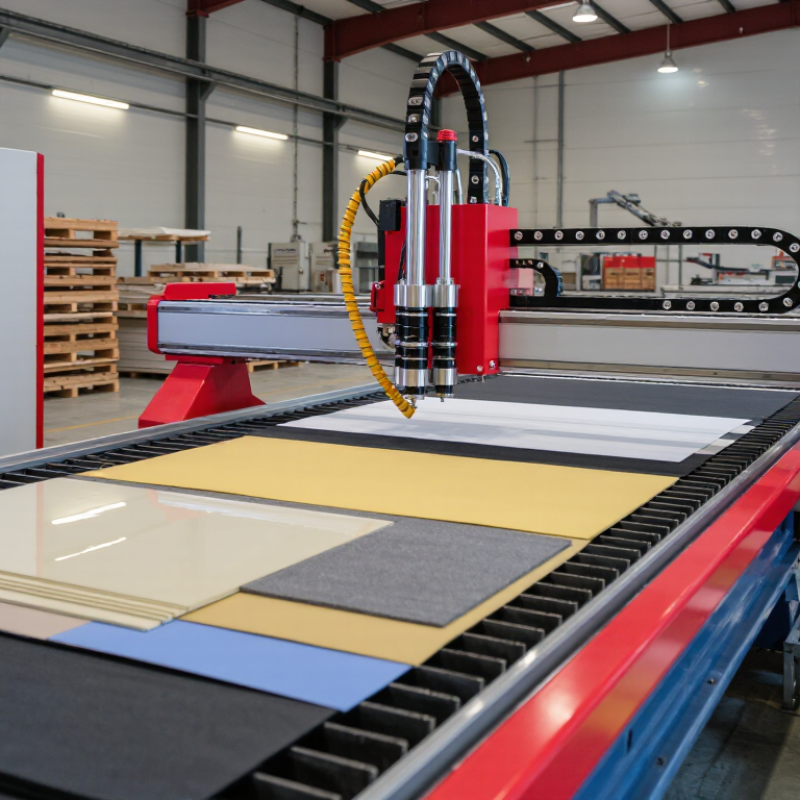
How to Choose a Hydraulic Cutting Machine

Identify the Material, Thickness, Cut Length, and Required Edge Quality

How to Choose a Hydraulic Cutting Machine

Start with the material, not just its listed thickness. Mild steel, stainless steel, and aluminum behave differently under the blade. A machine’s rated capacity may change with material strength, so check its specifications for your exact stock. Measure the thickest sheet you expect to cut, then consider how often you will process it. A machine working at its limit all day may not be the right fit. Leave room for variation.

Cut length matters too. Match the machine’s usable cutting width to your widest sheets, including any parts that need trimming. Then define acceptable edge quality. Will a small burr be acceptable, or do parts need clean edges straight off the machine? Blade condition, clearance, material support, and hold-down pressure can all affect the result. Test a sample piece before committing to a setup. Real material can surprise you.

Tips: Keep a short record of test cuts: material grade, thickness, settings, and edge results. Inspect both sides of the cut. If the edge quality is inconsistent, pause and check blade clearance and condition before changing several settings at once. One variable at a time is easier to assess.
Calculate Cutting Force with F = P × A; 1 MPa Equals 1 N/mm²

Choosing a hydraulic cutting machine starts with force, not catalog tonnage. Use F = P × A, where P is cylinder pressure and A is effective piston area. Because 1 MPa equals 1 N/mm², the units stay practical: 20 MPa acting on a 500 mm² piston produces 10,000 N, or 10 kN. Here, A means cylinder area, not blade footprint. That distinction is easy to miss.

The machine’s output must also meet the material’s cutting demand. For shearing, estimate that demand from material shear strength, cut length, and stock thickness. Allow for material variation, blade wear, friction, and pressure losses; check rated pressure and usable stroke. The U.S. Department of Energy’s 2006 Improving Pumping System Performance sourcebook reports that pumping systems can account for 25–50% of energy use in some industrial facilities. That broad range is not a cutter-specific prediction, but it makes pump sizing and idle time worth checking alongside peak force. A gauge can look reassuring while warm oil or a long hose reduces force at the tool. Measure twice. Test representative stock before settling on capacity.

Match Machine Type, Rated Tonnage, Stroke, and Bed Dimensions to the Job

A hydraulic cutting machine should match the material, cut shape, and daily workload. A swing-arm model can suit smaller, flexible workpieces; a traveling-head design may handle larger sheets more evenly. Check how the operator loads and positions each piece, too. A machine that fits the shop but slows every setup is a poor match.

Rated tonnage must cover the force needed for the material and die, with room for the job’s actual cutting conditions. Do not treat maximum capacity as a routine target. Stroke determines how far the cutting head travels; too little may prevent clean contact, while excess travel can waste time. Bed dimensions matter just as much. Measure the largest workpiece, then allow space for positioning and safe handling. Measure twice. Small errors matter.

Tips: Compare the machine’s rated capacity with the material and tooling specifications. Confirm usable stroke and bed area, not just headline dimensions. Ask for a trial cut with representative material when possible. A paper spec can look convincing; the real setup may still reveal awkward loading or limited clearance. That detail is easy to overlook.

How to Choose a Hydraulic Cutting Machine — Match Machine Type, Rated Tonnage, Stroke, and Bed Dimensions to the Job

Machine Type Typical Rated Tonnage Typical Stroke Typical Bed or Platen Dimensions Suitable Jobs and Materials Key Selection Consideration
Swing-arm hydraulic clicker press 20–30 metric tons 50–100 mm Working area approximately 900 × 430 mm; swing arm commonly about 350 × 500 mm Cutting individual small-to-medium dies in leather, gaskets, foam, rubber sheet, and textile laminates. Choose for flexible, low-to-medium-volume work where the operator positions the die by hand. Check arm reach and usable cutting area, not just the overall bed size.
Traveling-head hydraulic press 25–60 metric tons 50–150 mm Working table commonly about 1,600 × 500 mm; head travel varies by design Repeated die cutting of larger sheets, footwear components, foam parts, and gasket or insulation materials. Useful when a larger sheet must be cut across several positions. Confirm head travel, working height, and available clearance for the material stack and die.
Fixed-head beam hydraulic press 40–100 metric tons 80–150 mm Working area commonly about 1,000 × 800 mm to 1,600 × 1,000 mm Batch cutting of larger patterns from foam, rubber, composites, and other sheet materials using a beam or platen. Match the beam area to the die layout and sheet size. A larger bed can improve nesting flexibility but does not, by itself, guarantee adequate cutting force.
Four-column hydraulic die-cutting press 100–300 metric tons 100–300 mm Platen commonly about 800 × 800 mm to 1,500 × 1,200 mm Higher-force or larger-area die cutting, laminating, and forming of rubber, plastic sheet, fiber, and composite materials. Consider when the job requires greater force, a larger platen, or controlled parallel movement. Verify platen parallelism, daylight, and maximum working height.
Hydraulic guillotine shear Rated by maximum cutting thickness and blade length; capacity depends on material strength Blade gap and stroke are machine-specific Cutting length commonly about 1,000–3,000 mm on compact or general-purpose machines Straight-line shearing of metal sheet; not intended for shaped die cutting of soft sheet materials. Select by material type, thickness, and required cut length. Do not compare shear capacity directly with press tonnage: the cutting mechanism and rating method differ.

Selection note: These are representative ranges for industrial machine configurations, not universal specifications. Required force depends on material, thickness, die perimeter, cutting method, and tooling condition. Confirm the machine’s rated capacity, usable bed area, stroke, daylight, and safety features against the actual job before purchase.

Compare Hydraulic Pressure, Cycle Rate, and Duty Cycle with Production Needs

How to Choose a Hydraulic Cutting Machine

Match hydraulic pressure to the material, thickness, and cutting area—not just the machine’s maximum rating. A higher rating alone does not guarantee cleaner cuts. Check the required cutting force, then leave a practical margin for material variation and tool wear. Compare cycle rate with your real production target, including loading, alignment, and part removal. A machine rated for 12 cycles per minute may deliver less when operators handle heavy sheets. Measure a representative shift, not a brief demonstration.

Duty cycle matters just as much. A machine that runs continuously at peak pressure may overheat or need more frequent maintenance. The U.S. Department of Energy’s Improving Pumping System Performance sourcebook notes that pumping systems can account for 25–50% of energy use in some industrial plant operations. That figure is not a cutting-machine benchmark, but it highlights why operating time and hydraulic load belong in your evaluation. Track idle time, oil temperature, and actual cycles per hour. The numbers may be less tidy than the specification sheet.

Tips: Record pressure, completed cuts, and pauses over one full shift. Ask suppliers how duty cycle is defined, and compare like with like. A small trial helps. It can still miss seasonal changes or operator differences.

How to Choose a Hydraulic Cutting Machine

Compare hydraulic pressure, cycle rate, and duty cycle with production needs.

Example planning scenario: Production requires 180 bar, 12 cycles per minute, and a 70% duty cycle. The example machine is rated for 210 bar, 15 cycles per minute, and an 80% duty cycle. The chart shows each machine rating as a percentage of its corresponding requirement. These are illustrative values, not specifications for a particular machine; confirm pressure, cycle rate, and duty-cycle ratings for your material, tooling, and production schedule.

Verify Guards and Hydraulic-System Design Against ISO 4413:2010

How to Choose a Hydraulic Cutting Machine

When assessing a hydraulic cutting machine, inspect its guarding and hydraulic layout—not just its cutting capacity. ISO 4413:2010 addresses hydraulic-system safety, including pressure control, leakage, and unintended movement. Look for fixed or interlocked guards that keep hands away from the blade and hold-down area. Confirm that service access cannot expose workers to moving parts or trapped pressure. Guard design also needs review against applicable machine-guarding standards; ISO 4413 is not a guard-dimension checklist.

Trace the hydraulic circuit from pump to cylinder. Check for pressure-relief protection, clearly identified isolation points, and a safe method to release stored pressure before maintenance. Hoses should be secured away from sharp edges and the blade path. Ask how the machine prevents a platen from dropping if pressure is lost. A neat cabinet is reassuring, but it proves little by itself. The U.S. Bureau of Labor Statistics reported 2.4 recordable workplace injury and illness cases per 100 full-time-equivalent workers in private industry in 2023. That broad figure is not machine-specific, but it underlines why safety checks matter.

Tips: With the machine isolated, test each guard and document the result. Ask the supplier for the hydraulic schematic and ISO 4413:2010 risk-control evidence. Do not treat a checklist as proof; observe the machine under real operating conditions, too.

Packaging machine ROI calculator

Need help figuring out if packaging automation is right for your business?


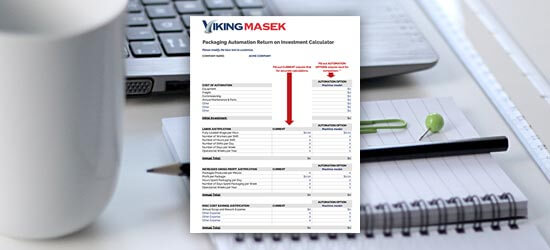
First, start with the numbers. Download our free packing machine ROI calculator to learn how long it will take for an investment in automation to pay for itself (and much more).


Free packaging automation ROI calculator