How to Choose the Right Stainless Hex Nuts for Your Project?
Choosing the right Stainless Hex Nuts can significantly impact the success of your project. The global fastener market is projected to reach $110 billion by 2026, with stainless steel components gaining increasing popularity. This rise stems from their corrosion resistance, durability, and aesthetic appeal. However, selecting the right type remains a challenge for many professionals.
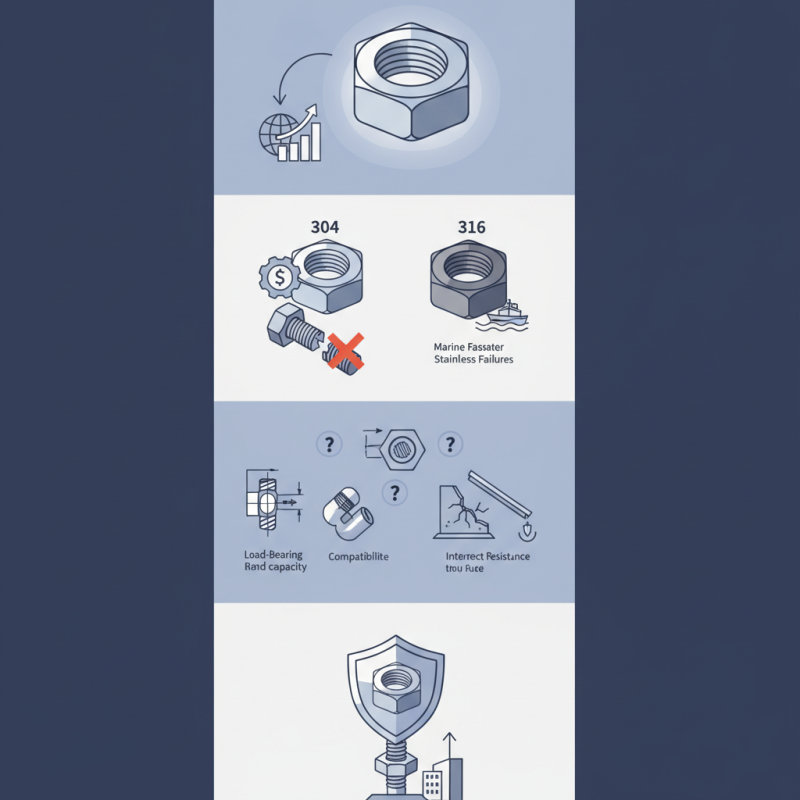
Stainless Hex Nuts come in various grades, such as 304 and 316. Grade 304 is more common and cost-effective, while grade 316 offers superior resistance to saline environments, making it essential for marine applications. Industry reports reveal that up to 40% of fastener failures stem from incorrect material choice or dimensions. Such failures can lead to costly delays or safety hazards.
Thus, understanding the specific requirements of your project is critical. Questions on load-bearing capacity and compatibility with your chosen bolts must be addressed. Overlooking these details can result in severe ramifications. Selecting the correct Stainless Hex Nuts is not just about aesthetics or cost; it's a pivotal factor in ensuring the integrity and longevity of your installations.
Understanding Different Types of Stainless Steel Hex Nuts
When choosing stainless steel hex nuts, it's crucial to understand their types. A304 stainless steel is common for general use. It resists rust in most conditions. However, it may not handle extreme environments well. You might face issues in coastal areas or places with high salinity.
Meanwhile, A316 stainless steel offers better corrosion resistance. It includes molybdenum, making it more durable in harsh conditions. These nuts can withstand exposure to chemicals and saltwater. For marine applications, A316 is often the preferred choice. Yet, it can be more expensive.
It's also important to consider the grade of the nuts. Higher grades usually mean better strength. Some projects might not require the strongest material. Balancing costs and performance can be challenging. Understanding the specific needs of your project helps in making the right decision. Each type of hex nut serves a unique purpose. Knowing these details ensures a successful outcome.
Identifying the Right Size for Your Project's Needs
Choosing the right size for stainless hex nuts is crucial for any project. It’s not just about finding a nut that fits. You need to ensure it will hold your materials securely and withstand the intended forces. For example, if you are using these nuts in a vehicle assembly, the size affects stability and safety. A nut that is too small may strip or fail under pressure.
Before making your selection, measure the diameter of the bolts you are using. The hex nut’s internal thread must match this size. Use a caliper or a tape measure for accuracy. Sometimes, defects in manufacturing can result in slightly off sizes. Always test a few nuts to see how they fit. An imperfect match can lead to frustrating assembly problems later on.
Consider the thickness of the materials you are joining. A thicker piece may require a deeper hex nut for full engagement. If the nut is not seated properly, it won't provide adequate clamping force. Remember that not all projects are straightforward. Adjustments may be necessary as you understand the dynamics of your build. Keep track of these details; they can lead to significant improvements in your project’s outcome.
Stainless Hex Nuts Size Distribution for Various Projects
Considering Corrosion Resistance and Material Grades
When selecting stainless hex nuts, understanding material grades and corrosion resistance is crucial. Stainless steel comes in several grades, each offering different levels of strength and resistance to environmental factors. For instance, grade 304 provides good corrosion resistance, suitable for general purposes. However, grade 316 is often recommended for marine applications due to its superior resistance to saltwater corrosion.
Data from industry reports indicate that over 70% of fastener failures are due to corrosion. This highlights the importance of choosing the right material. In construction, using the right grade can enhance the lifespan of structures significantly. In marine environments, grade 316 stainless steel can withstand harsh conditions, ensuring the integrity of marine hardware.
It's essential to consider the environmental conditions where the hex nuts will be used. Some applications may expose them to chemicals or extreme temperatures. Not every project requires the highest grade; sometimes, a lower grade can suffice. However, underestimating the effects of corrosion can lead to costly repairs and downtime. Assessing your project's specific needs is vital for long-term success.
Evaluating Load Capacity and Strength Requirements
When selecting stainless hex nuts, understanding load capacity is crucial. Not all projects require the same level of strength. For example, a light-duty application might only need a nut rated for moderate loads. In contrast, heavy-duty projects, like structural support, require nuts that can withstand significant forces. Consider the materials you'll be fastening. This factor can impact the stress placed on the nuts.
Strength requirements should align with your project specifications. Types of stainless steel, such as 304 or 316, differ in their resistance to corrosion and tensile strength. A project exposed to harsh environments might benefit from using 316 grade. It’s essential to conduct thorough testing under expected load conditions. Ignoring this could lead to future failures.
Evaluate the size and thread of the nut as well. Mismatched sizes can lead to improper fits and thread stripping. Frequent replacements can increase costs and time delays. It's easy to overlook these details, yet they determine the project's success. Assessing all these factors will lead to a better outcome.
Selecting the Appropriate Finish and Coating for Durability
Choosing the right finish and coating for stainless hex nuts is crucial for project longevity. Industry reports indicate that over 30% of premature failures in mechanical assemblies are due to inadequate corrosion resistance. With environmental factors like humidity and salt exposure, selecting a durable finish is essential.
Common options include passivation, yellow zinc plating, and powder coating. Passivation improves corrosion resistance by forming a protective layer on the surface. In contrast, yellow zinc plating offers enhanced aesthetics and moderate protection. Interestingly, powder coating can provide superior durability and scratch resistance but may have limitations in high-temperature environments.
It's important to reflect on the specific demands of your project. Not every coating is suitable for all applications. For example, certain finishes may not hold up well in marine environments. Test results from ASTM standards suggest that using the wrong coating could lead to significant failure rates and increased maintenance costs. Always weigh the benefits and potential drawbacks carefully.