What are Dielectric Filters and How Do They Work?

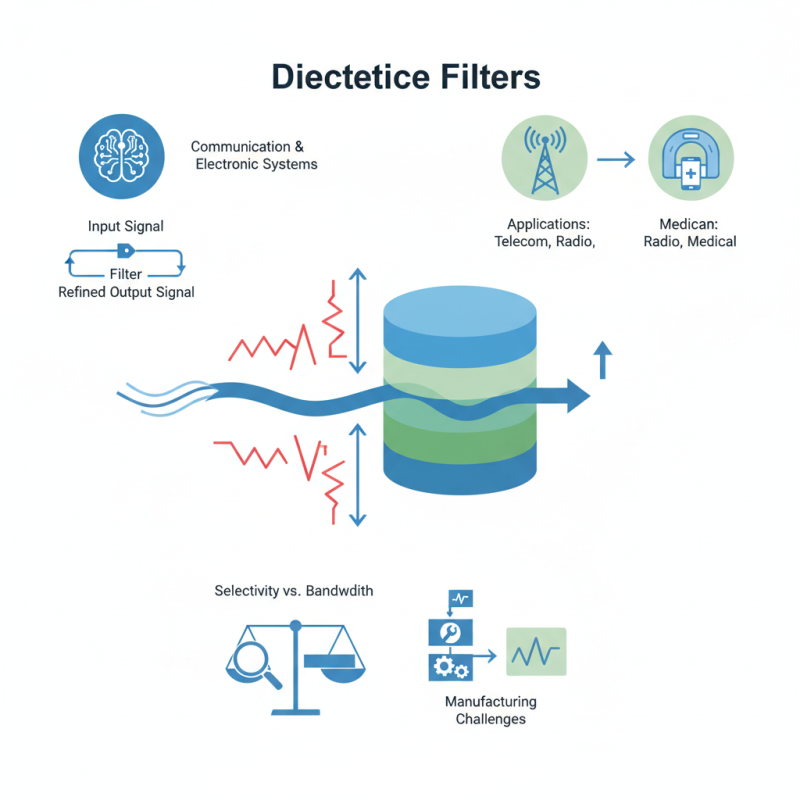
Dielectric Filters are essential components in modern communication and electronic systems. These filters utilize the principles of dielectric materials to selectively transmit or block specific frequencies. Their design relies on multiple layers of dielectric substrates, which create interference patterns that enhance performance.

Understanding how dielectric filters work is crucial for various applications, including telecommunications, radio broadcasting, and medical devices. They help in refining signal clarity by eliminating unwanted frequencies, ensuring that only the desired signals reach their destination. However, the effectiveness of a dielectric filter depends greatly on its design and material quality.

Despite their advantages, challenges exist. For instance, achieving the right balance between selectivity and bandwidth can be difficult. Additionally, manufacturing inconsistencies can lead to variations in performance. As technology advances, improvements will continue. This exploration of dielectric filters reveals both their significance and the complexities involved in their design and application.
What are Dielectric Filters and How Do They Work?

What Are Dielectric Filters and Their Role in Modern Technology?

Dielectric filters play a crucial role in modern technology, especially in telecommunications. These filters use dielectric materials to separate different frequencies efficiently. According to a report by MarketsandMarkets, the dielectric filter market is projected to grow from $780 million in 2021 to $1.2 billion by 2026. This growth highlights their increasing importance in various applications.

In mobile communications, dielectric filters help manage bandwidth. They ensure that signals are clean and free from interference. This is vital as mobile data usage continues to rise. A study by the International Telecommunication Union indicated a projected increase in mobile data volume to 77 exabytes per month by 2022. As such, dielectric filters are essential for maintaining quality in signal transmission.

Tips: Choosing the right dielectric filter can be tricky. It's important to consider factors like frequency range and bandwidth. Regular testing can help ensure optimal performance. Understanding the specific needs of your application will lead to better outcomes. In a rapidly evolving tech landscape, keeping abreast of new advancements in dielectrics can also offer competitive advantages.

What are Dielectric Filters and How Do They Work?

Parameter Description Value
Operating Frequency Range Typical range of frequencies that can be filtered 1 GHz - 10 GHz
Insertion Loss The amount of signal loss that occurs during filtering 0.5 - 1.5 dB
Return Loss Loss of power in the reflected signal -20 dB
Temperature Stability Stability of dielectric filter performance with temperature changes -40°C to +85°C
Applications Common uses of dielectric filters in technology Telecommunications, RF communication, Satellite systems
Material Used Common materials used for dielectric filters Ceramic, Glass, Polymer
Manufacturing Process Typical methods used to manufacture dielectric filters Sintering, Laser cutting, Surface mount technology

Principle of Operation: How Dielectric Filters Manipulate Frequency

Dielectric filters are crucial components in the world of electronics and telecommunications. They operate based on the manipulation of electromagnetic waves by utilizing dielectric materials. These materials have varying refractive indices, allowing the filter to selectively transmit specific frequency ranges while reflecting others. This selective transmission is essential for applications such as wireless communication, where interference from unwanted frequencies can disrupt signal clarity.

The principle of operation relies on creating layers of dielectric materials, each designed to affect the phase and amplitude of incoming signals. By adjusting the thickness and composition of these layers, engineers can fine-tune the filter’s characteristics. This process requires precision, as even minor variations can significantly impact performance. A well-designed filter can enhance signal quality and improve overall system efficiency.

When designing dielectric filters, consider the following tips: Always test prototypes under real-world conditions to understand their behavior. Pay attention to the temperature stability of materials, as fluctuations can alter performance. Additionally, document every step of the design process. This record can help identify areas for improvement in future projects. Remember, even the best designs can benefit from evaluation and refinement.

Types of Dielectric Filters: A Comparative Analysis of Design and Use

Dielectric filters are essential components in various applications, particularly in telecommunications and signal processing. They function by selectively allowing certain frequencies to pass while rejecting others. This capability makes them vital for managing signal integrity and maintaining performance in complex systems.

When comparing different types of dielectric filters, it's crucial to consider their design and intended use. Thin-film filters offer precision and high performance. They are often used in optical applications. In contrast, ceramic filters provide robustness and stability, making them suitable for wireless communication. Each type has its advantages and disadvantages based on specific needs and conditions.

Tips: Always evaluate the environment in which your filter will operate. Temperature and humidity can affect performance. Understand the frequency range needed for your application. This awareness will help in choosing the right type.

Dielectric filters also require careful consideration in design parameters. The physical dimensions can impact performance. A mismatch in size may lead to unexpected results. Regularly review filter specifications and updates on emerging technologies. This practice helps ensure you are using the best solutions available in evolving fields.

Key Applications: Where Dielectric Filters are Essential in Communication

Dielectric filters play a crucial role in communication systems. These filters are widely used to separate specific frequency bands, ensuring signal clarity and efficiency. According to a report by MarketsandMarkets, the dielectric filter market is projected to reach $3.4 billion by 2026, reflecting a growing demand in telecommunications.

In modern wireless communication technologies, dielectric filters are essential. They minimize interference from adjacent frequency bands. For example, in mobile communication, these filters help maintain call quality. In the aerospace sector, reliable filters ensure consistent performance in satellite communications. A study by Research and Markets highlighted that the demand for these filters is driven by the rise of 5G technology.

While dielectric filters are effective, there are challenges. Filter design can be complex, making production more costly. Additionally, as frequencies increase, maintaining performance requires ongoing innovation. Engineers must balance size, efficiency, and cost. This dynamic landscape underscores the need for continued research. It shows that even established technologies face evolution and refinement in the fast-paced communication industry.

Dielectric Filters: Key Applications in Communication

Performance Metrics: Evaluating Efficiency and Quality of Dielectric Filters

Evaluating the efficiency and quality of dielectric filters is crucial for ensuring optimal performance in various applications. These filters utilize the principles of electromagnetic wave interference. Key performance metrics include insertion loss, bandwidth, and selectivity. Insertion loss reflects how much signal power is lost as it passes through the filter. A lower value indicates better efficiency.

Bandwidth characterizes the range of frequencies the filter can effectively transmit. A wider bandwidth might offer more versatility, but it can also introduce undesired signals. Selectivity measures how well the filter distinguishes between the desired signal and unwanted noise. A highly selective filter minimizes interference from adjacent frequencies.

While these metrics are vital, they aren't the sole indicators of a filter's effectiveness. Real-world conditions can often reveal shortcomings. Variations in temperature or humidity may affect performance unpredictably. Understanding these limitations is essential for improving design and implementation. Factors like manufacturing tolerances also play a critical role. They can lead to unexpected performance deviations. Taking these elements into account fosters more reliable and robust dielectric filter applications.

Packaging machine ROI calculator

Need help figuring out if packaging automation is right for your business?


First, start with the numbers. Download our free packing machine ROI calculator to learn how long it will take for an investment in automation to pay for itself (and much more).


Free packaging automation ROI calculator