What Is an Expansion Screw and How Does It Work?
An Expansion Screw is a fastener that grips a drilled hole by pressing an expansion sleeve against the surrounding material. As the screw turns, the sleeve widens and creates friction. In concrete or masonry, that grip can hold brackets, rails, and equipment in place. The detail matters: dust, hole diameter, and installation torque can all affect performance.
Industry guidance makes clear that capacity is not one-size-fits-all. ACI 355.2-22 sets qualification procedures for post-installed mechanical anchors in concrete, while ICC-ES Evaluation Service Reports publish product-specific capacities and installation limits. These documents distinguish conditions such as cracked concrete, embedment depth, and load direction. Their tables are more useful than a generic claim that one screw “holds” a certain weight. Check the report for the exact anchor and base material.
The working principle is simple. The engineering is not. A sleeve may expand only slightly, yet a rough hole or a misplaced fixture can change the result. For a real installation, match the screw to the substrate, drill the specified hole, and follow the manufacturer’s torque instructions. ACI 318 Chapter 17 also provides design requirements for anchors in concrete. Still, reports and standards cannot replace sound site judgment. That is easy to overlook. A small fastener can carry a serious load, and the surface behind it may be weaker than it looks.
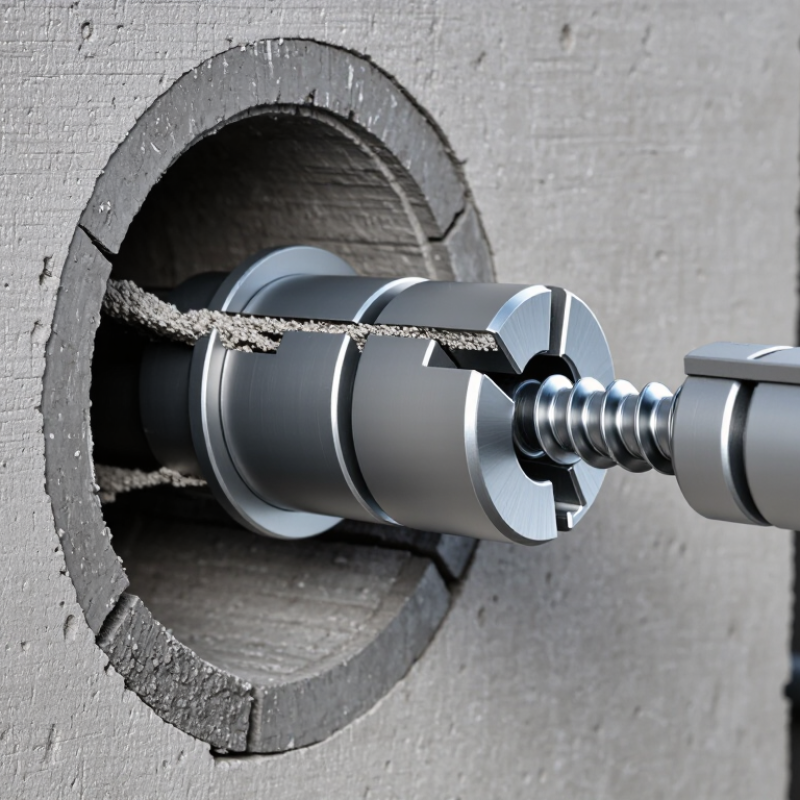
What an Expansion Screw Is
An expansion screw is a mechanical fastener designed to grip inside a drilled hole. In common use, the term often refers to a screw or bolt paired with an expanding sleeve. As the fastener is tightened, a cone or tapered section presses the sleeve outward against the hole. That pressure helps hold the assembly in place. The name can mislead: the screw itself may not expand.
These fasteners are commonly used in concrete, brick, and other solid masonry. A typical installation involves drilling a hole to the specified diameter and depth, clearing out dust, then inserting the anchor before tightening it. Fit matters. A hole that is too wide may weaken the grip, while a hole that is too shallow can prevent proper seating. Expansion screws are not interchangeable with ordinary wood screws, and the right type depends on the base material and expected load. Check the fastener’s rated capacity and installation instructions, especially near edges or in cracked masonry. Terminology varies between suppliers, so it is worth checking whether a product includes a sleeve or requires one separately.
Key Parts and Materials of an Expansion Screw
An expansion screw usually combines a threaded screw or bolt with an expanding sleeve. The sleeve sits inside a predrilled hole in concrete, brick, or another suitable base material. As the fastener tightens, a cone or tapered section pulls into the sleeve, pressing it outward against the hole walls. That contact creates the holding force. The exact arrangement varies, so the term may describe more than one anchor design.
The main parts have different jobs. The bolt carries the load, while the sleeve grips the substrate; a washer can spread pressure beneath the bolt head. Metal sleeves are commonly made from carbon steel or stainless steel. Carbon steel may have a zinc coating for added corrosion resistance, but coating damage or damp conditions can still matter. Stainless steel is often chosen where moisture exposure is expected. Some expansion fasteners use nylon components instead of metal, and these suit different loads and substrates. Check the product’s material and installation guidance.
A hole that is too wide, dusty, or shallow can weaken the grip.
Easy to overlook.
Even a sturdy-looking anchor may not hold reliably if the base material is cracked or crumbly.
I would not assume every masonry wall behaves the same.
Common Types of Expansion Screws
Expansion screws are a family of fasteners that grip inside drilled holes, usually in concrete or masonry. Their parts expand against the hole wall as a screw or bolt is tightened. The basic idea is simple. The details matter.
Sleeve anchors have a metal sleeve around a bolt. Tightening the bolt pulls a cone into the sleeve, pressing it outward. They suit many general-purpose fixings, such as attaching a bracket to a concrete wall. Wedge anchors use a clip at the bottom that spreads as the bolt is tightened. They are often chosen for heavier, permanent attachments in solid concrete. Both need a correctly sized hole and enough depth. Dust left inside can weaken the hold.
Drop-in anchors are set flush inside concrete and accept a separate bolt. They work well for overhead fixtures or installations that may need removal. Screw-style masonry anchors cut threads into the drilled material, so they do not expand in quite the same way. They can be useful in brick or concrete, depending on the specific design. Not every wall is alike. Hollow block, cracked concrete, and installation near an edge can change which fastener is suitable. Check the anchor’s load rating and installation instructions, and avoid overtightening. A snug fit may feel secure, but feel alone is not a reliable test.
How an Expansion Screw Expands and Holds
What Is an Expansion Screw and How Does It Work?
How an Expansion Screw Expands and Holds
An expansion screw grips a surface by pressing an anchor outward against the sides of a drilled hole. The screw and anchor work together, though their exact design varies. In one common type, turning the screw draws a tapered section into a sleeve. The sleeve spreads and presses firmly against the hole. That pressure creates friction, helping the fastener stay in place under load.
The hole must suit the anchor’s diameter and length. If it is too wide, the anchor may not grip; if it is too shallow, the screw may not seat correctly. Dust can also reduce contact, so clear the hole before installation. Tighten the screw until the fixture feels secure, but do not force it. Over-tightening can damage the anchor or the material. It sounds simple, yet the wall material matters a lot. A fastener suitable for solid masonry may not hold in hollow board.
Tips: Check the anchor’s stated load guidance and match it to the surface. Use a drill bit of the specified size, and test the fit before mounting anything heavy. I would still recheck the connection after installation; small mistakes are easy to miss.
Choosing the Right Expansion Screw for the Job
Choosing the Right Expansion Screw for the Job
The right expansion screw depends on the base material, load, and installation conditions. Start by identifying what sits behind the visible surface. A solid concrete wall behaves differently from hollow block or thin masonry. Expansion screws generally need sound material around the fixing point to grip securely.
Check the fastener’s rated capacity and required embedment depth for your specific substrate. A small shelf may need less support than a loaded bracket, but the weight alone is not the whole story. Pulling force, vibration, and repeated movement can also affect performance. Fit matters. Use the specified drill diameter, clear dust from the hole, and avoid placing the screw too close to an edge. Crumbling material or an oversized hole can weaken the hold.
Consider moisture and exposure, too. In damp locations, select a finish suitable for those conditions, and check the product guidance rather than guessing. If the material is hollow, damaged, or unfamiliar, a different fixing system may be more appropriate. It is easy to focus on screw length and miss the condition of the wall itself. That is worth a second look. When the load is critical, follow tested installation instructions or ask a qualified professional to assess the substrate.
Choosing the Right Expansion Screw: Match the Drill Bit to the Anchor
For many concrete expansion anchors, the recommended drill-bit diameter matches the anchor’s nominal diameter. Always check the specific anchor’s instructions, and choose an anchor suited to the base material and required load.