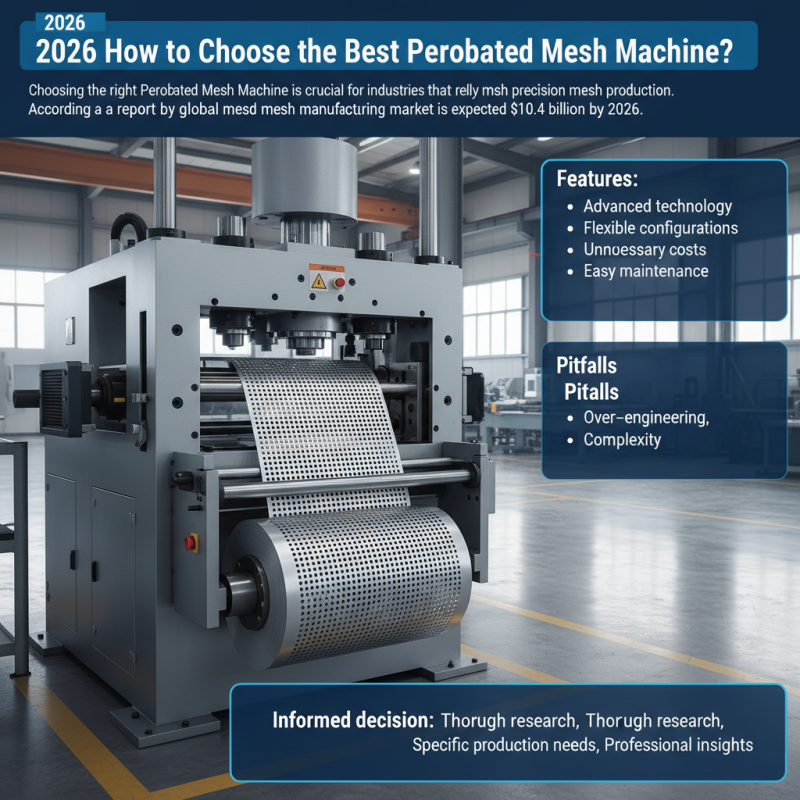
2026 How to Choose the Best Perforated Mesh Machine?
Choosing the right Perforated Mesh Machine is crucial for industries that rely on precision mesh production. According to a report by MarketsandMarkets, the global mesh manufacturing market is expected to reach $10.4 billion by 2026. As demand increases, selecting the appropriate machinery becomes essential for businesses aiming for efficiency and quality.
The features of a Perforated Mesh Machine can significantly influence production outcomes. Machines equipped with advanced technology can enhance output and reduce material waste. Industry experts suggest investing in machines that offer flexible configurations and easy maintenance. However, it's important to consider potential pitfalls, such as over-engineering, which can lead to unnecessary costs and complexity.
Ultimately, making an informed decision about a Perforated Mesh Machine requires thorough research and understanding of specific production needs. Each machine may possess strengths and weaknesses, warranting careful comparison. Engaging with professionals or industry reports can provide valuable insights for a strategic choice that aligns with your production goals.
Understanding Perforated Mesh Machines and Their Applications
Perforated mesh machines play a critical role in various industries. These machines create sheets of material with holes punched through them, allowing for better airflow and filtration. Applications range from architecture to manufacturing, with the mesh used in everything from air filters to decorative panels.
Choosing the right perforated mesh machine requires understanding your specific needs. Each machine has different capabilities, such as hole size and spacing. Some may excel at producing complex designs, while others are suited for high-volume production. Consider factors like the material you will use. Metal, plastic, and even fabric can require different settings and tools.
Reflecting on the operational efficiency of these machines is vital. Mistakes in settings can lead to wasted materials. Additionally, maintenance routines are necessary to ensure longevity and functionality. Assessing these aspects carefully can prevent common pitfalls and enhance productivity.
Key Factors to Consider When Choosing a Perforated Mesh Machine
When selecting a perforated mesh machine, several key factors come into play. First, you must consider the material thickness. Machines typically handle a range from 0.5 mm to 5 mm. Thicker materials need more robust machinery. Evaluating your project's requirements against machine capabilities is crucial. According to industry reports, choosing the wrong thickness can lead to production inefficiencies.
Another vital factor is hole size and pattern. Machines offer various customization options. The correct hole size affects airflow, light transmission, and aesthetic appeal. Data shows that 30% of manufacturing errors stem from inadequate hole specifications. It is essential to be precise in your requirements.
**Tip:** Always run a small batch test before full production. This can help identify any potential issues early.
Workflow efficiency should also be assessed. Some machines operate faster than others. A machine that can deliver high speed while maintaining quality is ideal. Industry reports suggest that production speed can vary by 50%. This inconsistency can lead to delays.
**Tip:** Consider the machine's maintenance requirements. Frequent breakdowns can slow down production and increase costs.
Thinking critically about these factors will help you make a more informed choice regarding your perforated mesh needs.
2026 How to Choose the Best Perforated Mesh Machine? - Key Factors to Consider When Choosing a Perforated Mesh Machine
| Factor | Description | Considerations |
| Material Compatibility | Ensure the machine can handle the types of materials you plan to perforate. | Check specifications for metal, plastic, or composite materials. |
| Perforation Size | Identify the range of perforation sizes the machine can create. | Consider your product design and application requirements. |
| Production Speed | Evaluate the machine's output speed to meet production demands. | Analyze projected production volumes and deadlines. |
| Ease of Use | Consider how user-friendly the machine is and the learning curve involved. | Assess training requirements for operators. |
| Maintenance Requirements | Understand the maintenance protocols needed to keep the machine running. | Check for ease of access to parts and service networks. |
| Cost | Analyze the total investment including purchase, operation, and maintenance costs. | Consider budgeting for long-term operational costs. |
Comparing Different Types of Perforated Mesh Machines Available
When comparing different types of perforated mesh machines, various factors come into play. These machines differ in size, material, and functionality. Understanding these differences is crucial when selecting the right one for your needs.
A key tip is to assess your specific requirements. Consider the thickness of the material you plan to perforate. Lightweight materials may require different equipment than heavier options. Don't overlook the layout of the perforations. Some machines are more adaptable than others, which can influence your productivity.
Another important aspect is the machine’s operational efficiency. Some machines might seem cost-effective initially, but they could incur higher maintenance costs in the long run. Evaluate the availability of spare parts and technical support. A machine might attract with low purchase costs but be expensive to maintain.
Lastly, conducting thorough research is essential. Look for user reviews and industry feedback. Gathering insights can illuminate potential issues that specs alone might miss. Understanding the strengths and weaknesses of each option will enhance your decision-making process.
Evaluating Machine Specifications and Performance Metrics
Choosing the right perforated mesh machine requires careful evaluation of specifications. Key factors include hole size, material quality, and production capacity. A machine with too small a hole might not meet your application needs. Overly large holes can compromise functionality. Look for machines that provide adjustable settings to cater to various projects.
Performance metrics are equally important. Consider production speed and efficiency. A high-speed machine may seem appealing, but efficiency should also be a priority. Analyze the energy consumption and maintenance needs of different models. Reliability in manufacturing processes can prevent delays and increase output.
It's crucial to reflect on your specific requirements. Sometimes, the most impressive specifications don't guarantee flawless performance. Seek machines that have proven reliability in similar applications. Reading user reviews can provide insight into potential issues. Understand that even the best machines may have limitations, and adaptability is essential for success.
2026 Perforated Mesh Machine Performance Comparison
Budgeting for Your Perforated Mesh Machine Investment
When investing in a perforated mesh machine, budgeting is crucial. A common misconception is that all machines perform equally, which is incorrect. According to a recent industry report, the initial cost can vary widely. Entry-level machines might start around $30,000, while high-end models can exceed $150,000. This range highlights the importance of evaluating your production needs.
Maintenance costs also play a significant role in budgeting. Regular maintenance ensures longevity and efficiency. Failure to maintain machines can lead to unexpected breakdowns, resulting in production halts. Reports show that poor maintenance can increase operational costs by up to 25%. Planning for these future expenses is critical.
Consideration of operational costs is vital too. Energy consumption can vary significantly. Some machines are energy-efficient, while others may lead to higher electricity bills. Evaluating power requirements can help lessen monthly expenses. In some cases, a higher upfront cost may translate to long-term savings. Balancing initial investment with ongoing costs requires careful thought and analysis. Each decision impacts your bottom line.