


How to Choose the Best Lift Stage in 2026?

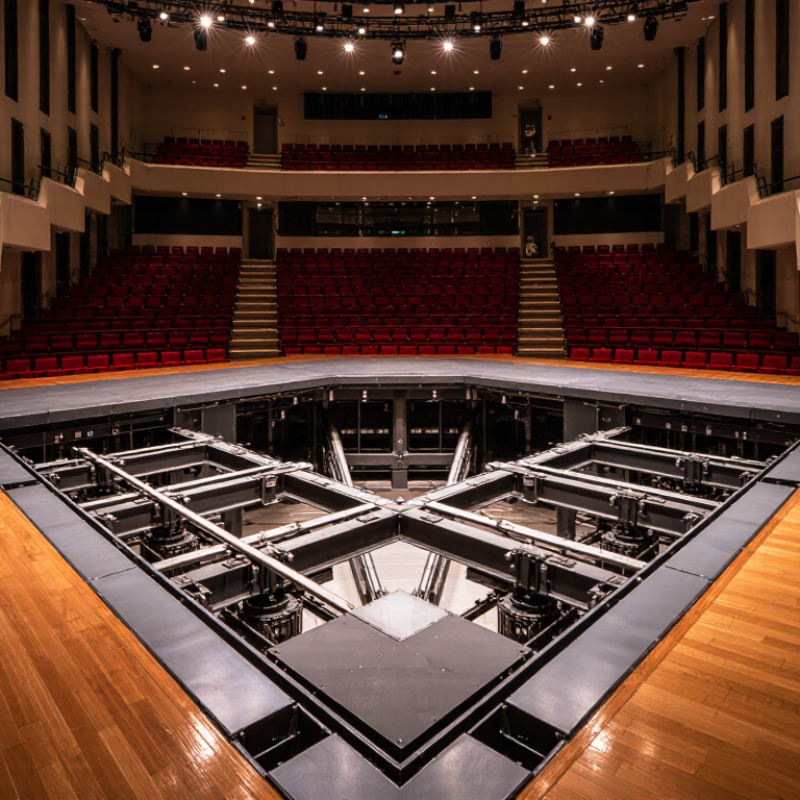
Choosing the best Lift Stage in 2026 starts with the room, not the brochure. A platform that raises scenery must fit the available pit, planned loads, show schedule, and maintenance capacity. Small margins matter. Measure the clear opening, travel distance, and pit depth before comparing designs. Then check how the lift will behave during rehearsals, changeovers, and routine inspections.

Safety figures deserve careful interpretation. OSHA reported 1,349 worker injuries and 22 deaths involving scissor-lift incidents from 2011 to 2014. These figures concern scissor lifts, not theatrical stage lifts, so they are context—not a direct risk estimate. They do underline why safe access, training, and documented procedures belong in the buying discussion. For stage-specific guidance, ESTA’s ANSI E1.42 standard addresses orchestra pit lifts; ANSI E1.6-1 covers powered hoist systems. Confirm the applicable editions and requirements with qualified professionals.

A useful specification should state rated load, platform dimensions, travel speed, noise expectations, control options, emergency lowering, and inspection access. Ask vendors for load calculations, drawings, maintenance schedules, and references from comparable venues. Compare the complete installed system, not just its quoted price. No shortcut. A low-cost design may bring trade-offs in service access or operating flexibility. This guide will help you weigh those details and match equipment to your venue. One limitation remains: no checklist can replace a site survey and engineering review.
How to Choose the Best Lift Stage in 2026?

Define the Application and Required Lift Performance

A lift stage should be chosen around the job it must perform, not just its advertised travel. Start with the task. Will it position a camera, raise a fixture, or move a delicate sample? Note the payload, including cables and attachments, because these add resistance and can shift the load’s center of gravity. Measure the required vertical travel between actual working positions. A stage with excessive travel may add height, mass, and cost without improving the setup.

Define performance in measurable terms. Specify lift distance, speed, repeatability, and how often the stage will run. For example, a stage that moves a 4-kilogram fixture 80 millimeters twice per hour has different needs from one cycling repeatedly throughout a shift. Consider mounting orientation and available space, too. Side loading or an off-center payload can affect stability and service life. Small details matter.

Then check the operating environment and acceptable positioning error. Dust, temperature changes, vibration, and limited clearance may influence the mechanism and mounting arrangement. Do not select capacity from payload weight alone; account for acceleration, leverage, and a suitable engineering margin. A quick estimate can be wrong, especially when cables pull unevenly or the fixture changes later. Revisit the assumptions with measurements from the real installation, and confirm that the required performance remains practical across the full stroke.

Compare Lift Stage Types and Their Operating Principles

A lift stage’s operating principle determines more than how it moves. It affects payload capacity, positioning accuracy, and installation space. A scissor stage raises a platform through linked arms that open and close. It can support substantial loads, but its height changes the geometry and may affect stability. A telescopic stage uses nested sections that extend in sequence. It offers a compact footprint, though long extensions can increase deflection under uneven loads. Not always.

A screw-driven stage converts motor rotation into vertical travel. With suitable feedback, it can provide controlled positioning and repeatable motion, but speed, backlash, and maintenance depend on the screw and drive design. Pneumatic or hydraulic stages use fluid pressure to move a piston. They can produce strong lifting force, while fine positioning may require additional control hardware. Compare the full travel, load at the highest position, duty cycle, and required accuracy—not just the rated capacity. Measure it. In practical selection, mounting stiffness and side loads matter too; a stage that fits the drawing may still vibrate under a real workpiece. Test the actual load and motion profile before finalizing the choice.

How to Choose the Best Lift Stage in 2026? — Compare Lift Stage Types and Their Operating Principles

Compare the mechanism, motion characteristics, and practical trade-offs of common industrial lift-stage designs. Capacity and travel vary significantly by model and configuration; confirm all limits in the equipment data sheet.

Lift Stage Type Operating Principle Typical Strengths Main Trade-Offs Best-Suited Applications Selection Checks
Hydraulic scissor lift A hydraulic cylinder moves linked scissor arms, raising or lowering a platform vertically. Well suited to substantial loads and work-platform applications; the platform can provide a broad support area. The mechanism needs space beneath the platform. Lift speed and positioning depend on the hydraulic system and controls; hoses and seals require inspection. Work-positioning tables, loading and unloading, assembly stations, and material handling. Check rated load, platform dimensions, lowered height, stroke, duty cycle, guarding, and whether the load is evenly distributed.
Electromechanical screw lift An electric motor turns a lead screw or ball screw. A nut or carriage travels along the screw to move the platform. Offers controlled, repeatable motion and can integrate readily with automated control systems. Speed, load, and service life depend on screw type, support, lubrication, and duty cycle. A screw is not automatically self-locking; holding may require a brake. Automated workstations, adjustable fixtures, synchronized lifts, and applications requiring controlled positioning. Check load direction, screw speed, travel, positioning accuracy, back-driving risk, motor brake, and synchronization needs.
Telescopic-column lift Nested column sections extend using an internal drive such as a screw, belt, or chain mechanism, depending on the design. Can provide a long vertical stroke from a relatively compact retracted height; multiple columns can support a platform. Load capacity, stiffness, and side-load tolerance vary by column design. Uneven loading or poor alignment can affect smooth movement. Height-adjustable work surfaces, medical or laboratory equipment, ergonomic stations, and compact lifting systems. Check the specific drive system, column count, stroke, retracted height, stability, side-load rating, and synchronization method.
Pneumatic bellows lift Compressed air expands a flexible bellows to raise a platform; releasing or controlling the air lowers or positions it. Simple lifting arrangement with no sliding column drive in the bellows itself; can suit applications where a compliant support is useful. Air compressibility makes precise position control more challenging than with many screw-driven systems. A regulated air supply and suitable load restraint are important. Ergonomic pallet positioning, load leveling, and applications needing compliant vertical support. Check air pressure and supply, load range, stroke, lateral stability, height variation under changing load, and safe behavior on air loss.
Mast-and-chain lift A motor and gearbox drive a chain over sprockets to move a guided carriage along a mast or mast assembly. Can provide substantial vertical travel while guiding a carriage; suitable for lifting loads to elevated positions. Requires adequate mast support and guarding. Chain, guides, brakes, and limit devices need regular inspection; installation conditions affect stability. Vertical transfer systems, storage and retrieval equipment, and lifting platforms with guided travel. Check rated load at the required height, mast anchoring, chain and brake provisions, travel limits, guarding, and installation clearances.

Evaluate Capacity, Travel, Footprint, and Safety Requirements

How to Choose the Best Lift Stage in 2026?
Evaluate Capacity, Travel, Footprint, and Safety Requirements

A lift stage should fit the real load, not just its advertised maximum. Add the payload, fixtures, cables, and moving tooling, then allow a sensible margin for uneven loading. Check travel against the full operating path, including clearance at both ends. Measure carefully. A stage may reach the target height yet block a nearby panel. Measure the available footprint, leaving room for wiring and maintenance.

Capacity, travel, footprint, and safety interact. A longer stroke can increase overall height or reduce rigidity, while a compact base may limit stability. Check speed and repeatability under the expected load, not only during an unloaded demonstration. Review pinch points, guarding, emergency stops, and control behavior with the people who will install and operate the equipment. Specifications help, but site conditions can reveal what a drawing misses. That detail is easy to underestimate.

Tips: Sketch the full motion envelope. Mark the load center, cable bends, and service access. Ask for test data at your operating load, and verify mounting surfaces before ordering.

How to Choose the Best Lift Stage in 2026?

Compare rated load capacity alongside travel, footprint, and safety requirements before selecting a lift stage.

Representative planning examples—not industry standards: Compact screw stage: 100 kg capacity, 300 mm travel, 400 × 400 mm footprint; single-stage scissor: 500 kg, 600 mm, 800 × 800 mm; telescopic two-stage: 300 kg, 1,200 mm, 600 × 600 mm; heavy-duty scissor: 1,000 kg, 1,000 mm, 1,200 × 1,000 mm. Actual specifications vary by design and manufacturer. Confirm rated capacity at the required extension, duty cycle, mounting conditions, guarding, limit switches, and emergency-stop provisions before choosing.

Check Controls, System Compatibility, and Maintenance Needs

How to Choose the Best Lift Stage in 2026?

A lift stage should fit the work, not just the room. Check its rated load, platform size, travel height, and duty cycle against real operating conditions. A stage that handles a display panel may struggle with repeated equipment changes. Measure doorways and ceiling clearance, too. Small details matter.

Controls deserve a hands-on check. Can an operator reach the stop control without leaning across the platform? Are travel limits clear, and does the control response feel steady under load? Test the stage with the equipment it will carry, following the operating instructions. A short demonstration can reveal awkward button placement or unexpected movement. I would not judge a control system from a product sheet alone; that is an easy mistake to make.

Compatibility and maintenance can shape long-term reliability. Confirm that the stage’s power supply, mounting arrangement, and control signals match the existing installation. Ask what routine inspections involve, how technicians access moving parts, and whether wear items are easy to identify. Keep a maintenance log with dates, observed changes, and completed service. It may feel like extra paperwork. It can also help spot a slow change in noise or travel before it disrupts a production day. Follow the manufacturer’s service intervals, and have qualified personnel assess issues beyond routine checks.

Choose the Best Stage by Balancing Cost and Long-Term Value

A lift stage should fit the work it will do, not just the budget available today. Start with the platform size, required travel height, rated load, and how often it will move. A compact unit may cost less, but it can become awkward when performers, scenery, or equipment share the platform. Looks simple. It isn’t.

Compare the full cost of ownership. Include installation, electrical work, routine inspections, likely service needs, and downtime—not only the purchase price. Ask for clear documentation on load limits and maintenance intervals. A reliable lift stage with accessible service points may save time over years of use, though the higher initial cost is not automatically worthwhile. Check that its duty cycle matches your schedule.

Site conditions matter too. Measure the available floor space and overhead clearance, and confirm how the stage will be accessed for maintenance. A qualified installer can help assess these details before purchase. I have seen planning focus heavily on lifting capacity while overlooking noise, controls, or service access. That is an easy mistake to make. Compare written specifications and realistic operating needs, then weigh the added cost against the value of safer, steadier, more dependable operation.

Packaging machine ROI calculator

Need help figuring out if packaging automation is right for your business?


First, start with the numbers. Download our free packing machine ROI calculator to learn how long it will take for an investment in automation to pay for itself (and much more).


Free packaging automation ROI calculator