Top Cast Resin Transformer Manufacturers Worldwide
Choosing the right Cast Resin Transformer manufacturer requires more than comparing prices and catalog ratings. Global buyers must examine engineering capability, production consistency, service coverage, and documented project experience. A transformer may look suitable on paper, yet perform differently in a humid factory, a dusty substation, or a high-rise building.
This guide reviews leading manufacturers worldwide through practical and technical criteria. It considers power ratings, insulation systems, cooling performance, short-circuit strength, noise control, and enclosure quality. It also examines factory testing, quality management, delivery reliability, and after-sales support. Details matter. A clear test report can reveal more than polished marketing language.
The selected companies represent different industrial strengths and regional specialties. Some focus on large utility projects, while others serve railways, renewable-energy plants, commercial buildings, or compact urban substations. Their experience with local grid requirements and environmental conditions can influence long-term value. However, no ranking is perfect. Public information may vary in depth, and manufacturer claims should be checked against certificates, references, and independent technical documents.
Readers should compare verified evidence rather than rely on brand reputation alone. Useful checks include temperature-rise records, partial-discharge results, warranty terms, spare-parts access, and installation guidance. An experienced supplier should explain limitations clearly, not hide them behind broad promises. This overview aims to support that careful process, helping engineers, contractors, and purchasing teams identify dependable partners for safe and efficient power distribution.
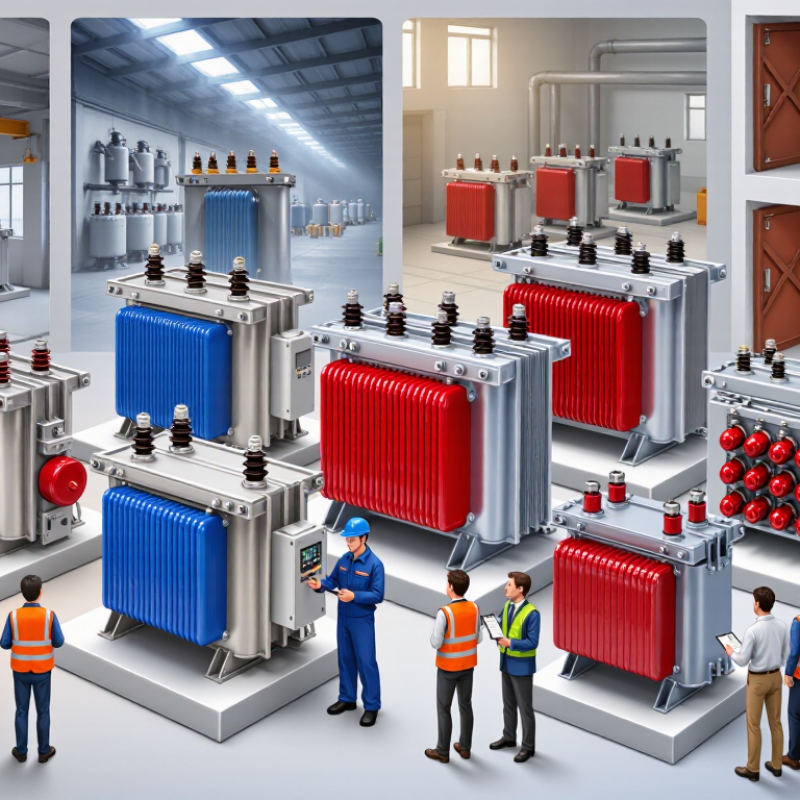
Cast Resin Transformer Technology: Dry-Type Ratings from 1 kVA to 36 kV
Top Cast Resin Transformer Manufacturers Worldwide
Cast resin transformer technology covers dry-type units from 1 kVA to 36 kV. This range serves compact control systems, commercial buildings, and medium-voltage distribution networks. Instead of liquid insulation, windings are encapsulated in cured epoxy resin. The resin limits moisture penetration and supports stable electrical insulation. It also reduces fire risk where oil-filled equipment is unsuitable. Small units may supply lighting panels or machine controls. Larger units can feed factories, hospitals, and renewable energy installations. Real-world selection depends on voltage, load profile, altitude, and installation space. A 36 kV rating does not automatically mean higher usable capacity. That assumption needs correction.
Engineers should review rated power, frequency, impedance, insulation level, and cooling method together. Temperature-rise testing reveals how the transformer behaves during sustained loading. Partial-discharge testing can expose insulation defects before service begins. Routine checks should include winding resistance, insulation resistance, and connection torque. Cast resin surfaces need clean airflow around ventilation channels. Dust buildup can raise operating temperature and shorten insulation life. Installation teams should also verify clearances and grounding arrangements against local requirements. A compact 1 kVA unit may appear simple, but poor terminals can create hot spots. Specifications look precise. Field conditions are not. Manufacturers with dependable testing records, traceable materials, and documented quality controls offer stronger technical confidence. Still, every project deserves an independent review before procurement.
Cast Resin Transformer Technology: Common Dry-Type Voltage Classes
Cast resin transformers are available across low-voltage and medium-voltage applications, with rated powers ranging from approximately 1 kVA upward and equipment voltage classes reaching 36 kV. The chart shows standardized maximum-voltage classes commonly referenced in dry-type transformer specifications.
Reference framework: IEC 60076-11 for dry-type transformers and IEC voltage-class conventions. Actual rated power, insulation level, temperature rise, cooling method, and application suitability depend on the transformer design and project requirements.
Global Manufacturer Profiles by IEC 60076-11 and IEEE C57.12.01 Compliance
When comparing top cast resin transformer manufacturers worldwide, compliance evidence matters more than polished brochures. IEC 60076-11 addresses dry-type transformer design, testing, and service expectations. IEEE C57.12.01 provides another widely used framework for dry-type units. A credible manufacturer states which edition applies. It also identifies ratings, insulation class, cooling method, and installation conditions. This detail helps engineers compare equivalent products, rather than attractive but mismatched specifications.
Manufacturer profiles should show type-test records from competent laboratories, not only declarations. Relevant evidence may cover temperature rise, lightning impulse, applied voltage, partial discharge, and short-circuit withstand performance. Routine tests should be traceable to each unit before shipment. Factory experience appears in practical details: controlled resin casting, vacuum treatment, coil cleanliness, and calibrated test equipment. Site engineers should ask how humidity, altitude, ventilation, and overload duty affect the stated rating. A certificate without test scope is weak evidence.
Reliable suppliers explain differences between IEC and IEEE acceptance practices before quoting. They document quality controls, nonconformance handling, and corrective actions. They should also provide drawings, losses, sound levels, terminal layouts, and maintenance guidance. No factory is flawless. I would treat vague answers as a technical risk, even when the product looks excellent. One overlooked clearance or incomplete record can delay energization. Independent inspection can expose that gap. The strongest profile combines standards knowledge, repeatable production, and candid limits. That is where trust becomes measurable.
Core Materials, Cooling Classes, and Typical Efficiency Above 98%
Top Cast Resin Transformer Manufacturers Worldwide
Cast resin transformers depend heavily on core design and material quality. Most use grain-oriented silicon steel to reduce hysteresis and eddy-current losses. Some advanced designs use amorphous metal, which can lower no-load losses further. However, material selection alone does not guarantee performance. Joint quality, clamping pressure, and manufacturing control also matter.
Efficiency commonly exceeds 98% at rated operating conditions. The actual result changes with load, temperature, harmonics, and power factor. A lightly loaded transformer may lose more energy through magnetization than expected. This detail is often overlooked.
Cooling class also affects operating reliability. AN cooling uses natural air circulation, while AF cooling adds fans for higher heat removal. An AN/AF unit can support temporary overloads, but fan failure may quickly reduce available capacity.
During technical inspections, engineers should check winding temperature, ventilation clearance, sound levels, and loss-test records. Insulation surfaces should appear clean and uniform, without cracks or resin voids. Even a well-designed transformer can perform poorly in a dusty or poorly ventilated room.
Efficiency claims need context. Rated-load results may not represent daily operation. Reviewing the complete load profile is wiser than trusting one impressive percentage.
Regional Production Hubs and Capacity Trends Across Five Global Markets
Top Cast Resin Transformer Manufacturers Worldwide
Cast resin transformer production is becoming more regional. Manufacturers now place plants near renewable projects, rail networks, data centers, and dense industrial zones. These locations reduce delivery risks and support faster technical service.
China remains a major production hub, supported by extensive electrical equipment supply chains and large domestic demand. Capacity is shifting toward higher-efficiency units and specialized designs for wind and solar installations. Europe focuses on compact, low-maintenance transformers for urban grids and industrial retrofits. Energy efficiency matters greatly there. However, factory expansion can be slower because certification and environmental requirements are demanding.
North America is adding capacity near data center corridors and infrastructure projects. Buyers often request short lead times, stronger fire performance, and customized enclosures. India is expanding production for railways, commercial buildings, and renewable power systems. Local sourcing is becoming more important, although some advanced materials still come from overseas. Southeast Asia is developing as both a manufacturing base and a regional distribution point. Its growth is uneven. Ports, skilled labor, and grid investment vary widely between countries.
Capacity alone does not prove manufacturing strength. Factory testing, resin quality control, partial discharge measurement, and documented thermal performance reveal more. During supplier evaluations, I would inspect test records and service coverage, not only brochures. Some market forecasts also appear too confident. Project delays, commodity prices, and grid connection limits can quickly change regional demand. Manufacturers that balance local production with disciplined engineering may prove more reliable over time.
Selection Criteria: Load, Insulation, Noise, Fire Safety, and Service Life
Top Cast Resin Transformer Manufacturers Worldwide
Choosing a cast resin transformer starts with the real load, not the nameplate alone. Record motor starts, harmonic currents, future expansion, and daily load changes. A 630 kVA unit may struggle if a plant repeatedly reaches 700 kVA during production peaks. Leave practical headroom. Too much spare capacity, however, can increase cost and reduce efficiency.
Insulation deserves careful inspection. Ask for rated voltage, temperature class, partial discharge results, and routine test records. Epoxy casting should show consistent surfaces, without cracks, voids, or exposed winding sections. Installation conditions also matter. In a dusty workshop, blocked ventilation can raise winding temperature quickly. Noise is often overlooked. Compare sound-pressure data at a stated distance, such as one metre, rather than relying on vague claims. Quiet matters near offices and hospitals.
Fire safety remains a major advantage of cast resin designs, but “fire safe” is not a complete specification. Check the enclosure, ventilation, flame behavior, and local installation requirements. Review test certificates and maintenance procedures with qualified engineers. Service life depends on thermal cycling, moisture control, cleaning access, and spare-part support. A manufacturer should explain inspection intervals and expected insulation aging, not only quote decades of operation. Ask difficult questions. Perfect data rarely exists, and even experienced teams can underestimate harmonics or humidity. That uncertainty should be recorded, tested, and managed before purchase.



