What is Machine Vision Inspection and How Does It Work?
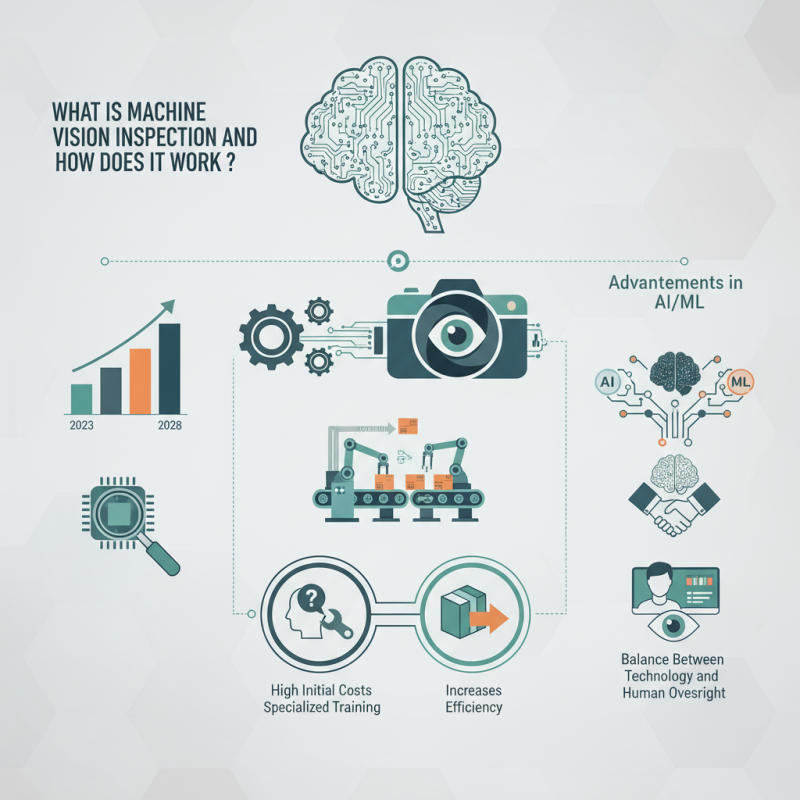
Machine Vision Inspection is revolutionizing various industries by enhancing quality control processes. According to a recent report by Markets and Markets, the machine vision market is expected to grow from $10.5 billion in 2023 to $16.9 billion by 2028. This growth highlights the increasing importance of automation and precision in manufacturing.
Dr. Emily Carter, a renowned expert in the field, emphasizes, “Effective Machine Vision Inspection reduces errors and increases efficiency.” This technology employs high-resolution cameras and sophisticated algorithms to detect defects that humans might overlook. However, challenges exist. High initial costs and the need for specialized training can be barriers for many companies. These limitations can hinder the adoption of such systems, leading to inefficiencies.
Moreover, the ongoing advancements in artificial intelligence and machine learning could further improve Machine Vision Inspection processes. Yet, reliance on technology raises questions about adaptability and the human touch in quality assurance. As industries strive for automation, maintaining a balance between technology and human oversight remains critical.
What is Machine Vision Inspection?
Machine vision inspection is a technology that combines cameras and algorithms to analyze products. It checks for defects, measurements, and quality control. This technology is widely used in manufacturing, food packaging, and electronics. The automation it provides improves efficiency. However, the initial setup can be challenging and sometimes costly.
Tips: Consider starting small. Implementing machine vision on one line may protect your investment. Train your staff to understand the technology. Regularly assess system performance. Continuous improvements are key.
During inspections, lighting and camera angles play crucial roles. Poor lighting can lead to missed defects. Similarly, incorrect angles may result in incomplete inspections. Machine vision isn't foolproof. It may produce false positives or overlook issues. Teams must be prepared for these imperfections and continuously adapt.
Always review inspection data. It can uncover recurring issues. Use this information for better quality assurance. Embrace feedback loops to improve the inspection process over time. Machine vision inspection should evolve with technology and human insights.
What is Machine Vision Inspection and How Does It Work?
| Dimension | Description | Applications |
| Image Acquisition | The process of capturing images for analysis through cameras and sensors. | Quality control in manufacturing, object detection |
| Image Processing | Techniques used to enhance and analyze raw images to extract useful information. | Defect detection, measurement, and inspection |
| Machine Learning | Utilizing algorithms to improve the accuracy of image analysis and decision-making. | Automated classification, sorting products |
| Output Interpretation | Analyzing results and making decisions based on processed images. | Feedback for production adjustments, reporting |
| Integration with Systems | Incorporating machine vision systems into automated workflows. | Robotics, conveyor systems, automated quality assurance |
Key Components of Machine Vision Systems
Machine vision systems are becoming essential in various industries. They enhance quality control by using advanced imaging equipment. The key components play critical roles in their effectiveness.
Cameras are the heart of machine vision. They capture images of products swiftly. The choice of camera depends on the application. High-resolution cameras help detect minute defects. However, they can also produce large files, complicating data management.
Lighting is another crucial factor. Proper illumination eliminates shadows and enhances features. Poor lighting can lead to misinterpretation of images, resulting in errors.
Processing software analyzes the captured images. It uses algorithms to identify defects or measurements. However, not all software is equally effective. Some may struggle with complex patterns or noise. Finally, the integration of these components can be challenging. It requires careful calibration. Overlooking even minor details can compromise system performance. Thus, continuous evaluation and adjustments are necessary for optimal results.
The Technology Behind Image Acquisition in Inspection
Machine vision inspection utilizes advanced imaging technology to enhance quality control in various industries. It relies on sophisticated image acquisition methods, which are crucial for detecting defects, ensuring product consistency, and streamlining production workflows. Recent reports show that the machine vision market is projected to grow significantly, with estimates suggesting an increase to $20 billion by 2025.
Image acquisition in inspection involves several key components, including cameras, lighting systems, and software algorithms. High-resolution cameras capture detailed images at lightning speed. Proper lighting is essential; it influences the clarity and contrast of the images. Efficient lighting minimizes shadows and highlights defects that might otherwise be missed. However, achieving ideal lighting conditions can be challenging and may require constant adjustments based on different materials or environments.
Software algorithms play a pivotal role in interpreting the captured images. These algorithms analyze visual data to identify potential flaws. However, they are not infallible. Misinterpretation can occur, leading to false positives or negatives. As technology advances, ongoing training for machine vision systems is essential to improve accuracy. Balancing automation with human oversight remains a critical factor in optimizing inspection processes.
Common Applications of Machine Vision in Industry
Machine vision inspection is increasingly common in various industries. This technology uses cameras and software to examine products automatically. It enhances quality control by detecting defects and ensuring compliance with specifications. Many factories rely on it for accuracy and efficiency. It can identify missing parts, measure dimensions, and check for proper color and surface finish.
In automotive manufacturing, machine vision plays a crucial role. It inspects painted surfaces for defects, ensuring a high-quality finish. In food processing, it verifies packaging integrity and checks for correct labels. However, not all systems are perfect. Sometimes, they may miss defects or produce false positives. This can lead to unnecessary waste or rework. Despite these challenges, machine vision remains vital for optimizing production lines.
Pharmaceutical companies use machine vision for quality assurance too. It checks the integrity of seals on bottles and ensures correct labeling. While these inspections improve safety, they rely on well-calibrated systems. Any misalignment can compromise results. The balance between technology and human oversight is crucial. As industries advance, the integration of machine vision continues to evolve.
Benefits and Challenges of Implementing Machine Vision Systems
Implementing machine vision systems offers numerous benefits. These systems enhance quality control in manufacturing processes. They can detect defects and inconsistencies in products that human inspectors might miss. With precise imaging capabilities, these systems provide reliable inspections at high speeds. This leads to increased productivity and reduced waste.
However, there are challenges to consider. The initial setup costs can be high, and technical expertise is required to operate the systems effectively. Frequent maintenance and updates are necessary to keep the technology functioning smoothly. Additionally, varying product shapes and sizes can complicate the implementation process. Adapting the system to different environments may require additional customization, which could further increase costs and time.
One must also reflect on the darker aspects of reliance on technology. False positives can occur, leading to unnecessary scrap or rework. There's the risk of overlooking minor flaws if the system is not calibrated correctly. This balance between efficiency and accuracy is crucial in deciding to implement machine vision systems. Each installation presents unique challenges that require careful consideration and ongoing evaluation.