Top Range Exhaust Hoods for Every Kitchen Style
Cooking can leave more than a good meal behind. Steam clouds cabinet doors, while frying onions sends fine grease toward nearby surfaces. A well-chosen Range Exhaust Hood helps capture smoke, odors, and airborne particles before they spread. It can also become a defining feature, from a slim stainless-steel canopy in a modern kitchen to a statement hood above a farmhouse range.
The best choice depends on more than appearance. Match the hood’s width to your cooktop, and check its airflow rating against your cooking habits and the manufacturer’s guidance. Ducted models usually vent air outdoors; ductless versions filter and recirculate it, so filter care matters. Noise, lighting, control placement, and cleaning access deserve attention, too. A filter that is awkward to remove may not get cleaned often enough. Small details matter.
Style should work with the room, not fight it. A concealed insert can keep a compact kitchen visually quiet, while a curved or custom-finished hood can anchor a larger space. Still, an impressive finish cannot make up for poor fit or inadequate ventilation. That part is easy to overlook. This guide explores top range exhaust hood options for different kitchen styles, with practical features to compare before you buy. Some specifications can be confusing, and product claims do not tell the whole story. Measure carefully, review installation requirements, and consult a qualified installer when your setup is uncertain.
What Range Exhaust Hoods Do and How They Work
A range exhaust hood removes cooking fumes near the stove, before heat, smoke, and odors spread through the room. Its fan draws air upward through an intake canopy. You may notice the difference when frying onions: less lingering smell, and fewer wisps drifting toward nearby cabinets. Small detail.
Most hoods use metal mesh or baffle filters to catch grease droplets. These filters need regular cleaning; a sticky layer can restrict airflow and become difficult to remove. In a ducted system, air travels through a vent to the outdoors. A recirculating model instead passes air through a filter, often containing activated carbon, then returns it to the kitchen. It can reduce odors, but it does not remove moisture as effectively as outdoor venting.
Performance depends on more than the fan’s advertised airflow. Duct length, bends, and narrow passages can reduce how much air actually moves. A hood that sounds powerful may still struggle over a wide cooktop. Match the hood’s coverage to the cooking surface, and follow the installation clearances in its instructions. I think this is the part people overlook. Even a well-chosen hood needs clean filters and a clear path for air to work as intended.
Common Hood Types and Their Design Features
Range hoods vary in shape, placement, and how they collect cooking fumes. Wall-mounted models sit above a range against a wall, often with a chimney that conceals ductwork. Their visible profile can suit modern or traditional kitchens, but the hood should cover the cooking area well. Placement matters. Under-cabinet hoods fit beneath existing cupboards and keep the layout compact. They can be practical in smaller kitchens, though the cabinet may limit hood depth and capture area.
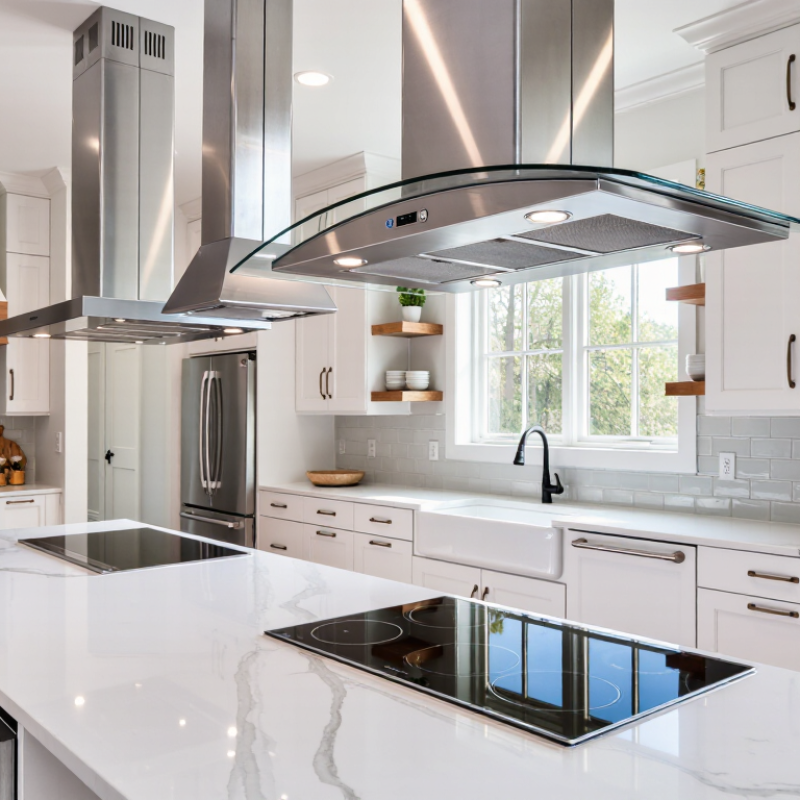
Island hoods hang above a cooktop set away from a wall. They become a focal point, so check ceiling support and duct routes before choosing one. Insert hoods, also called liners, fit inside custom cabinetry for a quieter visual presence. Their performance still depends on the insert size and the cabinet design. Downdraft systems draw air downward beside or behind the cooktop, which can help preserve open sightlines. They may be less effective at capturing rising steam from tall pots. Looks can mislead. Compare the hood’s capture area, filter access, and operating noise with your cooking habits; a beautiful shape is not useful if greasy filters are difficult to remove.
Choosing a Hood Style for Your Kitchen Layout
Choosing a Hood Style for Your Kitchen Layout
The best-looking hood is not always the best fit for the room. Start with the cooktop’s position, ceiling height, and duct route. A wall-mounted canopy suits a range against a wall and can become a strong visual feature. For an island, choose a ceiling-suspended hood with enough capture area; cross-drafts can pull cooking fumes away from it. Small detail, big difference.
Cabinet lines matter, too. An insert can keep a compact kitchen visually quiet, but its performance depends on a correctly sized liner and a clear path to the exterior. The U.S. Department of Energy’s Building America guidance recommends exhausting kitchen pollutants outdoors, rather than into an attic or crawlspace. ASHRAE Standard 62.2-2022 lists 100 cubic feet per minute for intermittent kitchen exhaust, or five air changes per hour for continuous exhaust. Treat these as design benchmarks, not a substitute for local requirements or the hood’s installation instructions.
Before choosing a finish, check the duct diameter, bends, and available clearance. A short, direct duct run generally makes planning easier; tight turns can restrict airflow. I would measure twice here. A sleek hood that conflicts with upper cabinets or hangs too high may capture less effectively. The compromise is real: visual balance matters, but so do reach, noise, and everyday cleaning.
Top Range Exhaust Hoods for Every Kitchen Style - Choosing a Hood Style for Your Kitchen Layout
| Hood Style | Installation | Kitchen Layout That Often Suits It | Typical Design Fit | Planning Considerations |
| Under-Cabinet | Mounted beneath a wall cabinet above the cooktop. | Compact kitchens and layouts with cabinets above the range. | A practical, space-conscious option that keeps the hood close to the cabinetry. | Check cabinet depth, duct route, and the hood’s required installation height. |
| Wall-Mount Chimney | Fixed to the wall above the cooktop, usually with a visible vertical chimney section. | Wall ranges where there is no cabinet directly above the cooking surface. | A prominent feature that can suit contemporary, transitional, or industrial interiors. | Confirm wall support, chimney coverage, and whether ducting can reach an exterior outlet. |
| Island | Suspended from the ceiling over a cooktop on a kitchen island. | Open-plan kitchens with cooking located away from a wall. | Creates a visible focal point and provides capture from above the island cooktop. | Plan ceiling support, duct routing, lighting, and sightlines before finalizing the island layout. |
| Insert or Liner | Installed inside a custom cabinet, canopy, or decorative hood surround. | Kitchens designed around custom millwork or a concealed ventilation system. | Keeps the ventilation equipment discreet while allowing a tailored exterior design. | Size the enclosure to the insert and provide access for filters, controls, and servicing. |
| Downdraft | Installed in or beside the cooktop; some models rise from the counter when used. | Layouts where an overhead hood is not desired or practical. | Offers an unobstructed view above the cooking area when not in use. | Check cabinet space and duct path; capture performance can depend on cooktop position and cooking conditions. |
Sizing note: A hood is commonly selected to be at least as wide as the cooking surface; a wider hood may improve capture, especially for open layouts. Follow the hood and cooktop manufacturers’ instructions for width, mounting height, ducting, and clearances, along with applicable local requirements.
Comparing Ventilation Power, Noise, and Controls
Range-hood comparisons work best when airflow, sound, and controls are considered together. ASHRAE Standard 62.2 lists 100 cubic feet per minute (cfm) for intermittent kitchen exhaust. That is a ventilation benchmark, not a promise that smoke will be captured at every burner. Hood depth, mounting height, and duct layout all affect performance.
HVI’s Certified Home Ventilating Products Directory provides standardized airflow and sound ratings. Compare figures at the same operating speed; maximum airflow alone can mislead. A long duct with several bends may reduce delivered airflow and create more turbulence. Listen at the speed you would actually use while searing fish or frying onions. Very quiet matters. But a quiet low setting may leave cooking odors lingering.
Controls shape daily use, too. Separate speed buttons are easier to adjust with damp hands than a tiny touch panel. A delay-off setting can keep ventilation running after cooking, while clear lighting helps reveal simmering spills. There is a trade-off: higher fan speeds typically sound louder, and real kitchens rarely match test conditions. It is worth checking the installation plan, not just the specification sheet.
Top Range Exhaust Hoods for Every Kitchen Style
Compare representative residential airflow and sound levels by hood style. Values are approximate planning benchmarks, not measured results for specific models; actual performance varies with fan speed, ductwork, installation, and product design.
Airflow is shown in cubic feet per minute (CFM). Sound is shown in sones; lower values indicate quieter operation. The sound scale uses a separate axis.
Control options to consider
- Under-cabinet: Push-button or touch controls are common; look for multiple fan speeds and a separate light control.
- Wall-mounted: Touch or button controls often offer several speeds; some models add a timer or automatic shutoff.
- Island: Remote or front-facing controls can be easier to reach; check that the control panel remains accessible after installation.
Installation, Care, and Long-Term Performance
A range hood performs well only when its installation suits the kitchen. Measure the cooktop and available wall or cabinet space before choosing a hood. Fit matters. Follow the installation manual’s clearance requirements, since the correct distance depends on the hood and cooking surface. Use smooth, appropriately sized ductwork with as few bends as practical; long, cramped runs can reduce airflow and increase noise. Venting outdoors is generally more effective than recirculating air, but the right setup depends on the home. Have a qualified installer handle electrical connections or unfamiliar ductwork, and check local requirements before work begins. A small oversight, such as a blocked duct path, can be hard to spot after cabinetry is finished.
Care is simple, but it needs consistency. Wash metal filters regularly, especially after frying, and let them dry fully before reinstalling. Replace disposable filters as directed. Wipe the hood’s underside with a soft cloth and suitable cleaner, avoiding abrasive pads that can mark the finish. Listen for new rattling or a change in fan sound. These details can reveal a loose fastener, clogged filter, or duct obstruction. I would not assume a powerful fan fixes every ventilation problem; poor duct design can still limit performance. Check the manual for maintenance intervals, and arrange service if the fan, controls, or lighting stop working reliably. Dust and grease build slowly. Regular attention helps the hood stay quieter and effective over time.