


5 Tips for Choosing a 1.5hp Brushless Motor?

A 1.5hp Brushless Motor can look like a straightforward upgrade: compact, efficient, and ready to deliver steady torque. But the wrong choice may run hot, struggle during startup, or fail to match the load. Small details matter. Shaft dimensions, controller compatibility, cooling, and duty cycle can shape performance more than the horsepower label suggests.

The U.S. Department of Energy’s 2014 United States Industrial Electric Motor Systems Market Opportunities Assessment reported that motor-driven systems used about 54% of the electricity consumed by U.S. manufacturing. That figure covers industrial motor systems broadly; it is not a market statistic for 1.5-hp brushless models. Still, it shows why efficiency and correct sizing deserve careful attention. A motor’s real-world performance depends on its complete operating setup, not a catalog rating alone.

A useful buying guide should turn specifications into practical checks: What load will the motor move? How often will it start? Does the controller support the required voltage and current? I can’t verify a direct quotation from a named motor expert using the material provided, so I won’t invent one. That gap matters. Even a polished quote is no substitute for a traceable source, a clear datasheet, and measurements from the actual application.
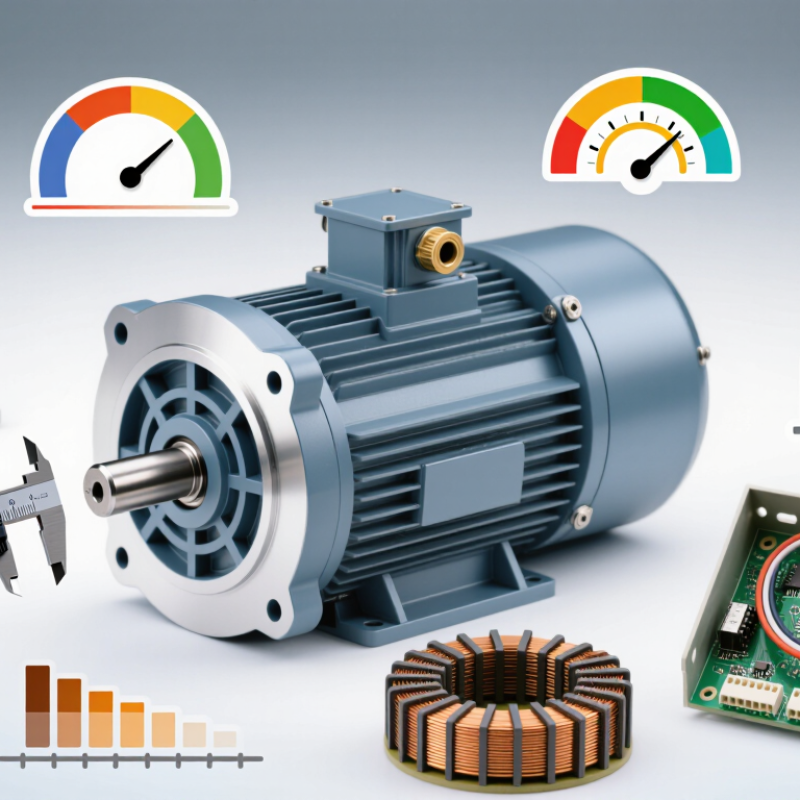
5 Tips for Choosing a 1.5hp Brushless Motor?

Define Your Application’s Power, Speed, and Operating Needs

5 Tips for Choosing a 1.5hp Brushless Motor?

Tip 1: Define the actual load before comparing motors. A 1.5 hp rating describes power, but it does not tell you whether the motor can start your machine or maintain speed under load. Note the required torque, target speed, and any heavy startup conditions. Measure the load, not just the machine’s advertised capacity.

Tip 2: Match speed to the work. A pump, conveyor, and cutting tool can need very different operating speeds, even when their power needs look similar. Check the motor’s speed range and whether its controller can adjust speed smoothly. Also confirm that the chosen speed provides enough torque; higher speed alone is not a performance upgrade.

Tip 3: Consider how the motor will run each day. Continuous operation, frequent starts, and short bursts place different demands on cooling and duty ratings. Check the rated voltage, controller compatibility, mounting dimensions, and available airflow. A small enclosure can trap heat. It is easy to overlook that detail.

Tip 4: Leave room for real-world variation. Friction, changing material, and temperature can increase demand beyond your initial estimate. Allow a sensible operating margin, but avoid choosing a larger motor without checking the drive and power supply. The specification sheet helps, yet it cannot replace measurements from the actual application.

5 Tips for Choosing a 1.5hp Brushless Motor? - Define Your Application’s Power, Speed, and Operating Needs
Tip What to Define Practical Data or Calculation Selection Guidance
1. Match the motor to the load Identify the load’s continuous power demand, starting load, and any short-duration peak demand. 1.5 mechanical horsepower is approximately 1.12 kW of shaft output. Electrical input will be higher because of motor and drive losses. Compare the load’s required shaft power with the motor’s rated output. Check the motor and drive specifications for permitted overload duration; do not assume a standard overload capacity.
2. Check speed and torque together Specify the required operating speed in rpm and the torque needed at that speed. For 1.12 kW output, approximate rated torque is 3.6 N·m at 3,000 rpm or 7.1 N·m at 1,500 rpm, using T (N·m) = 9,550 × P (kW) ÷ speed (rpm). Confirm that the motor and controller can provide the required torque across the full speed range. Available torque may decrease at higher speeds or outside the specified operating range.
3. Define the duty cycle Record daily operating hours, starts per hour, acceleration time, and whether the load runs continuously or intermittently. S1 denotes continuous-duty operation at a constant load long enough to reach thermal equilibrium. Intermittent duty requires a defined cycle, including run and rest periods. Choose a motor rated for the actual duty. Frequent starts, repeated acceleration, or sustained high torque can increase heating; verify the motor and drive ratings for the intended cycle.
4. Verify the electrical supply and drive Specify available AC or DC supply, voltage, phase, frequency where applicable, and the control method. A brushless motor generally requires a compatible electronic controller. Rated voltage, current, commutation method, and controller limits must match the motor’s specifications. Check supply compatibility, continuous and peak current limits, speed-control range, and protection features. Use the manufacturer’s wiring and controller requirements for the selected motor model.
5. Account for installation and environment Measure shaft, mounting, and available space; note ambient temperature, dust, moisture, vibration, and cooling conditions. Permissible ambient temperature, ingress protection, insulation, cooling method, and mounting dimensions are model-specific ratings—not properties guaranteed by a 1.5 hp power rating. Confirm the enclosure and cooling are suitable for the site, and check shaft and mounting dimensions against the driven equipment. Allow for any output derating required by the motor’s datasheet.

Match Motor Voltage and Current to the Available Power Supply

A 1.5 hp rating describes mechanical output, not the electricity the motor draws. It equals roughly 1,120 watts of shaft power, while the electrical input must be higher because the motor and controller have losses. Check the motor and controller documentation for their required voltage range and continuous current. Then compare those figures with the actual power supply, not just its label. A mismatch can cause weak performance, overheating, or protective shutdowns.

Current matters under load. A 48 V, 25 A supply can deliver up to 1,200 watts electrically, which may not support 1.5 hp of continuous mechanical output after losses. The controller may also draw brief current peaks when the motor starts or accelerates. Confirm that the supply and wiring can handle those demands, and allow headroom where the manufacturer recommends it. Measure, don’t guess. Real installations are not always tidy: long cables, warm enclosures, and shared circuits can reduce available power. Check voltage at the controller while the motor is working, and revisit the sizing if it dips.

Check Torque Capacity Against Load and Startup Demands

5 Tips for Choosing a 1.5hp Brushless Motor?

A 1.5 hp rating describes power, not the force available at every speed. At 1,750 rpm, 1.5 hp is roughly 6.1 N·m of rated torque. That estimate changes with actual motor speed. Check the motor’s torque-speed curve, not just its nameplate. The U.S. Department of Energy’s Improving Motor and Drive System Performance sourcebook reports that motor-driven systems use about 68% of U.S. manufacturing electricity. That figure is a reminder: motor choice affects the whole machine, not just the motor.

Compare the load’s running torque with the motor’s continuous rating, then check startup torque separately. A loaded conveyor, for example, may need extra torque to move a belt and product from rest. Ask for the required breakaway torque and acceleration time, and compare them with the motor and drive specifications. Leave headroom for friction, cold starts, and brief overloads. But don’t oversize blindly; excessive capacity can add cost and complicate control. A spreadsheet can still miss a sticky bearing or a belt that starts unevenly. Check the real load if possible. If the manufacturer provides only power and speed, request the torque curve before buying.

Verify Motor Size, Mounting, and Environmental Protection

A 1.5 hp brushless motor can vary in speed, torque, and physical size, so the horsepower figure is only a starting point. Check the motor’s rated voltage, operating speed, and duty cycle against your equipment’s actual demands. A pump that runs continuously may need different thermal capacity from a machine used for short bursts. Check the data sheet. Small details matter.

For mounting, compare the frame dimensions, bolt-hole spacing, shaft diameter, and shaft length with your existing setup. Also confirm the shaft keyway or coupling type; a few millimeters of mismatch can create vibration or prevent a secure fit. Look at available clearance around the motor, especially near the fan cover and wiring connections. Measure twice. A drawing may not show every obstruction in a crowded machine enclosure.

Environmental protection should match the motor’s location, not just the room’s usual conditions. Check the enclosure rating and manufacturer guidance for dust, moisture, and temperature exposure. A dusty workshop or occasional washdown can change what protection is appropriate. Outdoor use may require added protection from rain and corrosion, but do not assume a sealed-looking housing is weatherproof. Ask how ambient temperature and ventilation affect the rated output. It is easy to overlook airflow, and that assumption deserves a second look.

Compare Efficiency, Controller Compatibility, and Service Support

5 Tips for Choosing a 1.5hp Brushless Motor?
Compare Efficiency, Controller Compatibility, and Service Support

A 1.5 hp brushless motor may look efficient on a specification sheet, but performance depends on the load and operating cycle. Compare rated output with the actual task, such as driving a pump for several hours or starting a loaded conveyor. Ask for efficiency data at the speeds and loads you expect, not just a peak figure. Small losses add up. Check whether the motor needs extra cooling when run slowly or continuously. A quieter motor can still run hot if airflow is restricted.

Controller compatibility deserves equal attention. Confirm the controller’s voltage range, continuous current rating, and support for the motor’s sensor type. A mismatch can cause rough starts, excess heat, or unexpected shutdowns. Do not guess. Request a wiring diagram and written setup limits before installation. Service support matters after the first run, too: ask about fault diagnosis, spare controller availability, and typical response times. It is easy to focus on purchase price and overlook downtime. Compare the warranty terms carefully, and make sure technical help can address your actual application rather than offering generic troubleshooting.

Packaging machine ROI calculator

Need help figuring out if packaging automation is right for your business?


First, start with the numbers. Download our free packing machine ROI calculator to learn how long it will take for an investment in automation to pay for itself (and much more).


Free packaging automation ROI calculator
