


China Top 10 Construction Equipment Battery Manufacturers

Construction sites place unusual demands on batteries. A wheel loader may idle through cold mornings, while an electric excavator draws power through long, demanding shifts. The right Construction Equipment Battery depends on the machine, duty cycle, charging access, and operating climate. A battery suited to engine starting may not be suitable for traction or auxiliary systems. That distinction matters.

This guide examines ten manufacturers serving the construction equipment market. It considers product range, battery chemistry, published performance data, safety information, warranty terms, and service availability. Lead-acid options remain relevant for some starting and backup needs. Lithium-ion products can offer different advantages for electric machines, but buyers should check charging requirements, thermal controls, and compatibility with the equipment. Specifications deserve close attention. A high capacity number alone does not prove a battery will perform well on a jobsite.

The list is intended as a practical starting point, not a universal ranking. Manufacturer availability and product lines vary by region, and a model’s real-world performance depends on installation and use. Some details may be hard to compare directly; public data is not always presented in the same way. Buyers should confirm current specifications with manufacturers or authorized suppliers before making a decision. A little skepticism helps. The sections ahead introduce each company and highlight what equipment owners may want to verify, from dependable starts in freezing weather to charging support between shifts.
China Top 10 Construction Equipment Battery Manufacturers

China’s Construction Equipment Battery Industry: Scope and Key Applications

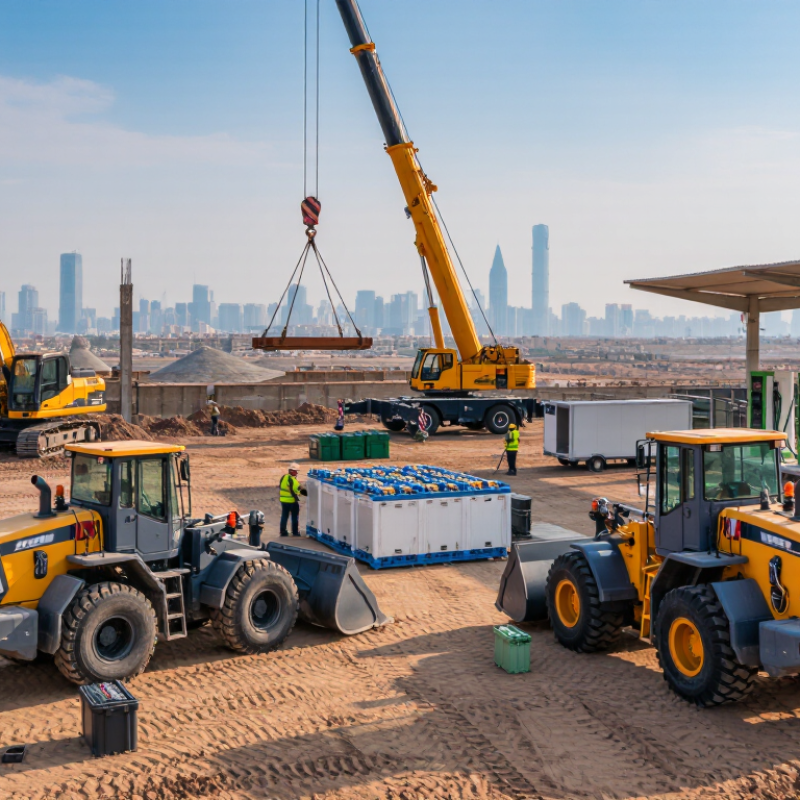
China’s construction equipment battery industry serves machines that start, move, lift, and operate far from fixed power supplies. Its scope includes starting batteries, auxiliary power systems, and battery packs for electric or hybrid equipment. Requirements differ sharply by machine. An excavator working through long shifts needs dependable starting and control power, while a compact electric loader depends on usable capacity and practical charging access.

Applications span excavators, wheel loaders, cranes, telehandlers, forklifts, and smaller site machines. Batteries also support lighting, displays, safety sensors, communication devices, and telematics when engines are off. On dusty sites, vibration-resistant housings and secure connections matter. Cold mornings can reduce available battery output, so rated capacity alone may not tell the full story. Real operating conditions do.

For buyers and equipment designers, the useful comparison is not simply lead-acid versus lithium-ion. Duty cycle, charging time, service access, thermal management, and replacement cost all shape suitability. A machine running short urban jobs may benefit from different specifications than one operating in a remote quarry. There is no universal answer. Battery data sheets can also look clearer than field performance; that gap deserves careful testing under actual workloads.
How the Top 10 Manufacturers Are Identified and Compared

To identify China’s leading construction equipment battery manufacturers, a comparison should begin with evidence, not promotional claims. Review published capacity data, product specifications, quality certifications, and documented experience supplying machinery applications. Check whether each company provides clear information on battery chemistry, voltage options, operating temperature, and charging requirements. Evidence matters.

The manufacturers can then be compared against practical job-site needs. Useful measures include cycle-life test conditions, vibration resistance, enclosure protection, warranty terms, delivery capacity, and technical support. Numbers need context: a cycle-life figure means little unless its temperature, discharge depth, and test method are disclosed. Where possible, compare like with like, such as batteries designed for similar equipment and duty cycles. A lower price is not automatically better value.

A transparent ranking should explain how each measure is weighted and distinguish verified facts from company-reported information. Product documents, factory quality records, and customer references can help confirm claims, though public information may be incomplete. Not every buyer agrees. A contractor working in cold regions may value low-temperature performance more than a buyer focused on fast local service. The comparison should note these trade-offs rather than imply one manufacturer suits every machine. Even a careful scoring sheet can miss real-world differences, so buyers should verify specifications against their equipment before making a decision.

China Top 10 Construction Equipment Battery Manufacturers

How the Top 10 Manufacturers Are Identified and Compared

The chart shows an illustrative evaluation framework, not measured company results or market rankings. Criteria and weightings are editorial; verify product specifications, certifications, production capacity, and service coverage against current, independently documented sources.

Profiles of China’s Top 10 Construction Equipment Battery Manufacturers

Profiles of China’s top ten construction equipment battery manufacturers should compare engineering capability, not just factory size. The IEA’s 2024 Batteries and Secure Energy Transitions report estimates that China held about 85% of global battery-cell manufacturing capacity in 2023. That scale matters, but it does not prove that every supplier can meet the shock, vibration, dust, and temperature demands of excavators or loaders.

The ten profiles should examine battery chemistry, pack design, thermal management, and field-service support. For example, a pack installed beneath a machine cab faces different cooling and maintenance needs from one used in a compact electric loader. Buyers should check usable capacity, continuous discharge output, cycle-life test conditions, and warranty limits. Ask whether published test results reflect construction duty cycles, not only laboratory use. Details matter.

Manufacturing scale can support stable supply, while application-specific testing shows whether a battery is ready for site work. Compare protection against water and dust, cell traceability, diagnostic tools, and replacement procedures. These are practical indicators, yet they are not always reported in comparable formats. That makes a clean ranking difficult. A profile should state what evidence is available and where claims remain unverified, rather than treating every specification sheet as equal.

Battery Technologies and Product Features Across Leading Manufacturers

Construction equipment batteries must handle more than repeated starts. Excavators and loaders face vibration, dust, long shifts, and sudden hydraulic loads. Lithium iron phosphate cells can offer strong cycle life and thermal stability, while nickel-rich chemistries may provide more energy in limited space. The trade-off is real. Pack design matters as much as cell chemistry.

BloombergNEF’s 2024 Lithium-Ion Battery Price Survey reported an average pack price of $115 per kilowatt-hour, down 20% from 2023. This is a broad market benchmark, not a construction-equipment quote. The International Energy Agency reported that electric-vehicle battery demand reached about 750 gigawatt-hours in 2023, up 40% year over year. Scale is growing. Yet jobsite duty cycles differ sharply from road use.

Useful product features include sealed enclosures, cell-level monitoring, thermal management, and charging controls that limit heat during fast charging. A battery-management system should flag voltage imbalance before it becomes a field failure. Operators also need clear state-of-charge readings and practical cold-weather performance. Test the full pack, not just its datasheet. A paper rating can miss rough-site reality. This is still an imperfect comparison: public reports rarely separate construction batteries from other industrial packs.

How to Evaluate Manufacturers for Equipment and Project Requirements

China Top 10 Construction Equipment Battery Manufacturers

How to Evaluate Manufacturers for Equipment and Project Requirements

For construction equipment, a battery must fit the machine’s real workload, not just its nameplate. Record voltage, capacity, starting current, operating hours, and charging access. A compact excavator working in cold mornings may need different performance from a loader running long shifts indoors. Confirm dimensions, terminal layout, mounting points, and the equipment maker’s specifications before requesting quotations. Small details matter.

Ask manufacturers for test data that matches your application. Check how cycle life was measured, including discharge depth, temperature, and charging conditions. Request protection details for vibration, dust, moisture, and high or low temperatures. For lithium batteries, review the battery management system’s limits and fault protections. Also assess production traceability, sample testing, warranty terms, and technical support. A polished datasheet can still leave gaps; I would compare the stated figures with a sample under realistic duty cycles.

Tips: Share the machine model, daily runtime, and site conditions. Ask for written answers, not just sales claims. Keep a record of test results and unresolved questions.

Packaging machine ROI calculator

Need help figuring out if packaging automation is right for your business?


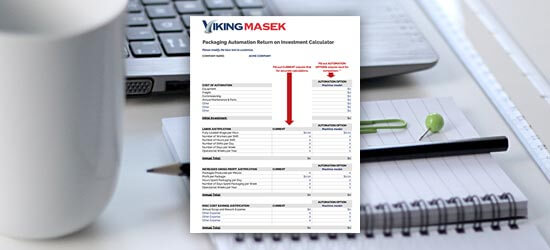
First, start with the numbers. Download our free packing machine ROI calculator to learn how long it will take for an investment in automation to pay for itself (and much more).


Free packaging automation ROI calculator