Top 10 Trailer Generator Manufacturers Worldwide?
The global Trailer Generator market is becoming more important as construction, events, utilities, and emergency services require flexible power. Portable generator demand is also expanding. Grand View Research estimated the global portable generator market at approximately USD 2.1 billion in 2023, with continued growth expected through 2030. MarketsandMarkets reports similar momentum, driven by infrastructure investment, extreme weather, and temporary power requirements.
Real-world performance matters.
A Trailer Generator must start reliably, handle changing loads, and remain serviceable on uneven sites. Fuel efficiency, noise control, emissions compliance, towing stability, and remote monitoring now influence purchasing decisions. The International Energy Agency also highlights rising electricity demand and increasing pressure on grid resilience. These conditions help explain why manufacturers are investing in smarter controls and cleaner engine technologies.
“Choose the generator around the load profile, not the nameplate size,” says Kevin Flaherty, a power-generation product specialist often cited in mobile-power discussions. This principle is practical. An oversized unit may waste fuel, while an undersized unit can suffer overheating and unstable voltage. Our Top 10 Trailer Generator Manufacturers Worldwide ranking considers product range, operating experience, service coverage, engineering capability, and documented market presence. It is not flawless. Regional pricing, dealer quality, and customer support can change the result. Some manufacturers publish limited performance data, which makes direct comparison difficult. Still, the list offers a useful starting point for contractors, rental companies, event producers, and facility managers seeking dependable mobile power. Expect differences. Inspect the details.
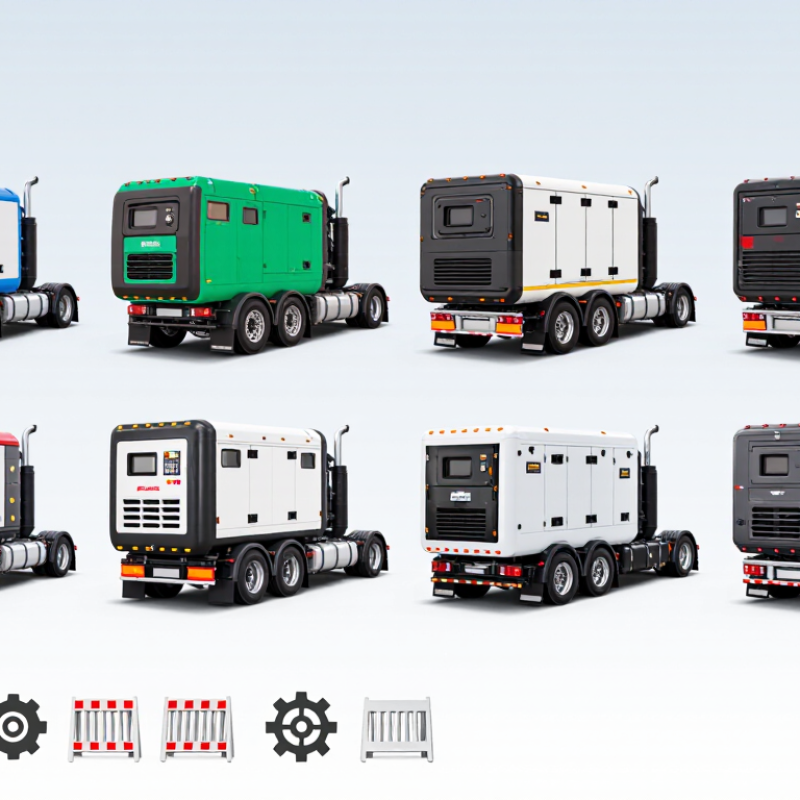
Trailer Generator Market Scope: Global Demand, Output, and 2024 Growth Data
Top 10 Trailer Generator Manufacturers Worldwide?
Trailer-mounted generators support construction sites, outdoor events, emergency repairs, and temporary power projects. Yet the data needs careful reading. Most market studies classify trailer units within broader diesel generator or power rental segments.
Grand View Research’s 2024 diesel generator analysis projects steady market expansion through 2030, with annual growth estimated above 7%. MarketsandMarkets reports similar momentum for the global power rental sector during 2024–2029. These figures indicate strong demand, but they do not isolate trailer generators perfectly. That limitation matters.
Market output is harder to measure. UN Comtrade’s HS 8502 category tracks generator-set trade, although it includes stationary equipment. Production remains concentrated across Asia, Europe, and North America. Rental fleets are expanding near infrastructure projects. Construction contractors increasingly prefer mobile units with remote monitoring and lower fuel consumption. Small details matter, especially fuel tanks and axle ratings.
The IEA Electricity 2024 report forecasts global electricity demand growth of about 3.4% annually through 2026. This pressure supports temporary generation in regions facing grid constraints. However, growth will not be uniform. High interest rates may delay equipment replacement. Weather-related outages could accelerate orders unexpectedly. Data also remains fragmented. Better reporting is still needed for trailer-specific output, utilization, and 2024 sales.
Top 10 Trailer Generator Manufacturers Worldwide? — Trailer Generator Market Scope: Global Demand, Output, and 2024 Growth Data
The chart presents an aggregated, non-brand view of the trailer generator market. Regional demand and output are shown as indexed values, with 2023 set to 100, while the 2024 growth rate reflects estimated market expansion by region.
Market figures are rounded aggregated estimates derived from publicly reported industry outlooks and regional power-equipment demand trends; they do not represent the performance of any individual manufacturer or brand.
Top 10 Trailer Generator Manufacturers by Capacity, Reach, and Product Range
Top 10 Trailer Generator Manufacturers Worldwide?
Top 10 Trailer Generator Manufacturers by Capacity, Reach, and Product Range
The leading ten trailer generator manufacturers are best compared through measurable capabilities, not advertising claims. Capacity ranges from compact units for construction tools to large systems supporting hospitals, events, and industrial sites. Strong manufacturers usually offer diesel, gas, hybrid, and battery-assisted models. Their product ranges also include sound-attenuated enclosures, automatic transfer systems, remote monitoring, and cold-weather packages. Global reach matters too. Reliable suppliers maintain regional service teams, spare-parts warehouses, and trained technicians. A powerful generator is less useful when a replacement filter takes weeks to arrive.
Experience reveals practical differences. Rental-focused manufacturers often prioritize rugged frames, simple controls, and fast maintenance access. Industrial specialists may provide higher output, synchronized systems, and custom voltage options. Product certification, load-bank testing, warranty clarity, and documented fuel consumption deserve careful review. No ranking is perfect. Project conditions can change the result. A mid-sized unit may outperform a larger one when transport limits, noise rules, or fuel storage become serious concerns.
Tips: Compare continuous and standby capacity separately. Ask for tested fuel-use data, not estimates. Check wheel, axle, and braking specifications before purchase. Confirm local service coverage and parts availability. Review the control panel in person if possible. Small details matter. And remember that “more capacity” can mean higher fuel costs, heavier transport, and unnecessary operating complexity.
Comparing Generator Ratings from 20 kVA to 2,000 kVA Across Global Brands
Comparing the top ten trailer generator manufacturers requires more than reading peak output figures. Their ranges typically begin near 20 kVA and extend beyond 2,000 kVA. Small units suit mobile workshops, emergency lighting, and compact construction sites. Large systems support mines, data facilities, and temporary industrial power.
I compare continuous and standby ratings separately. A 100 kVA generator may deliver less during sustained heat, altitude, or heavy motor starting. Trailer weight, axle design, fuel capacity, and service access also affect real performance. During equipment inspections, I check control-panel readings against calibrated load-bank results. Published figures are useful, but they are not always directly comparable.
At the lower range, compact frames and low fuel use matter most. From 250 to 800 kVA, cooling performance and parallel operation become more important. Above 1,000 kVA, transport permits, lifting points, and synchronized controls can determine project success. Weatherproof enclosures should protect wiring without trapping excessive heat. Noise data needs careful review because test distances and operating loads differ.
Some comparisons remain imperfect. Manufacturers may present ratings under different standards or ambient conditions. Buyers should request prime-power curves, fuel consumption at 50% and 100% load, and documented maintenance intervals. A dependable trailer generator is not simply the largest unit. It is the unit that matches the load, route, climate, and service capability.
Emissions, Fuel Efficiency, and Tier 4 Final Compliance in Mobile Generators
Mobile generator manufacturers now design around emissions, fuel use, and dependable operation. Tier 4 Final compliance requires advanced exhaust treatment, including diesel particulate filters and selective catalytic reduction. These systems reduce harmful pollutants from construction sites, events, and emergency power operations. Clean exhaust matters.
Fuel efficiency depends on more than the engine’s advertised rating. Generator size, electrical load, altitude, temperature, and maintenance all change real consumption. A lightly loaded unit may waste fuel through inefficient combustion and extended idling. Load management can improve performance. Some modern controls adjust engine speed as demand changes, reducing unnecessary fuel burn during quiet periods.
Field technicians often inspect the air filter, fuel system, exhaust temperature, and DEF quality before approving a mobile unit. A blocked filter can increase fuel use quickly. Poor DEF handling may trigger warnings or reduced power. Telematics also help operators track runtime, load percentage, regeneration events, and service intervals across global fleets. Small details matter.
Manufacturers with strong engineering teams usually publish clear emissions data, fuel curves, maintenance schedules, and operating limits. Buyers should verify performance under realistic loads, not only laboratory conditions. A load-bank test can reveal cooling problems and unstable voltage. It is not simple. Even well-designed equipment may struggle in extreme dust, high heat, or inconsistent servicing. That limitation deserves honest review before purchase.



