


Top Automated Injection Molding Manufacturers Worldwide

Automated Injection Molding is reshaping how manufacturers produce precise plastic components at global scale. Robotic part removal, vision inspection, and connected production systems now support faster, more consistent output. Yet automation alone does not guarantee quality. Reliable results depend on mold design, material control, machine stability, and trained technical teams.

This overview examines leading Automated Injection Molding manufacturers worldwide through practical industry criteria. These include engineering experience, production capacity, certification, process monitoring, and after-sales support. Strong manufacturers can demonstrate repeatable tolerances, documented testing, and clear traceability from resin delivery to finished parts. Their facilities may include clean production areas, automated assembly cells, and real-time dashboards showing pressure, temperature, and cycle data.

Details matter. A stable cycle can protect a medical housing from warping. A well-calibrated robot can prevent scratches on an automotive trim component. However, supplier comparisons are rarely perfect. Public information may be incomplete, and impressive equipment does not always reflect daily performance. Regional service coverage, communication quality, and response times also influence long-term results. These factors deserve careful verification before a purchasing decision.

The manufacturers discussed here represent different strengths, markets, and technical approaches. Some focus on high-volume consumer products. Others specialize in complex engineering parts or regulated applications. Their capabilities should be judged against each project’s material, tolerance, volume, and compliance requirements. Practical evidence matters more than polished claims. This introduction provides a clear foundation for evaluating trusted global suppliers with a balanced and professional perspective.
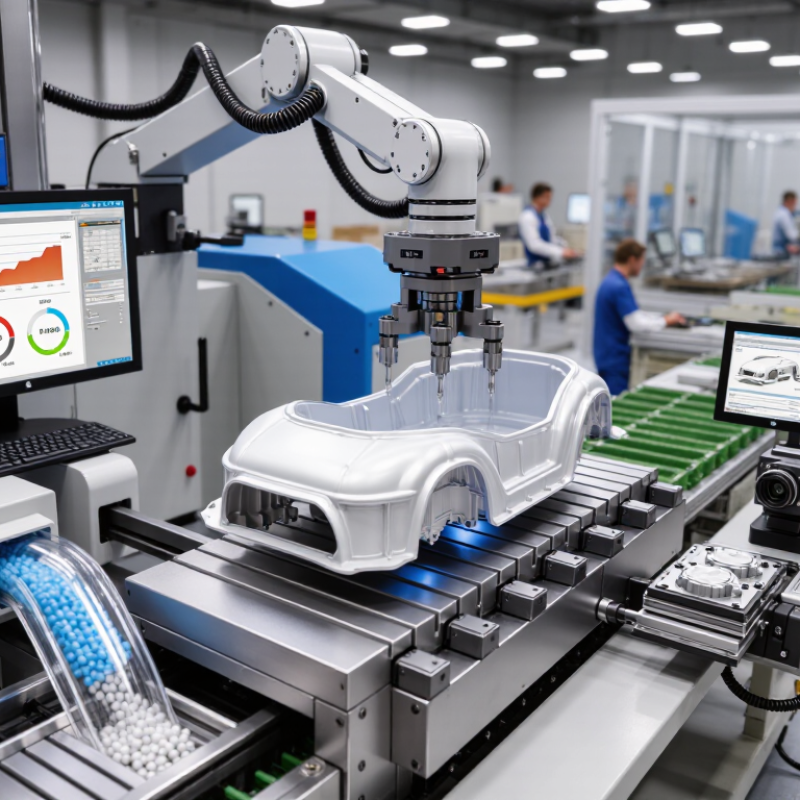
Top Automated Injection Molding Manufacturers Worldwide

Global Plastics Baseline: 400.3 Million Tonnes Produced in 2022

Top Automated Injection Molding Manufacturers Worldwide

Global Plastics Baseline: 400.3 Million Tonnes Produced in 2022

Global plastics production reached 400.3 million tonnes in 2022, according to PlasticsEurope’s Plastics—The Fast Facts 2023 report. This figure shows the enormous scale behind injection molding demand. Automated systems now support repeatable part quality, faster cycle control, and lower manual handling. In a typical factory, sensors monitor mold temperature, pressure, and cooling time. Small deviations can still create visible defects.

The OECD’s Global Plastics Outlook reports that global plastic waste reached 353 million tonnes in 2019. That contrast matters. High-output molding should not focus only on speed. Manufacturers need energy monitoring, material traceability, and designs that reduce scrap. The International Energy Agency also identifies efficiency as a major pathway for lowering industrial energy demand. Yet automation is not automatically sustainable. Poor maintenance, oversized equipment, and unstable process settings can waste resources.

Tips: Compare suppliers by cycle stability, service response, data access, and training quality. Ask for measured energy use per kilogram, not broad efficiency claims. Request sample validation under real production conditions. Do not overlook mold maintenance. It often decides whether automation delivers value.

Automation Types: Electric, Hydraulic and Hybrid Machines Above 10,000 kN

For machines above 10,000 kN, automation must control force, speed, and material flow together.
Large automotive panels, appliance housings, and technical pallets need stable clamping across wide molds. Hydraulic machines remain strong in this range because servo pumps deliver high force and flexible pressure control. Electric machines offer cleaner motion, repeatable dosing, and lower noise. Their higher purchase cost can challenge smaller plants. Hybrid machines combine electric plasticizing with hydraulic clamping. This balance often suits demanding, mixed-production lines.

Grand View Research estimates the global injection molding machine market will expand steadily through 2030, supported by automotive, packaging, and medical production. EUROMAP reported global plastics and rubber machinery production at approximately €42 billion in 2022. These figures show why large-scale automation attracts continued investment. Still, market growth does not guarantee a quick return. A 10,000 kN machine may consume less energy with variable-speed hydraulics, but poor mold setup can erase that advantage. Electric systems need accurate power-quality planning. Hybrid systems require more complex maintenance training.

Useful automation includes robotic part removal, mold-protection sensors, cavity-pressure monitoring, and real-time scrap tracking.
A six-axis robot can place hot parts onto a cooling conveyor while the next cycle starts. That detail matters when cycle times fall below one minute. Data from the International Energy Agency supports efficiency audits, yet machine-level results vary widely by resin and mold design. The choice is rarely perfect. Operators should compare total cost, service access, uptime, and energy data from actual trials, not brochures alone.

Manufacturer Ranking Metrics: OEE, Cycle Time, Energy Use and Global Service

Top Automated Injection Molding Manufacturers Worldwide

A credible ranking should begin with OEE, not machine count. A widely cited 2024 manufacturing benchmark identifies 85% OEE as a world-class reference point. However, product mix can distort comparisons. Thin-wall parts and large structural components rarely share the same production rhythm.

Cycle time must be verified from machine logs, not brochures. Measure injection, cooling, mold opening, and handling separately. A one-second reduction becomes significant across millions of cycles.

Quality matters too. Faster output means little if scrap rates rise. This is where rankings become imperfect, and analysts should admit it.

Energy use deserves equal weight. The International Energy Agency reported that industry consumed about 37% of global final energy in 2022. For molding plants, compare kilowatt-hours per kilogram of accepted parts, including auxiliaries. ISO 50001 principles support consistent energy measurement.

Global service should include remote diagnostics, regional technicians, spare-parts availability, and documented commissioning times. Fast help matters. A high-performing cell can still lose production after one failed sensor. Reliable rankings therefore combine OEE, validated cycle time, energy intensity, and service response data across comparable sites, while clearly reporting data limitations.

Leading Automated Molding Manufacturers Across Asia, Europe and North America

Automated injection molding manufacturers across Asia, Europe, and North America serve demanding industries with different production cultures. Their strongest facilities combine servo-driven presses, robotic part removal, vision inspection, and closed-loop process control. On a factory floor, this can mean stable cycle times, cleaner handling, and fewer damaged components. Consistency matters. Experienced teams also review mold cooling, resin drying, and maintenance records before scaling production. This practical discipline often separates a reliable supplier from a merely modern-looking facility.

In Asia, leading manufacturers often stand out through high-volume capacity and tightly coordinated supplier networks. Engineers may use automated assembly cells beside molding machines, reducing transfers between workstations. European manufacturers commonly emphasize energy efficiency, process documentation, and strict validation routines. Their facilities may track cavity pressure, temperature variation, and material batches in digital production records. North American manufacturers frequently focus on flexible automation, quick tooling changes, and responsive technical support. These strengths can suit mixed product portfolios and shorter regional delivery routes.

A serious evaluation should include sample runs, capability studies, workplace observations, and clear corrective-action procedures. Ask how the manufacturer handles flash, sink marks, color shifts, and robotic stoppages. Ask again. No operation is perfect; even advanced lines can lose efficiency when sensors drift or molds wear unevenly. The better partners disclose these risks, measure them, and improve settings without hiding inconvenient results. That honesty, supported by trained operators and auditable data, gives automated molding its real competitive value.

Top Automated Injection Molding Manufacturers Worldwide - Leading Automated Molding Manufacturers Across Asia, Europe and North America

Manufacturing Region Major Production Countries Typical Automation Scope Common Machine Configurations Frequently Processed Materials Key End-Use Sectors Typical Compliance Requirements
East Asia China, Japan, South Korea, Taiwan Robotic part removal, automatic feeding, insert loading, vision inspection, packaging, and centralized production monitoring Electric and hybrid injection molding cells; multi-cavity systems; high-speed thin-wall and precision molding lines PP, ABS, PC, PA, POM, PBT, TPU, TPE, and glass-fiber-reinforced engineering plastics Consumer electronics, automotive components, medical products, packaging, household appliances, and precision parts ISO 9001; ISO 14001; ISO 13485 for medical production; IATF 16949 for automotive supply chains
Southeast Asia Singapore, Malaysia, Thailand, Vietnam, Indonesia Automated take-out, mold-temperature control, material drying, assembly, labeling, and production data collection Servo-hydraulic and electric machines; insert molding; two-color molding; medium- and high-volume production cells PP, PE, ABS, HIPS, PC, PA, POM, PVC, TPE, and recycled thermoplastics Electrical products, automotive parts, consumer goods, food packaging, medical disposables, and industrial components ISO 9001; ISO 14001; ISO 45001; customer-specific automotive, electronics, and medical quality systems
Western Europe Germany, Italy, France, Switzerland, Austria, Spain Integrated robotics, closed-loop process control, predictive maintenance, automated inspection, traceability, and energy monitoring All-electric precision machines; multi-component systems; micro-molding; automation cells for low-waste production PP, PA, PBT, PC, POM, PPS, LCP, TPU, silicone-related elastomers, and recycled polymers Automotive, medical technology, electrical engineering, industrial automation, packaging, and laboratory equipment CE marking; ISO 9001; ISO 13485; IATF 16949; EU machinery safety and environmental requirements
Northern Europe Sweden, Denmark, Finland, Norway, Netherlands, Belgium High levels of robot integration, digital production tracking, automated quality control, material handling, and energy optimization Electric and hybrid machines; modular robotic cells; clean-production molding; high-repeatability systems PP, PE, PA, PBT, PC, ABS, POM, TPE, bio-based polymers, and post-consumer recycled materials Medical devices, clean technology, packaging, telecommunications, automotive, and industrial products CE marking; ISO 9001; ISO 14001; ISO 13485; product traceability and workplace safety regulations
North America United States, Canada, Mexico Robotic unloading, automated assembly, in-line vision inspection, resin drying, mold monitoring, and manufacturing execution system connectivity Hydraulic, electric, and hybrid machines; high-tonnage systems; insert molding; large-part and structural-component cells PP, PE, ABS, PC, PA, POM, PBT, PVC, TPE, and long- or short-glass-fiber-reinforced compounds Automotive, medical, aerospace support products, packaging, consumer goods, electronics, and construction products ISO 9001; IATF 16949; ISO 13485; FDA-related requirements for applicable medical products; OSHA workplace safety rules
Central and Eastern Europe Czech Republic, Poland, Hungary, Slovakia, Romania, Slovenia Robotic handling, automatic sprue separation, assembly, inspection, packaging, and production-line data recording Hydraulic, hybrid, and electric machines; multi-cavity tooling; automated cells for automotive and technical parts PP, ABS, PA, PC, PBT, POM, HDPE, TPE, and reinforced engineering polymers Automotive, electrical equipment, appliances, packaging, industrial products, and consumer goods CE marking; ISO 9001; IATF 16949; ISO 14001; European machinery and product-safety requirements
Latin America Brazil, Mexico, Argentina, Colombia, Chile Automated take-out, material conveying, basic vision inspection, labeling, packaging, and selective assembly automation Hydraulic and hybrid machines; medium- and large-tonnage systems; packaging, automotive, and consumer-product molding cells PP, PE, ABS, PS, PET, PC, PA, PVC, HDPE, and thermoplastic elastomers Food and beverage packaging, automotive, household products, electrical goods, agriculture, and construction ISO 9001; ISO 14001; local occupational safety regulations; automotive and food-contact requirements where applicable

Note: Regional descriptions represent commonly observed manufacturing capabilities and application patterns. They are not a ranked list of individual companies and do not disclose company or brand-specific data.

Safety and Smart Manufacturing: ISO 20430 and Industry 4.0 Integration

Leading automated injection molding manufacturers now treat safety as a production function, not paperwork. ISO 20430 provides practical guidance for machine safety, including guarding, controls, and risk reduction. Experienced engineering teams verify interlocks during commissioning. They also inspect access doors, emergency stops, and mold movement zones. A machine can look advanced and still hide a dangerous gap. This reality deserves attention.

Industry 4.0 adds traceability and faster decisions. Sensors can monitor pressure, temperature, cycle time, and abnormal vibration. Connected systems can flag drift before defective parts fill a pallet. Operators should review the evidence, rather than trust an attractive dashboard. Secure access, role-based permissions, and documented software changes support reliable production. Yet automation is not automatically intelligent. Poor sensor placement can create confident errors. Even experienced teams should question clean data when physical checks disagree. Regular training keeps human judgment inside the control loop.

Tips: Ask manufacturers for a documented ISO 20430 risk assessment. Request test records for guards, interlocks, and emergency stops. Check whether alarms explain the required action. Confirm data backups and access controls before connecting equipment. Begin with one measurable process problem. Expand only after operators can use the system safely. Small gaps matter.

Top Automated Injection Molding Manufacturers Worldwide — Safety and Smart Manufacturing: ISO 20430 and Industry 4.0 Integration

This chart shows the publication years of major international standards commonly used to support safer automated injection-molding systems and Industry 4.0 integration. ISO 20430:2017 addresses safety requirements for injection-moulding machines, while ISO 12100, ISO 13849-1, IEC 60204-1, and IEC 62443-3-3 cover machinery risk reduction, safety-related control systems, electrical equipment, and industrial cybersecurity. The years shown refer to the listed editions and are not manufacturer rankings or market-share estimates.

Packaging machine ROI calculator

Need help figuring out if packaging automation is right for your business?


First, start with the numbers. Download our free packing machine ROI calculator to learn how long it will take for an investment in automation to pay for itself (and much more).


Free packaging automation ROI calculator