Top 10 Benefits of Injection Molding Machine With Robot?
The advancement of manufacturing technology has transformed the landscape of production. One of the key innovations is the Injection Molding Machine With Robot. According to a recent report by MarketsandMarkets, the global injection molding market is expected to grow to $18 billion by 2025, driven largely by automation. This trend indicates the increasing reliance on robotic integration to enhance production efficiency.
Dr. Emily Chen, a leading expert in manufacturing automation, stated, “Integration of robotics with injection molding machines significantly reduces human error and increases precision.” The benefits are evident: improved cycle times, enhanced product quality, and reduced labor costs. However, there are challenges as well. Initial investment costs can be high, and not all manufacturers may have the expertise to maximize the integration effectively.
As businesses adopt these advanced systems, it is vital to consider the balance between automation and human oversight. The use of the Injection Molding Machine With Robot brings forth great potential, yet it also raises questions about workforce adaptation and long-term sustainability.
Overview of Injection Molding Machines with Robotics Integration
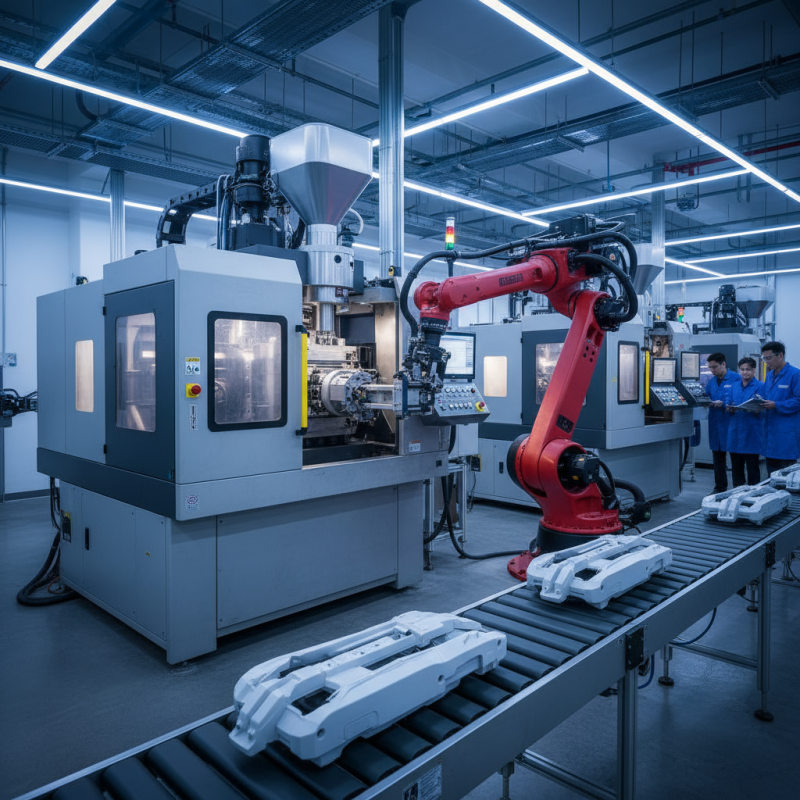
Injection molding machines with robotics integration are transforming the manufacturing landscape. These systems automate tasks, increasing efficiency and precision. The combination of mold processing and robotics can significantly reduce cycle times. In many cases, this integration minimizes human error, leading to higher quality products. However, not all factories benefit equally from this technology.
While the benefits are considerable, there are challenges. Initial investment costs can be high. Manufacturers must also ensure proper training for staff. Employees may feel apprehensive about working alongside robots. Change can be difficult, and resistance to new technology can hinder progress. Addressing these human factors is crucial.
The robots used in these machines can handle various tasks. They assist in loading materials, removing parts, and packaging finished products. This integration often leads to more consistent output. Nevertheless, a one-size-fits-all approach doesn’t work. Each production line has unique needs. Adapting robotics solutions to fit those needs is vital for success.
Top 10 Benefits of Injection Molding Machine With Robot
Enhanced Precision and Consistency in Manufacturing Processes
Injection molding machines equipped with robots are revolutionizing manufacturing. Enhanced precision and consistency are at the forefront of this technology. This integration minimizes human error, leading to accurate parts production. Each cycle can produce items with identical dimensions. Such reliability reduces material waste.
Moreover, robotic arms can operate at high speeds. They can swiftly remove and sort components after molding. This speed promotes efficiency in production lines. Workers benefit from improved safety as robots take over repetitive tasks. Yet, there are challenges to consider.
Maintaining robotic systems requires skilled personnel. Training employees can be time-consuming and expensive. Additionally, if the system malfunctions, production halts. Understanding how to troubleshoot issues is essential. These factors highlight the need for careful planning and reflection as industries embrace this technology.
Increased Efficiency and Productivity in Production Cycles
Injection molding machines equipped with robots can significantly enhance efficiency and productivity in production cycles. According to a report by a leading industry research firm, companies implementing automation can experience productivity increases of up to 25%. These systems optimize workflow and reduce cycle time. Machines can operate continuously, minimizing downtime and maximizing output.
Using robots in conjunction with injection molding provides precision. This precision leads to fewer defects, resulting in lower material waste. A study indicated that companies see a 30% reduction in scrap rates with robotic integration. This means not only saving on raw materials but also improving the quality of end products.
Tip: Regular maintenance of both robots and injection molding machines is essential to keep production smooth. Scheduling periodic checks can preempt unexpected breakdowns.
However, the initial investment in robotic systems can be significant. Smaller companies may find it challenging to justify these costs. There’s also a learning curve associated with programming and maintaining robots. Employees must be trained effectively to adapt to new processes. Continuous feedback and adjustment are necessary to truly reap the benefits of this technology.
Tip: Ensure your workforce is trained in both the technology and safety protocols involved in robotic operations.
Cost Savings Through Automation and Reduced Labor Requirements
The integration of a robotic system with injection molding machines brings remarkable cost savings. Automation reduces the need for manual labor. This can lead to lower operational costs over time. Moreover, robots increase the efficiency of production lines. They work continuously and consistently, ensuring minimal downtime.
It's wise to assess your current workflow. Look for areas where automation might fit. Training personnel to manage these systems is crucial. A smooth transition can boost productivity. However, some workers may feel uneasy about job security. Communication is key. Address concerns openly to foster a positive environment.
Consider the layout of your workspace. A robotic system may require a different setup. Ensure there’s enough space for the robot to operate safely. Regular maintenance of the machines is also necessary for optimal performance. With the right approach, the benefits of automation can outweigh the initial investment.
Improved Safety and Reduced Risk of Workplace Accidents
Injection molding machines equipped with robots significantly enhance workplace safety. The automation reduces the need for manual handling. This shift can lead to a 70% decrease in workplace incidents. According to a report by the National Safety Council, manufacturing roles often witness the highest rates of injuries. Greater automation addresses these safety challenges effectively.
Robots perform repetitive tasks that are prone to accidents. These include heavy lifting and precise part placements. A study from the American Society of Safety Professionals indicates that implementing robotic systems lowers injury risks by nearly 50%. Additionally, with less human intervention, exposure to hazardous conditions decreases. Employees can perform more critical tasks, improving both safety and morale.
Despite these advancements, there are areas for improvement. Some workers may feel a lack of job security with increased automation. Training programs are essential. Educating staff about new technologies can ease fears and promote acceptance. Companies should also assess the integration challenges. Not every machine works seamlessly with robotic systems. Continuous evaluation and adaptation are key to ensure safety and efficiency in the workplace.