


Top Brackish Water RO System Manufacturers for Global Buyers
Choosing a Brackish Water Ro System manufacturer is not just a price comparison. Feedwater quality, operating costs, and local service can shape performance for years. A plant drawing water from a coastal well may face different challenges than one treating inland groundwater. Even nearby wells can vary in salinity, hardness, iron, and suspended solids.
This guide introduces manufacturers serving global buyers and explains what to examine before requesting a quotation. Look beyond membrane capacity. Ask about pretreatment design, pressure-vessel materials, expected recovery, energy use, and replacement-part availability. A clear proposal should state its feedwater assumptions and show how the system responds when water quality changes. That detail matters.
Service matters, too. Commissioning support, operator training, warranty terms, and response times can affect uptime as much as equipment selection. Buyers should verify certifications and references directly, since claims in brochures do not always tell the whole story. A polished brochure cannot answer every question. No supplier is perfect, and comparisons may miss site-specific issues without a proper water analysis.
The manufacturers discussed here offer different strengths, from standard packaged units to systems configured for demanding industrial applications. Use the overview as a starting point, not a substitute for technical review. Share laboratory results, daily flow targets, and discharge constraints before choosing a design. Careful questions now can prevent costly changes later.
What Defines a Brackish Water Reverse Osmosis System
A brackish water reverse osmosis (BWRO) system treats water with dissolved salts above typical freshwater levels but below seawater concentrations. There is no universal feed-water cutoff for every project. The source matters. Well water at 1,500 mg/L total dissolved solids can behave differently from a variable surface supply, even when average salinity looks similar. Laboratory analysis is the starting point, not a brochure label.
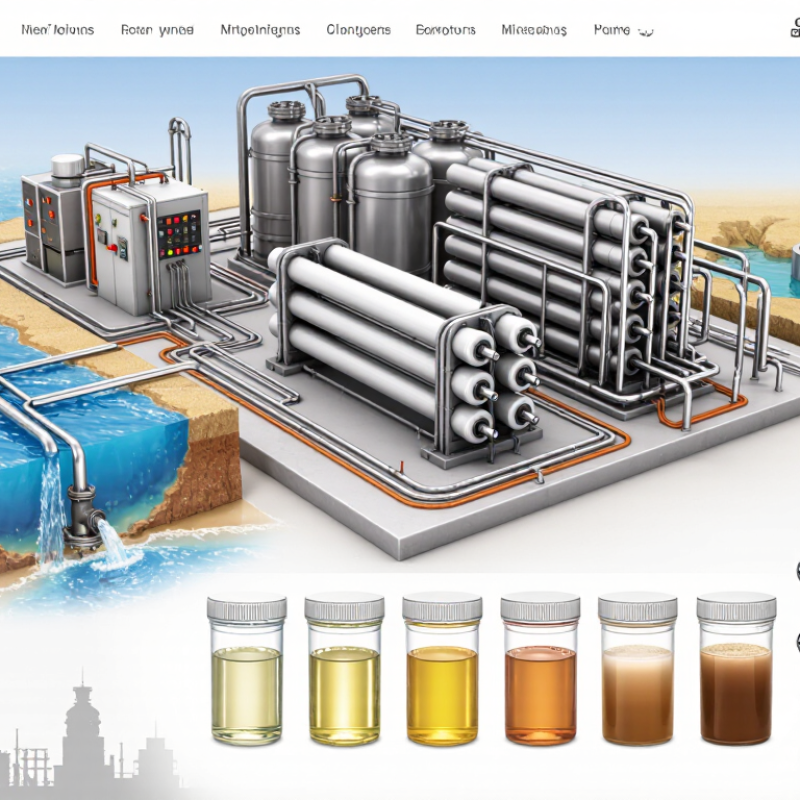
At its core, BWRO pushes feed water through semipermeable membranes under pressure. Salts and many dissolved contaminants remain in a concentrate stream; lower-salinity permeate passes through. A typical system includes pretreatment, cartridge filtration, a pump, membrane vessels, controls, and post-treatment where needed. Pressure depends on feed chemistry and temperature, not simply on settings copied from another plant. Watch the numbers. Recovery, scaling risk, and product-water targets must be considered together.
Operators should track feed and permeate conductivity, flow, pressure, and pressure drop across filters and membranes. These readings can reveal fouling or changing source conditions before output falls. It is not magic. Seasonal shifts in well chemistry can disrupt an otherwise sound design. A spreadsheet may miss that. Reliable suppliers explain design assumptions, cleaning limits, and expected performance using actual water data; buyers should review those details and verify performance during commissioning.

What Defines a Brackish Water Reverse Osmosis System?
Typical operating pressure ranges for brackish-water and seawater reverse osmosis systems
Brackish-water RO treats moderately saline feedwater, commonly around 1,000–10,000 mg/L total dissolved solids (TDS). Its operating pressure is generally lower than seawater RO pressure. The ranges shown are indicative; actual system pressure depends on feedwater quality, temperature, recovery, and system design.
How Manufacturers Adapt Systems to Different Water Conditions
Brackish water is not one fixed recipe. USGS Circular 1376, Brackish Groundwater in the United States, defines brackish groundwater as containing 1,000–10,000 mg/L of total dissolved solids. That wide range changes the pressure and recovery a reverse osmosis system can handle. A feed sample matters. So does its location and season.
Manufacturers adapt designs to measured salinity, temperature, hardness, silica, and suspended solids. Higher salinity usually requires greater operating pressure; calcium and silica can form scale as water becomes more concentrated. Pretreatment may therefore include filtration, pH adjustment, or antiscalant dosing, selected only after water analysis.
Membrane choice and recovery settings also need to reflect the feed, rather than a catalogue’s ideal conditions. Small details count: a muddy intake after rain can quickly raise filter pressure.
Operators should track conductivity, pressure drop, and permeate flow during commissioning and routine checks. ASTM D4189 provides a method for measuring silt density index, a useful indicator of fouling potential in RO feed water. But one test is only a snapshot. Seasonal sampling and pilot testing can reveal changes that a single laboratory result misses, though they add time and cost.
Leading Brackish Water RO System Manufacturers Worldwide
Leading brackish water reverse osmosis manufacturers serve municipal, agricultural, and industrial buyers across many regions. Their systems must match local feedwater, not just a standard capacity figure. A reliable supplier will review laboratory results for salinity, hardness, iron, and organic matter before recommending pretreatment. Small details matter. A change in well-water quality after heavy rain can affect filter loading and membrane performance.
Experienced manufacturers typically provide process drawings, operating limits, and commissioning guidance. Buyers should ask how the design manages pressure, recovery rate, and concentrate disposal, then compare those answers against site conditions. Look for clear component specifications and documented quality checks, rather than broad performance promises. After-sales support matters too: operators may need troubleshooting help, replacement parts, or training months after installation. Response times vary by location, so confirm what support is actually available.
Regional expertise can be useful, but it should be backed by measurable engineering work. Request references for projects with similar feedwater and daily demand, and check whether reported output includes seasonal operating conditions. No datasheet captures every variation. I would also question designs that appear unusually simple; lower complexity can reduce maintenance, yet inadequate pretreatment may shorten membrane life. Manufacturers that explain these trade-offs plainly are easier to assess.
| Evaluation Area | Indicative Brackish-Water RO Benchmark | What Global Buyers Should Verify |
|---|---|---|
| Feed-water salinity | Brackish water is commonly described as having about 1,000–10,000 mg/L of total dissolved solids (TDS); definitions can vary. | Ask for a design based on a recent laboratory water analysis, including TDS, hardness, silica, iron, manganese, and organics. |
| System recovery | Many brackish-water RO systems are designed for approximately 70–85% recovery, depending on feed-water chemistry and operating conditions. | Check the stated recovery against scaling projections, concentrate disposal limits, and the actual feed-water analysis. |
| Operating pressure | Approximately 10–25 bar (145–363 psi) is a broad indicative range; required pressure depends on salinity, temperature, recovery, and membrane selection. | Request the design pressure, pump duty point, pressure-vessel rating, and operating envelope for the specified site conditions. |
| RO feed pretreatment | RO feed is commonly pretreated to achieve a silt density index (SDI₁₅) below 5; tighter targets may be specified for particular designs. | Confirm the pretreatment equipment, filtration rating, chemical dosing, and provisions for variable or seasonal source-water quality. |
| Energy use | Specific energy consumption varies widely with feed salinity, recovery, system size, and operating conditions; compare proposals using kWh per m³ of permeate. | Ensure quoted energy use states the design feed conditions and clarifies whether pretreatment and auxiliary equipment are included. |
| Permeate quality | Product-water TDS depends on feed composition, membrane performance, temperature, and system configuration; it cannot be reliably specified from feed TDS alone. | Request a projected permeate analysis and confirm whether post-treatment, such as remineralization or pH adjustment, is required for the intended use. |
| Membrane and pressure-vessel configuration | Commercial RO systems use membrane elements installed in pressure vessels; the number and arrangement are selected for the required flow and water chemistry. | Check membrane-element availability, replacement compatibility, design flux, vessel rating, and access for routine maintenance. |
| Materials and corrosion protection | Material selection depends on feed-water chemistry, site conditions, and the wetted component; no single material suits every installation. | Review material specifications for pumps, piping, valves, tanks, and fasteners, especially where chloride levels or corrosive conditions are high. |
| Controls and monitoring | Typical monitoring points include feed and permeate flow, pressure, conductivity, and key operating alarms. | Confirm instrumentation scope, data logging, remote-monitoring options, alarm handling, and compatibility with the plant control system. |
| Compliance and project documentation | Applicable requirements depend on the destination market, end use, and project specification. | Request the relevant conformity documents, electrical documentation, process drawings, operating manuals, and commissioning records for the installation location. |
| Service and lifecycle support | Maintenance intervals and consumable life depend on water quality, pretreatment performance, and operating practices. | Compare local service coverage, spare-parts lead times, operator training, warranty terms, and the availability of membrane-cleaning support. |
Note: These are general planning benchmarks, not guaranteed performance values. Final system specifications should be established through a site-specific water analysis and engineering design.
How to Compare Manufacturers, Technologies, and Services
Compare brackish-water RO manufacturers using the same feedwater assumptions. Ask for pilot or operating data that matches your source water’s salinity, temperature, and seasonal variation. A design tested on stable feedwater may perform differently when a well’s conductivity shifts after heavy pumping. Small details matter. Request the projected recovery rate, normalized membrane performance, energy use, and cleaning frequency, with assumptions shown rather than hidden in a headline figure.
Service matters as much as membrane selection. Check whether the supplier provides commissioning, operator training, spare-parts planning, and clear response times. Ask how it manages concentrate: Jones et al., writing in Science of the Total Environment in 2019, estimated global desalination output at 95.37 million cubic meters per day, alongside 141.5 million cubic meters of brine. Those figures cover desalination broadly, not brackish systems alone, but they underline why concentrate handling deserves early review. Ask for references from plants with comparable feedwater and capacity. Ask for proof. A polished datasheet is useful, but it can still rest on optimistic assumptions; independent testing and a realistic maintenance plan offer a stronger basis for comparison.
Choosing a Manufacturer for Global Water Treatment Projects
Choosing a brackish water reverse osmosis manufacturer starts with the source water, not the equipment brochure. Test seasonal salinity, hardness, silica, iron, and suspended solids before comparing proposals.
The UN World Water Development Report 2024 reports that global water demand has risen by about 1% annually over the past four decades. That trend makes dependable local treatment increasingly important.
Yet water chemistry varies sharply between sites. A system designed for a steady well may struggle when a coastal aquifer’s salinity shifts after heavy pumping.
Ask manufacturers for performance data at your actual feed-water conditions. Check permeate quality, recovery rate, energy use, pretreatment needs, and membrane cleaning intervals.
Request references from projects with similar temperature and feed-water chemistry. Practical details matter: Can operators replace cartridges locally? Are common spare parts available? How quickly can technical support respond across time zones?
The World Health Organization’s Guidelines for Drinking-water Quality also offer a useful reference for evaluating finished-water risks; compliance depends on local requirements and testing.
Be cautious with guarantees based on ideal laboratory water. Real systems foul, and operators sometimes miss early warning signs. A well-specified plant still needs trained staff, clear maintenance records, and room for imperfect operating conditions.


